
Recent from talks
W. A. S. Butement
Knowledge base stats:
Talk channels stats:
Members stats:
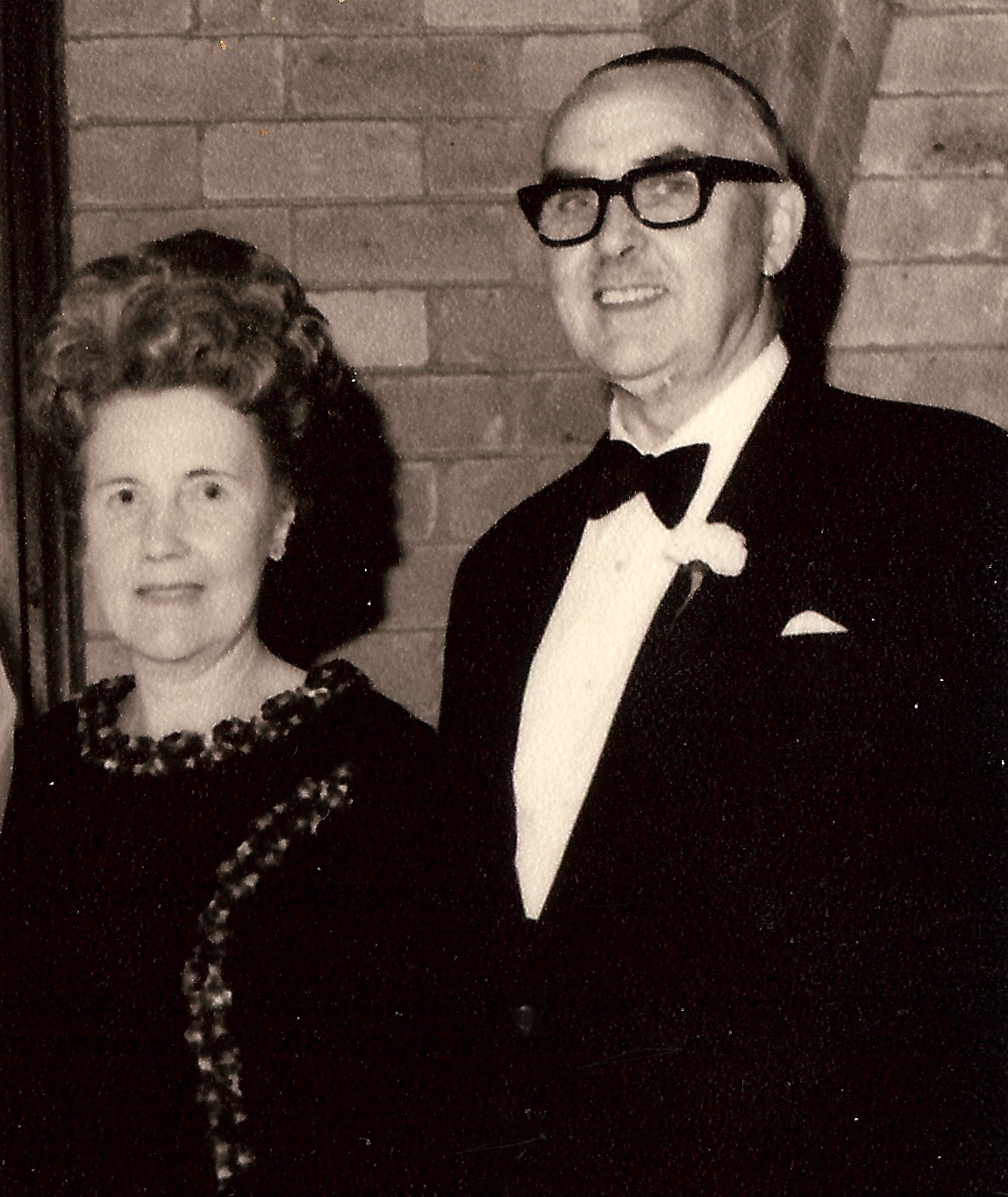
W. A. S. Butement
William Alan Stewart Butement CBE (18 August 1904 – 25 January 1990) was a New Zealand-born British-Australian defence scientist and public servant. A native of New Zealand, he made extensive contributions to radar development in Great Britain during World War II and was one of the inventors of the proximity fuse. He designed the Wireless Set No. 11 and invented and supervised the development of the Wireless Set No. 10, a secure radio-based method of communication to replace the traditional telephone cable.
Butement returned to Australia in 1947 to help set up the Anglo-Australian rocket test range at Woomera, South Australia. He then became the first Chief Defence Scientist of Australia. As head of the Weapons Research Establishment, he oversaw the development of the Malkara anti-tank guided missile, the Ikara anti-submarine missile and the Barra sonar buoy. He also continued his association with radar, sponsoring research into what eventually became the Jindalee over-the-horizon radar. He ended his professional career with a research position in private business.
William Alan Stewart Butement was born in Masterton, New Zealand, on 18 August 1904, the oldest of five children of William Butement, a physician and surgeon, and his wife Amy Louise Stewart. When Alan was age eight, the family moved to Sydney, where he started at The Scots College. After the outbreak of the First World War, his father tried to enlist in the First Australian Imperial Force as a medical officer but was rejected as being too old. The family therefore moved again, this time to London, England, where his father was able to join the British Army. Alan graduated from University College School in 1922. He then entered University College London, where he studied medicine for a year before switching to science. He graduated with a Bachelor of Science degree with a first class pass in chemistry in 1926.
After graduation, Butement worked at Ealing Studios as an research assistant with DeForest Phonofilm. In 1928, he joined the War Office's Signals Experimental Establishment at Woolwich, London, as a Scientific Officer, developing radio equipment for the British Army. He worked on a Doctor of Philosophy thesis under the supervision of Alfred William Porter, but the degree was never awarded due to Porter's death on 11 January 1939. Butement and an associate, P. E. Pollard, conceived a radio apparatus for the detection of ships. A breadboard test unit, operating at 50 cm (600 MHz) and using pulsed modulation, gave successful laboratory results, but was not of interest to War Office officials. Nevertheless, in January 1931, a writeup on the apparatus was entered in the Inventions Book maintained by the Royal Engineers. This is the first official record in Great Britain of the technology that would eventually become radar. Butement married Ursula Florence Alberta Parish on 17 June 1933 at the St Philip and All Saints Church in North Sheen, Surrey. They had two daughters, Ann and Jane.
In October 1936, Robert Watson Watt's team from the Air Ministry began work on what would become Chain Home (CH). By 1936 they had moved to the Bawdsey Manor Research Centre (on the North Sea coast) and had already begun plans for deployment of the CH system. Referred to as Range and Direction Finding (RDF), Bawdsey had by this time begun branching out, forming teams to design and build all sorts of radar related devices. An Army Cell from the SEE was attached to the Bawdsey operation. Butement joined the team in 1938 as a senior scientific officer. At Bawdsey, Butement was assigned to develop a Coastal Defence (CD) RDF system to be used for aiming anti-shipping and anti-aircraft guns. By early 1938, he had a prototype under test. This used a pulsed 1.5 m (200 MHz) transmitter producing 50 kW power, (later increased to 150 kW). For the transmitting and receiving antennas, he developed a large dipole array, 3.0 metres (10 ft) high and 7.3 metres (24 ft) wide, giving narrow transmitting and receiving beams. This array could be rotated at a speed around 1.5 revolutions per minute. To improve the directional accuracy, lobe switching was used in the transmitting array. As a part of this development, he formulated the first – at least in Great Britain – mathematical relationship that became known as the radar range equation. He also designed the Wireless Set No. 11.
In September 1939, at the start of the Second World War, operations at Bawdsey were distributed to safer locations. The Army Cell joined the Air Defence Experimental Establishment (ADEE) at Christchurch, Dorset, on the south coast. At the time of the move, Butement was named an Assistant Director of Scientific Research, and continued to lead the Coastal Defence (CD) research activity.The primary use of the evolving CD system was in aiming searchlights associated with the anti-aircraft guns, and he acquired the nickname of "Mr Searchlight Radar". He developed what became the standard method of determining miss-distance of gunfire against shipping by using RDF echoes from splashes caused by shells hitting the sea. The ADEE was merged into the Air Defence Research and Development Establishment (ADRDE) in 1941. Applications of the CD system and the work of Butement were even more important as microwave devices were added. Germany began bomber attacks on the British mainland, and it was decided that radar research and development activities would be moved further inland. In May 1942, the ADRDE was transferred to Malvern, Worcestershire, where it remained for many years. It was renamed the Radar Research and Development Establishment in 1944.
There was an urgent need to improve the effectiveness of the anti-aircraft guns. With his background in radio, in October 1939, Butement turned to this technology as a potential solution. He conceived of a highly compact RDF set placed on the projectile, setting off the detonation when close proximity to the target was attained. He completed the circuit design, but there was the problem of packaging such a device in a small projectile, as well as the question of the vacuum tubes surviving the acceleration forces at firing. The demands on personnel and funds at the start of the war were such that little more was done at that time. In September 1940, Butement's concept was moved dramatically toward mass production when it was exported under the technology transfer arrangements of the Tizard Mission, and subsequently a variation of his circuit became adopted in the United States as the proximity fuse or VT (variable-time) fuse. In the later stages of the war, anti-aircraft shells fitted with proximity fuses played a major part in defeating both German V-1 flying bomb attacks on London, and Japanese kamikaze attacks on Allied shipping. The British government filed a patent on the VT fuse in April 1942 and the Americans filed one in September 1943. After the war there was litigation over credit for the invention before Justice Alexander Holtzoff awarded it for the invention to Butement and his collaborators, Edward Samuel Shire and Amherst Thomson, on 18 August 1967.
In 1942, Butement, who became Assistant Director of Scientific Research with the Ministry of Supply in 1940, invented and supervised the development of a secure radio-based method of battlefield communication using narrow beams of pulsed microwave signals, to replace the traditional telephone cable. Using a 10 cm (3 GHz) transmitter and receiver developed for radar, the Wireless Set No. 10 evolved. This was the first multi-channel, microwave communication system in Great Britain. It first went operational in July 1944, just after D-Day, and served as the central communications backbone for the 1944–1945 campaign in North West Europe. Field Marshal Sir Bernard Montgomery used it to communicate between the 21st Army Group and the War Office in London.
Hub AI
W. A. S. Butement AI simulator
(@W. A. S. Butement_simulator)
W. A. S. Butement
William Alan Stewart Butement CBE (18 August 1904 – 25 January 1990) was a New Zealand-born British-Australian defence scientist and public servant. A native of New Zealand, he made extensive contributions to radar development in Great Britain during World War II and was one of the inventors of the proximity fuse. He designed the Wireless Set No. 11 and invented and supervised the development of the Wireless Set No. 10, a secure radio-based method of communication to replace the traditional telephone cable.
Butement returned to Australia in 1947 to help set up the Anglo-Australian rocket test range at Woomera, South Australia. He then became the first Chief Defence Scientist of Australia. As head of the Weapons Research Establishment, he oversaw the development of the Malkara anti-tank guided missile, the Ikara anti-submarine missile and the Barra sonar buoy. He also continued his association with radar, sponsoring research into what eventually became the Jindalee over-the-horizon radar. He ended his professional career with a research position in private business.
William Alan Stewart Butement was born in Masterton, New Zealand, on 18 August 1904, the oldest of five children of William Butement, a physician and surgeon, and his wife Amy Louise Stewart. When Alan was age eight, the family moved to Sydney, where he started at The Scots College. After the outbreak of the First World War, his father tried to enlist in the First Australian Imperial Force as a medical officer but was rejected as being too old. The family therefore moved again, this time to London, England, where his father was able to join the British Army. Alan graduated from University College School in 1922. He then entered University College London, where he studied medicine for a year before switching to science. He graduated with a Bachelor of Science degree with a first class pass in chemistry in 1926.
After graduation, Butement worked at Ealing Studios as an research assistant with DeForest Phonofilm. In 1928, he joined the War Office's Signals Experimental Establishment at Woolwich, London, as a Scientific Officer, developing radio equipment for the British Army. He worked on a Doctor of Philosophy thesis under the supervision of Alfred William Porter, but the degree was never awarded due to Porter's death on 11 January 1939. Butement and an associate, P. E. Pollard, conceived a radio apparatus for the detection of ships. A breadboard test unit, operating at 50 cm (600 MHz) and using pulsed modulation, gave successful laboratory results, but was not of interest to War Office officials. Nevertheless, in January 1931, a writeup on the apparatus was entered in the Inventions Book maintained by the Royal Engineers. This is the first official record in Great Britain of the technology that would eventually become radar. Butement married Ursula Florence Alberta Parish on 17 June 1933 at the St Philip and All Saints Church in North Sheen, Surrey. They had two daughters, Ann and Jane.
In October 1936, Robert Watson Watt's team from the Air Ministry began work on what would become Chain Home (CH). By 1936 they had moved to the Bawdsey Manor Research Centre (on the North Sea coast) and had already begun plans for deployment of the CH system. Referred to as Range and Direction Finding (RDF), Bawdsey had by this time begun branching out, forming teams to design and build all sorts of radar related devices. An Army Cell from the SEE was attached to the Bawdsey operation. Butement joined the team in 1938 as a senior scientific officer. At Bawdsey, Butement was assigned to develop a Coastal Defence (CD) RDF system to be used for aiming anti-shipping and anti-aircraft guns. By early 1938, he had a prototype under test. This used a pulsed 1.5 m (200 MHz) transmitter producing 50 kW power, (later increased to 150 kW). For the transmitting and receiving antennas, he developed a large dipole array, 3.0 metres (10 ft) high and 7.3 metres (24 ft) wide, giving narrow transmitting and receiving beams. This array could be rotated at a speed around 1.5 revolutions per minute. To improve the directional accuracy, lobe switching was used in the transmitting array. As a part of this development, he formulated the first – at least in Great Britain – mathematical relationship that became known as the radar range equation. He also designed the Wireless Set No. 11.
In September 1939, at the start of the Second World War, operations at Bawdsey were distributed to safer locations. The Army Cell joined the Air Defence Experimental Establishment (ADEE) at Christchurch, Dorset, on the south coast. At the time of the move, Butement was named an Assistant Director of Scientific Research, and continued to lead the Coastal Defence (CD) research activity.The primary use of the evolving CD system was in aiming searchlights associated with the anti-aircraft guns, and he acquired the nickname of "Mr Searchlight Radar". He developed what became the standard method of determining miss-distance of gunfire against shipping by using RDF echoes from splashes caused by shells hitting the sea. The ADEE was merged into the Air Defence Research and Development Establishment (ADRDE) in 1941. Applications of the CD system and the work of Butement were even more important as microwave devices were added. Germany began bomber attacks on the British mainland, and it was decided that radar research and development activities would be moved further inland. In May 1942, the ADRDE was transferred to Malvern, Worcestershire, where it remained for many years. It was renamed the Radar Research and Development Establishment in 1944.
There was an urgent need to improve the effectiveness of the anti-aircraft guns. With his background in radio, in October 1939, Butement turned to this technology as a potential solution. He conceived of a highly compact RDF set placed on the projectile, setting off the detonation when close proximity to the target was attained. He completed the circuit design, but there was the problem of packaging such a device in a small projectile, as well as the question of the vacuum tubes surviving the acceleration forces at firing. The demands on personnel and funds at the start of the war were such that little more was done at that time. In September 1940, Butement's concept was moved dramatically toward mass production when it was exported under the technology transfer arrangements of the Tizard Mission, and subsequently a variation of his circuit became adopted in the United States as the proximity fuse or VT (variable-time) fuse. In the later stages of the war, anti-aircraft shells fitted with proximity fuses played a major part in defeating both German V-1 flying bomb attacks on London, and Japanese kamikaze attacks on Allied shipping. The British government filed a patent on the VT fuse in April 1942 and the Americans filed one in September 1943. After the war there was litigation over credit for the invention before Justice Alexander Holtzoff awarded it for the invention to Butement and his collaborators, Edward Samuel Shire and Amherst Thomson, on 18 August 1967.
In 1942, Butement, who became Assistant Director of Scientific Research with the Ministry of Supply in 1940, invented and supervised the development of a secure radio-based method of battlefield communication using narrow beams of pulsed microwave signals, to replace the traditional telephone cable. Using a 10 cm (3 GHz) transmitter and receiver developed for radar, the Wireless Set No. 10 evolved. This was the first multi-channel, microwave communication system in Great Britain. It first went operational in July 1944, just after D-Day, and served as the central communications backbone for the 1944–1945 campaign in North West Europe. Field Marshal Sir Bernard Montgomery used it to communicate between the 21st Army Group and the War Office in London.
Recent media