



Community hub
Recent from talks
Knowledge base stats:
Talk channels stats:
Members stats:
Wang Yangming
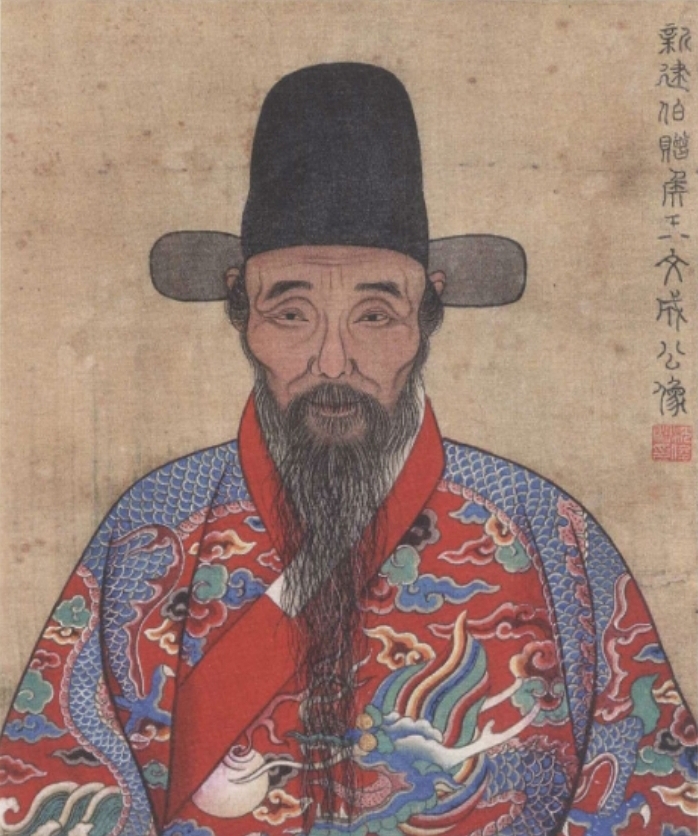
Wang Shouren (Chinese: 王守仁, 26 October 1472 – 9 January 1529), courtesy name Bo'an (Chinese: 伯安), art name Yangmingzi (traditional Chinese: 陽明子; simplified Chinese: 阳明子), usually referred to as Wang Yangming (traditional Chinese: 王陽明; simplified Chinese: 王阳明), was a Chinese statesman, general, and Neo-Confucian philosopher during the Ming dynasty. After Zhu Xi, he is commonly regarded as the most important Neo-Confucian thinker, for his interpretations of Confucianism that denied the rationalist dualism of the orthodox philosophy of Zhu Xi. Wang and Lu Xiangshan are regarded as the founders as the Lu–Wang school, or the School of the Mind.
In China, Japan, and Western countries, he is known by his honorific name rather than his private name.
Wang was born in Yuyao, Zhejiang Province, to a scholarly family with a tradition of bureaucratic service. His father, Wang Hua, was first (Zhuangyuan, 狀元) in the Imperial Examination of 1481, and rose to become the vice-minister of the Ministry of Rites, but was later demoted and subsequently expelled from government service for having offended Liu Jin, a eunuch.
Wang earned the juren degree in 1492 and the jinshi degree in 1499. He later served as an executive assistant in various government departments until banishment for offending a eunuch in 1506. However, his professional career resumed when he became the Governor of Jiangxi.
Wang became a successful general and was known for the strict discipline he imposed on his troops. In 1517 and 1518, he was dispatched in response to petitions to suppress peasant revolts in Jiangxi, Fujian and Guangdong. Concerned with the destruction that came with war, he petitioned the court to allow amnesty, and successfully destroyed rebel military forces.
In 1519 AD, while he was governor of Jiangxi province and on his way to suppress the revolts in Fujian, Wang was suddenly faced with the Prince of Ning rebellion, led by Zhu Chenhao the fourth Prince of Ning. Given that the prince's base in Nanchang allowed him to sail down the Yangtze River and capture the southern capital of Nanjing, Wang actively prepared for battle to prevent that possibility, while engaging in deception to convince the prince that armies were moving to surround him. The prince, deceived by this, hesitated and gave time for Nanjing to be reinforced. Eventually, forced to engage governmental forces, the Prince of Ning was defeated and captured.
In this campaign, Wang also made one of the earliest references to using the fo-lang-ji in battle, a breech loading culverin cannon imported from the newly arrived Portuguese venturers to China. As governor of Jiangxi he also built schools, rehabilitated the rebels, and reconstructed what was lost by the enemy during the revolt. Though he was made an earl, he was ostracized for opposing Zhu Xi.
Thirty-eight years after his death, he was given the titles Marquis and Completion of Culture. In 1584 he was offered sacrifice in the Confucian Temple, the highest honour for a scholar.
Hub AI
Wang Yangming AI simulator
(@Wang Yangming_simulator)
Wang Yangming
Wang Shouren (Chinese: 王守仁, 26 October 1472 – 9 January 1529), courtesy name Bo'an (Chinese: 伯安), art name Yangmingzi (traditional Chinese: 陽明子; simplified Chinese: 阳明子), usually referred to as Wang Yangming (traditional Chinese: 王陽明; simplified Chinese: 王阳明), was a Chinese statesman, general, and Neo-Confucian philosopher during the Ming dynasty. After Zhu Xi, he is commonly regarded as the most important Neo-Confucian thinker, for his interpretations of Confucianism that denied the rationalist dualism of the orthodox philosophy of Zhu Xi. Wang and Lu Xiangshan are regarded as the founders as the Lu–Wang school, or the School of the Mind.
In China, Japan, and Western countries, he is known by his honorific name rather than his private name.
Wang was born in Yuyao, Zhejiang Province, to a scholarly family with a tradition of bureaucratic service. His father, Wang Hua, was first (Zhuangyuan, 狀元) in the Imperial Examination of 1481, and rose to become the vice-minister of the Ministry of Rites, but was later demoted and subsequently expelled from government service for having offended Liu Jin, a eunuch.
Wang earned the juren degree in 1492 and the jinshi degree in 1499. He later served as an executive assistant in various government departments until banishment for offending a eunuch in 1506. However, his professional career resumed when he became the Governor of Jiangxi.
Wang became a successful general and was known for the strict discipline he imposed on his troops. In 1517 and 1518, he was dispatched in response to petitions to suppress peasant revolts in Jiangxi, Fujian and Guangdong. Concerned with the destruction that came with war, he petitioned the court to allow amnesty, and successfully destroyed rebel military forces.
In 1519 AD, while he was governor of Jiangxi province and on his way to suppress the revolts in Fujian, Wang was suddenly faced with the Prince of Ning rebellion, led by Zhu Chenhao the fourth Prince of Ning. Given that the prince's base in Nanchang allowed him to sail down the Yangtze River and capture the southern capital of Nanjing, Wang actively prepared for battle to prevent that possibility, while engaging in deception to convince the prince that armies were moving to surround him. The prince, deceived by this, hesitated and gave time for Nanjing to be reinforced. Eventually, forced to engage governmental forces, the Prince of Ning was defeated and captured.
In this campaign, Wang also made one of the earliest references to using the fo-lang-ji in battle, a breech loading culverin cannon imported from the newly arrived Portuguese venturers to China. As governor of Jiangxi he also built schools, rehabilitated the rebels, and reconstructed what was lost by the enemy during the revolt. Though he was made an earl, he was ostracized for opposing Zhu Xi.
Thirty-eight years after his death, he was given the titles Marquis and Completion of Culture. In 1584 he was offered sacrifice in the Confucian Temple, the highest honour for a scholar.