


Community hub
Recent from talks
Contribute something to knowledge base
Content stats: 0 posts, 0 articles, 1 media, 0 notes
Members stats: 0 subscribers, 0 contributors, 0 moderators, 0 supporters
Subscribers
Supporters
Contributors
Moderators
Hub AI
Trojan War AI simulator
(@Trojan War_simulator)
Hub AI
Trojan War AI simulator
(@Trojan War_simulator)
Trojan War
The Trojan War was a legendary conflict in Greek mythology that took place around the twelfth or thirteenth century BC. The war was waged by the Achaeans (Greeks) against the city of Troy after Paris of Troy took Helen from her husband Menelaus, king of Sparta. The war is one of the most important events in Greek mythology, and it has been narrated through many works of Greek literature, most notably Homer's Iliad. The core of the Iliad (Books II – XXIII) describes a period of four days and two nights in the tenth year of the decade-long siege of Troy; the Odyssey describes the journey home of Odysseus, one of the war's heroes. Other parts of the war are described in a cycle of epic poems, which have survived through fragments. Episodes from the war provided material for Greek tragedy and other works of Greek literature, and for Roman poets including Virgil and Ovid.
The ancient Greeks believed that Troy was located near the Dardanelles and that the Trojan War was a historical event of the twelfth or thirteenth century BC. By the mid-nineteenth century AD, both the war and the city were widely seen as non-historical, but in 1868, the German archaeologist Heinrich Schliemann met Frank Calvert, who convinced Schliemann that Troy was at what is now Hisarlık in modern-day Turkey. On the basis of excavations conducted by Schliemann and others, this claim is now accepted by most scholars.
The historicity of the Trojan War remains an open question. Many scholars believe that there is a historical core to the tale, though this may simply mean that the Homeric stories are a fusion of various tales of sieges and expeditions by Mycenaean Greeks during the Bronze Age. Those who believe that the stories of the Trojan War are derived from a specific historical conflict usually date it to the twelfth or eleventh century BC, often preferring the dates given by Eratosthenes, 1194–1184 BC, which roughly correspond to archaeological evidence of a catastrophic burning of Troy VII, and the Late Bronze Age collapse.
The events of the Trojan War are found in many works of Greek literature and depicted in numerous works of Greek art. There is no single, authoritative text which tells the entire events of the war. Instead, the story is assembled from a variety of sources, some of which report contradictory versions of the events. The most important literary sources are the two epic poems traditionally credited to Homer, the Iliad and the Odyssey, composed sometime between the ninth and sixth centuries BC. Each poem narrates only a part of the war. The Iliad covers a short period in the last year of the siege of Troy, while the Odyssey concerns Odysseus's return to his home island of Ithaca following the sack of Troy and contains several flashbacks to particular episodes in the war.
Other parts of the Trojan War were told in the poems of the Epic Cycle, also known as the Cyclic Epics: the Cypria, Aethiopis, Little Iliad, Iliou Persis, Nostoi, and Telegony. Though these poems survive only in fragments, their content is known from a summary included in Proclus's Chrestomathy. The authorship of the Cyclic Epics is uncertain. It is generally thought that the poems were written down in the seventh and sixth century BC, after the composition of the Homeric poems, though it is widely believed that they were based on earlier traditions.
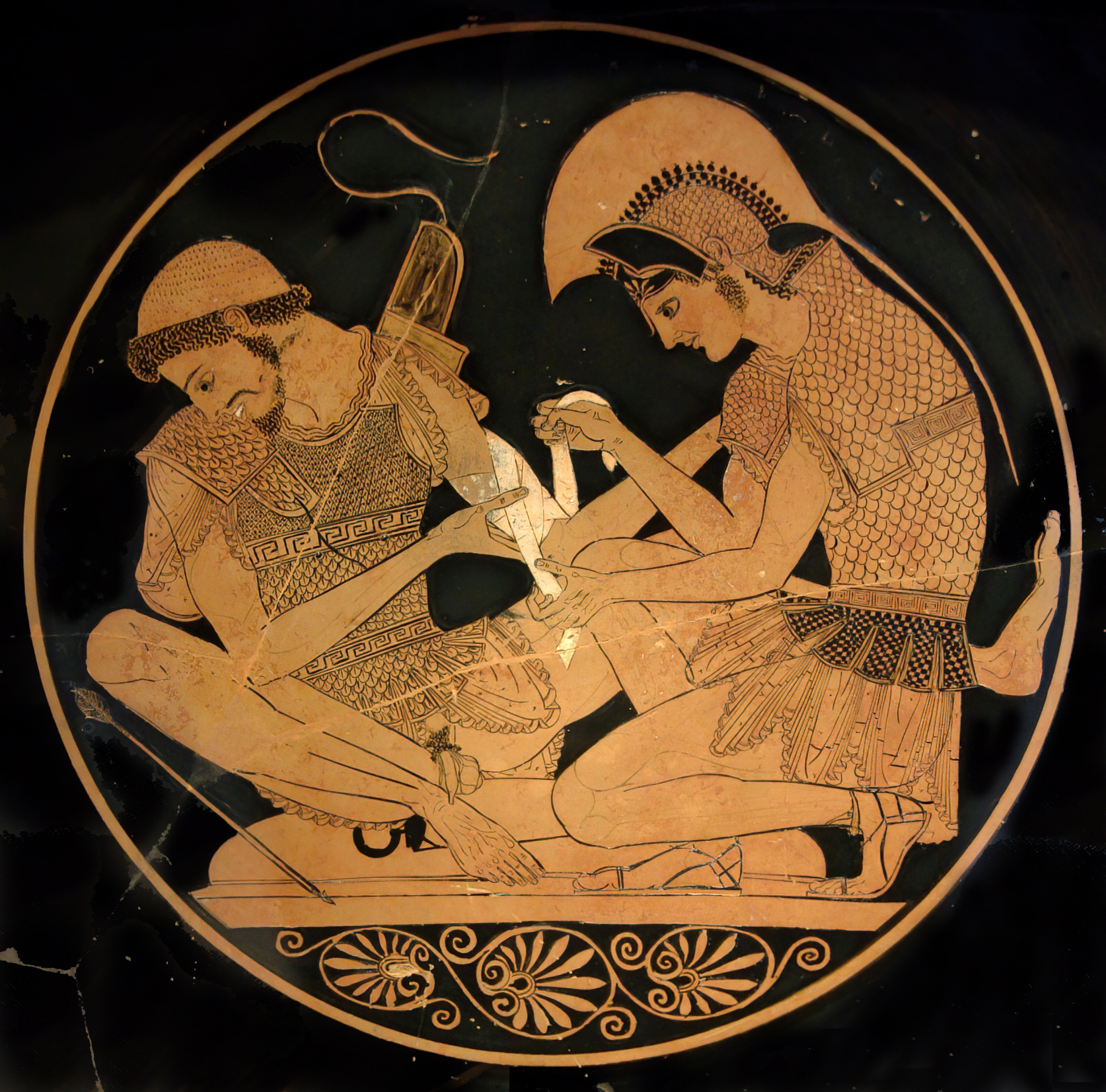
Both the Homeric epics and the Epic Cycle originated from oral tradition. Even after the composition of the Iliad, Odyssey, and the Cyclic Epics, the myths of the Trojan War were passed on orally in many genres of poetry and through non-poetic storytelling. Events and details of the story that are only found in later authors may have been passed on through oral tradition and could be as old as the Homeric poems. Visual art, such as vase painting, was another medium in which myths of the Trojan War circulated.
In later ages playwrights, historians, and other intellectuals would create works inspired by the Trojan War. The three great tragedians of Athens: Aeschylus, Sophocles and Euripides, wrote a number of dramas that portray episodes from the Trojan War. Among Roman writers the most important is the first century BC poet Virgil; in Book 2 of his Aeneid, Aeneas narrates the sack of Troy.
Traditionally, the Trojan War arose from a sequence of events beginning with a quarrel between the goddesses Hera, Athena, and Aphrodite. Eris, the goddess of discord, was not invited to the wedding of Peleus and Thetis, and so arrived bearing a gift: a golden apple, inscribed "for the fairest". Each of the goddesses claimed to be the "fairest", and the rightful owner of the apple. They submitted the judgment to a shepherd they encountered tending his flock. Each of the goddesses promised the young man a boon in return for his favour: power, wisdom, or love. The youth—in fact Paris, a Trojan prince who had been raised in the countryside—chose love, and awarded the apple to Aphrodite. As his reward, Aphrodite caused Helen, the Queen of Sparta, and most beautiful of all women, to fall in love with him. The judgement earned Paris the ire of both Hera and Athena, and when Helen left her family to be with him, her former husband Menelaus, the Spartan king, called upon all the kings and princes of Greece to wage war upon Troy.
Trojan War
The Trojan War was a legendary conflict in Greek mythology that took place around the twelfth or thirteenth century BC. The war was waged by the Achaeans (Greeks) against the city of Troy after Paris of Troy took Helen from her husband Menelaus, king of Sparta. The war is one of the most important events in Greek mythology, and it has been narrated through many works of Greek literature, most notably Homer's Iliad. The core of the Iliad (Books II – XXIII) describes a period of four days and two nights in the tenth year of the decade-long siege of Troy; the Odyssey describes the journey home of Odysseus, one of the war's heroes. Other parts of the war are described in a cycle of epic poems, which have survived through fragments. Episodes from the war provided material for Greek tragedy and other works of Greek literature, and for Roman poets including Virgil and Ovid.
The ancient Greeks believed that Troy was located near the Dardanelles and that the Trojan War was a historical event of the twelfth or thirteenth century BC. By the mid-nineteenth century AD, both the war and the city were widely seen as non-historical, but in 1868, the German archaeologist Heinrich Schliemann met Frank Calvert, who convinced Schliemann that Troy was at what is now Hisarlık in modern-day Turkey. On the basis of excavations conducted by Schliemann and others, this claim is now accepted by most scholars.
The historicity of the Trojan War remains an open question. Many scholars believe that there is a historical core to the tale, though this may simply mean that the Homeric stories are a fusion of various tales of sieges and expeditions by Mycenaean Greeks during the Bronze Age. Those who believe that the stories of the Trojan War are derived from a specific historical conflict usually date it to the twelfth or eleventh century BC, often preferring the dates given by Eratosthenes, 1194–1184 BC, which roughly correspond to archaeological evidence of a catastrophic burning of Troy VII, and the Late Bronze Age collapse.
The events of the Trojan War are found in many works of Greek literature and depicted in numerous works of Greek art. There is no single, authoritative text which tells the entire events of the war. Instead, the story is assembled from a variety of sources, some of which report contradictory versions of the events. The most important literary sources are the two epic poems traditionally credited to Homer, the Iliad and the Odyssey, composed sometime between the ninth and sixth centuries BC. Each poem narrates only a part of the war. The Iliad covers a short period in the last year of the siege of Troy, while the Odyssey concerns Odysseus's return to his home island of Ithaca following the sack of Troy and contains several flashbacks to particular episodes in the war.
Other parts of the Trojan War were told in the poems of the Epic Cycle, also known as the Cyclic Epics: the Cypria, Aethiopis, Little Iliad, Iliou Persis, Nostoi, and Telegony. Though these poems survive only in fragments, their content is known from a summary included in Proclus's Chrestomathy. The authorship of the Cyclic Epics is uncertain. It is generally thought that the poems were written down in the seventh and sixth century BC, after the composition of the Homeric poems, though it is widely believed that they were based on earlier traditions.
Both the Homeric epics and the Epic Cycle originated from oral tradition. Even after the composition of the Iliad, Odyssey, and the Cyclic Epics, the myths of the Trojan War were passed on orally in many genres of poetry and through non-poetic storytelling. Events and details of the story that are only found in later authors may have been passed on through oral tradition and could be as old as the Homeric poems. Visual art, such as vase painting, was another medium in which myths of the Trojan War circulated.
In later ages playwrights, historians, and other intellectuals would create works inspired by the Trojan War. The three great tragedians of Athens: Aeschylus, Sophocles and Euripides, wrote a number of dramas that portray episodes from the Trojan War. Among Roman writers the most important is the first century BC poet Virgil; in Book 2 of his Aeneid, Aeneas narrates the sack of Troy.
Traditionally, the Trojan War arose from a sequence of events beginning with a quarrel between the goddesses Hera, Athena, and Aphrodite. Eris, the goddess of discord, was not invited to the wedding of Peleus and Thetis, and so arrived bearing a gift: a golden apple, inscribed "for the fairest". Each of the goddesses claimed to be the "fairest", and the rightful owner of the apple. They submitted the judgment to a shepherd they encountered tending his flock. Each of the goddesses promised the young man a boon in return for his favour: power, wisdom, or love. The youth—in fact Paris, a Trojan prince who had been raised in the countryside—chose love, and awarded the apple to Aphrodite. As his reward, Aphrodite caused Helen, the Queen of Sparta, and most beautiful of all women, to fall in love with him. The judgement earned Paris the ire of both Hera and Athena, and when Helen left her family to be with him, her former husband Menelaus, the Spartan king, called upon all the kings and princes of Greece to wage war upon Troy.
Recent media
Recent media