

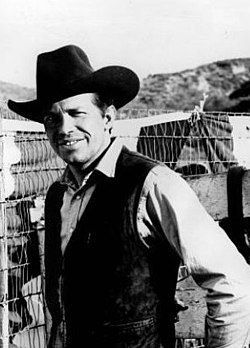

Warren Oates
View on Wikipedia
Warren Mercer Oates (July 5, 1928 – April 3, 1982) was an American actor best known for his performances in several films directed by Sam Peckinpah, including The Wild Bunch (1969) and Bring Me the Head of Alfredo Garcia (1974). Another of his most acclaimed performances was as officer Sam Wood in In the Heat of the Night (1967).
Key Information


Oates starred in numerous films during the early 1970s that have since achieved cult status, such as The Hired Hand (1971), Two-Lane Blacktop (1971), Cockfighter (1974) and Race with the Devil (1975). Oates portrayed John Dillinger in the biopic Dillinger (1973) and as the supporting character U.S. Army Sergeant Hulka in the military comedy Stripes (1981). Another notable appearance was in the classic New Zealand film Sleeping Dogs (1977), in which he played the commander of the American forces in the country.
Early life
[edit]Warren Oates was born and reared in Depoy, a tiny rural community in Muhlenberg County, Kentucky, located just a few miles west of Greenville, the county seat. According to the federal census of 1940, he was the younger of two sons born to Sarah Alice (née Mercer) and Bayless Earle Oates, who owned a general store.[1][2][3] His brother, Gordon, was five years his senior.[3]
On his father's side, Warren was of English, Scottish, and Welsh ancestry. He attended Louisville Male High School in Louisville, Kentucky, until 1945, but did not graduate from that institution. He later earned a high-school equivalency diploma. After high school, he enlisted in the United States Marine Corps for two years (1946–1948), serving in its air wing as an aircraft mechanic and reaching the rank of corporal.[4]
Oates became interested in theater while attending the University of Louisville, where in 1953, he starred in several plays produced by the school's Little Theater Company. Four years later, in New York City, he got an opportunity to star in a live production of the television series Studio One.[5]
Career
[edit]Oates moved to Los Angeles, where in the 1950s, he began to establish himself in guest roles in weekly television Westerns, including Wagon Train, Tombstone Territory, Buckskin, Rawhide, Trackdown, Tate, The Rebel, Wanted Dead or Alive, The Virginian, Have Gun – Will Travel, Lawman, The Big Valley, Bat Masterson, and Gunsmoke.
In the episode "Subterranean City" (October 14, 1958) of the syndicated Rescue 8, Oates played a gang member, Pete, who is the nephew of series character Skip Johnson (Lang Jeffries). In the story line, rescuers Johnson and Wes Cameron (Jim Davis) search for a lost girl in the sewer tunnels and encounter three criminals hiding out underground. Pete soon breaks with his gang companions and joins the firemen Wes and Skip in locating the missing child.[6]
In 1961, Oates guest-starred in the episode "Artie Moon" in NBC's The Lawless Years crime drama about the 1920s. In 1962, he appeared as Ves Painter in the short-lived ABC series Stoney Burke, co-starring Jack Lord, a program about rodeo contestants.
Oates also played in a number of guest roles on The Twilight Zone (in "The Purple Testament" and "The 7th Is Made Up of Phantoms" S5 E10 1963, in which he costarred with Randy Boone and Ron Foster), The Outer Limits ("The Mutant" [1964]), Combat! ("The Pillbox" [1964]) and Lost in Space ("Welcome Stranger" [1965]). During the 1960s and 1970s, he guest-starred on such shows as Twelve O'Clock High ("The Hotshot" [1965]), Lancer, and The Virginian. While making a guest appearance on a segment of the Western television series Dundee and the Culhane, Oates managed to steal the show with his off-camera antics and bloopers that had everyone on the set rolling. After a long day of filming, he headed over and set his footprints in concrete along with all the other stars who appeared at Apacheland Movie Ranch.[7]
"There were 40 [Western] series, and I went from one to the other. I started out playing the third bad guy on a horse and worked my way up to the number-one bad guy," Oates once quipped.[8] Oates did play the good guy once as Deke Bassop in the title role of the episode “The Bassops” on Gunsmoke in 1964.
Oates first met Peckinpah when he played a variety of guest roles in The Rifleman (1958–1963), a popular television series co-created and sometimes directed by Peckinpah. He also played a supporting role in Peckinpah's short-lived series The Westerner in 1960.[9] The collaboration continued as he worked in Peckinpah's early films Ride the High Country (1962) and Major Dundee (1965) and resulted in two of his most famous film roles.
In the 1969 Western classic The Wild Bunch, he portrayed Lyle Gorch, a long-time outlaw who chooses to die with his friends during the film's violent conclusion. According to his wife at the time, Teddy, Oates had the choice of starring in Support Your Local Sheriff!, to be filmed in Los Angeles, or The Wild Bunch in Mexico. "He had done Return of the Seven in Mexico; he got hepatitis, plus dysentery, but off he went again with Sam [Peckinpah]. He loved going on location. He loved the adventure of it. He had great admiration for Sam."
In Bring Me the Head of Alfredo Garcia, the dark 1974 action/tragedy also filmed in Mexico, Oates played the lead role of Bennie, a hard-drinking, down-on-his-luck musician and bartender hoping to make a final score. The character was reportedly based on Peckinpah. For authenticity, Oates wore the director's sunglasses while filming scenes of the production.
Although the Peckinpah film roles are his best-known, his most critically acclaimed role is GTO in Monte Hellman's 1971 cult classic Two-Lane Blacktop. The film, although a failure at the box office, is studied in film schools as a treasure of the 1970s, in large part due to Oates' performance. Film critic Leonard Maltin remarked that Oates' performance as GTO was as good as any he had seen and should have won the Oscar.[10]
Oates had a close relationship with Hellman, and worked with him on three other films: the western film The Shooting (1966), co-starring a young Jack Nicholson, Cockfighter (1974), and China 9, Liberty 37 (1978), in which Peckinpah, who was also a friend of Hellman's, featured in a rare acting role. Oates' wife Teddy said, "Sam Peckinpah and Monte Hellman were the two directors with whom Warren would work anytime, anywhere."[11]
.jpg)
In addition to Peckinpah and Hellman, Oates worked with several major directors of his era, including Leslie Stevens in the 1960 film Private Property, his first starring role; Norman Jewison in In the Heat of the Night (1967); Joseph L. Mankiewicz in There Was a Crooked Man... (1970); John Milius in Dillinger (1973); Terrence Malick in Badlands (1973); Philip Kaufman in The White Dawn (1974); William Friedkin in The Brink's Job (1978); and Steven Spielberg in 1941 (1979).
He appeared in the Sherman Brothers' musical version of Tom Sawyer (1973), as Muff Potter, the town drunk. He also starred in The Rise and Fall of Legs Diamond (1960), Return of the Seven (1966), The Split (1968), The Thief Who Came to Dinner (1973), Drum (1976), and played the title role in a 1971 crime drama, Chandler. Oates costarred three times with friend Peter Fonda in The Hired Hand (1971), Race with the Devil (1975), and 92 in the Shade (1975).
Oates was cast in Roger Donaldson's 1977 New Zealand film Sleeping Dogs together with New Zealand actor Sam Neill. A political thriller with action film elements, Sleeping Dogs follows the lead character "Smith" (Neill) as New Zealand plunges into a police state, as a fascist government institutes martial law after industrial disputes flare into violence. Smith gets caught between the special police and a growing resistance movement, and reluctantly becomes involved. Oates plays the role of Willoughby, commander of the American forces stationed in New Zealand and working with the New Zealand fascist government to find and subdue "rebels" (the resistance movement).
A year before his death, Oates costarred with Bill Murray in the 1981 military comedy Stripes. In the role of the drill sergeant, Sgt. Hulka, Oates played the straight man to Murray's comedic character. The film was a huge financial success, earning $85 million at the box office. In 1982, he costarred opposite Jack Nicholson in director Tony Richardson's The Border.
In 1981, Oates also costarred as a fanatical Southern preacher-turned-Confederate officer in The Blue and the Gray, a CBS TV miniseries that aired in November 1982. His last two films were not released until 1983: Blue Thunder and Tough Enough, both filmed in late 1981. Both films are dedicated to him, along with Monte Hellman's 1988 film Iguana, which ends with the titles "For Warren".
Death
[edit]Oates was ill with influenza in the weeks before his death.[12] On April 3, 1982, at the age of 53, he died of a heart attack while taking an afternoon nap at his home in Los Angeles, after having experienced chest pains and shortness of breath earlier that day.[8] An autopsy determined that he had chronic obstructive pulmonary disease.[12] After his funeral, in accordance with Oates' wishes, his body was cremated and his ashes were scattered at his ranch in Montana.[12]
Legacy
[edit]Oates has a dedicated cult following because of his performances in Peckinpah's studio films and television shows, Monte Hellman's independent works, his films with Peter Fonda, and in a number of B movies from the 1970s.[13][14] During a screening of Hellman's Two-Lane Blacktop, Richard Linklater introduced the film, and gave 16 reasons why viewers should love it. The sixth was: "Because there was once a god who walked the Earth named Warren Oates."[5]
The documentary film Warren Oates: Across the Border was produced by Tom Thurman in 1993 as a tribute to the actor's career.
Oates was the subject of a 2009 biography, Warren Oates: A Wild Life, written by Susan Compo.[12]
Filmography
[edit]Films
[edit]Television films
[edit]| Year | Title | Role | Notes |
|---|---|---|---|
| 1968 | Something for a Lonely Man | Angus Duren | |
| 1970 | The Movie Murderer | Alfred Fisher | |
| 1971 | The Reluctant Heroes of Hill 656 | Corporal Leroy Sprague | |
| 1977 | The African Queen | Captain Charlie Allnut | |
| 1978 | True Grit: A Further Adventure | Reuben J. 'Rooster' Cogburn | |
| 1979 | And Baby Makes Six | Michael Kramer | |
| My Old Man | Frank Butler | ||
| 1980 | Baby Comes Home | Michael Kramer |
Television
[edit]- 1956 The United States Steel Hour ("Operation Three R's") as Private Lear
- 1956 The Big Story ("Reunion") as Danny (Adult)
- 1957 Kraft Television Theatre ("Gun at a Fair One") as Milkman
- 1956–1958 Westinghouse Studio One as 2nd Card Player
- 1958–1967 Gunsmoke as Al Tresh / Chris Kelly / Deke Bassop / Speeler / Lafe / Tate Crocker / Billy 'Sweet Billy' Cathcart / Jep Galloway / Jed Hakes / Seth Pickett
- 1958–1961 Wanted Dead Or Alive as Jesse Cox / Billy Clegg / George Aswell / Clem Robinson. Note: wrongly credited as "Warren Oats" as Jesse Cox in "Die by the Gun," Season 1, Episode 14, first aired 12/6/1958.
- 1958 Rescue 8 ("Subterranean City") as Pete
- 1958 The Adventures of Rin Tin Tin ("The Epidemic") as Deke
- 1958 Playhouse 90 ("Seven Against The Wall") as Ted Ryan
- 1958 Black Saddle ("Client: Steele") as Deputy Simms
- 1958–1960 Tombstone Territory as Joe Clinton / Bob Pickett / Vic Reel
- 1958–1960 Have Gun – Will Travel as John Bosworth / Harrison
- 1959 Buckskin ("Charlie, My Boy") as Charlie
- 1959 The Rough Riders ("The Rifle") as Frank Day
- 1959 Trackdown as 'Lute' Borden / Kelly Hooker / Deputy Norvil
- 1959 Wagon Train ("The Martha Barham Story") as Private Silas Carpenter
- 1959 The Rebel ("School Days") as Troy Armbruster
- 1959–1961 Bat Masterson as Sonny Parsons / 'Cat' Crail
- 1960 Hotel de Paree ("Hard Luck for Sundance") as Charlie Aiken
- 1960 Bronco ("Every Man a Hero") as Private Hurd Maple
- 1960–1965 Rawhide as Marco / Charlie 'Rabbit' Waters / Weed / Jesse Gufler
- 1960 Johnny Ringo ("Single Debt"), as Burt Scanlon
- 1960 Tate ("Before Sunup) as Cowpoke
- 1960 Wrangler ("Affair at the Trading Post") as Shep Martin
- 1960 Outlaws ("Thirty a Month") as Bill Hooton
- 1960 The Westerner ("Jeff") as Drunk
- 1960 Lawman ("The Second Son") as Al May
- 1960 Hawaiian Eye ("The Contenders") as Al
- 1960 Michael Shayne ("Murder 'Round My Wrist") as Frank Hobbes
- 1960 The Case of the Dangerous Robin ("Baubles and Bullets") as Unknown
- 1961–1962 Target: The Corruptors! ("Mr. Megalomania" and "Journey into Mourning") as Unknown
- 1961 Bat Masterson ("Members of Mimbres") as 'Cat' Craig, JB Villain
- 1961 Laramie ("Two for the Gallows") as Pete Dixson
- 1961 Stagecoach West as Billy Joe / Trooper Haig / Tom Lochlin
- 1961 The Lawless Years ("Artie Moon") as Charlie Brown
- 1961 The Dick Powell Show ("Somebody's Waiting") as Bruno
- 1958–1962 The Rifleman ("The Day of Reckoning", "The Marshall", "Bloodlines", "The Prodigal") as Willie Breen / Andrew Sheltin / Jed Malakie
- 1960–1962 Thriller ("Knock Three-One-Two" & "The Hollow Watcher") as Unknown
- 1960–1962 77 Sunset Strip as 'Dink' Strahman / Orville
- 1962 Bonanza ("The Mountain Girl") as Paul Magruder
- 1962 The Untouchables ("Pressure") as Artie Krebs
- 1962–1963 Stoney Burke as Ves Painter (Oates' only regular role on a television series)
- 1963 The Twilight Zone "The Purple Testament" & "The 7th Is Made Up of Phantoms" as Unknown
- 1963 The Travels of Jaimie McPheeters ("The Day of the First Suitor") as Eldon Bishop
- 1963–1966 The Virginian as Corbie / Roy Judd / Bowers / Buxton
- 1964 Combat! ("The Pillbox") as Soldier Stark
- 1964 The Outer Limits ("The Mutant") as Reese Fowler
- 1964 The Fugitive ("Devil's Carnival" & "Rat in a Corner") as Hanes McClure / Herbie Grant
- 1964 The Reporter ("No Comment") as Mickroe
- 1965 Bob Hope Presents the Chrysler Theatre ("The War" & "Eric Kurtz") as Joe Grover
- 1965 Branded ("Judge Not") as Pierce / Frank
- 1965 A Man Called Shenandoah ("The Fort") as Sergeant Ryder
- 1965 Slattery's People as Eugene Henson / Stu Burns
- 1965 Twelve O'Clock High as Lieutenant Colonel Troper
- 1965 Lost in Space ("Welcome Stranger") as Jimmy Hapgood
- 1965–1966 The Big Valley as Korby Kyles / Duke
- 1966 The Monroes as Nick Beresford
- 1966 Shane as Kemp Spicer
- 1967 Dundee and the Culhane as Lafe Doolin
- 1967 The Iron Horse as Hode Avery
- 1967 Cimarron Strip as Mobeetie
- 1968 Run for Your Life as Deputy Potter
- 1968 Disneyland as John Blythe
- 1969–1970 Lancer as Sheriff Val Crawford / Drago
- 1971 The F.B.I. as Richie Billings
- 1971 The Name of the Game as John Lew Weatherford
- 1978 Black Beauty as Jerry Barker
- 1973 Police Story as Richey Neptune
- 1979 Insight as Unknown
- 1981 East of Eden (Miniseries) as Cyrus Trask
- 1982 The Blue and the Gray as Major 'Preacher' Welles (released posthumously)
- 1985 Tales of the Unexpected as Harry (filmed in 1981; released posthumously; final role)
References
[edit]- ^ "Kentuckian Warren Oates Got His Big Break in 1954". Archived from the original on July 22, 2011. Retrieved April 24, 2008.
- ^ Jesse Oates, retrieved July 27, 2019
- ^ a b "Sixteenth Census of the United States: 1940". Depoy, Muhlenberg County, Kentucky, April 4, 1940. Bureau of the Census, United States Department of Commerce, Washington, DC. Digital copy of original enumeration page available on Family Search, a genealogical database provided as a public service by The Church of Jesus Christ of Latter-day Saints, Salt Lake City, Utah. Retrieved July 19, 2017.
- ^ Obituaries, Warren Oates. The New York Times via Internet Archive. Retrieved February 19, 2020.
- ^ a b "Tedstrong, Warren Oates". tedstrong.com. 2002. Archived from the original on July 22, 2011. Retrieved August 3, 2007.
- ^ "Subterranean City, Rescue 8, October 14, 1958". Internet Movie Database. Retrieved January 29, 2013.
- ^ "Warren Oates". apacheland.com. Archived from the original on March 18, 2016.
- ^ a b "Actor Warren Oates Dies", Minden Press-Herald, Minden, Louisiana, April 5, 1982, p. 8
- ^ Weddle, David (1994). If They Move...Kill 'Em!. Grove Press. pp. 153–154. ISBN 0-8021-3776-8.
- ^ Weddle, David (1994). If They Move...Kill 'Em!. Grove Press. p. 321. ISBN 0-8021-3776-8.
- ^ Weddle, David (1994). If They Move...Kill 'Em!. Grove Press. p. 321. ISBN 0-8021-3776-8.
- ^ a b c d Compo, Susan (March 9, 2010). Warren Oates: A Wild Life. University Press of Kentucky. ISBN 978-0813193465.
- ^ "The Films of Monte Hellman". Retrieved August 3, 2007.
- ^ "Monte Hellman: In His Own Words". Archived from the original on September 27, 2011. Retrieved August 3, 2007.
External links
[edit]


Warren Oates
View on GrokipediaEarly life
Family and childhood
Warren Oates was born on July 5, 1928, in Depoy, a tiny rural community in Muhlenberg County, Kentucky, as the younger of two sons to Bayless Earle Oates and Sarah Alice (née Mercer).[5] His father owned and operated a general store in the area, while his mother managed the household.[6] The family resided in the predominantly coal-mining region of western Kentucky, where Oates spent his early years immersed in a close-knit, hardscrabble rural environment during the Great Depression.[7] Oates' older brother, Gordon Foster Oates, was five years his senior, and the siblings grew up sharing the challenges and simplicities of small-town life in Depoy.[8] The family's modest circumstances reflected the economic realities of the time, with Bayless Oates' store serving as a community hub amid the fluctuations of local mining and farming activities.[7] This setting fostered Oates' early awareness of regional folklore and oral traditions, which later influenced his affinity for authentic, character-driven storytelling in his performances. In his adolescence, around age 13, the Oates family relocated to the Louisville area in search of improved educational and economic prospects.[9] The move marked a transition from isolated rural existence to urban opportunities, though Oates retained a lifelong connection to his Kentucky roots and the unpretentious values instilled during his formative years in Depoy.[7]Education and military service
Warren Oates attended a two-room schoolhouse for elementary education in Depoy, Muhlenberg County, Kentucky, where he was born and raised in a rural setting that later influenced his grounded on-screen persona.[10] His family relocated to Louisville when he was around age 13, leading him to enroll in Eastern Junior High School and subsequently Louisville Male High School.[10][5] At high school, Oates maintained average academic performance but developed a strong interest in drama, influenced by the local theater scene, though he dropped out in 1946 due to poor grades.[10] After his discharge from the military, Oates enrolled at the University of Louisville around 1950, where he studied drama and appeared in several student plays, further honing his skills before dropping out again to pursue acting.[2][10] In July 1946, at age 18, Oates enlisted in the United States Marine Corps, serving until 1948 as an aircraft mechanic and attaining the rank of corporal.[11] His military experiences, including rigorous discipline and opportunities for travel, built his resilience and sense of discipline, shaping the tough, authentic characters he would later portray.[10][11] Upon his discharge in 1948, Oates returned to Louisville and immersed himself in amateur theater through university and community groups, where his performances solidified his commitment to an acting career.[10]Career
Early work in theater and television
After completing his military service in the United States Marine Corps, Oates moved to New York City in 1954 to pursue acting professionally. He enrolled in classes at the HB Studio, where he trained in method acting alongside notable peers and developed a disciplined approach to character work that drew on his military background for focus and resilience.[12] His initial stage experience came through off-Broadway productions in the mid-1950s, providing essential groundwork in live performance and ensemble dynamics before transitioning to screen work. A notable stage role came in 1965 when he portrayed Randall P. McMurphy in a Hollywood production of One Flew Over the Cuckoo's Nest.[13] Oates relocated to Hollywood later that decade, making his screen debut in small, uncredited film roles while prioritizing television opportunities to build his resume. His earliest credited television appearance was as Harris in an episode of Private Secretary in 1954, marking the start of a steady stream of guest spots.[14][15] Throughout the 1950s and into the 1960s, Oates established himself as a staple in television Westerns, often portraying rugged outlaws, ranch hands, or lawmen that showcased his raw intensity and authenticity. He appeared in multiple episodes of The Range Rider from 1954 to 1955, had recurring roles across ten installments of Gunsmoke between 1957 and 1965—including standout performances as volatile antagonists—and contributed to Rawhide in episodes spanning 1959 to 1966. These parts, drawn from the era's popular oaters, solidified his foundation as a dependable character player capable of conveying moral ambiguity and frontier grit.[14][15] As his television career progressed, Oates expanded into anthology series, refining his ability to embody complex tough-guy archetypes in shorter formats. He featured in Alfred Hitchcock Presents in 1958, delivering tense portrayals in suspense-driven stories, and appeared in the 1963 Twilight Zone episode "The 7th Is Made Up of Phantoms," where he played a haunted soldier, demonstrating his knack for psychological depth amid supernatural elements.[14]Film breakthrough and notable roles
Oates's first credited film role was as a corporal in the Western Yellowstone Kelly (1959), directed by Gordon Douglas, following an uncredited debut in Up Periscope (1959). His early career featured supporting parts that highlighted his raw intensity, such as the dim-witted drifter Boots in the independent thriller Private Property (1960), a psycho-sexual drama that showcased his ability to convey menace and vulnerability.[16] He followed with the role of Wayte Giddens, a loyal servant in the adventure film Hero's Island (1962), directed by Leslie Stevens, further building his presence in low-budget productions. His breakthrough came in Sam Peckinpah's Ride the High Country (1962), where he played one of the Hammond brothers, earning praise for his naturalistic performance.[2] A pivotal role came with Oates's performance as Officer Sam Wood in Norman Jewison's Oscar-winning racial drama In the Heat of the Night (1967), where he portrayed a bigoted yet complex small-town officer involved in a tense murder investigation; critics noted his effective depiction of the character's voyeuristic flaws and underlying unease.[17] Throughout the 1970s, Oates solidified his reputation with memorable character roles in revisionist Westerns and cult classics. He played the volatile outlaw Lyle Gorch in Sam Peckinpah's landmark The Wild Bunch (1969), contributing to the film's brutal ensemble dynamic during its iconic violent climax.[18] In Monte Hellman's existential road film Two-Lane Blacktop (1971), Oates excelled as the fast-talking, unreliable driver G.T.O., infusing the character with authentic humor and pathos amid a cross-country race.[18] He portrayed the steadfast ranch hand Arch Harris in Peter Fonda's meditative Western The Hired Hand (1971), the charismatic bank robber John Dillinger in John Milius's biopic Dillinger (1973), and the obsessive bounty hunter Bennie in Peckinpah's gritty Bring Me the Head of Alfredo Garcia (1974), a role blending determination, tenderness, and self-destruction.[18] In his later years, Oates demonstrated versatility in comedy as the no-nonsense drill sergeant Sgt. Hulka in Ivan Reitman's Stripes (1981), stealing scenes opposite Bill Murray with his gruff authority. His final performances appeared posthumously in Tough Enough (1983), where he played a boxing promoter, and Blue Thunder (1983), as a weary police captain in the action thriller.[18]Collaborations with key directors
Warren Oates developed an extensive professional relationship with director Sam Peckinpah, appearing in six of his films: Ride the High Country (1962), The Wild Bunch (1969), The Ballad of Cable Hogue (1970), Junior Bonner (1972), Bring Me the Head of Alfredo Garcia (1974), and The Killer Elite (1975). These collaborations often cast Oates as rugged, morally ambiguous figures—such as the volatile Lyle Gorch in The Wild Bunch and the obsessive bounty hunter Bennie in Bring Me the Head of Alfredo Garcia—that exemplified Peckinpah's exploration of anti-heroes grappling with violence and obsolescence in a changing American West. Their partnership, marked by mutual respect amid intense, alcohol-fueled on-set dynamics, elevated Oates from supporting roles to leads, though it ended in a rift before Peckinpah's uninvited attendance at Oates' funeral in 1982.[19][20] Oates also formed a significant partnership with independent filmmaker Monte Hellman, starring in three key projects: The Shooting (1966), Two-Lane Blacktop (1971), and Cockfighter (1974). This collaboration helped shape Hellman's signature minimalist aesthetic in existential road movies and character-driven dramas, with Oates delivering understated performances as enigmatic drifters and obsessive loners, such as the deceptive driver in Two-Lane Blacktop and the near-silent cockfighter Frank Mansfield. Hellman, who first cast Oates after seeing his stage work, credited him with a confident sense of his acting identity and natural ability to contribute to storytelling without heavy direction.[19][21] Beyond these core alliances, Oates worked with other influential directors, including Arthur Penn in the neo-noir thriller Night Moves (1975), where he portrayed the shady investigator Harry Moseby; John Milius in the biographical crime film Dillinger (1973), embodying the charismatic bank robber John Dillinger; and Richard Rush in the psychedelic counterculture picture Psych-Out (1968) and the meta-cinematic satire The Stunt Man (1980). These one-off partnerships showcased Oates' versatility across genres, from gritty realism to hallucinatory ensemble pieces.[19] Throughout these collaborations, directors consistently praised Oates for his raw authenticity, improvisational flair, and skill in portraying complex anti-heroes who operated on the fringes without seeking conventional stardom. Hellman, for instance, selected Oates for roles where his innate humor and enigmatic presence could enhance sparse narratives, while Peckinpah relied on his reliability in chaotic productions to bring depth to flawed, everyman outlaws. This reputation for grounded, intuitive performances solidified Oates' niche as an actor's actor in New Hollywood's revisionist era.[19][21][20]Personal life
Marriages and relationships
Warren Oates was married four times, with each union reflecting aspects of his dynamic personal life amid a demanding acting career. His first marriage, to Roberta "Bobbie" Ellis in 1957, lasted only two years and ended in divorce in 1959 with no children from the union.[12] Oates' second marriage was to model Teddy Louise Farmer on August 22, 1959, after meeting her in Hollywood where she had moved to pursue her career. The couple had two children, Jennifer (born 1960) and Timothy (born 1964), but the relationship strained under the pressures of Oates' increasing commitments to theater and early television work, leading to their divorce on November 7, 1966.[22][10] In 1969, Oates married British actress and playwright Vickery Turner, whom he met during the production of the film Crooks and Coronets. Their marriage, from June 21, 1969, to November 16, 1974, was turbulent, influenced by differing lifestyles—Oates' hard-partying Hollywood routine clashing with Turner's more structured background—and his frequent absences for film shoots, resulting in divorce with no children together.[23][9] Oates' final marriage, to Judy Ann Jones on August 24, 1977, came through introductions by mutual friends in the industry and marked a period of greater stability as he focused more on family amid later career successes. The couple welcomed two children, daughter Torey (born 1979) and son Cody (born 1980), and remained together until Oates' death, providing a grounding influence during his intense professional years.[24][25]Family and children
Warren Oates fathered four children across his marriages. With his second wife, Teddy Louise Farmer, he had a daughter, Jennifer, born in 1960, and a son, Tim, born in 1964.[22] With his fourth wife, Judy Jones, he had a daughter, Torey, born in 1979, and a son, Cody, born in 1980.[24] Oates remained close to his extended family throughout his life, particularly his older brother Gordon, with whom he shared a strong bond rooted in their Kentucky upbringing; Gordon assisted in preserving Oates's legacy after his death.[26] His parents, Bayless Earle Oates, a general store owner, and Sarah Alice Mercer, offered familial support until Bayless's death in 1950 and Sarah's in 1963.[27][28] In his later years, Oates balanced his acting commitments by splitting time between a home in Los Angeles and a ranch in Montana's Paradise Valley, using the property as a retreat to focus on family amid his demanding schedule and health issues.[29]Death and legacy
Death
Warren Oates suffered a sudden heart attack on April 3, 1982, at the age of 53, while at his home in the Hollywood Hills section of Los Angeles.[2] He had retired for an afternoon nap after experiencing chest pains and was found unconscious by his wife, Judy Oates.[4] Paramedics arrived but were unable to revive him, pronouncing him dead at the scene.[2] An autopsy conducted the following Monday by Dr. Ronald Kornblum, chief of forensic medicine for Los Angeles County, confirmed the cause of death as a coronary event due to natural causes.[4] The examination also revealed chronic obstructive pulmonary disease and emphysema, conditions attributed to decades of chain smoking both on and off screen.[30] Oates had been ill with influenza in the weeks leading up to his death, and his lifestyle—including heavy drinking amid the high-pressure Hollywood environment of the 1970s—likely exacerbated his health decline, though friends noted he was not a major user of illicit drugs and had moderated substance use by the early 1980s.[31][30] In keeping with Oates' wishes, a private funeral service was held for family and close friends, after which his body was cremated and the ashes scattered across his ranch in Montana.[32][9] Oates' death elicited immediate tributes in the press, with The New York Times obituary on April 5, 1982, lauding him as an underrated character actor whose naturalistic performances illuminated films like Easy Rider, In the Heat of the Night, and Dillinger.[2] The industry expressed shock at the loss, particularly given his rising visibility from the 1981 hit comedy Stripes, where he played the memorable drill sergeant Sgt. Hulka opposite Bill Murray.[33]Legacy
Warren Oates garnered a dedicated cult following for his portrayals of complex anti-heroes during the New Hollywood era, where his raw, unpolished authenticity brought depth to roles in gritty, revisionist films that challenged traditional Hollywood narratives. Films like Two-Lane Blacktop (1971) and The Hired Hand (1971) exemplify his ability to embody morally ambiguous characters with understated intensity, contributing to their enduring status as cult classics among cinephiles.[34] A pivotal scholarly work on Oates is the biography Warren Oates: A Wild Life (2009) by Susan Compo, which offers a detailed portrait of his life and career through extensive interviews with colleagues, family, and archival materials, highlighting his off-screen charisma and professional dedication. The book underscores his underappreciated contributions to American cinema, positioning him as a quintessential figure of the era's independent spirit.[20] Posthumous recognitions include the documentary Warren Oates: Across the Border (1993), directed by Tom Thurman, which features film clips, interviews with directors like Sam Peckinpah and Monte Hellman, and insights from Oates' collaborators to celebrate his legacy as a character actor.[35] His performances in Westerns, such as Lyle Gorch in The Wild Bunch (1969), have been honored through inclusions in American Film Institute (AFI) compilations, including the film's ranking on AFI's 100 Years...100 Movies list, affirming his role in landmark genre works.[36] In 2021, a retrospective at Lincoln Center highlighted Oates' films, including Two-Lane Blacktop, as part of broader tributes to New Hollywood innovators like Monte Hellman.[34] Oates' modern relevance persists in discussions of 1970s cinema, with recent podcast episodes analyzing his films' thematic depth and stylistic innovations, such as a 2024 installment of The Projection Booth examining Cockfighter (1974) for its portrayal of obsession and masculinity.[37] His uncredited influence extends to indie road movies, where the existential wanderings and character-focused narratives in works like Two-Lane Blacktop have shaped contemporary filmmakers exploring themes of alienation and freedom.[34]Filmography
Films
Warren Oates began his film career with minor and often uncredited roles in Westerns and dramas during the late 1950s and 1960s, gradually building toward more substantial supporting parts that showcased his rugged intensity.[14] Early uncredited and supporting roles (1950s–1960s)- Up Periscope (1959): Played Seaman Kovacs in this World War II submarine drama directed by Gordon Douglas, co-starring James Garner and Edmond O'Brien; an early credited appearance marking his entry into features.
- Yellowstone Kelly (1959): Appeared uncredited as Corporal in Gordon Douglas's Western, co-starring Clint Walker; one of his first Hollywood roles in a frontier tale.[38]
- Private Property (1960): Portrayed Boots, a menacing drifter, in Leslie Stevens's low-budget psychological thriller, co-starring Kate Manx and Corey Allen; highlighted his ability in tense, character-driven indie productions.
- Ride the High Country (1962): As Henry Hammond, a young outlaw, in Sam Peckinpah's acclaimed Western, co-starring Joel McCrea and Randolph Scott; his first collaboration with Peckinpah, earning notice for its poetic violence and marking a career milestone.
- Major Dundee (1965): As O.W. Hadley, a soldier, in Sam Peckinpah's Civil War Western, co-starring Charlton Heston and Richard Harris; an early supporting role in another Peckinpah project.[39]
- In the Heat of the Night (1967): Played deputy Sam Wood in Norman Jewison's Oscar-winning racial drama, co-starring Sidney Poitier and Rod Steiger; a supporting role that demonstrated his skill in authoritative figures.
- The Shooting (1966): As Willett Gashade, a bounty hunter, in Monte Hellman's stark low-budget Western, co-starring Jack Nicholson and Millie Perkins; achieved cult status for its existential tone and minimalist style.[40]
- The Split (1968): As Marty Gough, a criminal associate, in Gordon Flemyng's heist thriller, co-starring Jim Brown and Gene Hackman; a tense supporting role in a crime ensemble.
- The Wild Bunch (1969): Portrayed Lyle Gorch, a bandit, in Sam Peckinpah's groundbreaking violent Western, co-starring William Holden, Ernest Borgnine, and Robert Ryan; a pivotal supporting role in a seminal film that redefined the genre.[41]
- Crooks and Coronets (1969): As Marty Miller, an American criminal, in Jim O'Connolly's comedy-crime film (also known as Sophie's Place), co-starring Telly Savalas and Cesar Romero; a lighthearted supporting turn.
- There Was a Crooked Man... (1970): As Floyd Moon, an escaped convict, in Joseph L. Mankiewicz's prison drama, co-starring Kirk Douglas and Henry Fonda; showcased his charismatic villainy.[42]
- Barquero (1970): Played Jake Remy in Gordon Douglas's gritty Western, co-starring Lee Van Cleef and Forrest Tucker; a B-movie that highlighted his tough-guy persona.[43]
- The Hired Hand (1971): As Arch Harris, a ranch hand, in Peter Fonda's meditative Western, co-starring Peter Fonda and Karen Black; contributed to its lyrical exploration of freedom and regret.
- Two-Lane Blacktop (1971): Lead as G.T.O., a mysterious driver, in Monte Hellman's existential road film, co-starring James Taylor and Laurie Bird; a cult classic embodying 1970s counterculture ennui.
- Chandler (1971): Lead as the titular private eye in Paul Mayersberg's neo-noir, co-starring Leslie Caron; a rare starring vehicle that underperformed but displayed his brooding depth.
- The Thief Who Came to Dinner (1973): As Dave Reilly, a computer expert turned thief, in Bud Yorkin's comedy, co-starring Ryan O'Neal and Jacqueline Bisset; a lighter role in a caper film.[44]
- Badlands (1973): Played Holly's Father in Terrence Malick's poetic crime drama, co-starring Martin Sheen and Sissy Spacek; a brief but memorable supporting turn in an acclaimed modern classic.[45]
- Kid Blue (1973): As Reese Ford, a former outlaw, in James Frawley's comedic Western, co-starring Dennis Hopper and Peter Boyle; a quirky role in a revisionist frontier tale.
- Dillinger (1973): Lead as John Dillinger in John Milius's energetic gangster biopic, co-starring Ben Johnson and Cloris Leachman; earned praise for his charismatic portrayal of the outlaw.
- Cockfighter (1974): Lead as Frank, a cockfighter seeking redemption, in Monte Hellman's stark drama based on Charles Willeford's novel, co-starring Harry Dean Stanton; a cult favorite for its unflinching look at obsession.
- Bring Me the Head of Alfredo Garcia (1974): Lead as Bennie, a bartender on a deadly quest, in Sam Peckinpah's violent neo-Western, co-starring Isela Vega and Gig Young; a personal favorite of Peckinpah's, gaining cult reverence for its raw intensity.
- 92 in the Shade (1975): As Dance, a fishing guide, in Thomas McGuane's adaptation of his novel, co-starring Peter Fonda and Margot Kidder; a quirky Florida-set drama emphasizing regional eccentricity.
- Race with the Devil (1975): As Frank Stewart, a vacationer pursued by satanists, in Jack Starrett's horror-thriller, co-starring Peter Fonda and Susan Sarandon; a high-energy supporting role in a cult chase film.
- Drum (1976): Portrayed Hammond, a slave owner, in Steve Carver's blaxploitation sequel to Mandingo, co-starring Ken Norton and Pamela Grier; a villainous role in an exploitative period piece.
- Dixie Dynamite (1976): As Mack, a moonshiner, in Lee Frost's action-comedy, co-starring Christopher George and Jane Anne Johnstone; a minor drive-in entry with car chases and Southern flair.[46]
- The White Buffalo (1977): Played Wild Bill Hickok in J. Lee Thompson's fantastical Western, co-starring Charles Bronson and Jack Warden; a bizarre genre hybrid involving a mythical beast.[47]
- China 9, Liberty 37 (1978): Lead as Clayton 'Clay' Beaudry, a gunslinger, in Monte Hellman's spaghetti Western, co-starring Fabio Testi and Jenny Agutter; noted for its atmospheric tension and Oates's weathered authority.[48]
- Straight Time (1978): As Manny, an ex-con's associate, in Ulu Grosbard's crime drama, co-starring Dustin Hoffman and M. Emmet Walsh; a gritty supporting performance in a realistic prison-release story.
- The Brink's Job (1978): Portrayed Specks O'Keefe in William Friedkin's heist comedy, co-starring Peter Falk and Peter Boyle; based on a real 1950 robbery, emphasizing ensemble humor.
- 1941 (1979): As Col. "Madman" Maddox in Steven Spielberg's epic wartime comedy, co-starring John Belushi, Dan Aykroyd, and Tim Matheson; a bombastic supporting role in a chaotic ensemble.
- The Border (1982): Played Red, a corrupt rancher, in Tony Richardson's immigration drama, co-starring Jack Nicholson and Harvey Keitel; addressed border issues with Oates in a sleazy antagonist part.
- Stripes (1981): As Sgt. Hulka, a drill instructor, in Ivan Reitman's military comedy, co-starring Bill Murray and Harold Ramis; a standout comedic role that parodied army life and boosted his mainstream visibility.
- Tough Enough (1983): Lead as James Neese, an aspiring wrestler, in Richard Tuggle's underdog drama, co-starring Dennis Quaid and Stan Shaw; filmed before his death and released posthumously, dedicated to his memory.
- Blue Thunder (1983): Portrayed Capt. Jack Braddock in John Badham's high-tech action thriller, co-starring Roy Scheider and Malcolm McDowell; another posthumous release completed earlier, dedicated to Oates, featuring aerial chases and conspiracy elements.