Recent from talks
Nothing was collected or created yet.
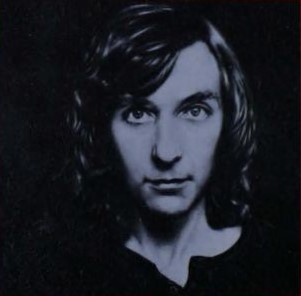
Richard Tandy
View on Wikipedia
This article needs additional citations for verification. (May 2024) |
Key Information
Richard Tandy (26 March 1948 – 1 May 2024) was an English musician. He was the full-time keyboardist in the band Electric Light Orchestra ("ELO").[1] His palette of keyboards (including Minimoog, Clavinet, Mellotron, and piano) was an important ingredient in the group's sound, especially on the albums A New World Record (1976), Out of the Blue (1977), Discovery (1979) and Time (1981). He collaborated musically with ELO frontman Jeff Lynne on many projects, among them songs for the Electric Dreams soundtrack, Lynne's solo album Armchair Theatre and Lynne-produced Dave Edmunds album Information.
Tandy was inducted into the Rock and Roll Hall of Fame in 2017 as a member of Electric Light Orchestra.[2]
Life and career
[edit]Early career
[edit]Tandy was born on 26 March 1948 in Birmingham, Warwickshire and educated at Moseley School, where he first met future bandmate Bev Bevan.[3] Tandy would later be reunited with Bevan in 1968 when he played the harpsichord on The Move's UK number one chart single "Blackberry Way" and briefly joined them live playing keyboards, but switched to bass while regular bassist Trevor Burton was sidelined due to a shoulder injury. When Burton was able to play again, Tandy left to join The Uglys.[4]
ELO
[edit]Tandy joined Electric Light Orchestra (ELO) in 1971, replacing previous bass guitarist Rick Price.[5][6] At this time he also played guitar on live performances and tv appearances by The Move. In 1972, Tandy served as the bassist in the first live line-up of ELO, before becoming the band's full-time keyboardist after the departure of Bill Hunt who left with Roy Wood to form Wizzard. Tandy was featured on every ELO album since then during the band's original existence starting with ELO 2.
Tandy's keyboards were an integral part of ELO's sound, and include piano, Minimoog, Clavinet, Oberheim, Wurlitzer electric piano, Mellotron, Yamaha CS-80, ARP 2600, and harmonium. He was also proficient on guitar. On some albums he is also credited with vocals or backing vocals, without any specification of which songs. Tandy was Jeff Lynne's right-hand man in the studio and co-arranged the strings with Lynne and Louis Clark from Eldorado onwards.[citation needed]
In 2012, Tandy reunited with Lynne to record another ELO project, a live set of the band's biggest hits recorded at Lynne's Bungalow Palace home recording studio, which was broadcast on television.[7] In 2013, Tandy joined Lynne in performing two songs for Children In Need Rocks, "Livin' Thing" and "Mr Blue Sky". He was also part of ELO's set on Radio 2's Festival In A Day in September 2014.
Tandy was absent from Jeff Lynne's ELO 2015 album Alone in the Universe, on which all of the instruments aside from some percussion were played by Lynne, but was featured on the next album From Out of Nowhere where he played a piano solo on the song "One More Time".[8]
Other projects
[edit]In 1984, Richard Tandy formed the Tandy Morgan Band (also known simply as Tandy & Morgan) featuring Dave Morgan and Martin Smith, both of whom had worked with ELO in live concerts. In 1985, the Tandy Morgan Band released the concept album Earthrise. A remastered version was released on CD on the Rock Legacy label in 2011. A follow-up to Earthrise with previously unpublished tracks was released as The BC Collection, containing one track written by Tandy: "Enola Sad".
Tandy also collaborated musically with ELO frontman Jeff Lynne on many projects, among them songs for the Electric Dreams soundtrack, Lynne's solo album Armchair Theatre and Lynne-produced Dave Edmunds album Information.
Equipment
[edit]After permanently switching from bass to keyboards, Tandy's initial onstage setup was of Minimoog synthesizer and Wurlitzer electric piano and occasionally grand piano (as seen on ELO's performance of "Roll Over Beethoven" on The Midnight Special),[9] which he otherwise used mainly in the studio. However, he gradually added more keyboards to his stage and studio rig, including the Hohner clavinet, Mellotron (which was largely relegated to stage use), and other synthesizers, and he began to make more regular use of the grand piano both on stage and in the studio. He also used the Yamaha CS80, ARP 2600, ARP Omni, Polymoog, Micromoog, ARP Quadra, and Oberheim synthesizers from the late 1970s to the early 1980s.[citation needed] Tandy played a harmonium on "Kuiama" on ELO 2.
Personal life and death
[edit]Tandy's first marriage was to Carol "Cookie", a friend of Cleo Odzer,[10] but the marriage ended in divorce; he then[when?] married his second wife, Sheila. Tandy lived variously in Birmingham, France,[11] and Los Angeles,[10] but by the early-to-mid 2010s, he resided in Wales.[12]
Tandy died on 1 May 2024, at the age of 76.[13] Lynne posted a tribute later that day, memorialising him as "a remarkable musician and friend".[14]
Discography
[edit]Albums
[edit]- Earthrise (as Tandy & Morgan) (1985)
- The BC Collection (1992) (as Tandy, Morgan, Smith)
Singles
[edit]- "Berlin" (as R & D a.k.a. Tandy & Morgan) (1984)
- "Action!" (as The Tandy Morgan Band) (1986)
References
[edit]- ^ "Rewired Electric Light Orchestra Hitting The Road". MTV. 13 July 2001. Archived from the original on 25 December 2019. Retrieved 16 November 2013.
- ^ "Inductees: Electric Light Orchestra (ELO)". Rock & Roll Hall of Fame. Archived from the original on 1 August 2022. Retrieved 20 December 2016.
- ^ "Richard Tandy Interview - April 1999". Archived from the original on 26 July 2021.
- ^ Strong, Martin C. (2000). The Great Rock Discography (5th ed.). Edinburgh: Mojo Books. pp. 673–675. ISBN 1-84195-017-3.
- ^ Madarang, Charisma (2 May 2024). "Richard Tandy, ELO Keyboardist, Dead at 76". Rolling Stone. Retrieved 8 June 2024.
- ^ Woodhouse, John R. "Rick Price". Brumbeat. Retrieved 24 June 2024.
- ^ "FULL PERFORMANCE: Jeff Lynne and Richard Tandy reunite for Evil Woman". Youtube. 22 October 2012. Archived from the original on 13 December 2021. Retrieved 16 November 2013.
- ^ "Jeff Lynne's ELO releasing new album, 'From Out of Nowhere,' in November; title track available now". 94.3 Jack FM. Archived from the original on 1 October 2019. Retrieved 1 October 2019.
- ^ Electric Light Orchestra - Roll Over Beethoven. 23 December 2007. Archived from the original on 13 December 2021 – via YouTube.
- ^ a b "Richard Tandy". Archived from the original on 8 August 2022. Retrieved 20 November 2016.
- ^ Scott-Morgan, David (26 October 2014). Patterns in the Chaos. Lulu.com. ISBN 9781291374667. Retrieved 20 November 2016 – via Google Books.
- ^ Cole, Paul (14 March 2014). "ELO's Jeff Lynne: The lad from Birmingham who reunited The Beatles". Business Live. Archived from the original on 25 February 2021. Retrieved 15 September 2022.
- ^ "Richard Tandy obituary: Keyboard player who gave ELO its quasi-symphonic sound". The Times. 6 May 2024. Retrieved 6 May 2024.
- ^ Novak, Lauren (1 May 2024). "Richard Tandy, Keyboardist of ELO Dies at 76". Remind Magazine. Retrieved 1 May 2024.
External links
[edit]- Richard Tandy discography at Discogs
- Richard Tandy at IMDb
Richard Tandy
View on GrokipediaEarly life
Birth and education
Richard Tandy was born on 26 March 1948 in Birmingham, Warwickshire, England.[5] He grew up in the Olton area, a suburb of Birmingham known for its post-war residential communities.[6] Details about Tandy's family background are limited in public records, with no widely documented information on his parents' occupations or siblings.[4] Tandy attended Moseley Grammar School, a grammar school in Birmingham, where he received a standard secondary education focused on academic and extracurricular development.[7] It was during his time at Moseley that he first met future Electric Light Orchestra drummer Bev Bevan.[6]Early musical pursuits
Tandy began formal piano lessons at the age of nine, cultivating a strong interest in keyboards through classical training.[8][9] This early piano foundation would underpin his subsequent professional keyboard proficiency. While attending Moseley Grammar School, Tandy encountered his first electric guitar, which introduced him to the emerging rock and roll scene.[10] He began learning the instrument as a teenager, expanding beyond his piano roots.[11] Before completing his schooling around 1964, Tandy joined his initial local band, The Chantelles, performing guitar in amateur lineups.[8][6][9] In these formative amateur experiences, Tandy experimented as a multi-instrumentalist, incorporating guitar, harmonica, and keyboards while playing jazz-blues styles at pubs and clubs in the Midlands region.[11]Career
Early professional work
Tandy's entry into professional music came in 1968 through his school acquaintance Bev Bevan, the drummer for The Move, leading to a reunion when Bevan invited him to contribute to the band's recordings. That year, Tandy played harpsichord on The Move's single "Blackberry Way," adding a distinctive baroque flourish to the track, which became the band's only UK number-one hit.[12] He also filled in on bass guitar for several live performances while regular bassist Trevor Burton recovered from a shoulder injury sustained earlier in 1968, marking Tandy's initial session and touring role with the group.[2] Following Burton's recovery later in 1968, Tandy briefly continued as a session musician for The Move in 1969 before departing to join the Birmingham-based band The Uglys, where he performed on guitar and bass in the vibrant Midlands rock scene.[6] During this period, Tandy honed his skills across multiple instruments, transitioning from his early focus on guitar and bass—rooted in local club gigs around Birmingham—to an emerging emphasis on keyboards amid the late 1960s psychedelic and progressive influences.[6] These engagements helped establish his reputation as a versatile multi-instrumentalist in the regional music circuit, including appearances at clubs like the Marquee in London during his Move stint.[13] Tandy rejoined The Move in 1971 as a more formal member, contributing on guitar, bass, and keyboards through 1972, including on tracks from their final album Message from the Country.[13] This second brief tenure solidified his professional connections in the evolving Birmingham sound, bridging his session work with future orchestral rock endeavors, while local performances continued to showcase his adaptability in the competitive Midlands club environment.[6]Electric Light Orchestra
Richard Tandy joined the Electric Light Orchestra (ELO) in 1972, shortly after the release of the band's debut album, initially serving as bassist while also contributing on keyboards.[4] This transition came through his prior connection to drummer Bev Bevan from their time in The Move.[3] By mid-1972, following the departure of multi-instrumentalist Bill Hunt, Tandy shifted to full-time keyboards, becoming a core member alongside Jeff Lynne and Bevan.[14] Tandy participated in every ELO studio album from ELO 2 (1973) through Balance of Power (1986), providing keyboards and arrangements that defined the band's orchestral rock sound.[3] His contributions spanned key releases like On the Third Day (1973), Eldorado (1974), Face the Music (1975), A New World Record (1976), Out of the Blue (1977), Discovery (1979), Xanadu (1980), Time (1981), Secret Messages (1983), and the final original album.[14] Notably absent from the 1971 debut No Answer and the 2015 release Alone in the Universe, Tandy's consistent presence helped evolve ELO from progressive experimentation to pop accessibility during their commercial peak in the 1970s.[4] In live settings, Tandy performed on ELO's early 1970s tours, handling both bass and keyboards during the band's initial international outings starting in 1972.[14] He rejoined for subsequent reunions under Jeff Lynne's ELO, including the 2001 Zoom Tour and the 2014–2016 tours, though health issues limited his involvement starting in 2017.[3][14] Tandy also offered vocal support throughout ELO's catalog, delivering backing vocals on major hits such as "Mr. Blue Sky" from Out of the Blue.[4][14] His harmonies complemented Lynne's leads, enhancing the layered, Beatles-inspired vocal textures that became a hallmark of ELO's recordings.[3]Later collaborations
Following the dissolution of the original Electric Light Orchestra lineup in 1986, Richard Tandy formed the short-lived Tandy Morgan Band with Dave Morgan and released the album Earthrise that year. He continued to collaborate closely with Jeff Lynne on various projects outside the band's core activities, including contributions to productions for artists like Dave Edmunds and the Everly Brothers. In 1984, prior to the band's full disbandment, Tandy contributed keyboards to the soundtrack for the film Electric Dreams, co-produced by Lynne, including synthesizer parts on tracks such as "Video!" and "Let It Run," where he also served as assistant producer.[15][16] Tandy's partnership with Lynne extended into the 1990s, marked by his keyboard work on Lynne's debut solo album Armchair Theatre (1990), where he provided acoustic guitar and synthesizer contributions across several tracks.[17] He also played piano on George Harrison's single "Cheer Down" (1989), a Lynne-produced track from Harrison's album Cloud Nine, adding subtle melodic support to the song's upbeat rhythm section.[18] Similarly, Tandy contributed piano to Julianna Raye's debut album Something Peculiar (1992), another Lynne production, enhancing the record's pop-rock arrangements with his signature keyboard textures.[19] In the post-2000 era, Tandy participated in sporadic ELO reunion efforts led by Lynne, including live performances and tours such as the 2001 promotion for the Zoom album, though he did not commit to new full-length studio recordings with the group.[20] These appearances allowed Tandy to reprise his foundational keyboard role in ELO's sound during select live dates, focusing on reinterpreting classic material without deeper production involvement.[21] Beyond music, Tandy ventured into minor acting roles in films connected to his professional sphere. He appeared in the thriller Distortions (1987), a project involving musical elements where his performer background likely informed his on-screen presence.[22] Later, in the holiday comedy Christmas in Compton (2012), Tandy had a cameo tied to the film's soundtrack contributions, blending his musical expertise with narrative elements.[22]Musical style and equipment
Instruments and techniques
Throughout his tenure with Electric Light Orchestra, Richard Tandy utilized a diverse collection of keyboards and synthesizers, focusing on analog instruments in the 1970s before incorporating digital samplers and more compact synths in the 1980s. His core setup included the Minimoog for monophonic lead lines, the Hohner Clavinet for percussive, funky rhythms, the Mellotron—affectionately dubbed "Old Faithful"—for lush, tape-based orchestral simulations, the Wurlitzer electric piano for warm, electric Rhodes-like tones, and the Polymoog for polyphonic string and brass emulations.[23][24][25] Tandy also frequently employed ARP synthesizers, such as the Odyssey and Omni, alongside the Yamaha CS-80 for its expressive polyphonic capabilities and aftertouch sensitivity, adding depth to ELO's layered arrangements. Other notable gear encompassed the SLM Concert Spectrum for string ensemble effects, the Emulator II sampler for realistic orchestral and custom sounds during the mid-1980s tours, and modular systems, which provided versatile voltage-controlled synthesis during the band's early live performances in 1972. In later years, he adopted more portable options, including the Korg MicroKORG for its versatile modeling and vocoder features.[25][26][27] Tandy's techniques emphasized studio multi-tracking and overdubbing to create dense, orchestral textures, often layering multiple synth passes—such as combining Minimoog leads with Mellotron choirs and Clavinet stabs—to simulate a full symphony without additional musicians. He described the process as building upon basic rhythm tracks with successive keyboard additions, adapting sounds to fit Jeff Lynne's compositions through experimentation with effects like phasing and filtering. Live, Tandy occasionally switched instruments mid-set, playing guitar or bass for rhythmic support, enhancing the band's dynamic stage presence. This evolution from bulky analog rigs to efficient digital tools reflected broader industry shifts, allowing Tandy to maintain ELO's signature sound across decades.[11][28][12]Contributions to ELO's sound
Richard Tandy played a pivotal role in crafting Electric Light Orchestra's (ELO) futuristic orchestral rock sound through his innovative keyboard orchestration, which layered synthesizers and pianos to evoke a blend of progressive ambition and pop accessibility.[1] His contributions helped define the band's signature style, merging Jeff Lynne's Beatles-influenced songwriting with sweeping classical elements, as seen in his use of instruments like the Minimoog and Mellotron to create lush, atmospheric textures.[29] On the 1976 hit "Telephone Line," Tandy's synthesizer work formed the track's iconic introductory layers, including an authentic telephone ringing effect he developed by experimenting on the synth, setting a melancholic, otherworldly tone that propelled the song to No. 7 on the Billboard Hot 100.[30] Similarly, in "Don't Bring Me Down" from the 1979 album Discovery, Tandy provided essential keyboard flourishes and grand piano parts within the rhythm section, adding rhythmic drive and harmonic depth to the track's upbeat, dance-oriented energy during its quick studio sessions at Musicland Studios.[28][31] Tandy's integration of synthesizers further enhanced Lynne's productions by bridging Beatlesque pop melodies with orchestral grandeur, using tools like the Clavinet for funky accents and the Wurlitzer for rhythmic punch, which amplified ELO's commercial hits and tours.[29] He also contributed multi-instrumental support and vocal harmonies, notably on "Strange Magic" (1975), where his backing vocals and keyboard swells complemented the song's ethereal pop-rock vibe, and on "Livin' Thing" (1976), adding background vocals and keyboard layers to its soaring chorus and string-like synth intros.[32][33] In live performances, Tandy's adaptations of these studio orchestrations were crucial to replicating ELO's layered sound on stage, employing a palette of keyboards to maintain the band's symphonic-rock spectacle during extensive world tours from the 1970s onward.[2]Personal life
Family and relationships
Richard Tandy's first marriage was to Carol, known as "Cookie," which ended in divorce in the early 1980s.[34][6] He met his second wife, Sheila, after an Electric Light Orchestra concert in Los Angeles in May 1981, and the couple married shortly thereafter, enjoying a lasting partnership.[35][36] Tandy and Sheila resided in various locations tied to his career, including periods in Los Angeles and later in Wales.[37] Tandy had no children, and there are no publicly available details regarding extended family members.[1][29][11] Sheila provided support during Tandy's later musical endeavors, including collaborations on interviews and projects.[10] Following his career highlights, she contributed to posthumous recognitions of his legacy, such as establishing a music scholarship in his name.[38]Residences and later years
Richard Tandy spent his early years and the initial phase of his career with Electric Light Orchestra in his hometown of Birmingham, England, where the band formed and rose to prominence in the 1970s.[39][40] As ELO achieved international success, Tandy relocated to Los Angeles, California, during the late 1970s and early 1980s to support the band's activities in the United States. It was in Los Angeles in 1981, following an ELO concert, that he met Sheila, whom he later married.[9] He also lived in France for a time during this period.[41] In the early 2010s, Tandy settled with Sheila in Wales, marking the beginning of his quieter later years.[41][9] Following ELO's disbandment in 1986, he largely embraced a retirement centered on family life, eschewing full-scale tours after the band's 1980s activities though participating in select tours in the 2010s, and dedicating time to personal pursuits at home.[9]Death
Final days
Richard Tandy passed away on 1 May 2024 at his home in Wales, at the age of 76.[4][42] The cause of death was not publicly disclosed, with his family stating only that he died peacefully and had chosen to keep any details about his health private.[3][42] Tandy had been living in Wales since the early 2010s with his second wife, Sheila, whom he married after meeting her at an ELO concert in 1981.[7][9] His family, including Sheila, was present during his final period, providing support in his quiet retirement.[9][43] The timing of Tandy's death came just months before the start of Jeff Lynne's ELO's "Over and Out Tour" on 24 August 2024, marking the band's farewell performances after more than five decades.[2][44]Tributes
Upon the announcement of Richard Tandy's death on 1 May 2024, tributes from colleagues, media, and fans highlighted his profound impact on Electric Light Orchestra (ELO) over more than five decades.[4] ELO founder Jeff Lynne issued an immediate statement, describing Tandy as "a remarkable musician and friend" and vowing to "cherish the lifetime of memories we had together," underscoring their deep personal and professional bond since the band's early days.[4][3] Co-founder and former drummer Bev Bevan shared a radio tribute, calling Tandy an "amazing pianist" and "a really dedicated musician" who "really studied his craft," while remembering him as a "lovely, lovely guy" and reflecting on their 50-plus years of collaboration that defined ELO's sound.[4] Prominent media outlets quickly honored Tandy's legacy, with the BBC detailing his essential studio role alongside Lynne, The Guardian emphasizing his shaping of ELO's futuristic keyboard textures on hits like "Mr. Blue Sky," and The New York Times lauding his multi-instrumental contributions to the band's orchestral rock style.[4][3][1] In May 2024, fans and online music communities flooded social media with messages of sorrow, praising Tandy's innovative playing on ELO classics and sharing anecdotes of how his work enriched their lives.[45]Legacy
Posthumous honors
In June 2025, the Richard Tandy Scholarship was established at the Royal Birmingham Conservatoire to support first-year undergraduate students specializing in keyboard, piano, or guitar—instruments central to Tandy's career with Electric Light Orchestra (ELO).[39] An initial donation from Tandy's wife, Sheila Tandy, launched the fund, with additional support from ELO co-founder Jeff Lynne, who raised over £20,000 through proceeds from the band's Over and Out tour.[38][46] The scholarship provides financial aid to emerging musicians. As of November 2025, the fund has generated more than £40,000.[47] In July 2025, the Richard Tandy Production Suite was officially opened at the same conservatoire, serving as a dedicated space for music production and education.[48] The suite features Tandy's personal instruments, studio equipment, and a display of his gold and platinum records, donated by his family to inspire students and preserve his legacy.[49] Former ELO members, including guitarist Dave Scott-Morgan and bassist Martin Smith, attended the opening ceremony, highlighting Tandy's enduring connection to Birmingham's musical heritage.[48] Additional memorials in Birmingham's music scene during 2024–2025 included tribute events organized by local institutions. In November 2025, the Royal Birmingham Conservatoire hosted "Face the Music: A Tribute to ELO's Richard Tandy," a concert featuring RBC students, former ELO members, and the band Big Horizon, with proceeds benefiting the scholarship.[50] The event, held on November 7, 2025, raised £9,000 for the fund.[47] This event underscored Tandy's roots in the city's vibrant rock and orchestral traditions.[51]Enduring influence
Richard Tandy's innovative use of keyboards, including the Minimoog, Mellotron, and Clavinet, played a pivotal role in defining the 1970s synth-rock genre through Electric Light Orchestra's fusion of pop, classical elements, and electronic textures.[3] As a core architect of ELO's sound, Tandy co-arranged string sections that blended rock instrumentation with orchestral grandeur, influencing subsequent bands like the Flaming Lips and Daft Punk in their explorations of symphonic-rock and electronic orchestration.[9] This synthesis helped establish a blueprint for progressive rock acts seeking to integrate synthesizers with traditional arrangements, contributing to ELO's over 50 million records sold worldwide.[3] Tracks showcasing Tandy's keyboard work, such as "Mr. Blue Sky," have maintained enduring popularity in popular culture, frequently appearing in films and advertisements long after their 1977 release. The song features prominently in movies including Guardians of the Galaxy Vol. 2, Eternal Sunshine of the Spotless Mind, Megamind, and Role Models, underscoring its timeless appeal as an uplifting anthem.[52][53] Additionally, it has been licensed for commercials, notably a 2003 Volkswagen advertisement that revitalized ELO's visibility among new audiences.[54] Tandy's versatility as a multi-instrumentalist, proficient on bass, piano, and various synthesizers, has inspired generations of progressive rock musicians and session players to embrace eclectic instrumentation in their work.[3] His contributions are recognized in music histories for pioneering ELO's orchestral innovations, where keyboard layers simulated string sections and added futuristic depth to rock compositions, solidifying his status as a foundational figure in the genre's evolution.[9]Discography
ELO recordings
Richard Tandy was the longtime keyboardist for the Electric Light Orchestra (ELO), providing essential contributions to the band's orchestral rock sound through his multi-instrumental expertise on keyboards, synthesizers, and occasional vocals. His role expanded over time to include co-arrangements for strings and synthesizers, particularly from the mid-1970s onward, helping define ELO's blend of pop, classical, and futuristic elements.[3][14] Tandy joined ELO for their second album and remained a core member through the band's classic era, playing keyboards—including piano, Wurlitzer electric piano, Minimoog, Clavinet, and Mellotron—on every studio release from 1973 to 1986. These albums marked ELO's commercial peak, with Tandy's layered keyboard arrangements supporting Jeff Lynne's songwriting and production. The key studio albums featuring his contributions include:| Album | Year | Notable Role/Details |
|---|---|---|
| On the Third Day | 1973 | Keyboards, including piano and synthesizers on tracks like "Showdown" |
| Eldorado | 1974 | Keyboards; co-arranger credits begin here |
| Face the Music | 1975 | Keyboards, enhancing the album's pop-orchestral hybrid |
| A New World Record | 1976 | Keyboards and synth arrangements; suggested the album title during recording in Munich |
| Out of the Blue | 1977 | Keyboards across both LP sides, including the hit suite |
| Discovery | 1979 | Keyboards, shifting toward disco-influenced production |
| Xanadu (soundtrack) | 1980 | Keyboards on ELO tracks, collaborating with Olivia Newton-John |
| Time | 1981 | Keyboards and synthesizers for the sci-fi concept album |
| Secret Messages | 1983 | Keyboards, with double-LP format allowing expansive arrangements |
| Balance of Power | 1986 | Keyboards on the band's final 1980s release before hiatus |

