Hubbry Logo
RamrodRamrodMain
Open search
Ramrod
Community hub
Ramrod
logo
8 pages, 0 posts
0 subscribers
Be the first to start a discussion here.
Ramrod
Ramrod
from Wikipedia
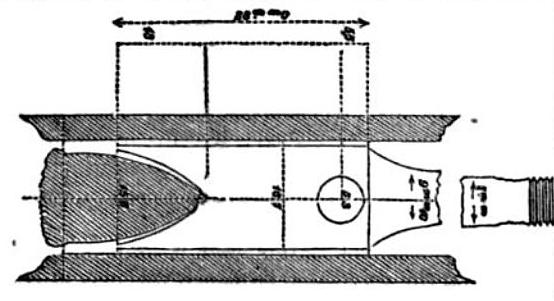
A countersunk ramrod, used in the 19th century for cylindro-conical bullets, as in the Thouvenin stem rifle or the Minié rifle.

A ramrod (or scouring stick) is a metal or wooden device used with muzzleloading firearms to push the projectile up against the propellant (mainly blackpowder). The ramrod was used with weapons such as muskets and cannons and was usually held in a notch underneath the barrel.[1] 

Use in firearms

[edit]

Bullets that did not fit snugly in the barrel were often secured in place by a wad of paper or cloth, but either way, ramming was necessary to place the bullet securely at the rear of the barrel. Ramming was also needed to tamp the powder so that it would explode properly instead of fizzle (this was a leading cause of misfires).[1]

In some pistols from the 17th century, the ramrod is folded up in a small compartment at the end of the pommel.[2]

The ramrod could also be fitted with tools for various tasks such as cleaning the weapon, or retrieving a stuck bullet.[citation needed]

Caplock revolvers

[edit]

Cap and ball revolvers were loaded a bit like muzzleloaders—powder was poured into each chamber of the cylinder from the muzzle end, and a bullet was then squeezed in. Such handguns usually had a ramming mechanism built into the frame. The user pulled a lever underneath the barrel of the pistol, which pushed a rammer into the aligned chamber.[citation needed]

Caplock revolvers mostly had mechanical devices with ramrods mounted on the frame of the revolver, which rammed the ball into the chamber of the cylinder by pulling a lever that was connected to the ramrod in various ways (by hinge, screw or lever). These mechanisms are called rammers or loading-levers. The most popular rammers used in caplock revolvers were the Colt, Adams and Kerr systems.

Colt's rammer

[edit]
Colt pocket revolver model 1849 with loading lever under the barrel.

Colt's rammer, patented by Samuel Colt about 1839, is a straight lever hinged under the barrel, with a triangular plate on its back end. The back corner of the triangle is hinged under the barrel, while the bottom corner is hinged to a short ramrod below and behind it. Pulling the lever down pushes the rod into the lowest chamber of the cylinder. This system was used on Colt revolvers from 1839 until 1873, when the Colt Peacemaker with metallic cartridges was introduced, as well as on Remington and Webley revolvers.[3][4]

Adams rammer

[edit]
Adams revolver with Adams-type rammer.
Adams revolver with Adams-type rammer rotated down 90°. An upward rotation of another 180° brings the rod into position to force the ball into the cylinder.

Adams rammer, patented by Robert Adams in 1853, a straight or slightly downward-curving lever mounted on the left or right side of the frame with a screw at the front end and resting under the cylinder on the side of the stock when not in use. The lever pivots around a pin at the front end (on the frame of the revolver in front of and below the cylinder), and has a short ramrod in the middle, facing down in a fixed position. To use, the lever must be manually rotated down and forward for 270°, until the lever is in front of the cylinder and the rod enters one of the chambers, pressing the ball in. This mechanism was used on older Adams revolvers (on the left side of the revolver) and Webley Longspur revolvers (on the right side of the revolver).[5][6]

Kerr's rammer

[edit]
Webley Longspur with a Kerr-type rammer.

Kerr rammer, patented by James Kerr[7] in 1855,[5] a bent lever (bent downwards at a right or obtuse angle, with a short ramrod on the lower arm) which pivots about a pin on the front of the revolver frame in front of the cylinder and rests on the left side of the barrel when not in use. The lever must be turned up 90° to push the rod into the chamber. This mechanism was used in the Beaumont-Adams and Tranter revolvers, as well as the newer Adams and Webley Longspur revolvers.[8]

Artillery

[edit]

Naval artillery began as muzzle-loading cannon and these too required ramming. Large muzzle loading guns continued into the 1880s, using wooden staffs worked by several sailors as ramrods.[9] Manual ramming was replaced with hydraulic powered ramming with trials on HMS Thunderer from 1874.[10]

Other uses

[edit]

The dictionary definition of Ramrod at Wiktionary indicates the term is also a used to describe a trail or ranch foreman, particularly one on cattle drives. It is also used as a verb to describe spurring or forcing a thing, such as a piece of legislation, forward. Similar to v. “spearhead”.

References

[edit]

Literature

[edit]
  • Smith, Walter Harold Black; Ezell, Edward Clinton (1969). Small Arms of the World: The Basic Manual of Military Small Arms. Harrisburg, Pennsylvania: Stackpole Books. p. 21. ISBN 9780811715669.
  • Kinard, Jeff (2003). Pistols, An Illustrated History of Their Impact. Santa Barbara, California: ABC-CLIO, Inc. p. 77. ISBN 1-85109-475-X.
  • Zhuk, A.B. (1995). Walter, John (ed.). The illustrated encyclopedia of HANDGUNS, pistols and revolvers of the world, 1870 to 1995. Translated by Bobrov, N.N. London: Greenhill Books. p. 16. ISBN 1-85367-187-8.
  • Wilkinson, Frederick (1979). The Illustrated Book of Pistols. Optimum Books. pp. 127. ISBN 0600372049.
  • Myatt, Major Frederick (1981). An Illustrated Guide to Pistols and Revolvers. London: Salamander Books Limited. pp. 12, 30. ISBN 0861010973.
[edit]
Revisions and contributorsEdit on WikipediaRead on Wikipedia
from Grokipedia
A ramrod is a slender rod, typically made of , , or , used in muzzleloading firearms to push a —such as a or —firmly against the charge at the breech end of the barrel, ensuring proper seating and safe ignition. It is essential for loading black powder weapons, where the ramrod is inserted through the muzzle to apply steady pressure, eliminating air gaps that could cause misfires or explosions. Traditionally carried in thimbles or along the underside of the firearm's barrel for quick access, the ramrod has been a core component since the early development of and mechanisms in the 16th and 17th centuries. In historical contexts, ramrods evolved from fragile wooden versions, often crafted from ash or hickory, which were susceptible to breakage during battle or loss in field conditions, to more durable iron or steel designs introduced in the early 19th century, such as the swivel ramrod on the U.S. Model 1819 Common Rifle Pistol. This shift improved reliability for military and frontier use, particularly with longarms like the Kentucky rifle and Hawken plains rifle during American expansion in the 18th and 19th centuries. Beyond loading, ramrods served practical roles like cleaning barrel fouling, measuring powder charges, or even as improvised tools for cooking or resting the firearm during aiming. Although the tool dates to the 16th century or earlier (often called a scouring stick), the term "ramrod" originated in the early 18th century (first known use 1706), combining "ram" (to force down) and "rod," reflecting its primary function in an era when muzzleloaders dominated warfare, hunting, and exploration. Today, ramrods remain integral to historical reenactments, black powder shooting sports, and the study of pre-cartridge firearms technology.

Historical Development

Early Origins

The ramrod, typically a slender wooden rod occasionally fitted with iron tips for durability, served as an essential tool in early muzzle-loading firearms by compacting the black powder charge, , and firmly against the breech to ensure reliable ignition and propulsion. This device originated in the , coinciding with the proliferation of arquebuses and mechanisms across , where it became integral to the loading process of these innovative shoulder-fired weapons. Prior to the ramrod's standardization, early handgonnes from the late relied on improvised tools or fingers for charging, but the rod's adoption marked a significant advancement in efficiency for use. The first documented military applications of the ramrod appeared in Renaissance Europe, particularly among Spanish, Italian, and German forces deploying arquebuses and early muskets during conflicts like the Italian Wars (1494–1559). These weapons, which evolved from lighter hand cannons, required the ramrod to seat the components securely in the smoothbore barrel, transforming handheld firearms into viable battlefield tools for pike-and-shot formations. By the mid-16th century, ramrods were standard issue in armies such as those of the Holy Roman Empire, enabling soldiers to load under duress while maintaining formation. The basic procedure involved pouring a measured charge of corned black powder down the muzzle, followed by a patch of wadding, the lead ball, and additional wadding, all driven home with several firm strokes of the ramrod to compress the load without leaving air gaps that could cause misfires. Early wooden ramrods, often crafted from or and measuring about 3 feet in length to match musket barrels, proved prone to splintering and breakage under the repetitive stress of rapid loading, especially in prolonged engagements. During the (1618–1648), matchlock musketeers frequently encountered this issue amid volley fire tactics, where the need to reload every 15–30 seconds exacerbated wear on the fragile wood, sometimes rendering weapons inoperable mid-battle and contributing to the chaos of infantry lines. Such vulnerabilities highlighted the limitations of organic materials in high-stakes , prompting later innovations. This reliance on wooden designs persisted into the , when iron ramrods gradually supplanted them for enhanced resilience.

Transition to Iron

The transition from wooden to iron ramrods marked a significant advancement in 18th-century equipment, driven by the need for greater durability under the stresses of combat. In 1718, , introduced iron ramrods to the to address the frequent breakage of wooden versions during intense firing sequences, where heat and repeated use often splintered the wood. This innovation replaced the fragile wooden ramrods that had been standard since the , allowing soldiers to ram charges more forcefully without risking tool failure. The term "ramrod" itself derives from the combination of "ram," meaning to force or drive, and "rod," reflecting its function as a pushing implement; it first appeared in English military contexts in the late but gained widespread use in drill manuals by the mid-18th century. During the Seven Years' War (1756–1763), Prussian forces under rapidly adopted these iron ramrods, extending their use to broader European armies as observers noted the tactical advantages. This shift enabled to achieve loading speeds of 3–4 shots per minute in trained conditions, a notable improvement over the 2 shots per minute typical with wooden ramrods, enhancing effectiveness in linear battles. Iron ramrods were designed for practicality and reliability, typically measuring 40–50 inches in length to match barrel dimensions, with tapered ends facilitating smooth insertion and extraction from the muzzle. Many featured tips at one or both ends to prevent scratching the rifled or barrel interiors, while the reversible —allowing use from either end—minimized errors under . These features not only reduced but also supported the n emphasis on rapid, disciplined maneuvers, influencing across .

Design and Materials

Wooden Variants

Wooden ramrods, essential for loading muzzle-loading firearms, were primarily crafted from dense hardwoods prized for their balance of strength, resilience, and availability. Hickory emerged as the most common material in colonial American contexts due to its exceptional flexibility and resistance to splitting under lateral pressure, while served as an alternative in European and early productions for similar qualities of lightness and durability. These woods allowed ramrods to withstand the repetitive force of seating powder charges and projectiles without excessive brittleness. Typical dimensions included a of 3/8 to 1/2 inch along the shaft, tapering slightly toward the center for maneuverability, with bulbous or swollen ends to facilitate secure gripping and prevent slippage during use. The advantages of wooden variants lay in their and safety profile for black environments. Their low production cost stemmed from the abundance of suitable timber, enabling rapid fabrication without specialized . Gunsmiths and soldiers could easily carve replacements on-site using basic knives or adzes, a critical feature during campaigns or sieges where supply lines faltered. Additionally, wood's non-ferrous nature reduced the risk of accidental ignition from sparks, unlike metal alternatives that could generate near loose residues. Despite these benefits, wooden ramrods exhibited notable limitations that compromised reliability in demanding conditions. Exposure to often caused warping, altering the rod's straightness and hindering precise alignment within the barrel, which could result in uneven charge seating and misfires. Under repeated stress from forceful —particularly with tightly patched balls—the wood was prone to cracking or outright breakage, potentially leaving fragments in the bore and causing dangerous obstructions or incomplete propellant compaction that risked barrel bursts. Such failures were documented in military contexts, contributing to the shift toward iron designs in 18th-century reforms. Manufacturing processes for wooden ramrods in the 17th through 19th centuries emphasized artisanal precision, typically involving hand-turning on simple pole or foot-powered lathes to achieve uniform cylindrical shapes from seasoned blanks. In colonial American armories and shops, this method produced ramrods tailored for longrifles, often featuring brass or horn tips for loading and cleaning attachments, as seen in surviving examples from frontier rifles. The process ensured a smooth finish to minimize barrel wear while preserving the wood's natural springiness.

Metal Variants

Metal ramrods emerged as a durable alternative to wooden ones, particularly in firearms where reliability under stress was paramount. Constructed primarily from or , these ramrods provided greater resistance to breakage compared to wooden predecessors, which were susceptible to splintering during forceful loading. Early metal ramrods were forged from or low-carbon , materials hammered into tapered rods for strength and balance. To mitigate —a common issue with iron in humid or wet environments—these were often finished with bluing or processes, creating a protective layer on the steel surface. The ends typically featured or tips, designed to protect the firearm's barrel from wear and ensure centered loading without damaging or the bore. A key advantage of metal ramrods was their ability to withstand the considerable force required for seating projectiles—often exceeding 40 pounds of pressure for consistent accuracy in —without deforming or snapping. Unlike wood, which could swell and bind in wet conditions, metal versions remained functional and reusable in damp environments, making them ideal for field use. Standard lengths ranged from 36 to 48 inches for muskets and , allowing full barrel clearance and secure storage in under-barrel . Historical examples include the ramrods of the Prussian Model 1723, which featured trumpet-shaped ends for secure handling and were paired with pipe fittings for resistance. By the , refinements such as internal threading at one end allowed attachments like cleaning worms or scrapers, enhancing versatility in models like the British . In modern replicas for black powder enthusiasts, ramrods predominate due to their superior resistance and longevity. These often incorporate ergonomic T-handles for improved leverage during loading, maintaining historical proportions while adding safety features like replaceable tips.

Applications in Firearms

Muzzle-Loading Muskets and

In muzzle-loading muskets and rifles of the 18th and 19th centuries, the ramrod served as an essential tool for seating the powder charge, , and during the loading process, ensuring a secure fit against the breech for reliable ignition and propulsion. These firearms, including muskets like the British and rifled variants such as the American Kentucky rifle, required manual loading from the muzzle end, a procedure that demanded precision under combat conditions to achieve firing rates of up to three to five rounds per minute. The ramrod's design evolved to support this, with early wooden versions giving way to more durable iron ones, as introduced in Prussian military reforms under Prince Leopold I of in the early , which allowed faster reloading by withstanding aggressive handling. The standard loading sequence began with the soldier drawing the ramrod from its storage position and inserting it muzzle-first into the barrel to push the components home. After biting open a paper cartridge to pour black powder down the bore, the remaining paper served as wadding, followed by the lead ball; the ramrod was then used in one or two firm strokes to compact the charge tightly against the breech, preventing separation that could cause misfires or reduced velocity. The ramrod was withdrawn and returned to its under-barrel pipe immediately after, allowing the soldier to prime the pan and prepare to fire. This method was drilled extensively in military training to minimize errors during rapid volleys. For storage, the ramrod was secured in one to three metal or channels along the forend of the , positioned beneath the barrel to keep it accessible yet protected from loss in battle; typically, the front pipe held the thicker end, while rear pipes guided the thinner tip. To prevent accidental discharge with a forgotten ramrod, soldiers performed drills before firing, dropping the ramrod down the barrel to confirm it rang clear if unloaded or seated the load properly if charged. These protocols were critical in tactics, where overlooked ramrods could eject violently upon firing. Historical incidents underscored the dangers of faulty loading, such as ramrod ejections that caused severe injuries; during the at the on May 12, 1864, Union Major William Ellis was struck by a Confederate iron ramrod fired from a neglected , the passing through his arm and bruising his chest, leading to his death from complications two months later. Such accidents were not uncommon in the chaos of battle, prompting modern safety protocols in historical reenactments, where live ramming is banned to avoid similar risks, with inspections ensuring ramrods protrude minimally from the muzzle during checks. Beyond loading, the ramrod facilitated maintenance by enabling bore cleaning to remove corrosive black powder after firing. Soldiers wrapped patches or cloths around the ramrod's end, often with a wiper attachment, and ran them through the barrel with warm soapy or solvents to scrub residue, followed by dry wiping to prevent ; this was performed daily or after each use in to preserve accuracy and function. In field conditions, a simple swab on the ramrod cleared minor buildup between shots, but thorough cleaning involved multiple passes to dissolve salts and hygroscopic residues.

Percussion Cap Revolvers

The ramrods used in percussion cap revolvers transitioned from simple detachable rods, borrowed from earlier muzzleloaders, to more sophisticated integrated loading levers mounted under the barrel during the and . This shift, exemplified in designs like the 1847 , eliminated the need to carry or insert a separate rod for each reloading, streamlining the process for multi-chamber cylinders in handheld firearms. The primary function of these under-barrel levers involved pivoting the rammer into alignment with individual chambers to compact charges and seat lead balls securely, preventing misalignment or loose loads that could cause misfires. By half-cocking the to rotate the cylinder and applying downward force on the , users could load all chambers sequentially without disassembly, a marked over prior methods requiring external tools. This mechanism boosted practical firing rates to approximately 4–6 shots per minute under field conditions, far surpassing the slower, one-at-a-time of traditional muskets. Key innovations included spring-loaded catches that locked the lever in either the stowed or operational position, enhancing reliability during rapid handling. These features appeared in dragoon-style models like the and early Dragoons, which saw extensive use by U.S. mounted troops during the Mexican-American War (1846–1848), where the levers facilitated quicker chambering amid cavalry charges and close-quarters combat. Navy-pattern revolvers, introduced shortly after, adopted similar designs for lighter maritime and frontier service. Despite these advances, the integrated levers contributed drawbacks, such as adding 0.5 to 1 pound to the revolver's overall weight, which strained holstered carry for extended periods. Additionally, in dusty or powder-fouled environments, the mechanism was prone to jamming, requiring frequent to maintain smooth pivoting and avoid failed seatings.

Applications in Artillery

Cannon Ramming Tools

Cannon ramming tools adapted the for large-bore , serving as essential implements for seating charges and projectiles in 18th- and 19th-century field and naval . These tools featured a long wooden staff, typically crafted from or for durability and balance, with a matching wooden head secured by dowels to push materials down the bore without damaging the components. The staff length varied by , generally spanning 6 to 10 feet to allow the operator to reach the breech from a safe distance outside the gun's path. In some designs, iron reinforcements occasionally supplemented wooden construction in heavier siege pieces, though wood remained predominant for its light weight and replaceability. The primary operator was the No. 2 cannoneer, positioned at the front right of the piece, who handled the rammer as part of a coordinated crew drill. During loading, after the bag or cartridge was introduced via scoop or direct insertion, the No. 2 rammed it firmly to the breech in a single, smooth motion to compact the charge. , shell, or canister was then similarly rammed into position atop the powder, with the tool withdrawn perpendicularly to avoid dislodging the load. This process enabled efficient muzzle-loading for cannons, contrasting with shorter small arms ramrods by accommodating the greater bore depths and crew-served dynamics of heavy ordnance. In the Napoleonic Wars (1799–1815), ramming tools proved vital for achieving rapid fire rates of 2–3 rounds per minute with trained crews, particularly in the French Gribeauval system, which standardized lighter field pieces like the 12-pounder for enhanced mobility and volume of fire. The Gribeauval reforms emphasized precise loading to maximize this tempo, allowing batteries to deliver sustained barrages against infantry formations. Examples include the Canon de 12 Gribeauval, where efficient ramming contributed to its role in key engagements such as Austerlitz and Waterloo. Variations in design accounted for operational environments: field artillery rammers were optimized for longer handles to suit open terrain and wheeled carriages, while naval versions featured shorter staffs to navigate cramped shipboard conditions and truck-mounted guns.

Sponge-Rammers

Sponge-rammers were specialized implements in artillery service, consisting of a wooden staff typically 8 to 12 feet in length, fitted at one end with a metal or wooden rammer head and at the opposite end with a sheepskin or wool-covered sponge head. The staff was commonly made of ash or hardwood for durability, while the sponge head utilized elm or poplar wood covered in oak-tanned sheepskin or 100% Brussels wool carpet to effectively absorb moisture and residue. This design allowed for efficient handling during loading and cleaning operations on large-caliber guns. The tool served a dual purpose in artillery procedures: the sponge end wetted the bore to extinguish embers and wipe away powder residue after misfires or between successive loads, thereby preventing premature explosions from lingering sparks, while the rammer end seated fresh powder charges and projectiles firmly against the breech. This integrated functionality was essential for maintaining safety and operational tempo in sustained fire, particularly when dealing with hot barrels that could retain combustible material. In practice, the cannoneer dipped the sponge end into a nearby water bucket to saturate it, shook off excess water, and then inserted it fully into the bore, rotating it several times to swab thoroughly while a vent pricker sealed the touchhole against sparks. The tool was then withdrawn, the powder charge and inserted into the muzzle by a member, and the staff reversed to insert the rammer head and drive the charge home in a single smooth motion. This sequence was performed after every shot to eliminate embers, a critical step especially in prolonged engagements where barrel heat intensified risks. members wore gauntlets for during these operations. The sponge-rammer's design was standardized in 18th-century French artillery manuals, such as Pierre Surirey de Saint Remy's Mémoires d'Artillerie ( edition), which detailed its construction and use for bore cleaning and charge seating, influencing European and American practices. This tool remained in widespread use through the , including with rifled pieces like the Parrott guns, where it facilitated safe reloading amid the era's high-volume fire.

Other Applications

Cleaning Rods

With the advent of breechloading firearms in the post-1860s era, particularly following widespread adoption during and after the , the ramrod transitioned from its primary role in loading muzzleloaders to a dedicated tool for removing from black powder residues. These early cleaning rods, often segmented for portability, were used with cotton patches soaked in solvents to swab the bore, addressing the corrosive buildup that plagued black powder arms and improved reliability in converted rifles like the Springfield Model 1866. In modern firearms maintenance, cleaning rods are typically constructed from durable steel or , featuring threaded ends (commonly 8-32 for rifles) to attach brushes, cotton swabs, or jags for thorough bore cleaning. Bolt-action rifles and semi-automatics like the incorporate such rods in dedicated kits, with lengths ranging from 24 to 36 inches to accommodate various barrel sizes while allowing full passage through the bore. These rods, often coated to reduce barrel wear, form a core component of field kits issued to and civilian shooters alike. Effective cleaning techniques emphasize a push-through method, where the rod and attached or patch are inserted from the chamber end and pushed fully to the muzzle without pulling back, thereby avoiding damage to the barrel crown—the critical edge at the muzzle that affects accuracy. Solvents such as Hoppe's No. 9 are applied to the or patch to dissolve powder and deposits, with multiple passes recommended until patches emerge clean. Safety protocols for using cleaning rods are stringent: firearms must never be stored or cleaned while loaded, as inserting a rod into a charged barrel risks accidental discharge.

Figurative and Modern Uses

In slang usage, "ramrod" refers to a strict disciplinarian, boss, or overseer, evoking the tool's rigid and forceful nature. This figurative sense emerged in mid-19th-century American cowboy and ranching jargon, where it denoted the foreman responsible for driving the crew, as recalled in a 1924 account of 1850s Texas practices: "The boss of the outfit was called the 'ramrod' or 'rod'." The term's connotation of unyielding authority later extended to military contexts, describing overseers who enforce "ramrod discipline"—a phrase for inflexible, precise order, often associated with Prussian-style training in 19th-century accounts of European armies. The "ramrod straight" describes an erect, unwavering posture, originating from the tool's inherent straightness and its role in maintaining rigidity, which influenced standards. This expression appears in 19th-century depicting soldiers' stances, such as in Civil War narratives where officers and troops are portrayed standing rigidly during inspections or marches. Beyond military metaphors, "ramrod" has been applied to other straight, rod-like implements mimicking its form. In equestrian contexts, it figuratively aligns with riding crops, which share a slender, unyielding shape for maintaining rider control and horse discipline. In camping and field gear, poles are sometimes described as "ramrod straight" to emphasize their taut, vertical support. Rare industrial adaptations include 20th-century laboratory tools, such as metal wire "ramrods" used to push viscous materials into containers during chemical procedures. In modern culture, "ramrod" persists in depictions of authoritarian figures, notably in Western films where strict sergeants or foremen embody the term's rigidity, as seen in the 1947 film Ramrod, which uses the for a determined overseer.

References

Add your contribution
Related Hubs
User Avatar
No comments yet.