



Community hub
Recent from talks
Knowledge base stats:
Talk channels stats:
Members stats:
Watergate scandal
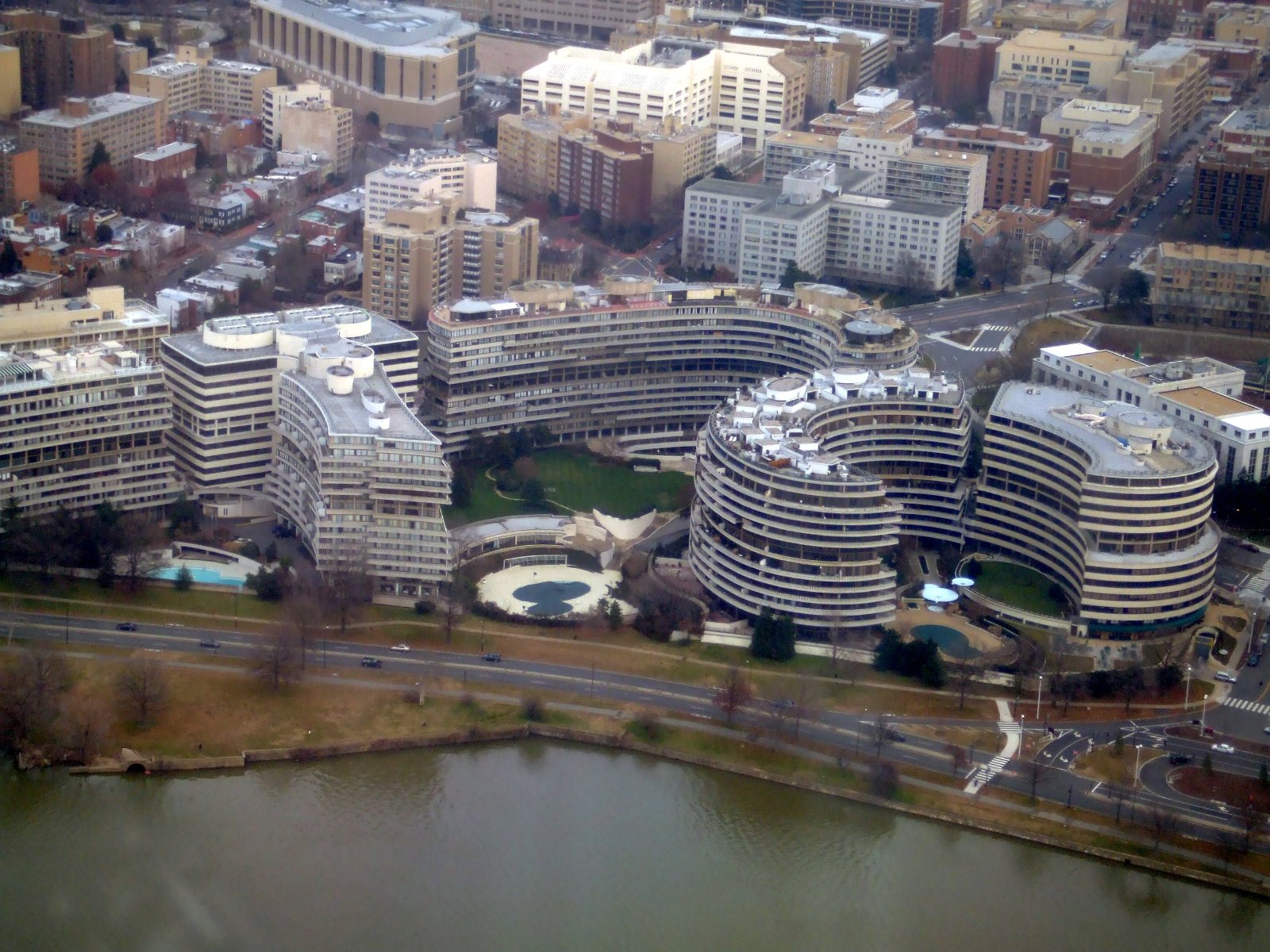
The Watergate scandal, or simply Watergate, was a political scandal in the United States involving the administration of President Richard Nixon. The affair began on June 17, 1972, when members of a group associated with Nixon's 1972 re-election campaign were caught burglarizing and planting listening devices in the Democratic National Committee headquarters at Washington, D.C.'s Watergate complex. Nixon's efforts to conceal his administration's involvement led to an impeachment process and his resignation in August 1974.
Following the burglars' arrest, media and the Department of Justice traced money to the Committee for the Re-Election of the President (CRP), the fundraising arm of Nixon's campaign. The Washington Post reporters Carl Bernstein and Bob Woodward pursued leads from a source named "Deep Throat" (later identified as Mark Felt, FBI Associate Director) and uncovered a campaign of political espionage directed by White House officials and illegally funded by donor contributions. Nixon dismissed the accusations and won the election in a landslide. Further investigation and revelations from the burglars' trial led the Senate to establish a special Watergate Committee and the House of Representatives to grant its Judiciary Committee expanded authority in February 1973. The burglars received lengthy prison sentences, with the promise of reduced terms if they cooperated—prompting a flood of witness testimony. In April, Nixon denied wrongdoing and announced the resignation of his aides. After it was revealed that Nixon had installed a voice-activated taping system in the Oval Office, his administration refused to grant investigators access to the tapes, leading to a constitutional crisis.
Attorney General Elliot Richardson appointed Archibald Cox as a special prosecutor for Watergate in May. Cox obtained a subpoena for the tapes, but Nixon continued to resist. In the "Saturday Night Massacre" in October, Nixon ordered Richardson to fire Cox, after which Richardson resigned, as did his deputy William Ruckelshaus; Solicitor General Robert Bork carried out the order. The incident bolstered a growing public belief that Nixon had something to hide, but he continued to defend his innocence. In April 1974, Cox's replacement Leon Jaworski reissued a subpoena for the tapes, but Nixon only released redacted transcripts. In July, the Supreme Court ordered Nixon to release the tapes, and the House Judiciary Committee recommended that he be impeached for obstructing justice, abuse of power, and contempt of Congress. In one of the tapes, known as "the smoking gun," he ordered aides to tell the FBI to halt its investigation. On the verge of being impeached, Nixon resigned on August 9, 1974, becoming the only U.S. president to do so. In all, 48 people were found guilty of Watergate-related crimes, but Nixon was pardoned by his vice president and successor Gerald Ford on September 8.
Public response to the Watergate disclosures had electoral ramifications: the Republican Party lost four Senate seats and 48 House seats in the 1974 mid-term elections, and Ford's pardon of Nixon is widely agreed to have contributed to his election defeat in 1976. A word combined with the suffix "-gate" has become widely used to name scandals, even outside the U.S., and especially in politics.
On January 27, 1972, G. Gordon Liddy, Finance Counsel for the Committee for the Re-Election of the President (CRP) and former aide to John Ehrlichman, presented a campaign intelligence plan to CRP's acting chairman Jeb Stuart Magruder, Attorney General John Mitchell, and Presidential Counsel John Dean. The plot involved extensive illegal activities against the Democratic Party. According to Dean, this marked "the opening scene of the worst political scandal of the twentieth century and the beginning of the end of the Nixon presidency".
Mitchell viewed the plan as unrealistic. Two months later, Mitchell approved a reduced version of the plan, which included burglarizing the Democratic National Committee's (DNC) headquarters at the Watergate Complex in Washington, D.C. to photograph campaign documents and install listening devices in telephones. Liddy later insisted that he was duped by both Dean and at least two of his subordinates. This included former CIA officers E. Howard Hunt and James McCord, the latter of whom was serving as then-CRP Security Coordinator after John Mitchell resigned as attorney general to become the CRP chairman.
In May, McCord assigned former FBI agent Alfred C. Baldwin III to carry out the wiretapping and monitor the telephone conversations afterward.
On May 11, McCord arranged for Baldwin, whom investigative reporter Jim Hougan described as "somehow special and perhaps well known to McCord", to stay at the Howard Johnson's motel across the street from the Watergate complex. Room 419 was booked in the name of McCord's company. At the behest of Liddy and Hunt, McCord and his team of burglars prepared for their first Watergate break-in, which began on May 28.
Hub AI
Watergate scandal AI simulator
(@Watergate scandal_simulator)
Watergate scandal
The Watergate scandal, or simply Watergate, was a political scandal in the United States involving the administration of President Richard Nixon. The affair began on June 17, 1972, when members of a group associated with Nixon's 1972 re-election campaign were caught burglarizing and planting listening devices in the Democratic National Committee headquarters at Washington, D.C.'s Watergate complex. Nixon's efforts to conceal his administration's involvement led to an impeachment process and his resignation in August 1974.
Following the burglars' arrest, media and the Department of Justice traced money to the Committee for the Re-Election of the President (CRP), the fundraising arm of Nixon's campaign. The Washington Post reporters Carl Bernstein and Bob Woodward pursued leads from a source named "Deep Throat" (later identified as Mark Felt, FBI Associate Director) and uncovered a campaign of political espionage directed by White House officials and illegally funded by donor contributions. Nixon dismissed the accusations and won the election in a landslide. Further investigation and revelations from the burglars' trial led the Senate to establish a special Watergate Committee and the House of Representatives to grant its Judiciary Committee expanded authority in February 1973. The burglars received lengthy prison sentences, with the promise of reduced terms if they cooperated—prompting a flood of witness testimony. In April, Nixon denied wrongdoing and announced the resignation of his aides. After it was revealed that Nixon had installed a voice-activated taping system in the Oval Office, his administration refused to grant investigators access to the tapes, leading to a constitutional crisis.
Attorney General Elliot Richardson appointed Archibald Cox as a special prosecutor for Watergate in May. Cox obtained a subpoena for the tapes, but Nixon continued to resist. In the "Saturday Night Massacre" in October, Nixon ordered Richardson to fire Cox, after which Richardson resigned, as did his deputy William Ruckelshaus; Solicitor General Robert Bork carried out the order. The incident bolstered a growing public belief that Nixon had something to hide, but he continued to defend his innocence. In April 1974, Cox's replacement Leon Jaworski reissued a subpoena for the tapes, but Nixon only released redacted transcripts. In July, the Supreme Court ordered Nixon to release the tapes, and the House Judiciary Committee recommended that he be impeached for obstructing justice, abuse of power, and contempt of Congress. In one of the tapes, known as "the smoking gun," he ordered aides to tell the FBI to halt its investigation. On the verge of being impeached, Nixon resigned on August 9, 1974, becoming the only U.S. president to do so. In all, 48 people were found guilty of Watergate-related crimes, but Nixon was pardoned by his vice president and successor Gerald Ford on September 8.
Public response to the Watergate disclosures had electoral ramifications: the Republican Party lost four Senate seats and 48 House seats in the 1974 mid-term elections, and Ford's pardon of Nixon is widely agreed to have contributed to his election defeat in 1976. A word combined with the suffix "-gate" has become widely used to name scandals, even outside the U.S., and especially in politics.
On January 27, 1972, G. Gordon Liddy, Finance Counsel for the Committee for the Re-Election of the President (CRP) and former aide to John Ehrlichman, presented a campaign intelligence plan to CRP's acting chairman Jeb Stuart Magruder, Attorney General John Mitchell, and Presidential Counsel John Dean. The plot involved extensive illegal activities against the Democratic Party. According to Dean, this marked "the opening scene of the worst political scandal of the twentieth century and the beginning of the end of the Nixon presidency".
Mitchell viewed the plan as unrealistic. Two months later, Mitchell approved a reduced version of the plan, which included burglarizing the Democratic National Committee's (DNC) headquarters at the Watergate Complex in Washington, D.C. to photograph campaign documents and install listening devices in telephones. Liddy later insisted that he was duped by both Dean and at least two of his subordinates. This included former CIA officers E. Howard Hunt and James McCord, the latter of whom was serving as then-CRP Security Coordinator after John Mitchell resigned as attorney general to become the CRP chairman.
In May, McCord assigned former FBI agent Alfred C. Baldwin III to carry out the wiretapping and monitor the telephone conversations afterward.
On May 11, McCord arranged for Baldwin, whom investigative reporter Jim Hougan described as "somehow special and perhaps well known to McCord", to stay at the Howard Johnson's motel across the street from the Watergate complex. Room 419 was booked in the name of McCord's company. At the behest of Liddy and Hunt, McCord and his team of burglars prepared for their first Watergate break-in, which began on May 28.