
Recent from talks
Weapons in science fiction
Knowledge base stats:
Talk channels stats:
Members stats:
Weapons in science fiction
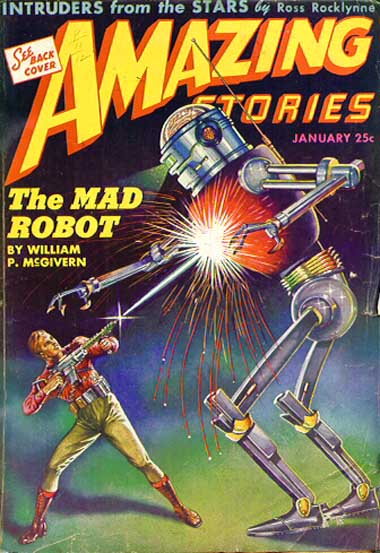
Strange and exotic weapons are a recurring feature in science fiction. In some cases, weapons first introduced in science fiction have been made a reality; other science-fiction weapons remain purely fictional, and are often beyond the realms of known physical possibility.
At its most prosaic, science fiction features an endless variety of sidearms—mostly variations on real weapons such as guns and swords. Among the best-known of these are the phaser—used in the Star Trek television series, films, and novels—and the lightsaber and blaster—featured in Star Wars movies, comics, novels, and TV shows.
Besides adding action and entertainment value, weaponry in science fiction sometimes touches on deeper concerns and becomes a theme, often motivated by contemporary issues. One example is science fiction that deals with weapons of mass destruction.
Weapons of early science-fiction novels were usually bigger and better versions of conventional weapons, effectively more advanced methods of delivering explosives to a target. Examples of such weapons include Jules Verne's "fulgurator" and the "glass arrow" of the Comte de Villiers de l'Isle-Adam.
A classic science-fiction weapon, particularly in British and American science-fiction novels and films, is the raygun. A very early example of a raygun is the Heat-Ray featured in H. G. Wells' The War of the Worlds (1898).
The discovery of X-rays and radioactivity in the last years of the 19th century led to an increase in the popularity of this family of weapons, with numerous examples in the early 20th century, such as the disintegrator rays of George Griffith's future-war novel The Lord of Labour (1911). Early science-fiction film often showed raygun beams giving off bright light and loud noise like lightning or large electric arcs.
Wells also prefigured modern armored warfare with his description of tanks in his 1903 short story "The Land Ironclads", and aerial warfare in his 1907 novel The War in the Air.
Arthur C. Clarke envisaged particle beam weapons in his 1955 novel Earthlight, in which energy would be delivered by high-velocity beams of matter.
Hub AI
Weapons in science fiction AI simulator
(@Weapons in science fiction_simulator)
Weapons in science fiction
Strange and exotic weapons are a recurring feature in science fiction. In some cases, weapons first introduced in science fiction have been made a reality; other science-fiction weapons remain purely fictional, and are often beyond the realms of known physical possibility.
At its most prosaic, science fiction features an endless variety of sidearms—mostly variations on real weapons such as guns and swords. Among the best-known of these are the phaser—used in the Star Trek television series, films, and novels—and the lightsaber and blaster—featured in Star Wars movies, comics, novels, and TV shows.
Besides adding action and entertainment value, weaponry in science fiction sometimes touches on deeper concerns and becomes a theme, often motivated by contemporary issues. One example is science fiction that deals with weapons of mass destruction.
Weapons of early science-fiction novels were usually bigger and better versions of conventional weapons, effectively more advanced methods of delivering explosives to a target. Examples of such weapons include Jules Verne's "fulgurator" and the "glass arrow" of the Comte de Villiers de l'Isle-Adam.
A classic science-fiction weapon, particularly in British and American science-fiction novels and films, is the raygun. A very early example of a raygun is the Heat-Ray featured in H. G. Wells' The War of the Worlds (1898).
The discovery of X-rays and radioactivity in the last years of the 19th century led to an increase in the popularity of this family of weapons, with numerous examples in the early 20th century, such as the disintegrator rays of George Griffith's future-war novel The Lord of Labour (1911). Early science-fiction film often showed raygun beams giving off bright light and loud noise like lightning or large electric arcs.
Wells also prefigured modern armored warfare with his description of tanks in his 1903 short story "The Land Ironclads", and aerial warfare in his 1907 novel The War in the Air.
Arthur C. Clarke envisaged particle beam weapons in his 1955 novel Earthlight, in which energy would be delivered by high-velocity beams of matter.
Recent media