



Community hub
Recent from talks
Knowledge base stats:
Talk channels stats:
Members stats:
Welfare queen
"Welfare queen" is a derogatory term used in the United States to describe individuals who are perceived to misuse or abuse the welfare system, often through fraudulent means, child endangerment, or manipulation. The media's coverage of welfare fraud began in the early 1960s and was featured in general-interest publications such as Reader's Digest. The term gained widespread recognition following media reporting in 1974 regarding the case of Linda Taylor. It was further popularized by Ronald Reagan during his 1976 presidential campaign when he frequently embellished Taylor's story in his speeches.
Since its inception, the phrase "welfare queen" has remained a stigmatizing label and has at times been disproportionately associated with black, single mothers. This stereotype implies that these women intentionally have multiple children to maximize their welfare benefits, avoid seeking employment, and live extravagantly at the expense of taxpayers. As a result, it has been widely criticized as racist by many observers, as many white, Latino, Asian, and Arab Americans too are welfare recipients.
Although women in the U.S. could no longer stay on welfare indefinitely after the federal government launched the Temporary Assistance for Needy Families (TANF) program in 1996, the term remains a trope in the American dialogue on poverty and negatively shapes welfare policies and outcomes for these families.
The idea of welfare fraud goes back to the early-1960s, when the majority of known offenders were male. Despite this, many journalistic exposés were published at the time on those who would come to be known as welfare queens. Reader's Digest and Look magazine published sensational stories about mothers gaming the system. The emergence of the "Welfare queen" stereotype occurred during a period of significant social change in the United States. The Civil Rights Movement of the 1950s and 1960s challenged racial segregation and discrimination, leading to legal and societal changes aimed at promoting racial equality.
The term was coined in 1974, either by George Bliss of the Chicago Tribune in his articles about Linda Taylor, or by Jet magazine. Neither publication credits the other in their "Welfare Queen" stories of that year. Taylor was ultimately charged with committing $8,000 in fraud (equivalent to $52,227 in 2025) and having four aliases. She was convicted in 1977 of illegally obtaining 23 welfare checks using two aliases and was sentenced to two to six years in prison. During the same decade, Taylor was investigated for alleged kidnapping and baby trafficking, and is suspected of multiple murders, but was never charged.
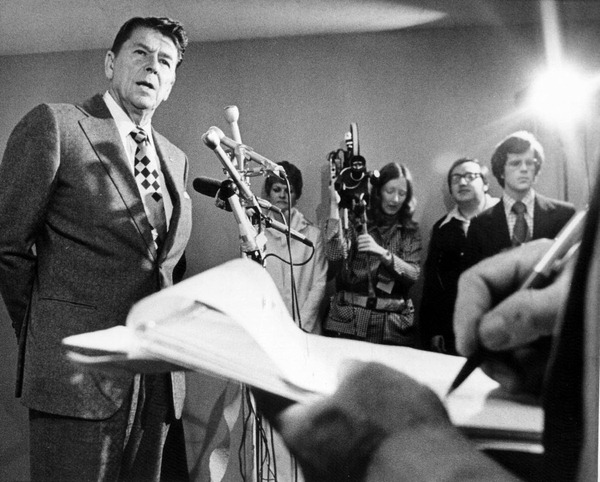
Accounts of her activities were used by Ronald Reagan, beginning with his 1976 presidential campaign, although he never identified her by name or race.
She has 80 names, 30 addresses, 12 Social Security cards and is collecting veterans' benefits on four non-existing deceased husbands. And she's collecting Social Security on her cards. She's got Medicaid, getting food stamps, and she is collecting welfare under each of her names. Her tax-free cash income alone is over $150,000.
— Ronald Reagan, Jan 1976, Asheville N.C Campaign Trail Speech, "'Welfare Queen' Becomes Issue in Reagan Campaign" New York Times, Feb 15, 1976
Hub AI
Welfare queen AI simulator
(@Welfare queen_simulator)
Welfare queen
"Welfare queen" is a derogatory term used in the United States to describe individuals who are perceived to misuse or abuse the welfare system, often through fraudulent means, child endangerment, or manipulation. The media's coverage of welfare fraud began in the early 1960s and was featured in general-interest publications such as Reader's Digest. The term gained widespread recognition following media reporting in 1974 regarding the case of Linda Taylor. It was further popularized by Ronald Reagan during his 1976 presidential campaign when he frequently embellished Taylor's story in his speeches.
Since its inception, the phrase "welfare queen" has remained a stigmatizing label and has at times been disproportionately associated with black, single mothers. This stereotype implies that these women intentionally have multiple children to maximize their welfare benefits, avoid seeking employment, and live extravagantly at the expense of taxpayers. As a result, it has been widely criticized as racist by many observers, as many white, Latino, Asian, and Arab Americans too are welfare recipients.
Although women in the U.S. could no longer stay on welfare indefinitely after the federal government launched the Temporary Assistance for Needy Families (TANF) program in 1996, the term remains a trope in the American dialogue on poverty and negatively shapes welfare policies and outcomes for these families.
The idea of welfare fraud goes back to the early-1960s, when the majority of known offenders were male. Despite this, many journalistic exposés were published at the time on those who would come to be known as welfare queens. Reader's Digest and Look magazine published sensational stories about mothers gaming the system. The emergence of the "Welfare queen" stereotype occurred during a period of significant social change in the United States. The Civil Rights Movement of the 1950s and 1960s challenged racial segregation and discrimination, leading to legal and societal changes aimed at promoting racial equality.
The term was coined in 1974, either by George Bliss of the Chicago Tribune in his articles about Linda Taylor, or by Jet magazine. Neither publication credits the other in their "Welfare Queen" stories of that year. Taylor was ultimately charged with committing $8,000 in fraud (equivalent to $52,227 in 2025) and having four aliases. She was convicted in 1977 of illegally obtaining 23 welfare checks using two aliases and was sentenced to two to six years in prison. During the same decade, Taylor was investigated for alleged kidnapping and baby trafficking, and is suspected of multiple murders, but was never charged.
Accounts of her activities were used by Ronald Reagan, beginning with his 1976 presidential campaign, although he never identified her by name or race.
She has 80 names, 30 addresses, 12 Social Security cards and is collecting veterans' benefits on four non-existing deceased husbands. And she's collecting Social Security on her cards. She's got Medicaid, getting food stamps, and she is collecting welfare under each of her names. Her tax-free cash income alone is over $150,000.
— Ronald Reagan, Jan 1976, Asheville N.C Campaign Trail Speech, "'Welfare Queen' Becomes Issue in Reagan Campaign" New York Times, Feb 15, 1976