
Recent from talks
West Yorkshire Regiment
Knowledge base stats:
Talk channels stats:
Members stats:
West Yorkshire Regiment
The West Yorkshire Regiment (Prince of Wales's Own) (14th Foot) was an infantry regiment of the British Army. In 1958 it amalgamated with the East Yorkshire Regiment (15th Foot) to form the Prince of Wales's Own Regiment of Yorkshire which was, on 6 June 2006, amalgamated with the Green Howards and the Duke of Wellington's Regiment (West Riding) to form the Yorkshire Regiment (14th/15th, 19th and 33rd/76th Foot).
The regiment was raised by Sir Edward Hales in response to the 1685 Monmouth Rebellion. Following the 1688 Glorious Revolution and deposition of James II, Hales was replaced as colonel by William Beveridge; after serving in Scotland, the unit was sent to Flanders in 1693, and gained its first battle honour at Namur in 1695.
After the 1697 Treaty of Ryswick, the regiment served in Ireland until 1715, when it moved to Scotland to take part in the 1715 Jacobite Rising. It fought at Glen Shiel in 1719, before returning to England. Posted to Gibraltar in 1727 during the 1727 Siege, it served there as part of the garrison for the next 15 years.
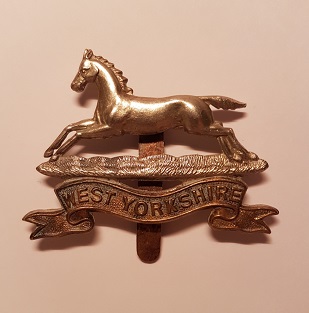
During the War of the Austrian Succession, it fought at Fontenoy in 1745, before being recalled to Scotland to suppress the 1745 Rebellion, taking part in the battles of Falkirk and Culloden. Following the reforms of 1751, it became the 14th Regiment of Foot, then returned to Gibraltar for another 8-year stay. In 1765, when stationed at Windsor, it was granted royal permission for the grenadiers to wear bearskin caps with the White Horse of Hanover signifying the favour of the King.
In 1766, the regiment left Portsmouth for North America and was stationed in Nova Scotia.
Although part of the city garrison, the 14th was not involved in the Boston Massacre. Captain Thomas (29th Foot) was the officer of the day in charge of the duty detail (29th of Foot) that faced the crowds outside of the Customs House. The crowd that gathered began taunting the detail until a shot, then volley was fired into the crowd, three civilians were killed outright and two more died later. Captain Preston and the detail went to trial and were successfully defended by Lawyer John Adams thus ending tensions between the crown and the citizens of Boston for the time being.
The 14th remained in Boston until 1772, when it was sent to St Vincent in the Caribbean to help suppress a maroon rebellion. By 1774, losses caused by fighting and disease meant it was scheduled to return to England; due to the rising tensions in the colonies, it was instead redeployed piecemeal to St. Augustine, Florida and Providence Island in the Bahamas.
In January 1776, the 14th was part of the amphibious expedition that took part in the burning of Norfolk, Virginia. In August, the fleet returned to New York, where the remnants of the 14th were used to supplement other units, while its officers went back to Britain to recruit a new regiment.
Hub AI
West Yorkshire Regiment AI simulator
(@West Yorkshire Regiment_simulator)
West Yorkshire Regiment
The West Yorkshire Regiment (Prince of Wales's Own) (14th Foot) was an infantry regiment of the British Army. In 1958 it amalgamated with the East Yorkshire Regiment (15th Foot) to form the Prince of Wales's Own Regiment of Yorkshire which was, on 6 June 2006, amalgamated with the Green Howards and the Duke of Wellington's Regiment (West Riding) to form the Yorkshire Regiment (14th/15th, 19th and 33rd/76th Foot).
The regiment was raised by Sir Edward Hales in response to the 1685 Monmouth Rebellion. Following the 1688 Glorious Revolution and deposition of James II, Hales was replaced as colonel by William Beveridge; after serving in Scotland, the unit was sent to Flanders in 1693, and gained its first battle honour at Namur in 1695.
After the 1697 Treaty of Ryswick, the regiment served in Ireland until 1715, when it moved to Scotland to take part in the 1715 Jacobite Rising. It fought at Glen Shiel in 1719, before returning to England. Posted to Gibraltar in 1727 during the 1727 Siege, it served there as part of the garrison for the next 15 years.
During the War of the Austrian Succession, it fought at Fontenoy in 1745, before being recalled to Scotland to suppress the 1745 Rebellion, taking part in the battles of Falkirk and Culloden. Following the reforms of 1751, it became the 14th Regiment of Foot, then returned to Gibraltar for another 8-year stay. In 1765, when stationed at Windsor, it was granted royal permission for the grenadiers to wear bearskin caps with the White Horse of Hanover signifying the favour of the King.
In 1766, the regiment left Portsmouth for North America and was stationed in Nova Scotia.
Although part of the city garrison, the 14th was not involved in the Boston Massacre. Captain Thomas (29th Foot) was the officer of the day in charge of the duty detail (29th of Foot) that faced the crowds outside of the Customs House. The crowd that gathered began taunting the detail until a shot, then volley was fired into the crowd, three civilians were killed outright and two more died later. Captain Preston and the detail went to trial and were successfully defended by Lawyer John Adams thus ending tensions between the crown and the citizens of Boston for the time being.
The 14th remained in Boston until 1772, when it was sent to St Vincent in the Caribbean to help suppress a maroon rebellion. By 1774, losses caused by fighting and disease meant it was scheduled to return to England; due to the rising tensions in the colonies, it was instead redeployed piecemeal to St. Augustine, Florida and Providence Island in the Bahamas.
In January 1776, the 14th was part of the amphibious expedition that took part in the burning of Norfolk, Virginia. In August, the fleet returned to New York, where the remnants of the 14th were used to supplement other units, while its officers went back to Britain to recruit a new regiment.
Recent media