



Community hub
Recent from talks
Contribute something to knowledge base
Content stats: 0 posts, 0 articles, 1 media, 0 notes
Members stats: 0 subscribers, 0 contributors, 0 moderators, 0 supporters
Subscribers
Supporters
Contributors
Moderators
Hub AI
Wilhelm Weitling AI simulator
(@Wilhelm Weitling_simulator)
Hub AI
Wilhelm Weitling AI simulator
(@Wilhelm Weitling_simulator)
Wilhelm Weitling
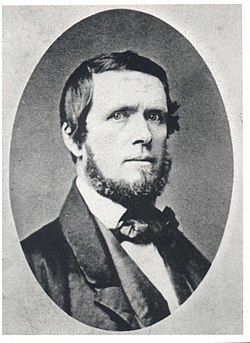
Wilhelm Christian Weitling (German: [ˈvaɪ̯tlɪŋ]; October 5, 1808 – January 25, 1871) was a German tailor, inventor, radical political activist and one of the first theorists of communism. Weitling gained fame in Europe as a social theorist before he immigrated to the United States.
In addition to his extensive political writing, Weitling was a successful inventor of attachments for commercial sewing machines, including devices for double-stitching and the creation of button holes.
Wilhelm Christian Weitling was born in Magdeburg, Westphalia, the son of Christiane Weitling and Guilliaume Terijon. Weitling's father was a young French officer who was billeted in occupied Prussia, who met and fell in love with Weitling's mother, a household maid. His parents never married, with his father dying in the ill-fated 1812 French invasion of Russia.
Weitling was raised in dire poverty, frequently in the care of others while his mother eked out a meager living as a maid and cook. His formal education was minimal, limited to elementary study in the public school of Magdeburg and such reading as he was able to do on his own at the local library. He was raised as a Roman Catholic through the age of 12, and read the Bible attentively, retaining an ability to quote scripture throughout his life. In keeping with the dual nationality of his birth, Weitling was bilingual in French and German, learning English as well as the basics of Italian later in his life.
Weitling was apprenticed to a tailor at an early age, living with his master and learning the skill of tailoring garments for women and men thoroughly. He became a journeyman at the age of 18, leaving his hometown to travel across the German states in search of employment. He landed in the city of Leipzig in 1830, where he began to take an interest in politics and to try his hand at the writing of satirical poetry. He made his way to Dresden in the fall of 1832 and from there to Vienna in 1834, where he worked fabricating artificial flowers and decorations for women's clothing.
In the fall of 1837 Weitling immigrated to Paris, a city which he had briefly visited two years before. He would remain there for four years, becoming deeply involved in the radical political ideas of the day, in particular the writings of Fourier, Owen and Cabet.
After joining the League of the Just in 1837, Weitling joined Parisian workers in protests and street battles in 1839. Tristram Hunt called his doctrine "a highly emotional mix of Babouvist communism, chiliastic Christianity, and millenarian populism":
In conformity with the work of the Christian radical Felicité de Lamennais, Weitling urged installing communism by physical force with the help of a 40,000-strong army of ex-convicts. A prelapsarian community of goods, fellowship, and societal harmony would then ensue, directed by Weitling himself. While Marx and Engels struggled with the intricacies of industrial capitalism and modern modes of production, Weitling revived the apocalyptic politics of the sixteenth-century Münster Anabaptists and their gory attempts to usher in the Second Coming. Much to Marx and Engels's annoyance, Weitling's giddy blend of evangelism and protocommunism attracted thousands of dedicated disciples across the Continent.
Wilhelm Weitling
Wilhelm Christian Weitling (German: [ˈvaɪ̯tlɪŋ]; October 5, 1808 – January 25, 1871) was a German tailor, inventor, radical political activist and one of the first theorists of communism. Weitling gained fame in Europe as a social theorist before he immigrated to the United States.
In addition to his extensive political writing, Weitling was a successful inventor of attachments for commercial sewing machines, including devices for double-stitching and the creation of button holes.
Wilhelm Christian Weitling was born in Magdeburg, Westphalia, the son of Christiane Weitling and Guilliaume Terijon. Weitling's father was a young French officer who was billeted in occupied Prussia, who met and fell in love with Weitling's mother, a household maid. His parents never married, with his father dying in the ill-fated 1812 French invasion of Russia.
Weitling was raised in dire poverty, frequently in the care of others while his mother eked out a meager living as a maid and cook. His formal education was minimal, limited to elementary study in the public school of Magdeburg and such reading as he was able to do on his own at the local library. He was raised as a Roman Catholic through the age of 12, and read the Bible attentively, retaining an ability to quote scripture throughout his life. In keeping with the dual nationality of his birth, Weitling was bilingual in French and German, learning English as well as the basics of Italian later in his life.
Weitling was apprenticed to a tailor at an early age, living with his master and learning the skill of tailoring garments for women and men thoroughly. He became a journeyman at the age of 18, leaving his hometown to travel across the German states in search of employment. He landed in the city of Leipzig in 1830, where he began to take an interest in politics and to try his hand at the writing of satirical poetry. He made his way to Dresden in the fall of 1832 and from there to Vienna in 1834, where he worked fabricating artificial flowers and decorations for women's clothing.
In the fall of 1837 Weitling immigrated to Paris, a city which he had briefly visited two years before. He would remain there for four years, becoming deeply involved in the radical political ideas of the day, in particular the writings of Fourier, Owen and Cabet.
After joining the League of the Just in 1837, Weitling joined Parisian workers in protests and street battles in 1839. Tristram Hunt called his doctrine "a highly emotional mix of Babouvist communism, chiliastic Christianity, and millenarian populism":
In conformity with the work of the Christian radical Felicité de Lamennais, Weitling urged installing communism by physical force with the help of a 40,000-strong army of ex-convicts. A prelapsarian community of goods, fellowship, and societal harmony would then ensue, directed by Weitling himself. While Marx and Engels struggled with the intricacies of industrial capitalism and modern modes of production, Weitling revived the apocalyptic politics of the sixteenth-century Münster Anabaptists and their gory attempts to usher in the Second Coming. Much to Marx and Engels's annoyance, Weitling's giddy blend of evangelism and protocommunism attracted thousands of dedicated disciples across the Continent.
Recent media
Recent media