
Recent from talks
Will Durant
Knowledge base stats:
Talk channels stats:
Members stats:
Will Durant
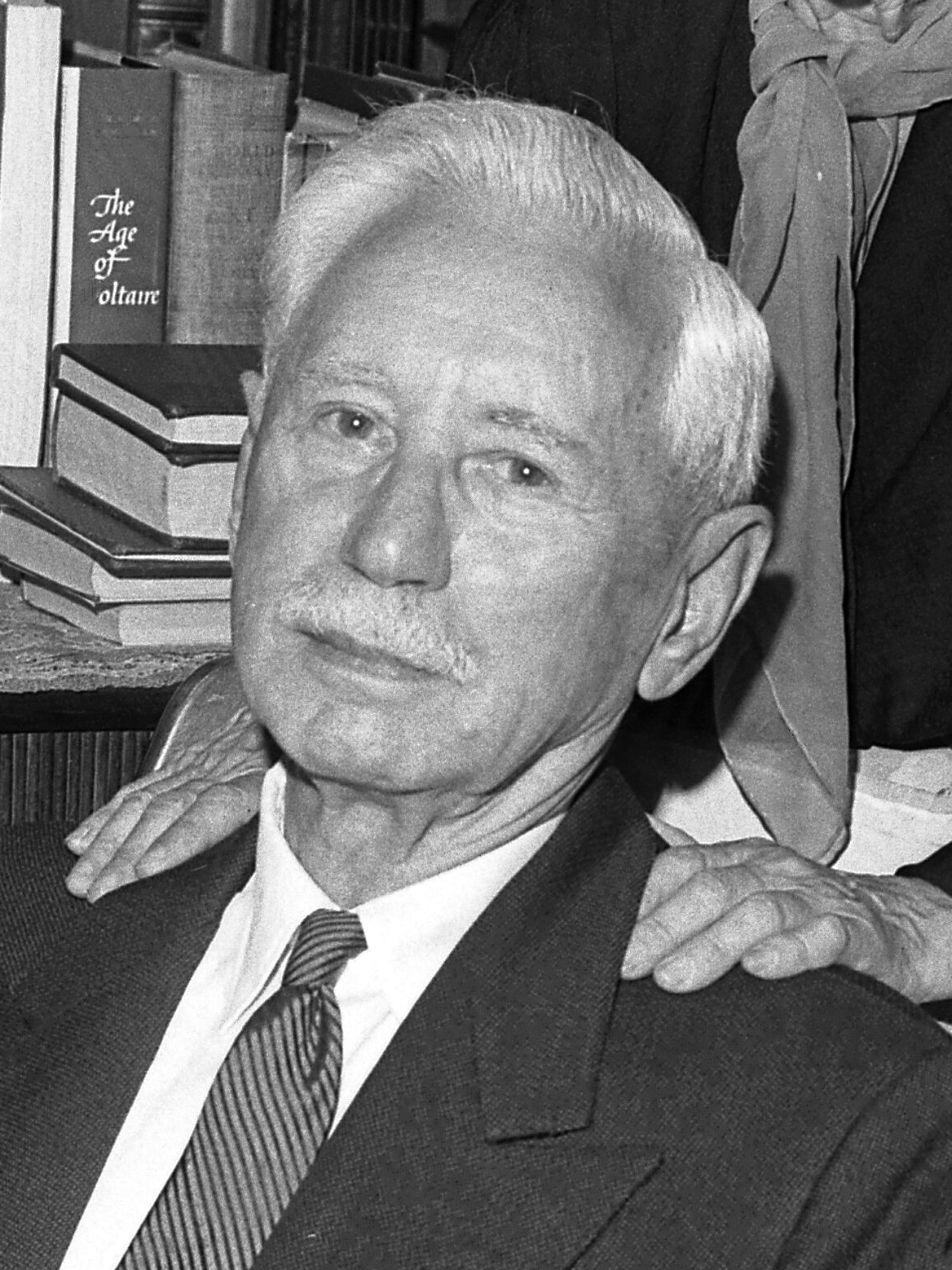
William James Durant (/dəˈrænt/; November 5, 1885 – November 7, 1981) was an American historian and philosopher, best known for his eleven-volume work, The Story of Civilization, which contains and details the history of Eastern and Western civilizations. It was written in collaboration with his wife, Ariel Durant, and published between 1935 and 1975. He was earlier noted for The Story of Philosophy (1926), described as "a groundbreaking work that helped to popularize philosophy".
Durant conceived of philosophy as total perspective or seeing things sub specie totius (i.e., "from the perspective of the whole")—a phrase inspired by Spinoza's sub specie aeternitatis, roughly meaning "from the perspective of the eternal". He sought to unify and humanize the great body of historical knowledge, which had grown voluminous and become fragmented into esoteric specialties, and to vitalize it for contemporary application. As a result of their success, he and his wife were jointly awarded the Pulitzer Prize for General Nonfiction in 1968 and the Presidential Medal of Freedom in 1977.
William James Durant was born in North Adams, Massachusetts, to French-Canadian Catholic parents, Joseph Durant and Mary Allard, who had been part of the Quebec emigration to the United States.
After graduating from St. Peter's Preparatory School in Jersey City, New Jersey, in 1903, Durant enrolled at Saint Peter's College (now Saint Peter's University), also in Jersey City, where he graduated in 1907. Historian Joan Rubin writes of that period, "Despite some adolescent flirtations, he began preparing for the vocation that promised to realize his mother's fondest hopes for him: the priesthood. In that way, one might argue, he embarked on a course that, while distant from Yale's or Columbia's apprenticeships in gentility, offered equivalent cultural authority within his own milieu."
In 1905, he began experimenting with socialist philosophy, but, after World War I, he began recognizing that a "lust for power" underlay all forms of political behavior. However, even before the war, "other aspects of his sensibility had competed with his radical leanings," notes Rubin. She adds that "the most concrete of those was a persistent penchant for philosophy. With his energy invested in Baruch Spinoza, he made little room for the Russian anarchist Mikhail Bakunin. From then on, writes Rubin, "his retention of a model of selfhood predicated on discipline made him unsympathetic to anarchist injunctions to 'be yourself.'... To be one's 'deliberate self,' he explained, meant to 'rise above' the impulse to 'become the slaves of our passions' and instead to act with 'courageous devotion' to a moral cause."
From 1907 to 1911, Durant taught Latin and French at Seton Hall College in South Orange, New Jersey.
After leaving Seton Hall, Durant was a teacher at Ferrer Modern School from 1911 to 1913. Ferrer was "an experiment in libertarian education," according to the Who's Who of Pulitzer Prize Winners. Alden Freeman, a supporter of the Ferrer Modern School, sponsored him for a tour of Europe.
In 1913, he resigned his post as teacher and married the 15-year-old Ariel Kaufman; they had one daughter, Ethel, and a "foster" son, Louis, whose mother was Flora—Ariel's sister. To support themselves, he began lecturing in a Presbyterian church for $5 and $10; the material for the lectures became the starting point for The Story of Civilization.
Hub AI
Will Durant AI simulator
(@Will Durant_simulator)
Will Durant
William James Durant (/dəˈrænt/; November 5, 1885 – November 7, 1981) was an American historian and philosopher, best known for his eleven-volume work, The Story of Civilization, which contains and details the history of Eastern and Western civilizations. It was written in collaboration with his wife, Ariel Durant, and published between 1935 and 1975. He was earlier noted for The Story of Philosophy (1926), described as "a groundbreaking work that helped to popularize philosophy".
Durant conceived of philosophy as total perspective or seeing things sub specie totius (i.e., "from the perspective of the whole")—a phrase inspired by Spinoza's sub specie aeternitatis, roughly meaning "from the perspective of the eternal". He sought to unify and humanize the great body of historical knowledge, which had grown voluminous and become fragmented into esoteric specialties, and to vitalize it for contemporary application. As a result of their success, he and his wife were jointly awarded the Pulitzer Prize for General Nonfiction in 1968 and the Presidential Medal of Freedom in 1977.
William James Durant was born in North Adams, Massachusetts, to French-Canadian Catholic parents, Joseph Durant and Mary Allard, who had been part of the Quebec emigration to the United States.
After graduating from St. Peter's Preparatory School in Jersey City, New Jersey, in 1903, Durant enrolled at Saint Peter's College (now Saint Peter's University), also in Jersey City, where he graduated in 1907. Historian Joan Rubin writes of that period, "Despite some adolescent flirtations, he began preparing for the vocation that promised to realize his mother's fondest hopes for him: the priesthood. In that way, one might argue, he embarked on a course that, while distant from Yale's or Columbia's apprenticeships in gentility, offered equivalent cultural authority within his own milieu."
In 1905, he began experimenting with socialist philosophy, but, after World War I, he began recognizing that a "lust for power" underlay all forms of political behavior. However, even before the war, "other aspects of his sensibility had competed with his radical leanings," notes Rubin. She adds that "the most concrete of those was a persistent penchant for philosophy. With his energy invested in Baruch Spinoza, he made little room for the Russian anarchist Mikhail Bakunin. From then on, writes Rubin, "his retention of a model of selfhood predicated on discipline made him unsympathetic to anarchist injunctions to 'be yourself.'... To be one's 'deliberate self,' he explained, meant to 'rise above' the impulse to 'become the slaves of our passions' and instead to act with 'courageous devotion' to a moral cause."
From 1907 to 1911, Durant taught Latin and French at Seton Hall College in South Orange, New Jersey.
After leaving Seton Hall, Durant was a teacher at Ferrer Modern School from 1911 to 1913. Ferrer was "an experiment in libertarian education," according to the Who's Who of Pulitzer Prize Winners. Alden Freeman, a supporter of the Ferrer Modern School, sponsored him for a tour of Europe.
In 1913, he resigned his post as teacher and married the 15-year-old Ariel Kaufman; they had one daughter, Ethel, and a "foster" son, Louis, whose mother was Flora—Ariel's sister. To support themselves, he began lecturing in a Presbyterian church for $5 and $10; the material for the lectures became the starting point for The Story of Civilization.
Recent media