
Recent from talks
William B. Travis
Knowledge base stats:
Talk channels stats:
Members stats:
William B. Travis
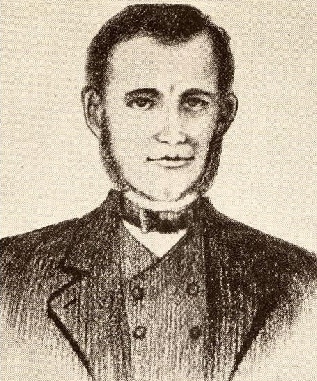
William Barret "Buck" Travis (August 1, 1809 – March 6, 1836) was a Texian Army officer and lawyer. He is known for helping set the Texas Revolution in motion during the Anahuac disturbances and defending the Alamo Mission during the battle of the Alamo.
During the Mexican siege of the Alamo, Travis wrote a letter pleading for reinforcements that became known as the "Victory or Death" letter. When Travis and the defenders were defeated, killed, and burned by Santa Anna's army, it made him a martyr, and battle cry, for the cause of Texas independence. It is considered one of the most notable last stands in history. The battle cry of "Remember the Alamo" became the official motto of Texas from 1836 to 1930 and remains on the state seal. The Alamo is the number one tourist destination in Texas, a National Landmark, and a UNESCO World Heritage Site.
Fort Travis, Travis Park, Travis County, Lake Travis, Travis High School, Travis Early College High School, Travis Science Academy, William B. Travis Building (Austin), and 12 elementary schools are named in his honor.
Travis's grandfather, Berwick (also known as Barrett) Travis, came from Great Britain to the Thirteen Colonies at the age of 12, where he was placed in indentured servitude for more than a decade. Berwick's ancestors came to North America in the late 17th century, and Berwick's grandfather was born in Perquimans County, North Carolina, but went back to Britain for his medical training. A descendant of the Travers of Tulketh Castle in Preston, Lancashire, Berwick had a life that hardly resembled his ancestor's glory and wealth. After working his period of servitude, he traveled southwards to the Province of South Carolina, where he received a grant of over 100 acres of land in what is now Saluda County, South Carolina. A year later, he married Anne Smallwood, and they lived out their lives there. They had four daughters and three sons, including Mark Travis and the Baptist missionary Alexander Travis.
Mark Travis married Jemima Stallworth on June 1, 1808. She gave birth to William Barret Travis on August 1, 1809. Records differ as to whether his date of birth was the first or the ninth of August, but his youngest brother, James C. Travis, who was in possession of the Travis family Bible at the time of his statement, indicated that William was born on the first. Mark and Jemima had nine other children over the next twenty years.
Travis's uncle Alexander migrated to the new territory of Alabama following the War of 1812, settling in modern-day Conecuh County. He urged his brother and family to come join him, where he said that the land was cheap and easy to acquire, so Mark took his family, including young William, then age 9, to Alabama. They settled in the newly forming town of Sparta, where Mark Travis purchased the very first certificate from the Sparta Land company. Young Travis grew up in Sparta, and while his father tended to the farming, his uncle Alexander became prominent, organizing the Old Beulah Church (among other churches), preaching in neighboring counties and nearby Evergreen, Alabama, and leaving a strong influence on young Travis.
During that same time, Alexander also founded the Sparta Academy and served as its superintendent. Travis received his first formal education at the Sparta Academy, studying subjects ranging from Greek and Latin to history and mathematics. After a few years, Travis moved to the academy of Professor William H. McCurdy in Claiborne, Alabama.
After completing his education at the age of 18, Travis gained a position as an assistant teacher in Monroe County, a position he held for less than a year. He met a student, Rosanna Cato, to whom he immediately felt attracted and with whom he began a romantic relationship.
Hub AI
William B. Travis AI simulator
(@William B. Travis_simulator)
William B. Travis
William Barret "Buck" Travis (August 1, 1809 – March 6, 1836) was a Texian Army officer and lawyer. He is known for helping set the Texas Revolution in motion during the Anahuac disturbances and defending the Alamo Mission during the battle of the Alamo.
During the Mexican siege of the Alamo, Travis wrote a letter pleading for reinforcements that became known as the "Victory or Death" letter. When Travis and the defenders were defeated, killed, and burned by Santa Anna's army, it made him a martyr, and battle cry, for the cause of Texas independence. It is considered one of the most notable last stands in history. The battle cry of "Remember the Alamo" became the official motto of Texas from 1836 to 1930 and remains on the state seal. The Alamo is the number one tourist destination in Texas, a National Landmark, and a UNESCO World Heritage Site.
Fort Travis, Travis Park, Travis County, Lake Travis, Travis High School, Travis Early College High School, Travis Science Academy, William B. Travis Building (Austin), and 12 elementary schools are named in his honor.
Travis's grandfather, Berwick (also known as Barrett) Travis, came from Great Britain to the Thirteen Colonies at the age of 12, where he was placed in indentured servitude for more than a decade. Berwick's ancestors came to North America in the late 17th century, and Berwick's grandfather was born in Perquimans County, North Carolina, but went back to Britain for his medical training. A descendant of the Travers of Tulketh Castle in Preston, Lancashire, Berwick had a life that hardly resembled his ancestor's glory and wealth. After working his period of servitude, he traveled southwards to the Province of South Carolina, where he received a grant of over 100 acres of land in what is now Saluda County, South Carolina. A year later, he married Anne Smallwood, and they lived out their lives there. They had four daughters and three sons, including Mark Travis and the Baptist missionary Alexander Travis.
Mark Travis married Jemima Stallworth on June 1, 1808. She gave birth to William Barret Travis on August 1, 1809. Records differ as to whether his date of birth was the first or the ninth of August, but his youngest brother, James C. Travis, who was in possession of the Travis family Bible at the time of his statement, indicated that William was born on the first. Mark and Jemima had nine other children over the next twenty years.
Travis's uncle Alexander migrated to the new territory of Alabama following the War of 1812, settling in modern-day Conecuh County. He urged his brother and family to come join him, where he said that the land was cheap and easy to acquire, so Mark took his family, including young William, then age 9, to Alabama. They settled in the newly forming town of Sparta, where Mark Travis purchased the very first certificate from the Sparta Land company. Young Travis grew up in Sparta, and while his father tended to the farming, his uncle Alexander became prominent, organizing the Old Beulah Church (among other churches), preaching in neighboring counties and nearby Evergreen, Alabama, and leaving a strong influence on young Travis.
During that same time, Alexander also founded the Sparta Academy and served as its superintendent. Travis received his first formal education at the Sparta Academy, studying subjects ranging from Greek and Latin to history and mathematics. After a few years, Travis moved to the academy of Professor William H. McCurdy in Claiborne, Alabama.
After completing his education at the age of 18, Travis gained a position as an assistant teacher in Monroe County, a position he held for less than a year. He met a student, Rosanna Cato, to whom he immediately felt attracted and with whom he began a romantic relationship.
Recent media