
Recent from talks
William Christian Bullitt Jr.
Knowledge base stats:
Talk channels stats:
Members stats:
William Christian Bullitt Jr.
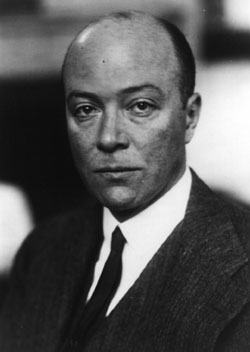
William Christian Bullitt Jr. (January 25, 1891 – February 15, 1967) was an American diplomat, journalist, and novelist. He is known for his special mission to negotiate with Lenin on behalf of the Paris Peace Conference, often recalled as a missed opportunity to normalize relations with the Bolsheviks. He was also the first U.S. ambassador to the Soviet Union and the U.S. ambassador to France during World War II. In his youth, he was considered a radical, but he later became an outspoken anticommunist.
Bullitt was born to a prominent Philadelphia family, the son of Louisa Gross Horwitz and William Christian Bullitt Sr. His family was of French descent. His ancestor Joseph Boulet, a Huguenot, had fled Nîmes in 1629. Joseph Boulet settled in St. Mary's City in the English colony of Maryland in 1634, and the family later anglicized its surname to Bullitt. His grandfather was John Christian Bullitt, founder of the law firm today known as Drinker Biddle & Reath. John C. Bullitt was also the preferred legal counsel for Jay Cooke, a choice of client that made him into a very rich man. On his maternal side, Bullitt was descended from Haym Salomon, a Polish Jew who settled in Philadelphia in 1778. The descendants of Salomon later converted to Episcopalianism in the 19th century, and Bullitt's mother, Louisa Horwitz, was, despite her surname, an Episcopalian.
Bullitt's upbringing was cosmopolitan. Members of his family lived in the main European capitals, and he learned French and German at a very young age. As a boy, Bullitt spent every summer on a grand tour of Europe. Despite his upbringing, he always saw himself as an American first. Bullitt was staying in Paris during the Spanish-American War. During the war, he hung an American flag on the window of his room in his parents' Paris house to show his support for his country and wanted to attack the Spanish embassy in Paris, which his parents forbade, saying that as a seven year old, he was too young to take part in the war. As a child, he was considered a rebellious and rambunctious youth who tended to associate with the "bad boys," as his parents called boys from poor families. As a teenager, he developed an obsession with one day being president. As he wrote in private school: "I'm going to be a lawyer and Governor and Secretary of State and President.” As a student, he was considered to be intelligent, charming and funny, but with a fierce combative streak along with being very egoistical. Bullitt did not hesitate to use his family's wealth to achieve his ambitions, and when one of his private school teachers accused him of cheating on an exam, Bullitt had his father use his influence to have the teacher fired.
Bullitt graduated from Yale University in 1912, after having been voted "most brilliant" in his class. When Bullitt arrived at Yale in September 1908, he saw the institution as mainly a way to make contacts for his future political career. Bullitt, who was already fluent in German and French, chose to major in those languages. This allowed him to achieve outstanding grades without working too hard. He himself noted that he spoke better German and French than his professors. Bullitt had little interest in learning, and he saw attending Yale more as a way to be popular, and he set out with much success to be the proverbial "big man on the campus.” Handsome, intelligent, witty and good at both athletics and scholarship, Bullitt was an exceedingly popular student. Two of Bullitt's closest friends at Yale were Cole Porter and Monty Woolley, with whom he staged several plays. During his time at Yale, he was a member of the elite Phi Beta Kappa fraternity and in 1911 was elected to the Scroll and Key secret society.
After graduating from Yale, Bullitt enrolled at Harvard Law School. At Harvard, his professors did not tolerate the antics in which Bullitt engaged at Yale, such as his constant jokes in the lecture halls and his practice of diverting a classroom conversation in order to dominate it and show off his intellectual abilities. One of Bullitt's professors at Harvard, Joseph Henry Beale, took a particular pleasure in humiliating him in the classroom, which contributed to his decision to drop out of Harvard. Moreover, during his time at Harvard, Bullitt became obsessed with the fear that he might become impotent due to his prematurely thinning hair, because he erroneously associated baldness with a loss of sexual potency, and he assaulted several other students who suggested to him he would soon be impotent. Additionally, Bullitt did not enjoy his legal studies, which he had undertaken only because of his father, who threatened to cut him off from his monthly allowance if he did not enter Harvard Law School. When Bullitt's father died in March 1914, he immediately dropped out of Harvard.
In 1914, Bullitt visited Russia with his mother. He was in Moscow on 28 July 1914 when Austria-Hungary declared war on Serbia, provoking pro-Serb demonstrations on the streets as angry crowds waved the Serbian and Russian flags while chanting "Down with Austria! Long live Serbia!" Bullitt took the last train from Moscow to Berlin and left Russia just before Germany declared war on Russia on 1 August 1914. Upon his return to America, Bullitt worked as a journalist for the Philadelphia Ledger, and become the deputy editor of the paper in 1915. In December 1915, in a publicity stunt, Henry Ford chartered an ocean liner, the Oscar II, which he called the "Peace Ship" and sailed to Europe with the intention of mediating an end to the war. Bullitt was one of the journalists abroad the Oscar II and he filed mocking reports from the ship about the resulting media circus, stressing the absurdity of Ford's voyage. These reports were published in various American newspapers. In January 1916, Bullitt started a popular humorous column in the Ledger, "Bumping the Bumps", which mocked virtually every aspect of American life.
He married socialite Aimee Ernesta Drinker (1892–1981) in 1916. Drinker was a renowned beauty from one of Philadelphia's wealthiest families who turned down marriage proposals from 50 different men before she decided to accept Bullitt's marriage proposal. Given her surplus of marriage proposals, many were surprised that she agreed to marry Bullitt, whom she dated only for a brief time and barely knew. The Drinker family had arrived in the newly founded colony of Pennsylvania in 1670 as one of the first English settlers, and had a quasi-aristocratic position in Philadelphia's social life. The marriage of a son and daughter from two of Philadelphia's richest families made front-page news in Philadelphia. Bullitt was incapable of understanding women as persons, and he regarded his wife as an object that existed only for his own needs. Given his views, the marriage became deeply unhappy.
The couple took their honeymoon in May 1916 in Germany, Austria-Hungary and German-occupied Belgium. Bullitt interviewed various German and Austrian leaders for the Ledger. The Bullitts were described by the Russian historian Alexander Etkind as a "socially progressive, but culturally conservative" couple who greatly admired the welfare state of Imperial Germany, which preserved the rule of the traditional elites while providing sufficient care for the poor to apparently end the possibility of a revolution. Bullitt was especially impressed with the German health care system, under which the German state provided free medical care for all, and came to wish that his country adopt a similar system. In September 1916, Bullitt took a guided tour of the Eastern Front, where he wrote admiringly of the German Army. Bullitt interviewed the industrialist Walther Rathenau who told him that Germany might give Constantinople to Russia as compensation for German annexations of other parts of the Russian empire. When Bullitt objected that the Ottomans would be opposed to the loss of their capital, Rathenau cynically replied, "We would only have to publish full accounts of the Armenian massacres, and German public opinion would be so incensed that we could drop the Turks as allies."
Hub AI
William Christian Bullitt Jr. AI simulator
(@William Christian Bullitt Jr._simulator)
William Christian Bullitt Jr.
William Christian Bullitt Jr. (January 25, 1891 – February 15, 1967) was an American diplomat, journalist, and novelist. He is known for his special mission to negotiate with Lenin on behalf of the Paris Peace Conference, often recalled as a missed opportunity to normalize relations with the Bolsheviks. He was also the first U.S. ambassador to the Soviet Union and the U.S. ambassador to France during World War II. In his youth, he was considered a radical, but he later became an outspoken anticommunist.
Bullitt was born to a prominent Philadelphia family, the son of Louisa Gross Horwitz and William Christian Bullitt Sr. His family was of French descent. His ancestor Joseph Boulet, a Huguenot, had fled Nîmes in 1629. Joseph Boulet settled in St. Mary's City in the English colony of Maryland in 1634, and the family later anglicized its surname to Bullitt. His grandfather was John Christian Bullitt, founder of the law firm today known as Drinker Biddle & Reath. John C. Bullitt was also the preferred legal counsel for Jay Cooke, a choice of client that made him into a very rich man. On his maternal side, Bullitt was descended from Haym Salomon, a Polish Jew who settled in Philadelphia in 1778. The descendants of Salomon later converted to Episcopalianism in the 19th century, and Bullitt's mother, Louisa Horwitz, was, despite her surname, an Episcopalian.
Bullitt's upbringing was cosmopolitan. Members of his family lived in the main European capitals, and he learned French and German at a very young age. As a boy, Bullitt spent every summer on a grand tour of Europe. Despite his upbringing, he always saw himself as an American first. Bullitt was staying in Paris during the Spanish-American War. During the war, he hung an American flag on the window of his room in his parents' Paris house to show his support for his country and wanted to attack the Spanish embassy in Paris, which his parents forbade, saying that as a seven year old, he was too young to take part in the war. As a child, he was considered a rebellious and rambunctious youth who tended to associate with the "bad boys," as his parents called boys from poor families. As a teenager, he developed an obsession with one day being president. As he wrote in private school: "I'm going to be a lawyer and Governor and Secretary of State and President.” As a student, he was considered to be intelligent, charming and funny, but with a fierce combative streak along with being very egoistical. Bullitt did not hesitate to use his family's wealth to achieve his ambitions, and when one of his private school teachers accused him of cheating on an exam, Bullitt had his father use his influence to have the teacher fired.
Bullitt graduated from Yale University in 1912, after having been voted "most brilliant" in his class. When Bullitt arrived at Yale in September 1908, he saw the institution as mainly a way to make contacts for his future political career. Bullitt, who was already fluent in German and French, chose to major in those languages. This allowed him to achieve outstanding grades without working too hard. He himself noted that he spoke better German and French than his professors. Bullitt had little interest in learning, and he saw attending Yale more as a way to be popular, and he set out with much success to be the proverbial "big man on the campus.” Handsome, intelligent, witty and good at both athletics and scholarship, Bullitt was an exceedingly popular student. Two of Bullitt's closest friends at Yale were Cole Porter and Monty Woolley, with whom he staged several plays. During his time at Yale, he was a member of the elite Phi Beta Kappa fraternity and in 1911 was elected to the Scroll and Key secret society.
After graduating from Yale, Bullitt enrolled at Harvard Law School. At Harvard, his professors did not tolerate the antics in which Bullitt engaged at Yale, such as his constant jokes in the lecture halls and his practice of diverting a classroom conversation in order to dominate it and show off his intellectual abilities. One of Bullitt's professors at Harvard, Joseph Henry Beale, took a particular pleasure in humiliating him in the classroom, which contributed to his decision to drop out of Harvard. Moreover, during his time at Harvard, Bullitt became obsessed with the fear that he might become impotent due to his prematurely thinning hair, because he erroneously associated baldness with a loss of sexual potency, and he assaulted several other students who suggested to him he would soon be impotent. Additionally, Bullitt did not enjoy his legal studies, which he had undertaken only because of his father, who threatened to cut him off from his monthly allowance if he did not enter Harvard Law School. When Bullitt's father died in March 1914, he immediately dropped out of Harvard.
In 1914, Bullitt visited Russia with his mother. He was in Moscow on 28 July 1914 when Austria-Hungary declared war on Serbia, provoking pro-Serb demonstrations on the streets as angry crowds waved the Serbian and Russian flags while chanting "Down with Austria! Long live Serbia!" Bullitt took the last train from Moscow to Berlin and left Russia just before Germany declared war on Russia on 1 August 1914. Upon his return to America, Bullitt worked as a journalist for the Philadelphia Ledger, and become the deputy editor of the paper in 1915. In December 1915, in a publicity stunt, Henry Ford chartered an ocean liner, the Oscar II, which he called the "Peace Ship" and sailed to Europe with the intention of mediating an end to the war. Bullitt was one of the journalists abroad the Oscar II and he filed mocking reports from the ship about the resulting media circus, stressing the absurdity of Ford's voyage. These reports were published in various American newspapers. In January 1916, Bullitt started a popular humorous column in the Ledger, "Bumping the Bumps", which mocked virtually every aspect of American life.
He married socialite Aimee Ernesta Drinker (1892–1981) in 1916. Drinker was a renowned beauty from one of Philadelphia's wealthiest families who turned down marriage proposals from 50 different men before she decided to accept Bullitt's marriage proposal. Given her surplus of marriage proposals, many were surprised that she agreed to marry Bullitt, whom she dated only for a brief time and barely knew. The Drinker family had arrived in the newly founded colony of Pennsylvania in 1670 as one of the first English settlers, and had a quasi-aristocratic position in Philadelphia's social life. The marriage of a son and daughter from two of Philadelphia's richest families made front-page news in Philadelphia. Bullitt was incapable of understanding women as persons, and he regarded his wife as an object that existed only for his own needs. Given his views, the marriage became deeply unhappy.
The couple took their honeymoon in May 1916 in Germany, Austria-Hungary and German-occupied Belgium. Bullitt interviewed various German and Austrian leaders for the Ledger. The Bullitts were described by the Russian historian Alexander Etkind as a "socially progressive, but culturally conservative" couple who greatly admired the welfare state of Imperial Germany, which preserved the rule of the traditional elites while providing sufficient care for the poor to apparently end the possibility of a revolution. Bullitt was especially impressed with the German health care system, under which the German state provided free medical care for all, and came to wish that his country adopt a similar system. In September 1916, Bullitt took a guided tour of the Eastern Front, where he wrote admiringly of the German Army. Bullitt interviewed the industrialist Walther Rathenau who told him that Germany might give Constantinople to Russia as compensation for German annexations of other parts of the Russian empire. When Bullitt objected that the Ottomans would be opposed to the loss of their capital, Rathenau cynically replied, "We would only have to publish full accounts of the Armenian massacres, and German public opinion would be so incensed that we could drop the Turks as allies."
Recent media