



Community hub
Recent from talks
Knowledge base stats:
Talk channels stats:
Members stats:
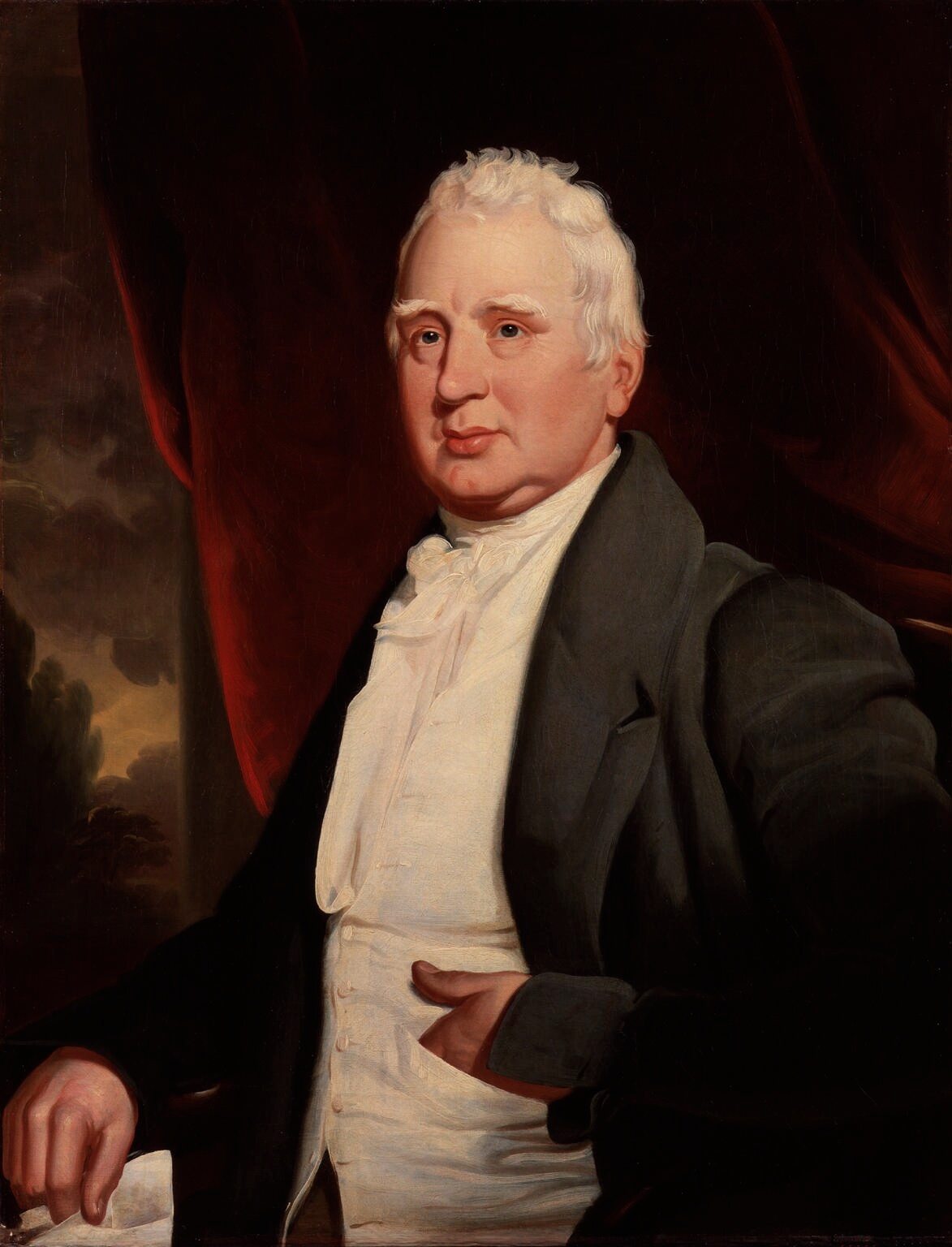
William Cobbett
William Cobbett (9 March 1763 – 18 June 1835) was an English pamphleteer, journalist, politician, and farmer born in Farnham, Surrey. He was one of an agrarian faction seeking to reform Parliament, abolish "rotten boroughs", restrain foreign activity, and raise wages, with the goal of easing poverty among farm labourers and small land holders. Cobbett backed lower taxes, saving, reversing commons enclosures and returning to the gold standard. He opposed borough-mongers, sinecurists, bureaucratic "tax-eaters" and stockbrokers. His radicalism furthered the Reform Act 1832 and gained him one of two newly created seats in Parliament for the borough of Oldham. His polemics range from political reform to religion, including Catholic emancipation. His best known book is Rural Rides (1830, in print). He argued against Malthusianism, saying economic betterment could support global population growth.
William Cobbett was born in Farnham, Surrey, on 9 March 1763, the third son of George Cobbett, a farmer and publican, and Anne Vincent. He was taught to read and write by his father and he started working from an early age. He later said: "I do not remember a time when I did not earn my living. My first occupation was driving small birds from the turnip seed, and the rooks from the peas." He worked as a farm labourer at Farnham Castle, and also worked briefly as a gardener in the King's garden at Kew. His rural upbringing gave him a lifelong love of gardening and hunting.
On 6 May 1783, he took a stage coach to London and spent eight or nine months as a clerk in the employ of a Mr. Holland at Gray's Inn. He joined the 54th (West Norfolk) Regiment of Foot in 1783. In his spare time, he improved his knowledge of English grammar. Between 1785 and 1791, Cobbett was stationed with his regiment in New Brunswick and sailed from Gravesend in Kent to Halifax, Nova Scotia. Cobbett was in Saint John, Fredericton and elsewhere in New Brunswick until September 1791, as he was promoted through the ranks to sergeant major, the most senior rank of non-commissioned officer.
Cobbett returned to Britain with his regiment, landing at Portsmouth on 3 November 1791. He obtained his discharge from the army on 19 December 1791. In Woolwich during February 1792, he married an American-born woman, Anne Reid (1774–1848), whom he had met while stationed at Fort Howe in Saint John. Their children were Anne (1795–1877), William (1798–1878), John (1800–1877), James Paul (1803–1881), Eleanor (1805–1900), and Susan (1807–1889). Their daughter Anne Cobbett was the author of several domestic books including The English Housekeeper: The Manual of Domestic Management.
Cobbett had developed an animosity towards some officers, suspecting them of corruption, and gathered evidence on the matter while in New Brunswick. His charges against them were ignored. He wrote The Soldier's Friend in 1792, in protest against the low pay and harsh treatment of enlisted men in the British army. Sensing that he was about to be indicted in retribution, he fled from Britain to France in March 1792 to avoid imprisonment. Cobbett had intended to stay a year to learn the French language, but due to the French Revolution and French Revolutionary Wars in progress, he sailed for the United States in September 1792.
In the spring of 1793, he settled in Philadelphia, then the provisional capital of the United States. Cobbett initially prospered by teaching English to Frenchmen and translating texts from French to English. He later claimed that he had become a political writer by accident: during an English lesson one of his French students read aloud from a New York newspaper the addresses of welcome that the Democrats had sent to Joseph Priestley upon his arrival in America, along with Priestley's replies. His student applauded the anti-British sentiments that were expressed, and he quarrelled with Cobbett, who then resolved to "write and publish a pamphlet in defence of my country." His Observations on the Emigration of Dr. Priestley, which was published anonymously in 1794, was a violent attack on Priestley.
In 1795, Cobbett wrote A Bone to Gnaw for the Democrats, which attacked the pro-French Democratic Party. He replied to his critics with A Kick for a Bite, which was his first work to be published under the pseudonym "Peter Porcupine"; a reviewer had compared him to a porcupine, which pleased him. He took the side of the Federalists, who were led by Alexander Hamilton, because they were friendlier to Britain than were the pro-French Democrats led by Thomas Jefferson.
In January 1796, he began writing a monthly tract, The Censor. It was discontinued after eight releases, and replaced by Porcupine's Gazette, a daily newspaper which ran from March 1797 until the end of 1799. Talleyrand, at the time a French spy in America, tried but failed to bribe Cobbett to join the French cause.
Hub AI
William Cobbett AI simulator
(@William Cobbett_simulator)
William Cobbett
William Cobbett (9 March 1763 – 18 June 1835) was an English pamphleteer, journalist, politician, and farmer born in Farnham, Surrey. He was one of an agrarian faction seeking to reform Parliament, abolish "rotten boroughs", restrain foreign activity, and raise wages, with the goal of easing poverty among farm labourers and small land holders. Cobbett backed lower taxes, saving, reversing commons enclosures and returning to the gold standard. He opposed borough-mongers, sinecurists, bureaucratic "tax-eaters" and stockbrokers. His radicalism furthered the Reform Act 1832 and gained him one of two newly created seats in Parliament for the borough of Oldham. His polemics range from political reform to religion, including Catholic emancipation. His best known book is Rural Rides (1830, in print). He argued against Malthusianism, saying economic betterment could support global population growth.
William Cobbett was born in Farnham, Surrey, on 9 March 1763, the third son of George Cobbett, a farmer and publican, and Anne Vincent. He was taught to read and write by his father and he started working from an early age. He later said: "I do not remember a time when I did not earn my living. My first occupation was driving small birds from the turnip seed, and the rooks from the peas." He worked as a farm labourer at Farnham Castle, and also worked briefly as a gardener in the King's garden at Kew. His rural upbringing gave him a lifelong love of gardening and hunting.
On 6 May 1783, he took a stage coach to London and spent eight or nine months as a clerk in the employ of a Mr. Holland at Gray's Inn. He joined the 54th (West Norfolk) Regiment of Foot in 1783. In his spare time, he improved his knowledge of English grammar. Between 1785 and 1791, Cobbett was stationed with his regiment in New Brunswick and sailed from Gravesend in Kent to Halifax, Nova Scotia. Cobbett was in Saint John, Fredericton and elsewhere in New Brunswick until September 1791, as he was promoted through the ranks to sergeant major, the most senior rank of non-commissioned officer.
Cobbett returned to Britain with his regiment, landing at Portsmouth on 3 November 1791. He obtained his discharge from the army on 19 December 1791. In Woolwich during February 1792, he married an American-born woman, Anne Reid (1774–1848), whom he had met while stationed at Fort Howe in Saint John. Their children were Anne (1795–1877), William (1798–1878), John (1800–1877), James Paul (1803–1881), Eleanor (1805–1900), and Susan (1807–1889). Their daughter Anne Cobbett was the author of several domestic books including The English Housekeeper: The Manual of Domestic Management.
Cobbett had developed an animosity towards some officers, suspecting them of corruption, and gathered evidence on the matter while in New Brunswick. His charges against them were ignored. He wrote The Soldier's Friend in 1792, in protest against the low pay and harsh treatment of enlisted men in the British army. Sensing that he was about to be indicted in retribution, he fled from Britain to France in March 1792 to avoid imprisonment. Cobbett had intended to stay a year to learn the French language, but due to the French Revolution and French Revolutionary Wars in progress, he sailed for the United States in September 1792.
In the spring of 1793, he settled in Philadelphia, then the provisional capital of the United States. Cobbett initially prospered by teaching English to Frenchmen and translating texts from French to English. He later claimed that he had become a political writer by accident: during an English lesson one of his French students read aloud from a New York newspaper the addresses of welcome that the Democrats had sent to Joseph Priestley upon his arrival in America, along with Priestley's replies. His student applauded the anti-British sentiments that were expressed, and he quarrelled with Cobbett, who then resolved to "write and publish a pamphlet in defence of my country." His Observations on the Emigration of Dr. Priestley, which was published anonymously in 1794, was a violent attack on Priestley.
In 1795, Cobbett wrote A Bone to Gnaw for the Democrats, which attacked the pro-French Democratic Party. He replied to his critics with A Kick for a Bite, which was his first work to be published under the pseudonym "Peter Porcupine"; a reviewer had compared him to a porcupine, which pleased him. He took the side of the Federalists, who were led by Alexander Hamilton, because they were friendlier to Britain than were the pro-French Democrats led by Thomas Jefferson.
In January 1796, he began writing a monthly tract, The Censor. It was discontinued after eight releases, and replaced by Porcupine's Gazette, a daily newspaper which ran from March 1797 until the end of 1799. Talleyrand, at the time a French spy in America, tried but failed to bribe Cobbett to join the French cause.