


Community hub
Recent from talks
Contribute something to knowledge base
Content stats: 0 posts, 0 articles, 1 media, 0 notes
Members stats: 0 subscribers, 0 contributors, 0 moderators, 0 supporters
Subscribers
Supporters
Contributors
Moderators
William Paget (actor)
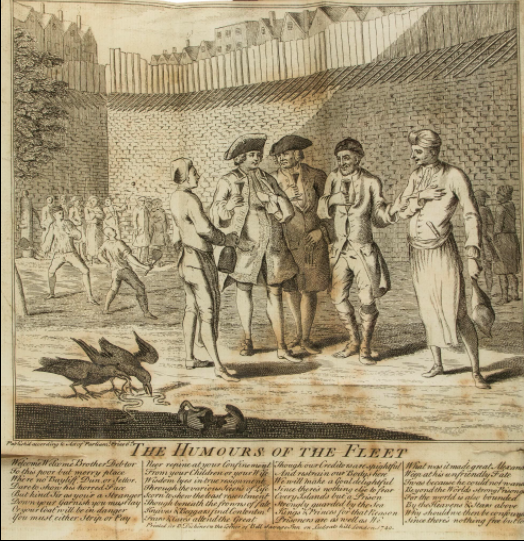
William Paget (died 23 March 1752) was an English actor and writer in the 18th century who played alongside David Garrick and was a member of John Rich's company, playing in the first season of Theatre Royal, Covent Garden (1732). He was also an eminent tobacconist on Fleet Street, London. Toward the end of his life he served time in Fleet Prison, writing the poem "The Humours of the Fleet" among others. He then agreed to participate in the establishment of Halifax, Nova Scotia, dying there in 1752.
His father, "the son of Dance", was a mason and architect and is reported to have built Buckingham House (which would become Buckingham Palace).
In 1730 Paget was cast as Mirza in the first Masonic opera, the libretto written by William Rufus Chetwood, entitled The Generous Freemason; or, The Constant Lady. With Humours of Squire Noodle and his Man Doodle. The opera was performed at Oates and Henry Fielding's Great Theatrical Booth at the George Inn Yard in Smithfield, during the time of Bartholomew Fair. He also played at Southwark Fair.
In the same year, 27 June 1730, Paget played Othello at Haymarket, having arrived from the theatre of Dublin.
In the 1730–1731 season, he joined the Drury Lane company, when he played Peachum in John Gay's Beggar's Opera. He played in John Rich's company for the 1731–1733 seasons at Lincoln's Inn Fields Theatre and later Covent Garden.
In 1733–1734 he returned to Drury Lane.
After that he played Covent Garden, the Haymarket, Lincoln's Inn Fields Theatre, Goodman's Fields Theatre, and at Richmond and Dublin. At Goodman's he played Longman in Henry Giffard's (1694–1772) play Pamela: A comedy, etc..
In 1736–37, Paget played Duke of Albany in King Lear at Covent Garden.
William Paget (actor)
William Paget (died 23 March 1752) was an English actor and writer in the 18th century who played alongside David Garrick and was a member of John Rich's company, playing in the first season of Theatre Royal, Covent Garden (1732). He was also an eminent tobacconist on Fleet Street, London. Toward the end of his life he served time in Fleet Prison, writing the poem "The Humours of the Fleet" among others. He then agreed to participate in the establishment of Halifax, Nova Scotia, dying there in 1752.
His father, "the son of Dance", was a mason and architect and is reported to have built Buckingham House (which would become Buckingham Palace).
In 1730 Paget was cast as Mirza in the first Masonic opera, the libretto written by William Rufus Chetwood, entitled The Generous Freemason; or, The Constant Lady. With Humours of Squire Noodle and his Man Doodle. The opera was performed at Oates and Henry Fielding's Great Theatrical Booth at the George Inn Yard in Smithfield, during the time of Bartholomew Fair. He also played at Southwark Fair.
In the same year, 27 June 1730, Paget played Othello at Haymarket, having arrived from the theatre of Dublin.
In the 1730–1731 season, he joined the Drury Lane company, when he played Peachum in John Gay's Beggar's Opera. He played in John Rich's company for the 1731–1733 seasons at Lincoln's Inn Fields Theatre and later Covent Garden.
In 1733–1734 he returned to Drury Lane.
After that he played Covent Garden, the Haymarket, Lincoln's Inn Fields Theatre, Goodman's Fields Theatre, and at Richmond and Dublin. At Goodman's he played Longman in Henry Giffard's (1694–1772) play Pamela: A comedy, etc..
In 1736–37, Paget played Duke of Albany in King Lear at Covent Garden.
Recent media
Recent media