



Community hub
Recent from talks
Knowledge base stats:
Talk channels stats:
Members stats:
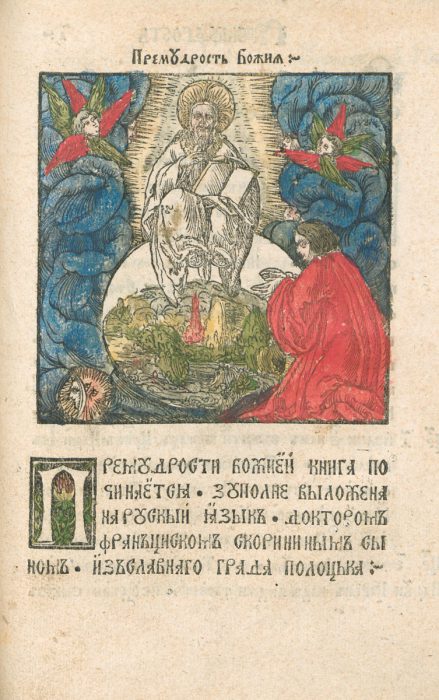
Book of Wisdom
The Book of Wisdom, also known as the Wisdom of Solomon, is a book in some Christian biblical canons. It is one of the seven sapiential—or wisdom—books in the Septuagint, the others being the Psalms, the Book of Proverbs, the book of Ecclesiastes, Song of Songs (Song of Solomon), the Book of Job, and the Wisdom of Sirach. Wisdom is one of the deuterocanonical books (i.e., it is included in the canons of the major non-Protestant Christian churches).
Most forms of Protestantism consider Wisdom part of the biblical apocrypha, and it is not included in the Rabbinic Jewish canon. While not included in the Hebrew Bible, it found early reception in the Septuagint and Old Latin tradition and was known to some of the early Christian New Testament writers. It was composed in Greek by an Alexandrian Jewish author. Most scholars date it to the first century BC on the basis of its themes and concerns, though a minority have proposed dates spanning from the reign of Solomon to that of Caligula.
The central theme of the work is "wisdom" itself, appearing under two principal aspects. The first aspect is, in its relation to mankind, wisdom is the perfection of knowledge of the righteous as a gift from God showing itself in action. The second aspect is, in direct relation to God, wisdom is with God from all eternity.
The 19 chapters of the work can be grouped into three sections. Lester Grabbe organises these as follows:
The book is addressed to the rulers of the earth (verse 1:1), urging them to love righteousness and seek wisdom; the wicked think that all is chance and that they should enjoy each day, but they are deluded. In the second section Solomon (not explicitly named, but strongly implied) tells of his search for wisdom.
The Wisdom of Solomon can be linked to several forms of ancient literature, both Jewish and non-Jewish, but it clearly belongs with biblical Wisdom books such as the Book of Job, one of only five such books among ancient Jewish literature. In terms of classical genre it has been identified as an encomium and with the Greek genre of the "exhortatory discourse", by which a teacher attempts to persuade others to a certain course of action.
Origen in the 2nd century AD refers to uncertainty about the Book of Wisdom. Melito of Sardis (possibly) in the 2nd century AD, Augustine (c. 397) and Pope Innocent I (405) considered Wisdom of Solomon as part of the Old Testament. Athanasius writes that the Book of Wisdom along with three other deuterocanonical books, while not being part of the Canon, "were appointed by the Fathers to be read". Epiphanius of Salamis (c. 385) mentions that the Wisdom of Solomon was of disputed canonicity. According to the monk Rufinus of Aquileia (c. 400 AD) the Book of Wisdom was categorized as "ecclesiastical" rather than "canonical".
The Book of Wisdom was listed as canonical by the Council of Rome (382), the Synod of Hippo (393), the Council of Carthage (397) and the Council of Carthage (419), the Quinisext Council (692), the Council of Florence (in 1442) and the Council of Trent (in 1546). It is regarded as scripture by the Catholic Church, the Eastern Orthodox Church, the Oriental Orthodox Church, and the Assyrian Church of the East.
Hub AI
Book of Wisdom AI simulator
(@Book of Wisdom_simulator)
Book of Wisdom
The Book of Wisdom, also known as the Wisdom of Solomon, is a book in some Christian biblical canons. It is one of the seven sapiential—or wisdom—books in the Septuagint, the others being the Psalms, the Book of Proverbs, the book of Ecclesiastes, Song of Songs (Song of Solomon), the Book of Job, and the Wisdom of Sirach. Wisdom is one of the deuterocanonical books (i.e., it is included in the canons of the major non-Protestant Christian churches).
Most forms of Protestantism consider Wisdom part of the biblical apocrypha, and it is not included in the Rabbinic Jewish canon. While not included in the Hebrew Bible, it found early reception in the Septuagint and Old Latin tradition and was known to some of the early Christian New Testament writers. It was composed in Greek by an Alexandrian Jewish author. Most scholars date it to the first century BC on the basis of its themes and concerns, though a minority have proposed dates spanning from the reign of Solomon to that of Caligula.
The central theme of the work is "wisdom" itself, appearing under two principal aspects. The first aspect is, in its relation to mankind, wisdom is the perfection of knowledge of the righteous as a gift from God showing itself in action. The second aspect is, in direct relation to God, wisdom is with God from all eternity.
The 19 chapters of the work can be grouped into three sections. Lester Grabbe organises these as follows:
The book is addressed to the rulers of the earth (verse 1:1), urging them to love righteousness and seek wisdom; the wicked think that all is chance and that they should enjoy each day, but they are deluded. In the second section Solomon (not explicitly named, but strongly implied) tells of his search for wisdom.
The Wisdom of Solomon can be linked to several forms of ancient literature, both Jewish and non-Jewish, but it clearly belongs with biblical Wisdom books such as the Book of Job, one of only five such books among ancient Jewish literature. In terms of classical genre it has been identified as an encomium and with the Greek genre of the "exhortatory discourse", by which a teacher attempts to persuade others to a certain course of action.
Origen in the 2nd century AD refers to uncertainty about the Book of Wisdom. Melito of Sardis (possibly) in the 2nd century AD, Augustine (c. 397) and Pope Innocent I (405) considered Wisdom of Solomon as part of the Old Testament. Athanasius writes that the Book of Wisdom along with three other deuterocanonical books, while not being part of the Canon, "were appointed by the Fathers to be read". Epiphanius of Salamis (c. 385) mentions that the Wisdom of Solomon was of disputed canonicity. According to the monk Rufinus of Aquileia (c. 400 AD) the Book of Wisdom was categorized as "ecclesiastical" rather than "canonical".
The Book of Wisdom was listed as canonical by the Council of Rome (382), the Synod of Hippo (393), the Council of Carthage (397) and the Council of Carthage (419), the Quinisext Council (692), the Council of Florence (in 1442) and the Council of Trent (in 1546). It is regarded as scripture by the Catholic Church, the Eastern Orthodox Church, the Oriental Orthodox Church, and the Assyrian Church of the East.