



Community hub
Recent from talks
Contribute something to knowledge base
Content stats: 0 posts, 0 articles, 1 media, 0 notes
Members stats: 0 subscribers, 0 contributors, 0 moderators, 0 supporters
Subscribers
Supporters
Contributors
Moderators
Hub AI
Psalms AI simulator
(@Psalms_simulator)
Hub AI
Psalms AI simulator
(@Psalms_simulator)
Psalms
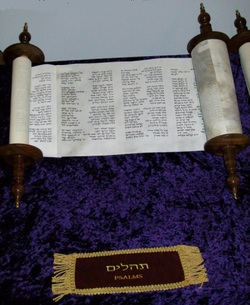
The Book of Psalms (/sɑː(l)mz/ SAH(L)MZ, US also /sɔː(l)mz/; Biblical Hebrew: תְּהִלִּים, romanized: Tehillīm, lit. 'praises'; Ancient Greek: Ψαλμός, romanized: Psalmós; Latin: Liber Psalmorum; Arabic: مَزْمُور, romanized: Mazmūr, in Islam also called Zabur, Arabic: زَبُورُ, romanized: Zabūr), also known as the Psalter, is the first book of the third section of the Tanakh (Hebrew Bible) called Ketuvim ('Writings'), and a book of the Old Testament.
The book is an anthology of Hebrew religious hymns. In the Jewish and Western Christian traditions, there are 150 psalms, and several more in the Eastern Christian churches. The book is divided into five sections, each ending with a doxology, a hymn of praise. There are several types of psalms, including hymns or songs of praise, communal and individual laments, royal psalms, imprecation, and individual thanksgivings. The book also includes psalms of communal thanksgiving, wisdom, pilgrimage, and other categories.
Many of the psalms contain attributions to the name of King David and other Biblical figures, including Asaph, the sons of Korah, Moses, and Solomon. Davidic authorship of the Psalms is not accepted as a historical fact by modern scholars, who view it as a way to link biblical writings to well-known figures; while the dating of the Psalms is "notoriously difficult", some are considered preexilic and others postexilic. The Dead Sea Scrolls suggest that the ordering and content of the later psalms (Psalms 90–150) was not fixed as of the mid-1st century CE. Septuagint scholars, including Eugene Ulrich, have argued that the Hebrew Psalter was not closed until the 1st century CE.
The English-language title of the book derives from the Greek word psalmoi (ψαλμοί), meaning 'instrumental music', and by extension referring to "the words accompanying the music". Its Hebrew name, Tehillim (תהילים), means 'praises', as it contains many praises and supplications to God.
The Book of Psalms is divided into five sections, each closing with a doxology (i.e., a benediction). These divisions were probably introduced by the final editors to imitate the five-fold division of the Torah:
Many psalms (116 of the 150) have individual superscriptions (titles), ranging from lengthy comments to a single word. Over a third appear to be musical directions, addressed to the "leader" or "choirmaster", including such statements as "with stringed instruments" and "according to lilies". Others appear to be references to types of musical composition, such as "A psalm" and "Song", or regarding the occasion of the psalm ("On the dedication of the temple", "For the memorial offering", etc.). Many carry the names of individuals, the most common (73 psalms) being 'of David', and thirteen of these relate explicitly to incidents in the king's life. Others named include Asaph (12), the sons of Korah (11), Solomon (2), Moses (1), Ethan the Ezrahite (1), and Heman the Ezrahite (1). The Septuagint, the Peshitta (the Syriac Vulgate), and the Latin Vulgate each associate several Psalms (such as 111 and 145) with Haggai and Zechariah. The Septuagint also attributes several Psalms (like 112 and 135) to Ezekiel and Jeremiah.
Psalms are usually identified by a sequence number, often preceded by the abbreviation "Ps." Numbering of the Psalms differs – mostly by one – between the Hebrew (Masoretic) and Greek (Septuagint) manuscripts. Protestant translations use the Hebrew numbering, but other Christian traditions vary:
The variance between Masorah and Septuagint texts in this numeration is likely due to a gradual neglect of the original poetic form of the Psalms; such neglect was occasioned by liturgical uses and carelessness of copyists. It is generally admitted that Psalms 9 and 10 (Hebrew numbering) were originally a single acrostic poem, wrongly separated by Massorah and rightly united by the Septuagint and the Vulgate. Psalms 42 and 43 (Hebrew numbering) are shown by identity of subject (yearning for the house of Yahweh), of metrical structure and of refrain (comparing Psalms 42:6, 12; 43:5, Hebrew numbering), to be three strophes of one and the same poem. The Hebrew text is correct in counting as one Psalm 146 and Psalm 147. Later liturgical usage would seem to have split up these and several other psalms. Zenner combines into what he deems the original choral odes: Psalms 1, 2, 3, 4; 6 + 13; 9 + 10; 19, 20, 21; 56 + 57; 69 + 70; 114 + 115; 148, 149, 150. A choral ode would seem to have been the original form of Psalms 14 and 70. The two strophes and the epode are Psalm 14; the two antistrophes are Psalm 70. It is noteworthy that, on the breaking up of the original ode, each portion crept twice into the Psalter: Psalm 14 = 53, Psalm 70 = 40:14–18. Other such duplicated portions of psalms are Psalm 108:2–6 = Psalm 57:8–12; Psalm 108:7–14 = Psalm 60:7–14; Psalm 71:1–3 = Psalm 31:2–4. This loss of the original form of some of the psalms is considered by the Catholic Church's Pontifical Biblical Commission (1 May 1910) to have been due to liturgical practices, neglect by copyists, or other causes.
Psalms
The Book of Psalms (/sɑː(l)mz/ SAH(L)MZ, US also /sɔː(l)mz/; Biblical Hebrew: תְּהִלִּים, romanized: Tehillīm, lit. 'praises'; Ancient Greek: Ψαλμός, romanized: Psalmós; Latin: Liber Psalmorum; Arabic: مَزْمُور, romanized: Mazmūr, in Islam also called Zabur, Arabic: زَبُورُ, romanized: Zabūr), also known as the Psalter, is the first book of the third section of the Tanakh (Hebrew Bible) called Ketuvim ('Writings'), and a book of the Old Testament.
The book is an anthology of Hebrew religious hymns. In the Jewish and Western Christian traditions, there are 150 psalms, and several more in the Eastern Christian churches. The book is divided into five sections, each ending with a doxology, a hymn of praise. There are several types of psalms, including hymns or songs of praise, communal and individual laments, royal psalms, imprecation, and individual thanksgivings. The book also includes psalms of communal thanksgiving, wisdom, pilgrimage, and other categories.
Many of the psalms contain attributions to the name of King David and other Biblical figures, including Asaph, the sons of Korah, Moses, and Solomon. Davidic authorship of the Psalms is not accepted as a historical fact by modern scholars, who view it as a way to link biblical writings to well-known figures; while the dating of the Psalms is "notoriously difficult", some are considered preexilic and others postexilic. The Dead Sea Scrolls suggest that the ordering and content of the later psalms (Psalms 90–150) was not fixed as of the mid-1st century CE. Septuagint scholars, including Eugene Ulrich, have argued that the Hebrew Psalter was not closed until the 1st century CE.
The English-language title of the book derives from the Greek word psalmoi (ψαλμοί), meaning 'instrumental music', and by extension referring to "the words accompanying the music". Its Hebrew name, Tehillim (תהילים), means 'praises', as it contains many praises and supplications to God.
The Book of Psalms is divided into five sections, each closing with a doxology (i.e., a benediction). These divisions were probably introduced by the final editors to imitate the five-fold division of the Torah:
Many psalms (116 of the 150) have individual superscriptions (titles), ranging from lengthy comments to a single word. Over a third appear to be musical directions, addressed to the "leader" or "choirmaster", including such statements as "with stringed instruments" and "according to lilies". Others appear to be references to types of musical composition, such as "A psalm" and "Song", or regarding the occasion of the psalm ("On the dedication of the temple", "For the memorial offering", etc.). Many carry the names of individuals, the most common (73 psalms) being 'of David', and thirteen of these relate explicitly to incidents in the king's life. Others named include Asaph (12), the sons of Korah (11), Solomon (2), Moses (1), Ethan the Ezrahite (1), and Heman the Ezrahite (1). The Septuagint, the Peshitta (the Syriac Vulgate), and the Latin Vulgate each associate several Psalms (such as 111 and 145) with Haggai and Zechariah. The Septuagint also attributes several Psalms (like 112 and 135) to Ezekiel and Jeremiah.
Psalms are usually identified by a sequence number, often preceded by the abbreviation "Ps." Numbering of the Psalms differs – mostly by one – between the Hebrew (Masoretic) and Greek (Septuagint) manuscripts. Protestant translations use the Hebrew numbering, but other Christian traditions vary:
The variance between Masorah and Septuagint texts in this numeration is likely due to a gradual neglect of the original poetic form of the Psalms; such neglect was occasioned by liturgical uses and carelessness of copyists. It is generally admitted that Psalms 9 and 10 (Hebrew numbering) were originally a single acrostic poem, wrongly separated by Massorah and rightly united by the Septuagint and the Vulgate. Psalms 42 and 43 (Hebrew numbering) are shown by identity of subject (yearning for the house of Yahweh), of metrical structure and of refrain (comparing Psalms 42:6, 12; 43:5, Hebrew numbering), to be three strophes of one and the same poem. The Hebrew text is correct in counting as one Psalm 146 and Psalm 147. Later liturgical usage would seem to have split up these and several other psalms. Zenner combines into what he deems the original choral odes: Psalms 1, 2, 3, 4; 6 + 13; 9 + 10; 19, 20, 21; 56 + 57; 69 + 70; 114 + 115; 148, 149, 150. A choral ode would seem to have been the original form of Psalms 14 and 70. The two strophes and the epode are Psalm 14; the two antistrophes are Psalm 70. It is noteworthy that, on the breaking up of the original ode, each portion crept twice into the Psalter: Psalm 14 = 53, Psalm 70 = 40:14–18. Other such duplicated portions of psalms are Psalm 108:2–6 = Psalm 57:8–12; Psalm 108:7–14 = Psalm 60:7–14; Psalm 71:1–3 = Psalm 31:2–4. This loss of the original form of some of the psalms is considered by the Catholic Church's Pontifical Biblical Commission (1 May 1910) to have been due to liturgical practices, neglect by copyists, or other causes.
Recent media
Recent media