Hubbry Logo
Amateur radio operating awardAmateur radio operating awardMain
Open search
Amateur radio operating award
Community hub
Amateur radio operating award
logo
8 pages, 0 posts
0 subscribers
Be the first to start a discussion here.
Contribute something
Amateur radio operating award
from Wikipedia
The most coveted Amateur Radio operating awards

An amateur radio operating award is earned by an amateur radio operator for establishing two-way communication (or "working") with other amateur radio stations. Awards are sponsored by national amateur radio societies, radio enthusiast magazines, or amateur radio clubs, and aim to promote activity on the amateur radio bands. Each award has its own set of rules and fees.

Some awards require the amateur radio operator to have contacted other stations in a certain number of countries, Maidenhead grid locators, or counties. Because amateur radio operators are forbidden by regulation to accept financial compensation for their on-air activity, award recipients generally only receive a certificate, wooden plaque, or a small trophy as recognition of their award. Some awards require fees to be paid, to cover processing and verification as well as hosting and system hardware charges, plus shipping, while others are free. In some instances certificates may be digital documents.

Many amateur radio operating awards require that the applicant submit proof, such as QSL cards, of the contacts which satisfy the requirements of the award. Digital cross-checked logs using online digitally-signed verification systems such as Logbook of the World also satisfy some awards’ requirements.

Many other awards are based on trust, with little or no verification that “QSOs” (contacts) submitted for consideration are genuine.

There are thousands of operating awards available. The most popular awards are the Worked All States award, the Worked All Continents award, and the more challenging Worked All Zones, DX Century Club (DXCC), Islands on the Air (IOTA) and VHF/UHF Century Club (VUCC) awards.

DXCC is the most popular awards program, initially requiring amateurs to contact 100 of the 340 (as of 2025) separately designated countries and territories ("entities") in the world. (DXing is the practice of contacting distant parties.)

Other popular awards include contacting remote islands (Islands on the Air, also known as “IOTA”), beaches, US counties, lighthouses, parks and forests. Each of these locations may have a unique designation for their specific award, which operators log and then submit for award accreditation.

Many awards are available for contacting amateurs in a particular country, region, city or topographical feature. For example, Summits On The Air (SOTA) tallies points towards awards to operators who transmit from mountain elevations or make contact with those transmitting from them, for which events are scheduled periodically.

Some countries may be split into collectible areas for awards based on county (e.g. USA, UK), province (Netherlands and Belgium, or in France, departments), canton (Switzerland), or other territorial area.

In the United Kingdom, the Worked All Britain (WAB) award uses WAB squares based on the UK Ordnance Survey mapping system, dividing the UK, Crown Dependencies and Republic of Ireland into squares to be contacted for credit.

Some awards are popular enough that “contests” (scheduled recurring designated dates and times of operation) take place where ham radio operators try to activate or contact as many locations and swap designations based on the rules as possible in the timeframe. This harmonizes activity for a specific purpose, such as activation of DXCC entities, island groups, Maidenhead Grid squares, zones or other award identifier, as per the rules of each contest organising body.

Awards may have tiers, for example, confirming 100 DXCC entities, then in stepped tiers until a “full house” is reached. This often becomes a lifelong challenge, which may be frustrated by national restrictions or geopolitics, such as North Korea and Turkmenistan’s prohibition on amateur radio operation, or safety concerns such as islands in the South China Sea such as Pratas Island, Scarborough Reef and Spratly Islands.

Special event stations

[edit]

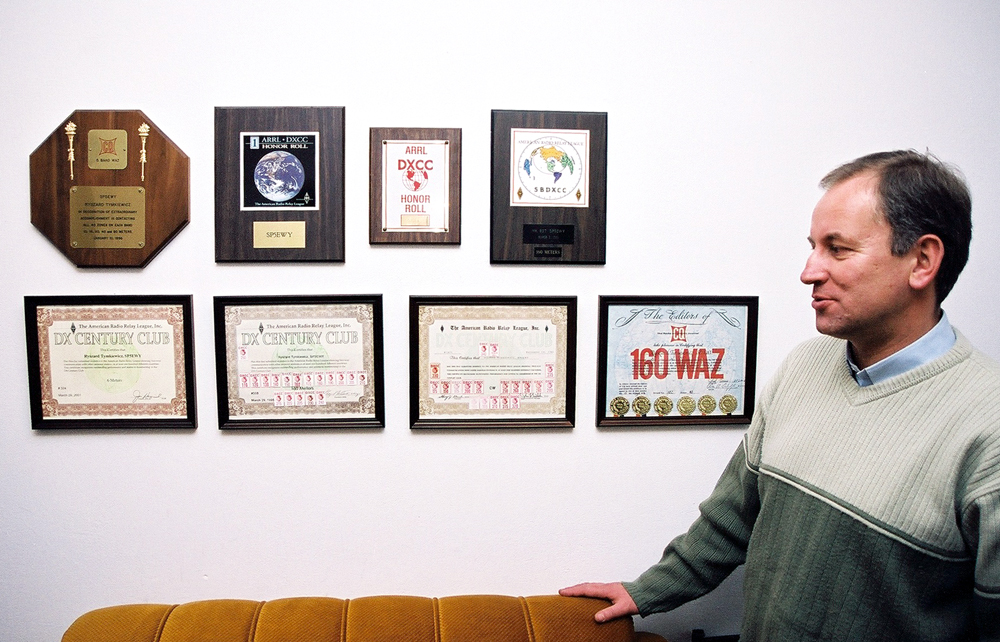
Many amateurs also enjoy setting up and contacting special event stations. Set up to commemorate special occurrences, they often issue distinctive QSLs or certificates. Some use unusual prefixes, such as the call signs with "96" that amateurs in the US State of Georgia could use during the 1996 Atlanta Olympics,[1] or the OO prefix used by Belgian amateurs in 2005 to commemorate their nation's 175th anniversary.[2] (Not surprisingly, there are also awards for working sufficient numbers of prefixes.) Some events are held annually such as Guides on the Air and Jamboree on the Air. Many amateurs decorate their radio "shacks" (the room where they keep their radios) with these certificates.

See also

[edit]

References

[edit]
[edit]
Revisions and contributorsEdit on WikipediaRead on Wikipedia
from Grokipedia
Amateur radio operating awards are formal recognitions, typically in the form of certificates, plaques, or endorsements, granted to licensed operators (hams) for achieving specific milestones in radio communication, such as establishing confirmed two-way contacts with stations across designated geographic areas, frequency bands, or operating modes. These awards, sponsored by national and international organizations, encourage operators to develop technical skills, explore propagation characteristics, and foster global connections within the hobby. The tradition of operating awards dates back to the 1930s, with programs designed to motivate activity on the airwaves amid growing regulatory frameworks and technological advancements. One of the most prestigious examples is the DX Century Club (DXCC) award, administered by the (ARRL) since 1937, which requires confirmed contacts with at least 100 distinct countries or territories (entities) worldwide, drawing from a foundational 1935 article in QST magazine that outlined the concept of systematic DX (long-distance) chasing. Other notable ARRL-sponsored awards include the Worked All States (WAS), earned by contacting all 50 U.S. states, often pursued across multiple bands or modes like voice, , or digital; the Worked All Continents (WAC), a global program under the (IARU) requiring contacts on all six inhabited continents; and the VHF/UHF Century Club (VUCC), focusing on grid squares for higher-frequency operations. In 2025, the ARRL introduced the DXCC Trident award for operators confirming contacts with 100 entities across phone, CW, and digital modes. Internationally, organizations like the Radio Society of Great Britain (RSGB) offer progressive HF (high-frequency) and VHF/UHF awards that build in difficulty, rewarding contacts with progressively more distant or challenging stations to promote experimentation with antennas, modes, and propagation. Similarly, IARU regions maintain tailored programs, such as the IARU Region 1 Operating Award, which recognizes contacts within , , the , and . To earn these awards, operators log qualifying contacts (QSOs) and submit proofs of confirmation—traditionally physical QSL cards exchanged by mail, but increasingly electronic via systems like ARRL's Logbook of the World (LoTW) or eQSL—for adjudication by the sponsoring body, often involving modest fees to cover processing. Beyond geographic challenges, some awards emphasize skills like proficiency or extended conversations, underscoring the hobby's blend of technical prowess and camaraderie.

Overview

Definition and Purpose

Amateur radio operating awards are recognitions granted to licensed operators for establishing confirmed two-way communications, known as QSOs, via various operating modes including radiotelephony and radiotelegraph, with a specified number or type of other stations, determined by geographic, operational, or technical criteria. These awards serve as formal acknowledgments of achievement within the hobby, typically issued by national or international amateur radio organizations. The core purpose of these awards is to promote international goodwill and cooperation among operators worldwide, while enhancing technical proficiency, operating skills, and understanding of . They foster community engagement by providing motivational goals that encourage experimentation with antennas, transmission modes, and frequency bands, thereby deepening participants' involvement in the hobby. Earning such awards generally requires verifiable proof of QSOs, most commonly through physical QSL cards exchanged between operators or electronic confirmations via systems like the ARRL's Logbook of the World (LoTW). Over time, the focus of these awards has evolved from an emphasis on long-distance (DX) contacts to include contemporary elements such as operations, digital modes like , and emergency communications activities.

Importance in Amateur Radio

Operating awards serve as a primary motivational force in , driving operators to refine their technical skills, upgrade equipment, and engage more frequently in on-air activities such as contests. This pursuit of specific confirmation goals—ranging from contacting distant stations to mastering particular modes—results in elevated activity levels across frequency bands, benefiting the entire hobby by increasing opportunities for interaction and experimentation. Within the amateur radio community, these awards act as key milestones that promote personal accomplishment and collective engagement. Operators often celebrate achievements in local clubs, fostering shared stories and discussions that strengthen bonds; for newer licensees, basic awards provide accessible entry points for mentorship and guidance from experienced hams. The educational benefits of operating awards are profound, as they incentivize operators to deepen knowledge of through identifying countries via ITU prefixes, analyze patterns influenced by solar conditions and ionospheric behavior, and uphold ethical standards like those outlined in the DX Code of Conduct, which emphasizes courteous and efficient operating practices. Beyond individual growth, operating awards contribute to broader societal impacts by honing skills essential for emergency preparedness, where simulated long-distance communications mirror real-world crisis scenarios. Amateur radio's historical involvement in disaster relief and wartime support underscores how award-driven proficiency equips operators to provide reliable communications when fails. Widespread participation in programs like the ARRL's DXCC award highlights the enduring appeal and scale of these incentives within the global community.

History

Origins in the 1930s

Following , amateur radio experienced significant growth as operations resumed in late after a wartime shutdown, with the number of U.S. licensed operators expanding from around 6,000 in to significantly more by the late . This surge was driven by enthusiasts seeking greater challenges beyond routine local contacts, particularly in long-distance or "DX" communications, amid evolving regulations that allocated dedicated amateur bands but still constrained power and frequencies. The (ARRL), founded in 1914, played a pivotal role in fostering this interest through organized relay networks and publications that encouraged technical experimentation and international outreach. In the early 1930s, ARRL began formalizing recognition for DX achievements with preliminary programs, such as tracking contacts via country lists, culminating in the foundational work of B. DeSoto, W1CBD (later W2SCL). DeSoto's landmark article, "How to Count Countries Worked: A New DX Scoring System," published in the October 1935 issue of QST, proposed a standardized method to tally distinct "countries" based on political and geographic criteria, addressing longstanding ambiguities in DX scoring. This inspired ARRL to develop the DX Century Club (DXCC) program, announced in the September 1937 QST as the organization's first major operating award, requiring confirmed contacts with at least 100 countries from an initial list of approximately 220 entities published earlier that year. The initial DXCC criteria emphasized verifiable global reach, allowing contacts made at any time after the advent of modern amateur operations on authorized bands with land-based stations, using any mode (primarily CW at the time), and confirmed via QSL cards submitted to ARRL headquarters. The first DXCC certificate was awarded to , W2VM, in 1938. These rules reflected the era's growing fascination with shortwave propagation, enabled by ionospheric studies and improved antenna designs, which made intercontinental contacts feasible for dedicated operators. The program saw rapid adoption within the amateur community; the first published list of qualifiers appeared in the November 1937 QST, featuring five operators who had reached the 100-country threshold, including British hams G6WY and G2ZQ. Certificates began issuing in , aligning with technological strides like more reliable transmitters and receivers that enhanced signal clarity and range, solidifying operating awards as a core motivator in the hobby.

Post-WWII Development and Expansion

Following , amateur radio in the United States experienced a complete operational hiatus, with all amateur stations ordered off the air by the on December 8, 1941, remaining silent until November 15, 1945, to prevent interference with military communications. During this period, the (ARRL) preserved the framework of existing award programs symbolically, maintaining records and administrative structures in anticipation of post-war resumption, while amateurs contributed to the war effort through the War Emergency Radio Service. The revival of award programs began immediately after the war's end, with the ARRL resuming the DX Century Club (DXCC) program effective November 15, 1945, allowing new applications for contacts made on or after that date and permitting pre-war DXCC holders to convert their credits to certificates. An updated ARRL Countries List was published in the February 1947 issue of QST, reflecting post-war territorial changes and adding entities such as Jarvis Island and the Palmyra Group in the Pacific to the total of recognized countries. The Worked All States (WAS) award, originally established in January 1936 for the then-48 states, was revived in the late 1940s amid renewed amateur activity, with its requirements later expanded in 1959 to include all 50 states following the statehood of Alaska and Hawaii. The 1950s and saw substantial growth and diversification of operating awards, driven by technological advancements and international engagement. The adoption of single-sideband (SSB) modulation in the early 1950s enhanced voice communication efficiency, broadening participation in both domestic and international awards by making long-distance contacts more accessible and less power-intensive compared to . Endorsements for multi-band operation were introduced to challenge operators further; for instance, the 5-Band DXCC certificate, requiring confirmations of 100 entities on each of 80, 40, , 15, and 10 meters, was launched in , shifting focus from single-band dominance (primarily 20 meters) to comprehensive HF band mastery. Internationally, CQ Magazine sponsored programs like the Worked All Zones award starting in the post-war era, while the Worked All Britain (WAB) scheme was initiated in 1969 by John Morris (G3ABG) to encourage exploration of the UK's through radio contacts with over 300 squares. The (IARU) Region 1 began promoting regional awards and contests in the 1960s, such as early VHF operating certificates, to strengthen ties among European and African societies. By the 1970s, programs had evolved with , including precursors to computer software that simplified contact verification and submission processes for complex endorsements. In , the ARRL began recognizing contacts for credit (valid since March 1, ), incorporating operations via early satellites like OSCAR into programs such as DXCC and WAS, which spurred innovation in space-based communications. This era's expansions led to widespread global adoption, with the DXCC program alone issuing tens of thousands of certificates by the 1980s as communities proliferated worldwide.

Types of Awards

DX and International Awards

DX and international awards in amateur radio emphasize the challenge of establishing long-distance communications across borders and continents, often requiring operators to navigate complex propagation conditions and geopolitical boundaries to confirm contacts with distinct entities. These awards recognize achievements in working "DX" (distant stations), typically defined as contacts outside one's own country, promoting global interaction among radio amateurs. The (ARRL) administers several prominent programs, while international bodies like the (IARU) and publications such as CQ Magazine offer complementary recognitions focused on continental or regional scope. The ARRL's DX Century Club (DXCC) stands as the flagship award, requiring confirmation of contacts with at least 100 entities from the current of 340 countries and territories as of 2025. Entities include sovereign nations, certain territories, and isolated islands, with the list maintained to reflect geopolitical realities. Participants can earn endorsements for specific bands, such as 160 meters, and modes including (CW), phone, and digital, as well as specialized versions like the 5-Band DXCC for achieving 100 entities on each of the 80, 40, 20, 15, and 10 meter bands. Higher challenges include the Honor Roll, which demands confirmation of 331 entities for entry-level status or all 340 for the #1 Honor Roll, highlighting the program's depth for advanced operators. For a more accessible international goal, the ARRL's Worked All Continents (WAC) award requires confirming one station in each of the six permanently inhabited continents: , , , , , and . This entry-level program serves as an introduction to global , with endorsements available for the five primary HF bands (80, 40, 20, 15, and 10 meters), CW operation, or low-power (QRP) contacts at 5 watts or less output. Unlike DXCC's entity focus, WAC prioritizes broad geographic coverage over quantity, making it achievable for many amateurs early in their DX pursuits. The IARU offers region-specific awards to encourage contacts within its administrative areas, such as the IARU Region 1 Operating Award, which recognizes confirmations of stations from member societies in , , the , and . Available in three classes, the program requires evidence of contacts with 40 member countries for Class 3, 60 for Class 2, or all 101 for Class 1, with a special endorsement for 28 MHz band operations since 1983. These awards foster intra-regional activity by tying eligibility to IARU-affiliated national societies, differing from purely geographic DX programs. CQ Magazine's DX Marathon provides a dynamic, annual tracking mechanism for progress toward working 100 countries, awarding points for unique countries (1 point each) and CQ zones (1 point each) across all HF bands from 160 to 6 meters and all modes. Participants submit logs yearly to accumulate scores, with plaques for top performers in categories like overall, single-band, or single-mode, encouraging consistent DX activity throughout the calendar year. This program complements lifetime awards by offering yearly motivation and recognition for incremental gains. Unique to DX awards are adaptations for special operations, such as the ARRL's separate Mobile DXCC for confirming 100 entities while operating from a self-propelled (maritime mobile included if outside ) and the Satellite DXCC for contacts via amateur satellites. The DXCC entity list evolves with global events, including additions and deletions; for instance, the early 1990s breakup of the led to the recognition of several former republics as distinct entities, reflecting changes in international status. Earning these awards presents inherent challenges, particularly the reliance on ionospheric propagation, which varies with solar cycles, time of day, and season, often limiting contacts to specific windows on higher frequencies. Rare entities, such as (3Y/B), rank among the most sought-after due to their remote locations and infrequent activations, frequently appearing in the top 10 of most-wanted DXCC lists and demanding substantial expedition efforts for confirmation. In contrast to domestic programs like Worked All States (WAS), these international awards underscore the thrill of overcoming vast distances and regulatory hurdles.

Domestic, Regional, and Activity-Specific Awards

Domestic and regional awards in focus on confirming contacts within a single country or continent, often emphasizing geographic or operational challenges rather than international entities. These programs encourage operators to explore local propagation conditions, diverse terrains, and specialized activities, fostering community engagement and portable operations. Unlike global DX awards such as DXCC, which prioritize cross-border confirmations, domestic awards like the Worked All States (WAS) program target national coverage, while regional ones extend to broader but still localized areas. The ARRL's Worked All States (WAS) award, one of the most popular in amateur radio, recognizes operators who confirm contacts with stations in all 50 U.S. states, available to amateurs worldwide. Basic requirements allow confirmations on any HF, VHF, or UHF band using any mode, with endorsements available for specific modes such as CW-only or phone-only, and for individual bands like 6 meters. Over thousands of certificates have been issued since its inception, highlighting its enduring appeal for building foundational operating skills. Building on WAS, the ARRL Triple Play award requires confirmations of all 50 states using Logbook of the World (LoTW) across three distinct band segments: HF (1.8–30 MHz), VHF (50–148 MHz), and UHF (above 222 MHz), promoting versatility in operating across frequency ranges. This award underscores the challenges of VHF/UHF , such as sporadic-E and tropospheric ducting, and must be earned from a single location or within a 50-mile . For VHF and UHF enthusiasts, the ARRL VHF/UHF Century Club (VUCC) award incentivizes weak-signal work by requiring contacts with at least 100 distinct grid squares per band, starting from 50 MHz upward, with reduced thresholds for higher frequencies like 100 grids for 144 MHz but only 25 for 902 MHz. The grid square system, a geolocation method dividing the world into 2° by 1° rectangles for precise location reporting, is essential for these awards, enabling operators to track progress in covering geographic areas rather than political boundaries. This system, widely adopted since the , facilitates VHF/UHF and promotes expeditions to remote grids. Regional awards extend these concepts beyond national borders but remain focused on continental scopes. In , the Radio Amateurs of Canada (RAC) offers the Canadaward for confirming contacts with all 10 provinces and 3 territories, available in basic and 5-band versions to encourage multi-band operation. Similarly, the German Amateur Radio Club (DARC) administers the (WAE) award, requiring confirmed QSOs with stations in at least 70 of the 72 European entities plus additional island groups, with endorsements for modes like CW and SSB. These programs highlight intra-continental diversity, such as varying terrain and regulatory differences. Activity-specific awards emphasize thematic pursuits, often involving portable setups in unique environments. Summits on the Air (SOTA), an international program originating in the UK, awards points to activators for operating from qualified summits (typically over 150 meters prominence) and to chasers for contacting them, with certificates issued for accumulating 100 or more points, encouraging and low-power operations. Parks on the Air (POTA), launched in 2017, similarly promotes activations in national, state, or provincial parks, where operators must complete 10 QSOs per activation for credit, with hunter awards for contacting distinct parks, fostering environmental awareness and outdoor radio use. Both SOTA and POTA prioritize portable operations, often with QRP (low-power) equipment, and integrate digital modes for confirmations, though PSK31 and other digital endorsements can be pursued within broader programs like WAS to recognize specialized mode usage.

Earning an Award

General Requirements and Criteria

operating awards generally require participants to establish valid two-way communications, known as QSOs, with other licensed stations under specific conditions to ensure the integrity and challenge of the achievement. A core criterion for a valid QSO is the successful exchange of full callsigns between operators, allowing mutual identification, along with a signal report—typically in the RST (, Strength, Tone) format for CW or RS for phone modes—to confirm reception quality. Contacts must demonstrate genuine , excluding self-QSOs, which are inherently invalid as they do not involve distinct operators. In CW operations, while no strict minimum frequency separation is mandated for award eligibility, operators should avoid interference and facilitate clear exchanges by adhering to band plans and practical spacing guidelines. Geographic rules emphasize distinct entities to promote global or regional outreach, such as requiring contacts with unique DXCC countries or states without duplicates from the same location; for instance, multiple QSOs with stations in the same DXCC entity count only once toward goals like the ARRL's DX Century Club (DXCC) award, which sets a threshold of 100 entities. To qualify contacts for entity credit, both the applicant's and contacted stations must generally operate as fixed locations within the entity. For DXCC, all transmitters and receivers for a contact must be within a 500-meter to ensure the station is considered within one entity; remote operations are permitted if the control point, transmitter, and receiver are in the same entity. For Worked All States (WAS), the applicant's operating locations must be no more than 50 miles (80 km) apart across the entire application to count as a single station, while contacted stations, including mobiles operating within a state, can credit that state. These rules prevent operations from multiple or temporary sites from inappropriately inflating scores. Most awards permit contacts across a wide range of modes and bands, including HF, VHF, UHF, and operations, unless explicitly restricted—for example, CW-only endorsements require exchanges, while mixed-mode awards accept phone, digital, or CW as long as the QSO meets exchange standards. All amateur bands are generally eligible except where prohibited, such as 60 meters for WAS, allowing flexibility for operators to leverage their preferred equipment and propagation conditions. Time periods for earning credits vary, with the majority of programs being perpetual, accepting QSOs from any date since a program's inception—such as November 15, 1945, for DXCC—while deleted entities from lists like DXCC are often grandfathered for legacy contacts but excluded from certain advanced endorsements. In contrast, annual contests like the CQ DX Marathon reset each calendar year, from January 1 to December 31, encouraging ongoing activity without cumulative carryover. Ethical standards underpin all awards, mandating adherence to international band plans established by the (IARU), which allocate frequencies by mode to minimize interference—such as CW segments at the lower ends of HF bands. Assisted contacts via spotting networks are permitted in many programs, including CQ DX Marathon, but operators must avoid unethical practices like self-spotting or fabricating logs, with violations leading to disqualification upon audit. Awards are inclusive, open to all licensed amateur radio operators regardless of license class, enabling Technicians, Generals, and Extra class holders to participate equally based on operating skills rather than privileges. Specialized versions, such as youth categories for operators born on or after , 2001, in CQ DX Marathon or club-based scoring, further broaden accessibility and foster community involvement.

Logging, Confirmation, and Submission Process

Amateur radio operators document their contacts, known as QSOs, through logging methods that range from traditional logs to sophisticated digital software. logs remain a basic option, where operators manually record details such as date, time, frequency, mode, signal reports, and station locations in notebooks or pre-printed forms. However, digital has become predominant, with software like N1MM Logger+ for and general operations, and Ham Radio Deluxe for comprehensive station control and log management, allowing real-time entry and automatic data population from rig interfaces. These tools support export in standard formats like ADIF (Amateur Data Interchange Format), facilitating seamless integration with online verification systems. Confirmation of QSOs is essential for award eligibility and typically involves exchanging QSL cards—physical or digital proofs of contact. Physical QSL cards can be sent directly between operators or routed through national bureaus, such as the ARRL Outgoing QSL Service, which forwards cards to international counterparts for a fee starting at $2 for up to 10 cards, with processing aimed at reducing direct mailing costs and delays. The ARRL Incoming QSL Service then distributes received foreign cards to U.S. members, often taking months due to international shipping and sorting; as of 2024, users may need to provide contributions or fees to support bureau operations. For digital alternatives, the ARRL's Logbook of the World (LoTW), launched in 2003 as a free electronic confirmation system, allows operators to upload signed log files for automated matching, providing confirmations often within minutes to days. eQSL.cc offers another digital platform for QSL exchanges, though it is not accepted by ARRL for major awards like DXCC; it supports its own award programs and is popular for quick, cost-free verifications among participating users. Once confirmations are obtained, operators submit applications to award issuers via online portals or mail, often requiring fees to cover processing and certificates. For ARRL awards like DXCC, LoTW submissions incur a $7.50 application fee for members plus $0.12 per QSO, while paper QSL applications cost $16 for members (including 101 QSOs) with additional $0.15 per extra QSO; online DXCC portals, available since the early , streamline scanned QSL uploads and reduce fees compared to traditional mail. Other organizations may require scanned QSLs or direct uploads, with annual fees for programs like CQ's World Wide 25 Words . Processing times vary: LoTW confirmations are rapid, but full applications typically take 4-6 weeks, though backlogs can extend this during peak periods. Modern efficiencies include ADIF file imports directly into submission systems and integrations in software, minimizing manual data entry and paperwork. Common pitfalls in the include incomplete or inaccurate logs, such as missing signal reports or incorrect timestamps, which can lead to rejected QSOs. Invalid contacts, like those with unlicensed "pirate" stations, result in disqualifications under ARRL rules prohibiting forged or improper confirmations. Disputes over credits can be addressed through an appeals process, where operators submit to the awards committee for review, potentially reversing decisions if errors are proven. Operators are advised to verify all data before submission to avoid delays or fees for corrections.

Special Event Stations

Role in Award Programs

Special event stations in amateur radio are temporary operations, typically using unique "one-by-one" call signs such as W2O or K1A, authorized by the (FCC) for commemorating anniversaries, holidays, public causes, or other significant events. These stations operate for a limited duration, often from specific locations, and are licensed under the control operator's existing amateur license, adhering to FCC Part 97 rules for temporary identifier use. Contacts with special event stations contribute to operating awards by counting as valid QSOs for the geographic entity or region from which the station transmits, provided they meet the award's general criteria such as confirmation and licensing verification. For instance, a special event station operating from a rare or overseas location can serve as a multiplier or unique entity toward the DX Century Club (DXCC) award, helping operators progress toward confirming 100 or more countries. Similarly, for the Worked All States (WAS) award, QSOs with state-specific special event stations fulfill the requirement for contacts in each of the 50 U.S. states, as these operations are treated as standard amateur transmissions from that jurisdiction. High-activity periods, such as during ARRL Field Day, amplify their role, where special event-style setups from diverse locations enable multiple award progressions in a single event. These stations offer strategic value to award hunters through streamlined confirmation processes, often managed by dedicated event QSL managers who handle bureau or direct returns, reducing barriers compared to standard individual logs. In programs like Parks on the Air (POTA), special event activations from designated parks act as multipliers, allowing hunters to log contacts toward park entity endorsements while activators earn points for their operations. Such efficiencies encourage targeted operating, particularly for endorsements requiring diverse contacts. Special event stations integrate into award rules by following the same submission and verification standards as regular operations, including Logbook of the World (LoTW) uploads or physical QSL cards, without special exemptions. Certain contests incorporate them for bonus scoring; for example, in ARRL Field Day, bonus points are awarded for media publicity and public information tables to promote outreach. This alignment ensures they enhance award pursuit without altering core eligibility. By drawing concentrated on-air activity, special event stations significantly boost participation in award programs, attracting novices who chase unique call signs for quick endorsements and fostering across skill levels.

Examples of Operations and Impact

One prominent example of a special event station operation in 2025 was the commemoration of the International Amateur Radio Union's (IARU) 100th anniversary during World Amateur Radio Day on April 18, with stations like W2W in the United States and GB0IARU in the activating to enable global QSOs and highlight amateur radio's international collaboration. Similarly, the Hurricane Watch Net (HWN) marked its 60th anniversary with a two-day special event on June 7-8, 2025, operating on 14.325 MHz and 7.268 MHz to relay tropical weather updates. These activations demonstrate how special events integrate commemorative themes with practical support for criteria focused on emergency roles. Operational setups for special events often involve multi-operator configurations at unique locations, such as the International /Lightship Weekend (ILLW) held August 16-17, 2025, which featured over 500 stations worldwide positioned at or adjacent to lighthouses and , running for 48 hours across multiple bands and modes. In national parks, similar multi-op portable operations occur under initiatives like (POTA), where teams deploy equipment compliant with guidelines, activating sites for periods ranging from a few hours during short outings to several days for extended events, emphasizing low-impact setups to preserve natural environments. These operations significantly impact award pursuits by generating high volumes of QSOs; for instance, the Dayton Hamvention's annual special event station W8BI facilitates contacts from that advance progress toward the Worked All States (WAS) and DX Century Club (DXCC) awards, often yielding hundreds of logged interactions per event amid the gathering of over 30,000 attendees. However, their popularity introduces challenges like QRM from overlapping signals, particularly on popular frequencies, requiring operators to employ techniques such as directional antennas and frequency agility to maintain clear communications. Coordination is facilitated through platforms like listings and ARRL's event database, enabling groups to schedule bands and avoid conflicts in advance. In the , post-COVID adaptations have led to increased hybrid formats, including remote operator coordination via tools like Zoom for on-site teams and integration of passes for QSOs, as seen in AMSAT-supported special events that combine HF/VHF operations with contacts. Environmental themes have also gained prominence, with stations activating for and Earth Science Week—such as Global Your (GYPO) events in October 2024 featuring multiple special event stations to promote planetary stewardship—drawing operators to eco-focused locations and boosting awareness alongside award logging.

Issuing Organizations

American Radio Relay League (ARRL)

The (ARRL), founded in 1914 as a U.S.-based non-profit organization, serves as the national association for operators and is the primary issuer of operating awards in the United States. It administers a wide array of programs that recognize achievements in contacting distant stations, states, continents, and grid squares, including flagship awards such as the DX Century Club (DXCC), introduced in 1937 to honor confirmations with at least 100 entities on the ARRL DXCC List; the Worked All States (WAS), for confirming contacts with all U.S. states; and the VHF/UHF Century Club (VUCC), which rewards grid square confirmations on VHF and UHF bands. These programs, along with others like Worked All Continents (WAC) and the Fred Fish Memorial Award (FFMA), encompass over 20 distinct awards when including mode, band, and endorsement variants, fostering global participation among amateurs. The ARRL's Awards Branch manages the processing of these applications, with the DXCC desk alone receiving 12,000 to 14,000 applications each year. Central to this administration is Logbook of the World (LoTW), an electronic confirmation system launched in 2003 that has accumulated over 100 million QSL confirmations by 2014 and continues to process tens of millions annually, streamlining verifications for award credit without physical cards. Key programs like DXCC feature 22 separate award certificates, including endorsements for modes such as Phone, CW, and Mixed, as well as 5-Band DXCC, single-band certificates, the DXCC Challenge for 1,000 band-points, and the recently introduced Award for triple-mode achievements. Additionally, ARRL supports club-level engagement through contest scoreboards and aggregate rankings, such as those on the ARRL Contests Portal, which track collective performance in events contributing to operating awards. ARRL award policies include application fees ranging from $10 to $20 depending on the program and submission method, with options for lifetime certificates upon achievement and no recurring fees thereafter; for instance, DXCC applications via LoTW incur a $7.50 fee for members, while paper submissions start at $16. The organization periodically updates its DXCC entity list to reflect geopolitical changes, as seen in the November 2025 edition maintaining 340 current entities. ARRL's influence extends internationally by establishing benchmarks for criteria and electronic logging, which many global bodies adopt, while providing educational support through its monthly QST magazine, which features operating tips, news, and historical context for programs like DXCC.

Other National and International Bodies

CQ Communications, publisher of CQ Magazine, issues several prominent operating awards that emphasize global activities. The CQ DX Marathon is an annual program encouraging year-round contacts, awarding certificates based on the number of distinct entities and CQ zones confirmed across all amateur bands from 160 to 6 meters, with submissions due by the end of each year. Similarly, the CQ World Wide WPX Award recognizes confirmed contacts with unique prefixes worldwide, supporting multiband and single-band endorsements, and remains active despite changes in magazine operations. The (IARU) sponsors operating awards through its regional organizations to promote contacts among member societies and foster international cooperation. The IARU Region 1 Operating Award, administered by the Radio Society of Great Britain (RSGB), is available in three classes requiring confirmed QSOs with 40, 60, or all 101 current member countries in , , the , and northern , with a special version limited to the 28 MHz band since July 1, 1983. In IARU Region 2, covering the , the award is granted for 20 confirmed contacts with member countries or entities since the region's founding on April 16, 1964, administered by the Radio Club Venezolano. National amateur radio societies worldwide offer specialized awards tailored to regional interests. The RSGB's Islands on the Air (IOTA) program, launched in 1964 and now managed in partnership with IOTA Ltd., awards certificates for confirmed contacts with 100 or more designated islands or island groups across global reference numbers, promoting island activations and chaser activities. The Deutscher Amateur-Radio-Club (DARC) issues the Worked All Europe (WAE) Award, its oldest certificate dating back decades, for contacts with at least three stations in each of numerous European countries and specified islands, available in classes based on mode and band confirmations. In Japan, the Japan Amateur Radio League (JARL) provides awards such as those tied to the All Asian DX Contest, recognizing contacts with Asian entities and promoting regional DXing since the contest's inception in 1964. Specialized clubs and groups also issue awards focused on particular bands or themes. The 10-10 International Net offers a suite of certificates for operations, including continents awards and nets-specific endorsements, requiring confirmed contacts with designated entities or participants. These programs often feature unique aspects, such as varying fee structures—many European awards like WAE provide free digital certificates while charging for printed versions—and increasing acceptance of electronic confirmations via systems like Logbook of the World (LoTW). Worldwide, over 100 organizations issue such awards, with growing inter-recognition of digital logs to streamline submissions and enhance global participation.

References

Add your contribution
Related Hubs
Contribute something
User Avatar
No comments yet.