


Community hub
Recent from talks
Contribute something to knowledge base
Content stats: 0 posts, 0 articles, 1 media, 0 notes
Members stats: 0 subscribers, 0 contributors, 0 moderators, 0 supporters
Subscribers
Supporters
Contributors
Moderators
Hub AI
Wu Commandery AI simulator
(@Wu Commandery_simulator)
Hub AI
Wu Commandery AI simulator
(@Wu Commandery_simulator)
Wu Commandery
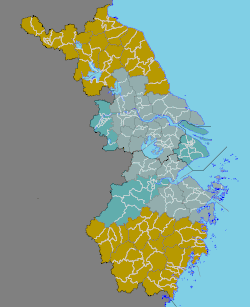
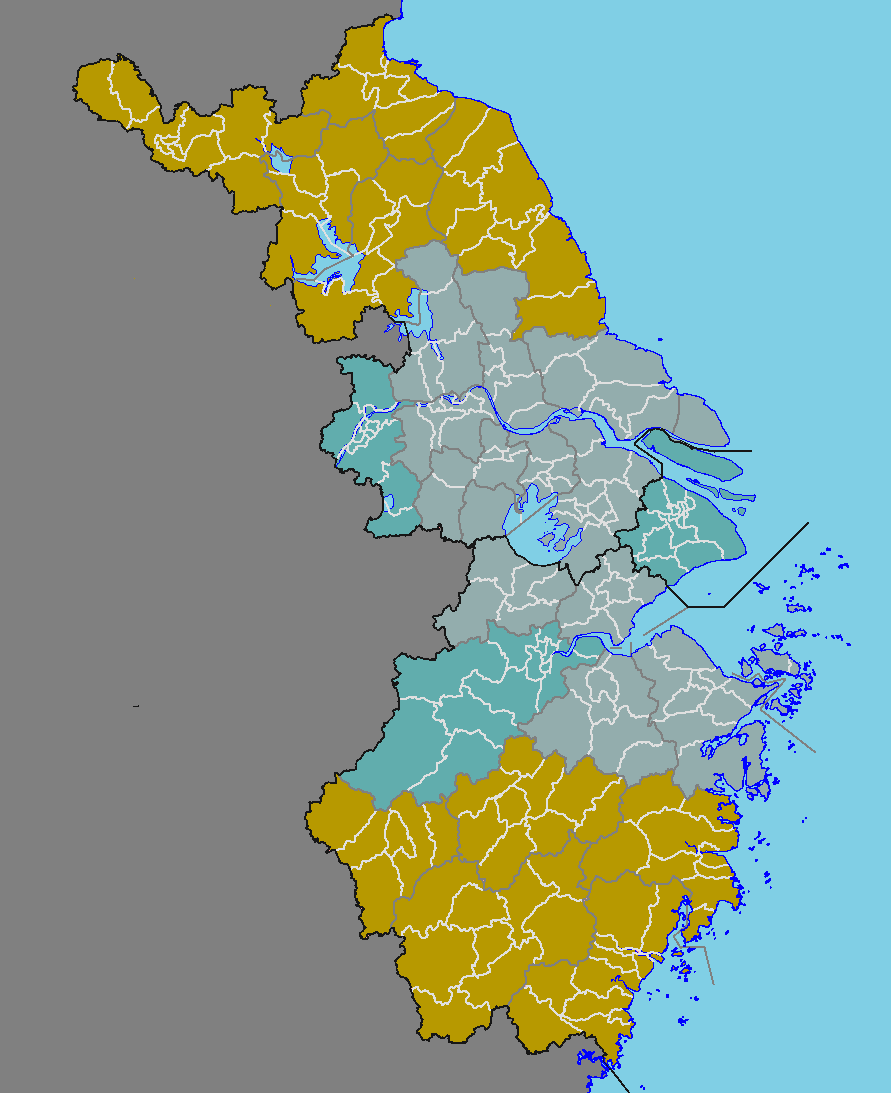
Wu Commandery was a commandery of imperial China. It covers parts of the contemporary Northern Zhejiang and Southern Jiangsu. The capital of Wu commandery was Wu (today's Suzhou). Major counties of Wu commandery include Wu (county), Yuhang county, and Huating county which later became known as Suzhou, Hangzhou and Shanghai.
During its existence, Wu commandery was ruled by various dynasties and regimes. Chronologically, Han dynasty, Eastern Wu, Jin dynasty, Liu Song dynasty, Southern Qi dynasty, Liang dynasty, Chen dynasty, Sui dynasty and Tang dynasty governed Wu commandery in sequence.
In the year of 129, Wu commandery was established during the reign of emperor Shun of Han. When Kuaiji Commandery was divided, lands west of Qiantang river in Kuaiji commandery formed the new Wu commandery. After the division of Kuaiji, Wu constitutes one of the commanderies of Yang Province.
In 195, local strongman and warlord of Fuchun count, Sun Ce, acquired the entire Wu commandery without the authorization of Han dynasty. His family ruled the commandery until 280, first as warlords under the Han and Cao Wei, and after 229 as emperors of the state of Eastern Wu during the Three Kingdoms era. The last ruler of Eastern Wu, Sun Hao divided a part of Wu commandery and formed the new Wuxing Commandery (吴兴郡).
In 548, Military leader Hou Jing started an open rebellion against Emperor Wu of Liang. Wu Commandery was occupied by Hou's army during his rebellion. Local lords Lu Xiang, Lu An and Lu Yingong of Lu clan were defeated. Xiang died out of fear and anger. The rebels caused great damage to the commandery's economy. It was recorded that, in Wu, human bodies were eaten as rations of the rebels.
In 589, Emperor Wen of Sui abolished the commandery system and substituted it with "Zhou" or "Prefecture"(administrative division). Consequently, Wu commandery was renamed as Suzhou. However, In 607, Emperor Yang of Sui re-established Wu commandery.
In 758. Wu commandery was once more renamed Suzhou.
Wu commandery ceased to exist nominally in 758 and continued to exist under the name of Suzhou. Shortly after the An Lushan Rebellion, the imperial court of Tang enforced heavy taxes on the people of Wu commandery since Wu was not invaded by An's army. However, the tax collection became unbearable for the ordinary peasants of the commandery (An amount of tax that was equivalent to 8 years of laboring was demanded). In 762, a low rank officer of Taizhou, Yuan Chao, with angry peasants, stormed and attacked cities of Wu commandery including Suzhou. The Tang court had to pacify Yuan's unexpected rebellion in 763. Yuan was captured by general Li Guangbi and was escorted to the capital Chang'An. He was soon executed under the charge of treason.
Wu Commandery
Wu Commandery was a commandery of imperial China. It covers parts of the contemporary Northern Zhejiang and Southern Jiangsu. The capital of Wu commandery was Wu (today's Suzhou). Major counties of Wu commandery include Wu (county), Yuhang county, and Huating county which later became known as Suzhou, Hangzhou and Shanghai.
During its existence, Wu commandery was ruled by various dynasties and regimes. Chronologically, Han dynasty, Eastern Wu, Jin dynasty, Liu Song dynasty, Southern Qi dynasty, Liang dynasty, Chen dynasty, Sui dynasty and Tang dynasty governed Wu commandery in sequence.
In the year of 129, Wu commandery was established during the reign of emperor Shun of Han. When Kuaiji Commandery was divided, lands west of Qiantang river in Kuaiji commandery formed the new Wu commandery. After the division of Kuaiji, Wu constitutes one of the commanderies of Yang Province.
In 195, local strongman and warlord of Fuchun count, Sun Ce, acquired the entire Wu commandery without the authorization of Han dynasty. His family ruled the commandery until 280, first as warlords under the Han and Cao Wei, and after 229 as emperors of the state of Eastern Wu during the Three Kingdoms era. The last ruler of Eastern Wu, Sun Hao divided a part of Wu commandery and formed the new Wuxing Commandery (吴兴郡).
In 548, Military leader Hou Jing started an open rebellion against Emperor Wu of Liang. Wu Commandery was occupied by Hou's army during his rebellion. Local lords Lu Xiang, Lu An and Lu Yingong of Lu clan were defeated. Xiang died out of fear and anger. The rebels caused great damage to the commandery's economy. It was recorded that, in Wu, human bodies were eaten as rations of the rebels.
In 589, Emperor Wen of Sui abolished the commandery system and substituted it with "Zhou" or "Prefecture"(administrative division). Consequently, Wu commandery was renamed as Suzhou. However, In 607, Emperor Yang of Sui re-established Wu commandery.
In 758. Wu commandery was once more renamed Suzhou.
Wu commandery ceased to exist nominally in 758 and continued to exist under the name of Suzhou. Shortly after the An Lushan Rebellion, the imperial court of Tang enforced heavy taxes on the people of Wu commandery since Wu was not invaded by An's army. However, the tax collection became unbearable for the ordinary peasants of the commandery (An amount of tax that was equivalent to 8 years of laboring was demanded). In 762, a low rank officer of Taizhou, Yuan Chao, with angry peasants, stormed and attacked cities of Wu commandery including Suzhou. The Tang court had to pacify Yuan's unexpected rebellion in 763. Yuan was captured by general Li Guangbi and was escorted to the capital Chang'An. He was soon executed under the charge of treason.
Recent media
Recent media