


Community hub
Recent from talks
Contribute something to knowledge base
Content stats: 0 posts, 0 articles, 1 media, 0 notes
Members stats: 0 subscribers, 0 contributors, 0 moderators, 0 supporters
Subscribers
Supporters
Contributors
Moderators
Hub AI
Wuchang Uprising AI simulator
(@Wuchang Uprising_simulator)
Hub AI
Wuchang Uprising AI simulator
(@Wuchang Uprising_simulator)
Wuchang Uprising
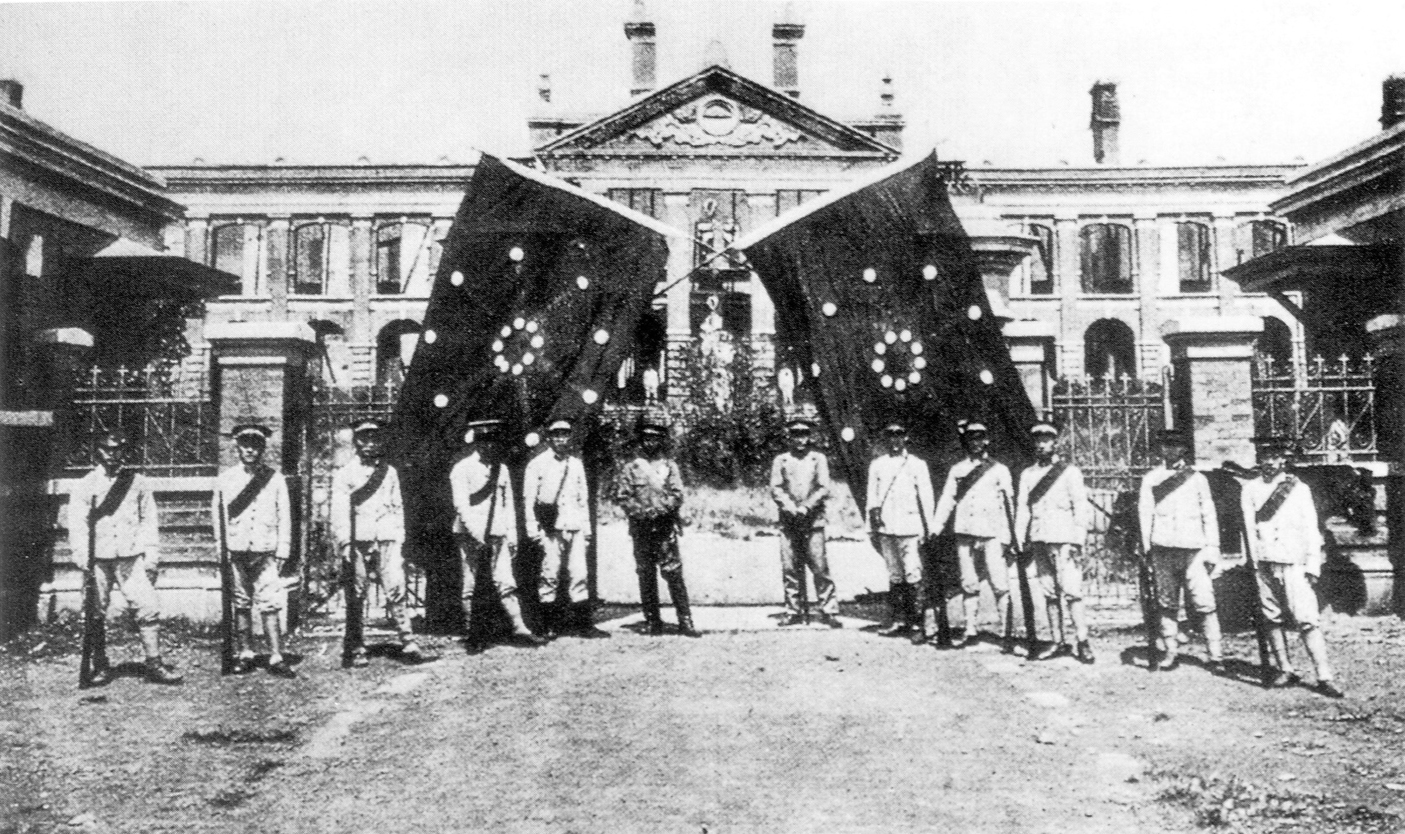
The Wuchang Uprising was an armed rebellion against the ruling Qing dynasty that took place in Wuchang (now Wuchang District of Wuhan) in the Chinese province of Hubei on 10 October 1911, beginning the 1911 Revolution that successfully overthrew China's last imperial dynasty. It was led by elements of the New Army, influenced by revolutionary ideas from Tongmenghui. The uprising and the eventual revolution led to the downfall of the Qing dynasty after almost three centuries of imperial rule, and the establishment of the Republic of China (ROC). Taiwan commemorates the anniversary of the uprising's outbreak on 10 October as the National Day of the Republic of China.
The uprising originated from popular unrest about a railway crisis, and the planning process took advantage of the situation. On 10 October 1911, the New Army stationed in Wuchang launched an assault on the residence of the Viceroy of Huguang. The viceroy Ruicheng quickly fled from the residence, and the revolutionaries soon took control of the entire city.
In 1895, China was decisively defeated by Japan in the First Sino-Japanese War. Intellectuals in China were divided into several factions. Constitutional monarchist reformers led by Kang Youwei and Liang Qichao took control initially, and orchestrated the Hundred Days' Reform in the Qing government. The reforms failed due to the Wuxu Coup by Empress Dowager Cixi. Disillusioned with the monarchy and the Qing government, many revolutionary groups began emerging across the country. In 1905, revolutionary leaders such as Sun Yat-sen and Song Jiaoren met in Tokyo to discuss a merger between different revolutionary groups. A new group known as Tongmenghui was formed after this meeting.
After the Boxer Rebellion, many Western powers saw railway investments as part of the consolidation in their spheres of influence over China. Railway constructions took place across Shandong, the Yangtze, Kunming and Manchuria. Provincial governments, with permission from the Qing court, also started to construct their own railways. The Guangzhou-Hankou Railway and Sichuan-Hankou Railway were under the oversight of Guangdong, Hunan, Hubei and Sichuan. Faced with ongoing financial struggles, partly due to ongoing indemnity payments from the Boxer Protocol, the Qing court turned to Sheng Xuanhuai in 1910, a "classic bureaucratic capitalist", and adhered to his policy of securing foreign loans through the nationalization of all railway lines. This policy was met with stiff resistance, particularly in Sichuan, and the resistance quickly turned into a movement known as the Sichuan Railway Protection Movement. In response, the Qing court suppressed the unrest by force, contributing to the declining popularity of its government. By August 11 there were massive strikes and rallies in Chengdu. On 7 September the Viceroy of Sichuan, Zhao Erfeng, was asked to "intervene vigorously", and he ordered the arrest of key leaders in the Railway Protection League, then ordered troops to open fire on the protesters. Subsequent fighting around Chengdu prompted the diversion of troops to Sichuan from central China, which later became an important factor in the Wuchang Uprising's success.
Meanwhile, inaction toward nationalization of railway lines in both Hunan and Hubei were criticized by the local press. Confidence in the Qing government among the populace continued to deteriorate in response to the escalation of the railway crisis.
There were two revolutionary groups in the Wuhan area, the Wenxueshe (Literary Society) and the Gongjinhui (Progressive Association). These groups, led by Jiang Yiwu and Sun Wu respectively, worked closely together as commander and chief of staff of the revolutionary efforts in Wuhan. Beginning in September, 1911, these two groups began negotiating with the Tongmenghui for possible collaboration in the next uprising. The date was originally set for 6 October, on the Mid-Autumn festival. The date was later postponed, due to inadequate preparations. On 9 October, while Sun Wu was supervising the making of explosive devices in the Russian concession in Hankou, one of the devices exploded unexpectedly, inflicting serious injuries on Sun. When he was hospitalized, the hospital staff discovered his identity and alerted the Qing authorities.
With their identities revealed, the revolutionaries in the New Army stationed in Wuchang were facing imminent arrest by the Qing authorities. The decision was made by Jiang Yiwu of the Wenxueshe to immediately launch the uprising, but the plot was leaked to the Viceroy of Huguang, Ruicheng, and he ordered a crackdown of the revolutionaries, arresting and executing several prominent members.
On the evening of 10 October, Wu Zhaolin as provisional commander led the revolutionary elements of the New Army staged a mutiny against the Qing garrison in Huguang, capturing the residence of the Viceroy in the process along with securing strategic points in the city after intense fighting. As the Viceroy escaped, the Qing garrison fell into disarray. Between the night of 10 October and noon of 11th, "more than 500 Manchu soldiers were killed" with "over 300 captured".
Wuchang Uprising
The Wuchang Uprising was an armed rebellion against the ruling Qing dynasty that took place in Wuchang (now Wuchang District of Wuhan) in the Chinese province of Hubei on 10 October 1911, beginning the 1911 Revolution that successfully overthrew China's last imperial dynasty. It was led by elements of the New Army, influenced by revolutionary ideas from Tongmenghui. The uprising and the eventual revolution led to the downfall of the Qing dynasty after almost three centuries of imperial rule, and the establishment of the Republic of China (ROC). Taiwan commemorates the anniversary of the uprising's outbreak on 10 October as the National Day of the Republic of China.
The uprising originated from popular unrest about a railway crisis, and the planning process took advantage of the situation. On 10 October 1911, the New Army stationed in Wuchang launched an assault on the residence of the Viceroy of Huguang. The viceroy Ruicheng quickly fled from the residence, and the revolutionaries soon took control of the entire city.
In 1895, China was decisively defeated by Japan in the First Sino-Japanese War. Intellectuals in China were divided into several factions. Constitutional monarchist reformers led by Kang Youwei and Liang Qichao took control initially, and orchestrated the Hundred Days' Reform in the Qing government. The reforms failed due to the Wuxu Coup by Empress Dowager Cixi. Disillusioned with the monarchy and the Qing government, many revolutionary groups began emerging across the country. In 1905, revolutionary leaders such as Sun Yat-sen and Song Jiaoren met in Tokyo to discuss a merger between different revolutionary groups. A new group known as Tongmenghui was formed after this meeting.
After the Boxer Rebellion, many Western powers saw railway investments as part of the consolidation in their spheres of influence over China. Railway constructions took place across Shandong, the Yangtze, Kunming and Manchuria. Provincial governments, with permission from the Qing court, also started to construct their own railways. The Guangzhou-Hankou Railway and Sichuan-Hankou Railway were under the oversight of Guangdong, Hunan, Hubei and Sichuan. Faced with ongoing financial struggles, partly due to ongoing indemnity payments from the Boxer Protocol, the Qing court turned to Sheng Xuanhuai in 1910, a "classic bureaucratic capitalist", and adhered to his policy of securing foreign loans through the nationalization of all railway lines. This policy was met with stiff resistance, particularly in Sichuan, and the resistance quickly turned into a movement known as the Sichuan Railway Protection Movement. In response, the Qing court suppressed the unrest by force, contributing to the declining popularity of its government. By August 11 there were massive strikes and rallies in Chengdu. On 7 September the Viceroy of Sichuan, Zhao Erfeng, was asked to "intervene vigorously", and he ordered the arrest of key leaders in the Railway Protection League, then ordered troops to open fire on the protesters. Subsequent fighting around Chengdu prompted the diversion of troops to Sichuan from central China, which later became an important factor in the Wuchang Uprising's success.
Meanwhile, inaction toward nationalization of railway lines in both Hunan and Hubei were criticized by the local press. Confidence in the Qing government among the populace continued to deteriorate in response to the escalation of the railway crisis.
There were two revolutionary groups in the Wuhan area, the Wenxueshe (Literary Society) and the Gongjinhui (Progressive Association). These groups, led by Jiang Yiwu and Sun Wu respectively, worked closely together as commander and chief of staff of the revolutionary efforts in Wuhan. Beginning in September, 1911, these two groups began negotiating with the Tongmenghui for possible collaboration in the next uprising. The date was originally set for 6 October, on the Mid-Autumn festival. The date was later postponed, due to inadequate preparations. On 9 October, while Sun Wu was supervising the making of explosive devices in the Russian concession in Hankou, one of the devices exploded unexpectedly, inflicting serious injuries on Sun. When he was hospitalized, the hospital staff discovered his identity and alerted the Qing authorities.
With their identities revealed, the revolutionaries in the New Army stationed in Wuchang were facing imminent arrest by the Qing authorities. The decision was made by Jiang Yiwu of the Wenxueshe to immediately launch the uprising, but the plot was leaked to the Viceroy of Huguang, Ruicheng, and he ordered a crackdown of the revolutionaries, arresting and executing several prominent members.
On the evening of 10 October, Wu Zhaolin as provisional commander led the revolutionary elements of the New Army staged a mutiny against the Qing garrison in Huguang, capturing the residence of the Viceroy in the process along with securing strategic points in the city after intense fighting. As the Viceroy escaped, the Qing garrison fell into disarray. Between the night of 10 October and noon of 11th, "more than 500 Manchu soldiers were killed" with "over 300 captured".
Recent media
Recent media