


Community hub
Recent from talks
Contribute something to knowledge base
Content stats: 0 posts, 0 articles, 1 media, 0 notes
Members stats: 0 subscribers, 0 contributors, 0 moderators, 0 supporters
Subscribers
Supporters
Contributors
Moderators
Wyeomyia
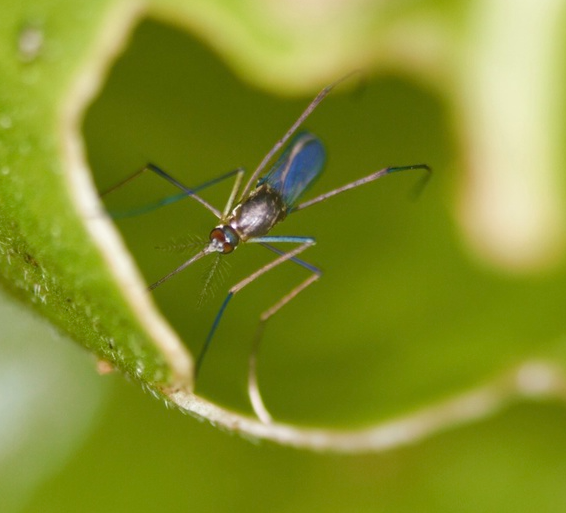
Wyeomyia is a genus of mosquitoes first described in 1901 by Frederick Vincent Theobald. The genus's 140 species can be difficult to characterize because of their diversity and the need for additional taxonomic work to further delineate them. Adults resemble genus Limatus and Sabethes mosquitoes more closely than other genera in the New World tribe Sabethini, but differ by their scutal scales ranging in color from a relatively dull bronzy with a slight metallic sheen in most species, to a metallic gold. There are other distinguishing characters as well.
Wyeomyia mosquitoes are predominantly neotropical, ranging across the Caribbean into Florida, with one species occurring in eastern North America.
Most Wyeomyia mosquitoes are forest-inhabiting, preferring damp environments. Larvae develop in small collections of water in bromeliads and aroids, flower bracts, broken bamboo and bamboo stumps, tree holes, pitcher plants, and sometimes man-made containers. They feed on organic matter in the water, including decomposing carcasses of insects and spiders. Some species obtain oxygen directly from the water, rarely, if ever, surfacing.
Adults are active during the day, usually near larval habitats. Some species are found at characteristic elevations in the forest canopy, with others appearing to be restricted to ground level.
Most Wyeomyia species will take blood meals, and females readily feed on humans who enter their habitat. Although Ilhéus, Venezuelan equine encephalitis and Maguari viruses have been isolated from Wyeomyia mosquitoes, they are not known to transmit a disease agent to humans.
The following species and subgenera are recognised:
Here is the list with the Wikipedia syntax added:
Here is the list with the Wikipedia syntax added:
Wyeomyia
Wyeomyia is a genus of mosquitoes first described in 1901 by Frederick Vincent Theobald. The genus's 140 species can be difficult to characterize because of their diversity and the need for additional taxonomic work to further delineate them. Adults resemble genus Limatus and Sabethes mosquitoes more closely than other genera in the New World tribe Sabethini, but differ by their scutal scales ranging in color from a relatively dull bronzy with a slight metallic sheen in most species, to a metallic gold. There are other distinguishing characters as well.
Wyeomyia mosquitoes are predominantly neotropical, ranging across the Caribbean into Florida, with one species occurring in eastern North America.
Most Wyeomyia mosquitoes are forest-inhabiting, preferring damp environments. Larvae develop in small collections of water in bromeliads and aroids, flower bracts, broken bamboo and bamboo stumps, tree holes, pitcher plants, and sometimes man-made containers. They feed on organic matter in the water, including decomposing carcasses of insects and spiders. Some species obtain oxygen directly from the water, rarely, if ever, surfacing.
Adults are active during the day, usually near larval habitats. Some species are found at characteristic elevations in the forest canopy, with others appearing to be restricted to ground level.
Most Wyeomyia species will take blood meals, and females readily feed on humans who enter their habitat. Although Ilhéus, Venezuelan equine encephalitis and Maguari viruses have been isolated from Wyeomyia mosquitoes, they are not known to transmit a disease agent to humans.
The following species and subgenera are recognised:
Here is the list with the Wikipedia syntax added:
Here is the list with the Wikipedia syntax added:
Recent media
Recent media