



Community hub
Recent from talks
Knowledge base stats:
Talk channels stats:
Members stats:
X-15 Flight 188
X-15 Flight 188 was a record-setting test flight of the North American X-15 rocket plane on October 3, 1967. USAF test pilot William J. Knight piloted the X-15A-2 hypersonic aircraft to 102,100 feet (31,100 meters) over Mud Lake, Nevada, reaching a top speed of 4,520 mph (7,270 km/h), or Mach 6.7. This remains the highest speed ever recorded by a crewed, powered aircraft.
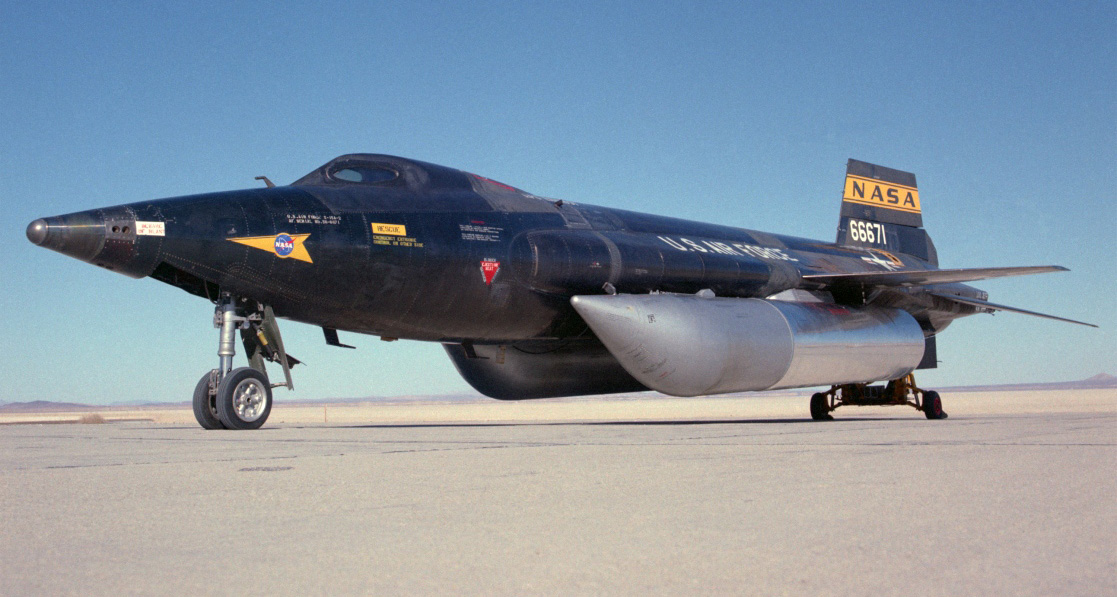
The aircraft used for Flight 188 was the X-15A-2 (AF Ser No. 56-6671). This X-15 was heavily modified compared to the original X-15 specification. Originally designated X-15-2, it was damaged during landing on November 9, 1962 (Flight 74); after extensive repairs and updates, it was redesignated X-15A-2. The fuselage was lengthened by 28 inches (0.71 meters) to accomodate a liquid hydrogen fuel tank for an experimental ramjet engine mounted on the aircraft's ventral fin, which was flown but never used. Two external drop tanks containing anhydrous ammonia and liquid oxygen were fitted to increase the XLR99 main engine's fuel supply by 75%, providing an additional 60 seconds of burn time. To handle the heat of atmospheric entry at hypersonic speed, the entire surface of the airframe was covered with the Martin MA-25S ablative thermal coating; this coating was designed to char and slowly break off as the aircraft experienced aerodynamic heating, carrying away heat in the process. The thermal coating was pink in color, and a white top coat of sealer was applied over it, giving the aircraft a notably different appearance than the other black painted X-15 airframes.
The X-15A-2 was the only X-15 airframe ever fitted with the drop tanks and ablative thermal coating. Flight 188 was the 53rd flight of X-15 No. 56-6671, and the fifth flight as the modified X-15A-2 configuration.
Flight 188 took place on October 3, 1967. After minor problems delayed the take-off briefly, the NASA NB-52B mothership Balls 8 took off from the NASA Flight Research Center at Edwards Air Force Base, carrying the X-15A-2 under its right wing up to the planned release altitude of 45,000 ft (14 km). Balls 8 was accompanied by several F-100, F-104, and F5D chase planes, which tailed the X-15A-2 as long as possible after its release and during its landing.
Once the release altitude was reached, the X-15 was released at 14:31:50 local time. X-15 pilot William J. Knight lit the XLR99 rocket engine and pulled up into a climb as the aircraft accelerated rapidly. 60 seconds after release, Knight jettisoned the drop tanks as the X-15 exceeded Mach 2 at an altitude of 70,000 ft (21 km). Now using the internal fuel supply, the engine continued to burn for a total of 140.7 seconds. Knight shut down the engine at an altitude of 102,000 ft (31 km), reaching a maximum speed of 4,520 mph (7,270 km/h), or Mach 6.7.
The experimental ramjet mounted on the ventral fin disrupted airflow during high-speed flight, heating some parts of the fuselage to 2,700 °F (1,480 °C); it eventually broke away from the aircraft and was later recovered on the Edwards Air Force Base bombing range.
As the X-15A-2 decelerated through Mach 5.5, an engine over-temperature warning sounded in the cockpit; Knight attempted to jettison remaining fuel from the internal tanks, but the fuel jettison system had been disabled by heat damage, meaning the aircraft's landing weight (and thus also its landing speed) would be higher than anticipated. Knight jettisoned the detachable lower fin, then safely landed the aircraft on Rogers Dry Lake at 14:40:07 local time after a flight time of 8 minutes and 17 seconds.
The X-15A-2 was found to have sustained extensive thermal damage during the flight. Repairs were not completed before the end of the X-15 program in December 1968, making flight 188 the final flight of X-15 No. 56-6671. The aircraft was ultimately relocated to the National Museum of the United States Air Force in Dayton, Ohio, where it was refurbished and placed on permanent display.
Hub AI
X-15 Flight 188 AI simulator
(@X-15 Flight 188_simulator)
X-15 Flight 188
X-15 Flight 188 was a record-setting test flight of the North American X-15 rocket plane on October 3, 1967. USAF test pilot William J. Knight piloted the X-15A-2 hypersonic aircraft to 102,100 feet (31,100 meters) over Mud Lake, Nevada, reaching a top speed of 4,520 mph (7,270 km/h), or Mach 6.7. This remains the highest speed ever recorded by a crewed, powered aircraft.
The aircraft used for Flight 188 was the X-15A-2 (AF Ser No. 56-6671). This X-15 was heavily modified compared to the original X-15 specification. Originally designated X-15-2, it was damaged during landing on November 9, 1962 (Flight 74); after extensive repairs and updates, it was redesignated X-15A-2. The fuselage was lengthened by 28 inches (0.71 meters) to accomodate a liquid hydrogen fuel tank for an experimental ramjet engine mounted on the aircraft's ventral fin, which was flown but never used. Two external drop tanks containing anhydrous ammonia and liquid oxygen were fitted to increase the XLR99 main engine's fuel supply by 75%, providing an additional 60 seconds of burn time. To handle the heat of atmospheric entry at hypersonic speed, the entire surface of the airframe was covered with the Martin MA-25S ablative thermal coating; this coating was designed to char and slowly break off as the aircraft experienced aerodynamic heating, carrying away heat in the process. The thermal coating was pink in color, and a white top coat of sealer was applied over it, giving the aircraft a notably different appearance than the other black painted X-15 airframes.
The X-15A-2 was the only X-15 airframe ever fitted with the drop tanks and ablative thermal coating. Flight 188 was the 53rd flight of X-15 No. 56-6671, and the fifth flight as the modified X-15A-2 configuration.
Flight 188 took place on October 3, 1967. After minor problems delayed the take-off briefly, the NASA NB-52B mothership Balls 8 took off from the NASA Flight Research Center at Edwards Air Force Base, carrying the X-15A-2 under its right wing up to the planned release altitude of 45,000 ft (14 km). Balls 8 was accompanied by several F-100, F-104, and F5D chase planes, which tailed the X-15A-2 as long as possible after its release and during its landing.
Once the release altitude was reached, the X-15 was released at 14:31:50 local time. X-15 pilot William J. Knight lit the XLR99 rocket engine and pulled up into a climb as the aircraft accelerated rapidly. 60 seconds after release, Knight jettisoned the drop tanks as the X-15 exceeded Mach 2 at an altitude of 70,000 ft (21 km). Now using the internal fuel supply, the engine continued to burn for a total of 140.7 seconds. Knight shut down the engine at an altitude of 102,000 ft (31 km), reaching a maximum speed of 4,520 mph (7,270 km/h), or Mach 6.7.
The experimental ramjet mounted on the ventral fin disrupted airflow during high-speed flight, heating some parts of the fuselage to 2,700 °F (1,480 °C); it eventually broke away from the aircraft and was later recovered on the Edwards Air Force Base bombing range.
As the X-15A-2 decelerated through Mach 5.5, an engine over-temperature warning sounded in the cockpit; Knight attempted to jettison remaining fuel from the internal tanks, but the fuel jettison system had been disabled by heat damage, meaning the aircraft's landing weight (and thus also its landing speed) would be higher than anticipated. Knight jettisoned the detachable lower fin, then safely landed the aircraft on Rogers Dry Lake at 14:40:07 local time after a flight time of 8 minutes and 17 seconds.
The X-15A-2 was found to have sustained extensive thermal damage during the flight. Repairs were not completed before the end of the X-15 program in December 1968, making flight 188 the final flight of X-15 No. 56-6671. The aircraft was ultimately relocated to the National Museum of the United States Air Force in Dayton, Ohio, where it was refurbished and placed on permanent display.