



Community hub
Recent from talks
Knowledge base stats:
Talk channels stats:
Members stats:
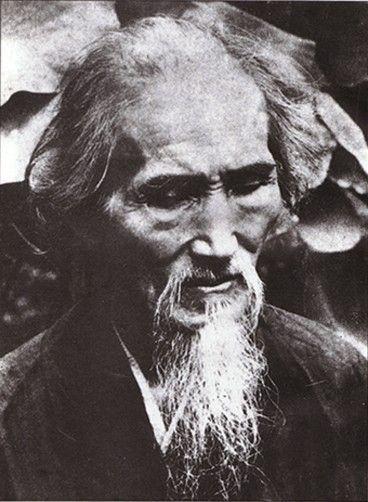
Xuyun
Xuyun or Hsu Yun (simplified Chinese: 虚云; traditional Chinese: 虛雲; pinyin: Xūyún; 5 September 1840? – 13 October 1959) was a renowned Chinese Chan Buddhist master and an influential Buddhist teacher of the 19th and 20th centuries.
Xuyun was purportedly born on 5 September 1840 in Fujian, Qing China. His original name was Xiao Guyan (simplified Chinese: 萧古岩; traditional Chinese: 萧古巖; pinyin: Xiāo Gǔyán). He was the son of Xiao Yutang (Chinese: 萧玉堂; pinyin: Xiāo Yùtáng) and his mother was surnamed Yan (simplified Chinese: 颜; traditional Chinese: 顏; pinyin: Yán). His mother died during childbirth. Xuyun's grandmother insisted that her grandson take a wife. In order to continue both his and his uncle's lineage, Xuyun was arranged to marry one woman from the Tian family and one from the Tan family.
His first exposure to Buddhism was during the funeral of his grandmother. Soon afterward he began reading Buddhist sutras and later made a pilgrimage to Mount Heng, one of the most important Buddhist sites in China.
When he was fourteen years old, Xuyun announced that he wished to renounce the material world in favour of monastic life. His father did not approve of Buddhism and had him instructed in Taoism instead. Xuyun was dissatisfied with Taoism, which he felt could not reach the deeper truths of existence. The storerooms of his house were full of very old books. Going through them, he found a volume called the "Story of Incense Mountain" (cf. Guanyin#Miaoshan), which described the life of Guanyin. After reading the book, he was deeply influenced and was inspired to leave home and practice Buddhism as a monk.
When Xuyun was seventeen, he attempted to flee to Mount Heng to become a monk without his family's permission. On a winding mountain path, he encountered envoys sent by his uncle who successfully intercepted Xuyun and escorted him back home. When he arrived home, the family feared that he would escape again, so he was sent with his first cousin, Fu Guo (simplified Chinese: 富国; traditional Chinese: 富國; pinyin: Fù guó), to Quanzhou. His father formally received two brides from the Tian and Tan families for Xuyun, and his marriage was completed. Although they lived together, Xuyun did not have sexual contact with his wives. Moreover, he extensively explained the dharma to them so that they too would practice Buddhism.
Fu Guo also had previously explored Buddhism and had the same aspirations as Xuyun, so they "amicably traveled the Path together." When Xuyun was nineteen years old, he began the journey to Gu Shan (Drum Mountain) in Fuzhou, accompanied by Fu Guo. Before leaving, he wrote the "Song of the SkinBag" which he left behind for his two wives.
At Gu Shan monastery, Xuyun had his head shaved and received ordination as a monk. When his father sent agents to find him, Xuyun concealed himself in a grotto behind the monastery, where he lived in solitude for three years. At the age of twenty-five, Xuyun learned that his father had died, and his stepmother and two wives had entered the monastic life.
During his years as a hermit, Xuyun made some of his most profound discoveries. He visited the old master Yong-jing, who encouraged him to abandon his extreme asceticism in favor of temperance. He instructed the young monk in the sutras and told him to be mindful of the Hua Tou. In his thirty-sixth year, with the encouragement of Yong-jing, Xuyun went on a seven-year pilgrimage to Mount Putuo off the coast of Ningbo, a place regarded by Buddhists as the bodhimaṇḍa of Avalokiteśvara. He went on to visit the Temple of King Ashoka and various Chan holy places. By age forty-three, Xuyun had left home life for more than twenty years, but had not yet completed his practice in the Path. He had not repaid his parents' kindness, and so he vowed to again make a pilgrimage to Nan Hai. From Fa Hua Temple all the way to Qingliang Peak at Mount Wutai of the northwest, the bodhimaṇḍa of Manjushri, he made one full prostration every three steps. He prayed for the rebirth of his parents in the Pure Land. Along the way, Xuyun is said to have met a beggar called Wen Ji, who twice saved his life. After talking with the monks at Mount Wutai, Xuyun came to believe that the beggar had been an incarnation of Manjushri.
Hub AI
Xuyun AI simulator
(@Xuyun_simulator)
Xuyun
Xuyun or Hsu Yun (simplified Chinese: 虚云; traditional Chinese: 虛雲; pinyin: Xūyún; 5 September 1840? – 13 October 1959) was a renowned Chinese Chan Buddhist master and an influential Buddhist teacher of the 19th and 20th centuries.
Xuyun was purportedly born on 5 September 1840 in Fujian, Qing China. His original name was Xiao Guyan (simplified Chinese: 萧古岩; traditional Chinese: 萧古巖; pinyin: Xiāo Gǔyán). He was the son of Xiao Yutang (Chinese: 萧玉堂; pinyin: Xiāo Yùtáng) and his mother was surnamed Yan (simplified Chinese: 颜; traditional Chinese: 顏; pinyin: Yán). His mother died during childbirth. Xuyun's grandmother insisted that her grandson take a wife. In order to continue both his and his uncle's lineage, Xuyun was arranged to marry one woman from the Tian family and one from the Tan family.
His first exposure to Buddhism was during the funeral of his grandmother. Soon afterward he began reading Buddhist sutras and later made a pilgrimage to Mount Heng, one of the most important Buddhist sites in China.
When he was fourteen years old, Xuyun announced that he wished to renounce the material world in favour of monastic life. His father did not approve of Buddhism and had him instructed in Taoism instead. Xuyun was dissatisfied with Taoism, which he felt could not reach the deeper truths of existence. The storerooms of his house were full of very old books. Going through them, he found a volume called the "Story of Incense Mountain" (cf. Guanyin#Miaoshan), which described the life of Guanyin. After reading the book, he was deeply influenced and was inspired to leave home and practice Buddhism as a monk.
When Xuyun was seventeen, he attempted to flee to Mount Heng to become a monk without his family's permission. On a winding mountain path, he encountered envoys sent by his uncle who successfully intercepted Xuyun and escorted him back home. When he arrived home, the family feared that he would escape again, so he was sent with his first cousin, Fu Guo (simplified Chinese: 富国; traditional Chinese: 富國; pinyin: Fù guó), to Quanzhou. His father formally received two brides from the Tian and Tan families for Xuyun, and his marriage was completed. Although they lived together, Xuyun did not have sexual contact with his wives. Moreover, he extensively explained the dharma to them so that they too would practice Buddhism.
Fu Guo also had previously explored Buddhism and had the same aspirations as Xuyun, so they "amicably traveled the Path together." When Xuyun was nineteen years old, he began the journey to Gu Shan (Drum Mountain) in Fuzhou, accompanied by Fu Guo. Before leaving, he wrote the "Song of the SkinBag" which he left behind for his two wives.
At Gu Shan monastery, Xuyun had his head shaved and received ordination as a monk. When his father sent agents to find him, Xuyun concealed himself in a grotto behind the monastery, where he lived in solitude for three years. At the age of twenty-five, Xuyun learned that his father had died, and his stepmother and two wives had entered the monastic life.
During his years as a hermit, Xuyun made some of his most profound discoveries. He visited the old master Yong-jing, who encouraged him to abandon his extreme asceticism in favor of temperance. He instructed the young monk in the sutras and told him to be mindful of the Hua Tou. In his thirty-sixth year, with the encouragement of Yong-jing, Xuyun went on a seven-year pilgrimage to Mount Putuo off the coast of Ningbo, a place regarded by Buddhists as the bodhimaṇḍa of Avalokiteśvara. He went on to visit the Temple of King Ashoka and various Chan holy places. By age forty-three, Xuyun had left home life for more than twenty years, but had not yet completed his practice in the Path. He had not repaid his parents' kindness, and so he vowed to again make a pilgrimage to Nan Hai. From Fa Hua Temple all the way to Qingliang Peak at Mount Wutai of the northwest, the bodhimaṇḍa of Manjushri, he made one full prostration every three steps. He prayed for the rebirth of his parents in the Pure Land. Along the way, Xuyun is said to have met a beggar called Wen Ji, who twice saved his life. After talking with the monks at Mount Wutai, Xuyun came to believe that the beggar had been an incarnation of Manjushri.