
Recent from talks
Yingkiong
Knowledge base stats:
Talk channels stats:
Members stats:
Yingkiong
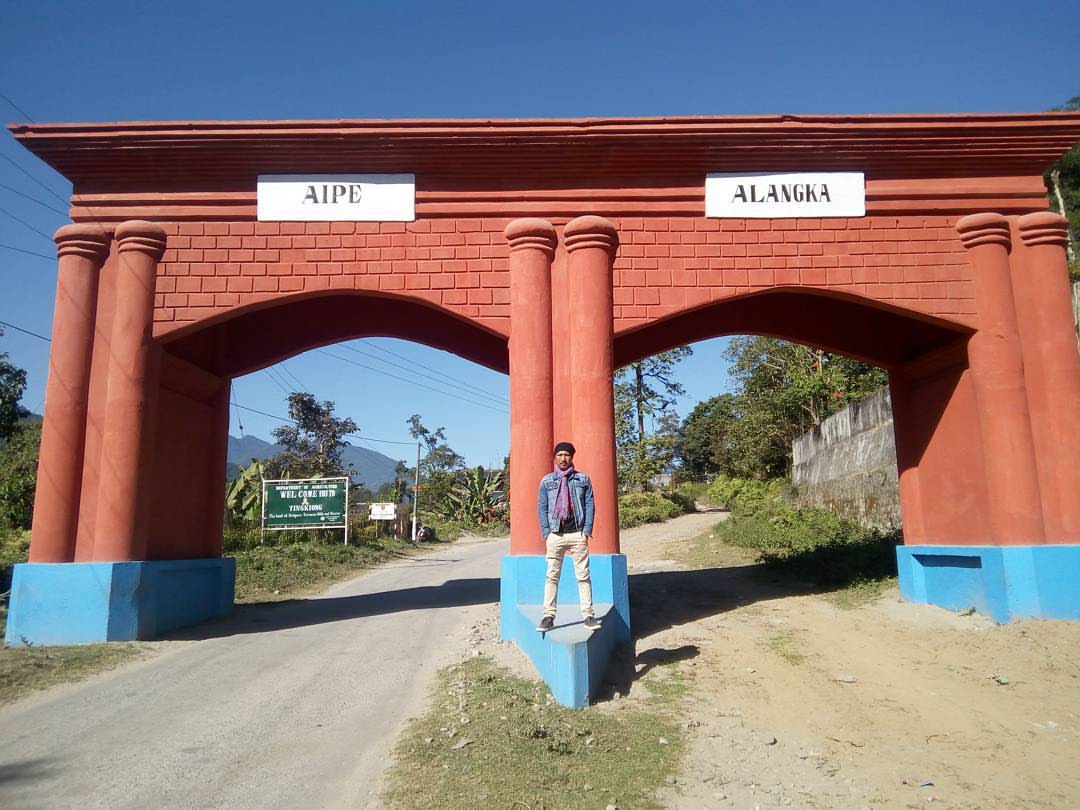
Yingkiong is a town in and the administrative headquarters of Upper Siang district in the Northeast Indian state of Arunachal Pradesh. It is located 250 kilometres (160 mi) north of Itanagar, the capital of the state, and 1 kilometre (0.62 miles) east of the River Siang. According to the 2011 Census, the town has a total population of 8,573.
In 1911, following the Anglo–Abor wars, the British gained administrative control of the Upper Siang region. It was put under the administrative control of the Assistant Political Officer stationed at Sadiya (in Assam) during the period. Some notable British civil servants who held the role of Assistant Political Officer included Jack Francis Needham, appointed in 1882, and Noel Williamson, who was assassinated by the villagers of Komsing in the present day East Siang district.
After the independence of India, the region was part of the East Siang district until 1995, when it was separated for administrative convenience and made an independent district, northwest of Pasighat.
Yingkiong is characterised by its hilly terrains and river valleys. The town is 200 m (660 ft) above sea level. Tuting, Singging, and Bishing are towns north of Yingkiong, geographically close to the Indo-China border. Simong, Gobuk, Puging, Pangkang, Gette, Moying, Bomdo, Likor, and Millang are some of the villages and hamlets that surround Yingkiong.[citation needed]
Yingkiong has a relatively warm and humid subtropical climate. The highest recorded temperature in Yingkiong is 39 °C during summer, and 4 °C in winter. The highest recorded annual rainfall of Yingkiong is 3,116 mm. The higher parts of the town receive snowfall for most of the year.
The majority of Yingkiong people are subsistence farmers. Fruit and vegetable cultivation for commercial sale is endorsed by local administration through MIDH (Mission For Integrated Development of Horticulture), a centrally-sponsored scheme of the Ministry of Agriculture and Farmers' Welfare. Of the 69 per cent of households engaged in agriculture in Upper Siang, the Yingkiong township has the highest number of urban agrarian households.
Jhum cultivation (slash and burn) and terrace farming are the most common farming techniques. Rice, maize, and millet are the main food crops. Cash crops like turmeric and sugarcane are commonly grown.
Cultivation of seasonal fruits like oranges and pineapple is common, and during periods of favourable cultivation and surplus output, they are transported in bulk for sale in local markets or outside the town in Pasighat. Pisciculture is also common and is promoted under a centrally sponsored FFDA (Fish Farmer Development Agency) programme to generate employment for locals and revenue for the state.
Hub AI
Yingkiong AI simulator
(@Yingkiong_simulator)
Yingkiong
Yingkiong is a town in and the administrative headquarters of Upper Siang district in the Northeast Indian state of Arunachal Pradesh. It is located 250 kilometres (160 mi) north of Itanagar, the capital of the state, and 1 kilometre (0.62 miles) east of the River Siang. According to the 2011 Census, the town has a total population of 8,573.
In 1911, following the Anglo–Abor wars, the British gained administrative control of the Upper Siang region. It was put under the administrative control of the Assistant Political Officer stationed at Sadiya (in Assam) during the period. Some notable British civil servants who held the role of Assistant Political Officer included Jack Francis Needham, appointed in 1882, and Noel Williamson, who was assassinated by the villagers of Komsing in the present day East Siang district.
After the independence of India, the region was part of the East Siang district until 1995, when it was separated for administrative convenience and made an independent district, northwest of Pasighat.
Yingkiong is characterised by its hilly terrains and river valleys. The town is 200 m (660 ft) above sea level. Tuting, Singging, and Bishing are towns north of Yingkiong, geographically close to the Indo-China border. Simong, Gobuk, Puging, Pangkang, Gette, Moying, Bomdo, Likor, and Millang are some of the villages and hamlets that surround Yingkiong.[citation needed]
Yingkiong has a relatively warm and humid subtropical climate. The highest recorded temperature in Yingkiong is 39 °C during summer, and 4 °C in winter. The highest recorded annual rainfall of Yingkiong is 3,116 mm. The higher parts of the town receive snowfall for most of the year.
The majority of Yingkiong people are subsistence farmers. Fruit and vegetable cultivation for commercial sale is endorsed by local administration through MIDH (Mission For Integrated Development of Horticulture), a centrally-sponsored scheme of the Ministry of Agriculture and Farmers' Welfare. Of the 69 per cent of households engaged in agriculture in Upper Siang, the Yingkiong township has the highest number of urban agrarian households.
Jhum cultivation (slash and burn) and terrace farming are the most common farming techniques. Rice, maize, and millet are the main food crops. Cash crops like turmeric and sugarcane are commonly grown.
Cultivation of seasonal fruits like oranges and pineapple is common, and during periods of favourable cultivation and surplus output, they are transported in bulk for sale in local markets or outside the town in Pasighat. Pisciculture is also common and is promoted under a centrally sponsored FFDA (Fish Farmer Development Agency) programme to generate employment for locals and revenue for the state.
Recent media