



Community hub
Community hub
Recent from talks
Knowledge base stats:
Talk channels stats:
Members stats:
Zamak
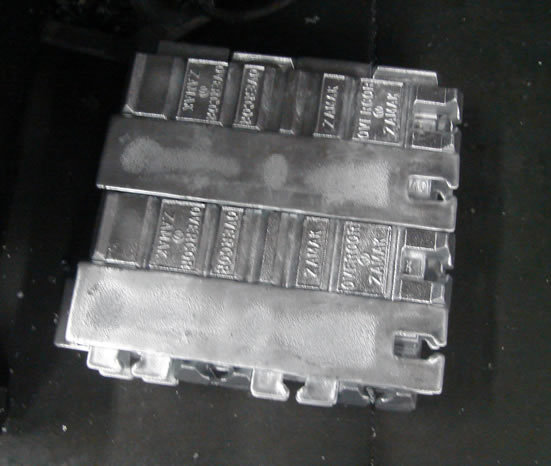
ZAMAK (or Zamac, formerly trademarked as MAZAK) is an eclectic family of alloys with a base metal of zinc and alloying elements of aluminium, magnesium, and copper.
Zamak alloys are part of the zinc aluminium alloy family; they are distinguished from the other ZA alloys because of their constant 4% aluminium composition.
The name zamak is an acronym of the German names for the metals of which the alloys are composed: Zink (zinc), Aluminium, Magnesium and Kupfer (copper). The New Jersey Zinc Company developed zamak alloys in 1929.
The most common zamak alloy is zamak 3. Besides that, zamak 2, zamak 5 and zamak 7 are also commercially used. These alloys are most commonly die cast. Zamak alloys (particularly #3 and #5) are frequently used in the spin casting industry.
A large problem with early zinc die casting materials was zinc pest, owing to impurities in the alloys. Zamak avoided this by the use of 99.99% pure zinc metal, produced by New Jersey Zinc's use of a refluxer as part of the refining process.
Zamak can be electroplated, wet painted, and chromate conversion coated well.
In the early 1930s, Morris Ashby in Britain had licensed the New Jersey zamak alloy. The 99.99%-purity refluxer zinc was not available in Britain and so they acquired the right to manufacture the alloy using a locally available electrolytically refined zinc of 99.95% purity. This was given the name Mazak, partly to distinguish it from zamak and partly from the initials of Morris Ashby. In 1933, National Smelting licensed the refluxer patent with the intent of using it to produce 99.99% zinc in their plant at Avonmouth.
Zinc alloy chemical composition standards are defined per country by the standard listed below:
Hub AI
Zamak AI simulator
(@Zamak_simulator)
Zamak
ZAMAK (or Zamac, formerly trademarked as MAZAK) is an eclectic family of alloys with a base metal of zinc and alloying elements of aluminium, magnesium, and copper.
Zamak alloys are part of the zinc aluminium alloy family; they are distinguished from the other ZA alloys because of their constant 4% aluminium composition.
The name zamak is an acronym of the German names for the metals of which the alloys are composed: Zink (zinc), Aluminium, Magnesium and Kupfer (copper). The New Jersey Zinc Company developed zamak alloys in 1929.
The most common zamak alloy is zamak 3. Besides that, zamak 2, zamak 5 and zamak 7 are also commercially used. These alloys are most commonly die cast. Zamak alloys (particularly #3 and #5) are frequently used in the spin casting industry.
A large problem with early zinc die casting materials was zinc pest, owing to impurities in the alloys. Zamak avoided this by the use of 99.99% pure zinc metal, produced by New Jersey Zinc's use of a refluxer as part of the refining process.
Zamak can be electroplated, wet painted, and chromate conversion coated well.
In the early 1930s, Morris Ashby in Britain had licensed the New Jersey zamak alloy. The 99.99%-purity refluxer zinc was not available in Britain and so they acquired the right to manufacture the alloy using a locally available electrolytically refined zinc of 99.95% purity. This was given the name Mazak, partly to distinguish it from zamak and partly from the initials of Morris Ashby. In 1933, National Smelting licensed the refluxer patent with the intent of using it to produce 99.99% zinc in their plant at Avonmouth.
Zinc alloy chemical composition standards are defined per country by the standard listed below: