Hubbry Logo
ZamakZamakMain
Open search
Zamak
Community hub
Zamak
logo
8 pages, 0 posts
0 subscribers
Be the first to start a discussion here.
Zamak
Zamak
from Wikipedia
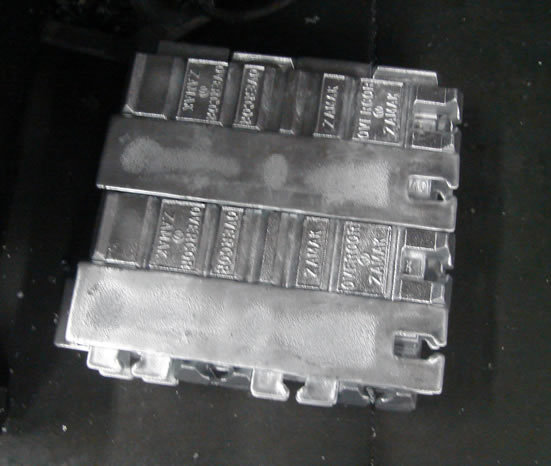
Zamak ingots

ZAMAK (or Zamac, formerly trademarked as MAZAK[1]) is an eclectic family of alloys with a base metal of zinc and alloying elements of aluminium, magnesium, and copper.

Zamak alloys are part of the zinc aluminium alloy family; they are distinguished from the other ZA alloys because of their constant 4% aluminium composition.[2]

The name zamak is an acronym of the German names for the metals of which the alloys are composed: Zink (zinc), Aluminium, Magnesium and Kupfer (copper).[2] The New Jersey Zinc Company developed zamak alloys in 1929.

The most common zamak alloy is zamak 3. Besides that, zamak 2, zamak 5 and zamak 7 are also commercially used.[2] These alloys are most commonly die cast.[2] Zamak alloys (particularly #3 and #5) are frequently used in the spin casting industry.

A large problem with early zinc die casting materials was zinc pest, owing to impurities in the alloys.[3] Zamak avoided this by the use of 99.99% pure zinc metal, produced by New Jersey Zinc's use of a refluxer as part of the refining process.

Zamak can be electroplated, wet painted, and chromate conversion coated well.[4]

Mazak

[edit]

In the early 1930s, Morris Ashby in Britain had licensed the New Jersey zamak alloy. The 99.99%-purity refluxer zinc was not available in Britain and so they acquired the right to manufacture the alloy using a locally available electrolytically refined zinc of 99.95% purity. This was given the name Mazak, partly to distinguish it from zamak and partly from the initials of Morris Ashby. In 1933, National Smelting licensed the refluxer patent with the intent of using it to produce 99.99% zinc in their plant at Avonmouth.[5]

Standards

[edit]

Zinc alloy chemical composition standards are defined per country by the standard listed below:

Zinc alloy standards per country[6]
Country Zinc ingot Zinc casting
Europe EN1774 EN12844
US ASTM B240 ASTM B86
Japan JIS H2201 JIS H5301
Australia AS 1881 - SAA H63 AS 1881 - SAA H64
China GB 8738-88 -
Canada CSA HZ3 CSA HZ11
International ISO 301 -

Zamak goes by many different names based on standard and/or country:

Various names for zamak alloys
Traditional name Short composition name Form Common ASTM Short European designation JIS China UK BS 1004[7] France NFA 55-010[7] Germany DIN 1743-2[7] UNS Other
Zamak 2[8][9]
or
Kirksite[10]
ZnAl4Cu3[11] Ingot Alloy 2[8][9] AC 43A[8][9] ZL0430[11] - ZX04[12] - Z-A4U3[11] Z430[11] Z35540[9] ZL2, ZA-2, ZN-002[13]
Cast ZP0430 - Z35541[8] ZP2, ZA-2, ZN-002[13]
Zamak 3[8][9] ZnAl4[11] Ingot Alloy 3[8][9] AG 40A[8][9] ZL0400[11] Ingot type 2[14] ZX01[12] Alloy A[11] Z-A4[11] Z400[11] Z35521[9] ZL3, ZA-3, ZN-003[13]
Cast ZP0400 ZDC2[15] - Z33520[8] ZP3, ZA-3, ZN-003[13]
Zamak 4[16] Ingot Used in Asia only ZA-4, ZN-004[13]
Zamak 5[8][9] ZnAl4Cu1[11] Ingot Alloy 5[8][9] AC 41A[8][9] ZL0410[11] Ingot type 1[14] ZX03[12] Alloy B[11] Z-A4UI[11] Z410[11] Z35530[9] ZL5, ZA-5, ZN-005[13]
Cast ZP0410 ZDC1[15] - Z35531[8] ZP5, ZA-5, ZN-005[13]
Zamak 7[8][9] ZnAl4Ni[12] Ingot Alloy 7[8][9] AG 40B[8][9] - - ZX02[12] - - - Z33522[9] ZA-7, ZN-007[13]
Cast - Z33523[8]
color of the cell is the color of the material designated by ASTM B908.[2]

The short European designation code breaks down as follows (using ZL0430 as the example):[11]

  • Z is the material (Z = zinc)
  • P is the use (P = pressure die casting (casting), L = ingot)
  • 04 is the percent aluminum (04 = 4% aluminum)
  • 3 is the percent copper (3 = 3% copper)

Zamak 2

[edit]

Zamak 2 has the same composition as zamak 3 with the addition of 3% copper in order to increase strength by 20%, which also increases the price. Zamak 2 has the greatest strength out of all the zamak alloys. Over time it retains its strength and hardness better than the other alloys; however, it becomes more brittle, shrinks, and is less elastic.[17]

Zamak 2 is also known as Kirksite when gravity cast for use as a die.[2][18] It was originally designed for low volume sheet metal dies.[19][20] It later gained popularity for making short run injection molding dies.[19] It is also less commonly used for non-sparking tools and mandrels for metal spinning.

Zamak 2 composition per standard
Alloying elements Impurities
Standard Limit Al Cu Mg Pb Cd Sn Fe Ni Si In Tl
ASTM B240[21] (Ingot) min 3.9 2.6 0.025 - - - - - - - -
max 4.3 2.9 0.05 0.004 0.003 0.002 0.075 - - - -
ASTM B86[22] (Cast) min 3.5 2.6 0.025 - - - - - - - -
max 4.3 2.9 0.05 0.005 0.004 0.003 0.1 - - - -
EN1774[23] (Ingot) min 3.8 2.7 0.035 - - - - - - - -
max 4.2 3.3 0.06 0.003 0.003 0.001 0.02 0.001 0.02 - -
EN12844[24] (Cast) min 3.7 2.7 0.025 - - - - - - - -
max 4.3 3.3 0.06 0.005 0.005 0.002 0.05 0.02 0.03 - -
GB8738-88[12] min 3.9 2.6 0.03 - - - - - - - -
max 4.3 3.1 0.06 0.004 0.003 0.0015 0.035 - - - -
Zamak 2 properties[17]
Property Metric value Imperial value
Mechanical properties
Ultimate tensile strength 397 MPa (331 MPa aged) 58,000 psi
Yield strength (0.2% offset) 361 MPa 52,000 psi
Impact strength 38 J (7 J aged) 28 ft-lbf (5 ft-lbf aged)
Elongation at Fmax 3% (2% aged)
Elongation at fracture 6%
Shear strength 317 MPa 46,000 psi
Compressive yield strength 641 MPa 93,000 psi
Fatigue strength (reverse bending 5x10⁸ cycles) 59 MPa 8,600 psi
Hardness 130 Brinell (98 Brinell aged)
Modulus of elasticity 96 GPa 14,000,000 psi
Physical properties
Solidification range (melting range) 379–390 °C 714–734 °F
Density 6.8 kg/dm3 0.25 lb/in3
Coefficient of thermal expansion 27.8 μm/m-°C 15.4 μin/in-°F
Thermal conductivity 105 W/m-K 729 BTU-in/hr-ft2-°F
Electrical resistivity 6.85 μΩ-cm at 20 °C 2.70 μΩ-in at 68 °F
Latent heat (heat of fusion) 110 J/g 4.7x10⁻⁵ BTU/lb
Specific heat capacity 419 J/kg-°C 0.100 BTU/lb-°F
Coefficient of friction 0.08

KS

[edit]

The KS alloy was developed for spin casting decorative parts. It has the same composition as zamak 2, except with more magnesium in order to produce finer grains and reduce the orange peel effect.[25]

KS composition[25]
Alloying elements Impurities
Standard Limit Al Cu Mg Pb Cd Sn Fe Ni Si In Tl
Nyrstar min 3.8 2.5 0.4 - - - - - - - -
max 4.2 3.5 0.6 0.003 0.003 0.001 0.020 - - - -
KS properties[25]
Property Metric value Imperial value
Mechanical properties
Ultimate tensile strength < 200 MPa < 29,000 psi
Yield strength (0.2% offset) < 200 MPa < 29,000 psi
Elongation < 2%
Hardness 150 Brinell max
Physical properties
Solidification range (melting range) 380—390 °C 716—734 °F
Density 6.6 g/cm3 0.25 lb/in3
Coefficient of thermal expansion 28.0 μm/m-°C 15.4 μin/in-°F
Thermal conductivity 105 W/m-K 729 BTU-in/hr-ft2-°F
Electrical conductivity 25% IACS
Specific heat capacity 419 J/kg-°C 0.100 BTU/lb-°F
Coefficient of friction 0.08

Zamak 3

[edit]

Zamak 3 is the de facto standard for the zamak series of zinc alloys; all other zinc alloys are compared to this. Zamak 3 has the base composition for the zamak alloys (96% zinc, 4% aluminum). It has excellent castability and long term dimensional stability. More than 70% of all North American zinc die castings are made from zamak 3.[2]

Zamak 3 composition per standard
Alloying elements Impurities
Standard Limit Al Cu Mg Pb Cd Sn Fe Ni Si In Tl
ASTM B240[21] (Ingot) min 3.9 - 0.025 - - - - - - - -
max 4.3 0.1 0.05 0.004 0.003 0.002 0.035 - - - -
ASTM B86[22] (Cast) min 3.5 - 0.025 - - - - - - - -
max 4.3 0.25 0.05 0.005 0.004 0.003 0.1 - - - -
EN1774[23] (Ingot) min 3.8 - 0.035 - - - - - - - -
max 4.2 0.03 0.06 0.003 0.003 0.001 0.02 0.001 0.02 - -
EN12844[24] (Cast) min 3.7 - 0.025 - - - - - - - -
max 4.3 0.1 0.06 0.005 0.005 0.002 0.05 0.02 0.03 - -
JIS H2201[14] (Ingot) min 3.9 - 0.03 - - - - - - - -
max 4.3 0.03 0.06 0.003 0.002 0.001 0.075 - - - -
JIS H5301[15] (Cast) min 3.5 - 0.02 - - - - - - - -
max 4.3 0.25 0.06 0.005 0.004 0.003 0.01 - - - -
AS1881[26] min 3.9 - 0.04 - - - - - - - -
max 4.3 0.03 0.06 0.003 0.003 0.001 0.05 - 0.001 0.0005 0.001
GB8738-88[12] min 3.9 - 0.03 - - - - - - - -
max 4.3 0.1 0.06 0.004 0.003 0.0015 0.035 - - - -
Impurity
Zamak 3 properties[4]
Property Metric value Imperial value
Mechanical properties
Ultimate tensile strength 268 MPa 38,900 psi
Yield strength (0.2% offset) 208 MPa 30,200 psi
Impact strength 46 J (56 J aged) 34 ft-lbf (41 ft-lbf aged)
Elongation at Fmax 3%
Elongation at fracture 6.3% (16% aged)
Shear strength 214 MPa 31,000 psi
Compressive yield strength 414 MPa 60,000 psi
Fatigue strength (reverse bending 5x10⁸ cycles) 48 MPa 7,000 psi
Hardness 97 Brinell
Modulus of elasticity 96 GPa 14,000,000 psi
Physical properties
Solidification range (melting range) 381—387 °C 718—729 °F
Density 6.7 g/cm3 0.24 lb/in3
Coefficient of thermal expansion 27.4 μm/m-°C 15.2 μin/in-°F
Thermal conductivity 113 W/mK 784 BTU-in/hr-ft2-°F
Electrical resistivity 6.37 μΩ-cm at 20 °C 2.51 μΩ-in at 68 °F
Latent heat (heat of fusion) 110 J/g 4.7x10⁻⁵ BTU/lb
Specific heat capacity 419 J/kg-°C 0.100 BTU/lb-°F
Coefficient of friction 0.07

Zamak 4

[edit]

Zamak 4 was developed for the Asian markets to reduce the effects of die soldering while maintaining the ductility of zamak 3. This was achieved by using half the amount of copper from the zamak 5 composition.[27]

Zamak 4 composition per standard
Alloying elements Impurities
Standard Limit Al Cu Mg Pb Cd Sn Fe Ni Si In Tl
Ningbo Jinyi Alloy Material Co.[13] min 3.9 0.3 0.03 - - - - - - - -
max 4.3 0.5 0.06 0.003 0.002 0.002 0.075 - - - -
Zamak 4 properties
Property Metric value Imperial value
Mechanical properties[28]
Ultimate tensile strength 317 MPa 46,000 psi
Yield strength (0.2% offset) 221—269 MPa 32,000—39,000 psi
Impact strength 61 J (7 J aged) 45 ft-lbf (5 ft-lbf aged)
Elongation 7%
Shear strength 214—262 MPa 31,000—38,000 psi
Compressive yield strength 414—600 MPa 60,000—87,000 psi
Fatigue strength (rotary bending 5x10⁸ cycles) 48—57 MPa 7,000—8,300 psi
Hardness 91 Brinell
Physical properties[29]
Solidification range (melting range) 380—386 °C 716—727 °F
Density 6.6 g/cm3 0.24 lb/in3
Coefficient of thermal expansion 27.4 μm/m-°C 15.2 μin/in-°F
Thermal conductivity 108.9—113.0 W/m-K @ 100 °C 755.6—784.0 BTU-in/hr-ft2-°F @ 212 °F
Electrical conductivity 26-27% IACS
Specific heat capacity 418.7 J/kg-°C 0.100 BTU/lb-°F

Zamak 5

[edit]

Zamak 5 has the same composition as zamak 3 with the addition of 1% copper in order to increase strength (by approximately 10%[17]), hardness and corrosive resistance, but reduces ductility.[30] It also has less dimensional accuracy.[30] Zamak 5 is more commonly used in Europe.[2]

Zamak 5 composition per standard
Alloying elements Impurities
Standard Limit Al Cu Mg Pb Cd Sn Fe Ni Si In Tl Zn
ASTM B240[21] (Ingot) min 3.9 0.75 0.03 - - - - - - - -
max 4.3 1.25 0.06 0.004 0.003 0.002 0.075 - - - -
ASTM B86[22] (Cast) min 3.5 0.75 0.03 - - - - - - - -
max 4.3 1.25 0.06 0.005 0.004 0.003 0.1 - - - -
EN1774[23] (Ingot) min 3.8 0.7 0.035 - - - - - - - -
max 4.2 1.1 0.06 0.003 0.003 0.001 0.02 0.001 0.02 - -
EN12844[24] (Cast) min 3.7 0.7 0.025 - - - - - - - -
max 4.3 1.2 0.06 0.005 0.005 0.002 0.05 0.02 0.03 - -
JIS H2201[14] (Ingot) min 3.9 0.75 0.03 - - - - - - - -
max 4.3 1.25 0.06 0.003 0.002 0.001 0.075 - - - -
JIS H5301[15] (Cast) min 3.5 0.75 0.02 - - - - - - - -
max 4.3 1.25 0.06 0.005 0.004 0.003 0.01 - - - -
AS1881[26] min 3.9 0.75 0.04 - - - - - - - -
max 4.3 1.25 0.06 0.003 0.003 0.001 0.05 - 0.001 0.0005 0.001
GB8738-88[12] min 3.9 0.7 0.03 - - - - - - - -
max 4.3 1.1 0.06 0.004 0.003 0.0015 0.035 - - - -
Zamak 5 properties[30]
Property Metric value Imperial value
Mechanical properties
Ultimate tensile strength 331 MPa (270 MPa aged) 48,000 psi (39,000 psi aged)
Yield strength (0.2% offset) 295 MPa 43,000 psi
Impact strength 52 J (56 J aged) 38 ft-lbf (41 ft-lbf aged)
Elongation at Fmax 2%
Elongation at fracture 3.6% (13% aged)
Shear strength 262 MPa 38,000 psi
Compressive yield strength 600 MPa 87,000 psi
Fatigue strength (reverse bending 5x10⁸ cycles) 57 MPa 8,300 psi
Hardness 91 Brinell
Modulus of elasticity 96 GPa 14,000,000 psi
Physical properties
Solidification range (melting range) 380—386 °C 716—727 °F
Density 6.7 kg/dm3 0.24 lb/in3
Coefficient of thermal expansion 27.4 μm/m-°C 15.2 μin/in-°F
Thermal conductivity 109 W/mK 756 BTU-in/hr-ft2-°F
Electrical resistivity 6.54 μΩ-cm at 20 °C 2.57 μΩ-in at 68 °F
Latent heat (heat of fusion) 110 J/g 4.7x10⁻⁵ BTU/lb
Specific heat capacity 419 J/kg-°C 0.100 BTU/lb-°F
Coefficient of friction 0.08

Zamak 7

[edit]

Zamak 7 has less magnesium than zamak 3 to increase fluidity and ductility, which is especially useful when casting thin wall components. In order to reduce inter-granular corrosion a small amount of nickel is added and impurities are more strictly controlled.[2]

Zamak 7 composition per standard
Alloying elements Impurities
Standard Limit Al Cu Mg Pb Cd Sn Fe Ni Si In Tl
ASTM B240[21] (Ingot) min 3.9 - 0.01 - - - - - - - -
max 4.3 0.1 0.02 0.002 0.002 0.001 0.075 - - - -
ASTM B86[22] (Cast) min 3.5 - 0.005 - - - - 0.005 - - -
max 4.3 0.25 0.02 0.003 0.002 0.001 0.075 0.02 - - -
GB8738-88[12] min 3.9 - 0.01 - - - - 0.005 - - -
max 4.3 0.1 0.02 0.002 0.002 0.001 0.075 0.02 - - -
Impurity Alloying element
Zamak 7 properties[31]
Property Metric value Imperial value
Mechanical properties
Ultimate tensile strength 285 MPa 41,300 psi
Yield strength (0.2% offset) 285 MPa 41,300 psi
Impact strength 58.0 J 42.8 ft-lbf
Elongation at fracture 14%
Shear strength 214 MPa 31,000 psi
Compressive yield strength 414 MPa 60,000 psi
Fatigue strength (reverse bending 5x10⁸ cycles) 47.0 MPa 6,820 psi
Hardness 80 Brinell
Physical properties
Solidification range (melting range) 381—387 °C 718—729 °F
Coefficient of thermal expansion 27.4 μm/m-°C 15.2 μin/in-°F
Thermal conductivity 113 W/m-K 784 BTU-in/hr-ft2-°F
Electrical resistivity 6.4 μΩ-cm 2.5 μΩ-in
Specific heat capacity 419 J/kg-°C 0.100 BTU/lb-°F
Casting temperature 395—425 °C 743—797 °F

Uses

[edit]

Common uses for zamak alloys include appliances, bathroom fixtures, die cast toys and automotive industry.[32][33][34] Zamak alloys are also used in the manufacture of some firearms such as those from Hi-Point Firearms.[35][36] In World War 2, zamak alloy buttplates were one of three variations common on Canadian and American-made .303 Lee Enfield rifles, particularly during mid-war production.[37]

See also

[edit]

References

[edit]
[edit]
Revisions and contributorsEdit on WikipediaRead on Wikipedia
from Grokipedia
Zamak is a family of -based alloys primarily composed of (typically 95-96%), along with aluminum (3-4%), magnesium (0.02-0.05%), and (0-3%), designed specifically for high-pressure . These alloys are renowned for their low (around 380–420°C), excellent castability, and balanced mechanical properties, including good tensile strength (up to around 400 MPa in certain grades), , and impact resistance, making them ideal for producing intricate, thin-walled components at high volumes. Developed between 1926 and 1929 by the New Jersey Zinc Company in the United States, Zamak alloys marked a significant advancement in non-ferrous metallurgy, enabling efficient mass production of durable parts that replaced more expensive materials like brass or aluminum in many applications. The name "Zamak" originates as an acronym from the German terms for the key elements—Zink (zinc), Aluminium (aluminum), Magnesium (magnesium), and Kupfer (copper)—reflecting the alloy's formulation during its early research phase. Initially patented for improved stability and reduced brittleness compared to earlier zinc alloys, Zamak quickly became the standard for zinc die casting, with production scaling globally by the 1930s. Several grades of Zamak alloys have been formulated to optimize specific attributes, such as Zamak 3 (4% aluminum, no ), the most widely used for its versatility, economical cost, and excellent compatibility; Zamak 5 (4% aluminum, 1% ) for enhanced strength and creep resistance; and Zamak 2 (4% aluminum, 3% ) for superior and tensile performance in demanding structural roles. These variations allow for tailored applications while maintaining core benefits like recyclability (up to 100% without quality loss), corrosion resistance in non-aggressive environments, and a smooth surface finish that supports decorative or functional coatings. Zamak alloys find extensive use across industries due to their affordability and performance: in the automotive sector for bodies, brackets, and emblems; in for connectors and housings; in hardware for locks, hinges, and fasteners; and in consumer products like toys, jewelry components, and fixtures. Their low raw material costs—zinc being abundant and inexpensive—combined with energy-efficient casting processes, make Zamak a sustainable choice, with ongoing innovations focusing on hybrid formulations for higher tolerance and environmental compliance.

History and Development

Invention and Early Development

Zamak alloys were developed by the Zinc Company in the late 1920s as a response to the need for improved zinc-based materials suitable for . The company's metallurgists focused on alloying with elements like aluminum, magnesium, and to enhance fluidity and mechanical strength. This was enabled by advancements in producing high-purity (99.99%) through the refluxer refining process, which removed impurities that caused degradation known as "zinc pest" in earlier alloys. These efforts addressed the shortcomings of pure , which exhibited poor castability and low tensile properties, as well as the concerns associated with leaded alloys previously used in similar applications. This innovation culminated in the patenting of the initial Zamak formulation around , marking a pivotal advancement in non-ferrous for industrial casting processes. By the late and early , Zamak alloys saw their first widespread commercial production in the United States, primarily through die-casting operations that leveraged the alloy's superior performance over traditional compositions. Initial applications targeted automotive components, such as parts and trim hardware, and general hardware items like locks and fittings, where the alloy's ease of , dimensional stability, and cost-effectiveness provided significant advantages. This period represented a key shift in the industry, as Zamak gradually supplanted leaded alloys, reducing risks while enabling more complex and precise part production. The alloys' adoption expanded internationally following licensing agreements, with early entry into Europe via Morris Ashby in Britain during the early , despite challenges with sourcing high-purity zinc. Post-World War II, production and application grew substantially across , driven by reconstruction efforts and the increasing demand for durable, lightweight materials in automotive and consumer goods sectors, solidifying Zamak's role in global manufacturing.

Naming and Etymology

The name "Zamak" is an acronym derived from the German names of the alloy's primary constituent elements: Z for Zink (zinc), A for Aluminium (aluminum), Ma for Magnesium (magnesium), and K for Kupfer (copper). This linguistic construction reflects the alloy's composition and was chosen to emphasize its zinc base while highlighting the key alloying elements. The term was introduced in 1929 by the Zinc Company, which developed and patented the Zamak family of alloys as a branded product for die-casting applications. Initially, alternative names such as "Zama" or "Mazak" were considered during the alloy's early formulation in the 1920s, but "Zamak" was selected to underscore the prominence of as the primary metal. Over time, "Zamak" evolved from a into a generic term widely used in industry to refer to zinc-aluminum die-casting alloys, regardless of manufacturer. This shift occurred as the alloys gained popularity and standardization, with the name becoming synonymous with the broader category of similar compositions.

Composition and Alloying

Base Composition

Zamak alloys are characterized by a base composition dominated by , which constitutes 95-96% by weight, and a fixed aluminum content of 3.5-4.5%, providing the eutectic structure essential for die-casting applications. This aluminum level, nominally 4%, differentiates Zamak alloys from the family, which feature higher aluminum concentrations ranging from 8% to 27% for enhanced strength at the expense of castability. Minor alloying elements include 0–3% copper (Cu) and 0.02-0.05% magnesium (Mg), which are intentionally added in controlled amounts across the family. Impurities are rigorously limited to ensure performance and corrosion resistance, with maximum levels of iron (Fe) at 0.1%, lead (Pb) at 0.005%, cadmium (Cd) at 0.005%, and tin (Sn) at 0.003%. The fundamental chemical makeup of Zamak can be approximated by the formula \ceZamakZn96Al4(CuxMgy)\ce{Zamak \approx Zn_{96}Al_4(Cu_x Mg_y)}, where xx and yy represent the variable but minimal contributions of copper and magnesium in the base form.

Role of Alloying Elements

Zamak alloys consist of zinc as the primary matrix metal, with deliberate additions of aluminum, copper, and magnesium serving distinct functional roles in enhancing the overall performance of the material. Aluminum, typically incorporated at around 4%, plays a crucial role in improving the alloy's castability and fluidity during the die-casting process by lowering the melting point and facilitating better flow into intricate molds. It also contributes to corrosion resistance by promoting the formation of a stable oxide layer on the surface, which acts as a protective barrier against environmental degradation. Furthermore, aluminum refines the microstructure through the formation of a near-eutectic Zn-Al composition, optimizing the melting range to approximately 380-420°C for efficient processing. Copper, added in amounts of 0–3%, primarily enhances the mechanical integrity of the by increasing tensile strength and , making it suitable for applications requiring under load. However, excessive beyond 3% can diminish , leading to reduced flexibility and potential in the final product. This element also supports improved wear resistance, particularly in components exposed to frictional stresses. Magnesium, present in trace levels of 0.02-0.05%, is essential for mitigating intergranular corrosion by refining grain boundaries and preventing the propagation of corrosive attacks along them. It further stabilizes dimensional accuracy during and after casting by controlling shrinkage and minimizing long-term creep deformation. Control of impurities is vital to maintain the alloy's integrity; for instance, iron levels are strictly limited to prevent the formation of brittle compounds that could compromise toughness. Similarly, low concentrations of lead, , and tin are enforced to avoid environmental hazards and to prevent issues like hot shortness or cracking during solidification, ensuring compliance with regulatory standards.

Properties

Mechanical Properties

Zamak alloys are known for their balanced mechanical properties, offering sufficient strength and for die-cast components in applications such as automotive hardware, , and fasteners. These properties arise from the zinc-based matrix reinforced by aluminum and additions, enabling good formability while maintaining structural integrity under load. Typical tensile strength ranges from 280 to 380 MPa across common grades, providing a robust yet alternative to metals in non-structural roles. Ductility is assessed through elongation at break, which typically falls between 3% and 10%, allowing Zamak to withstand moderate deformation without brittle failure. This range reflects variations in composition and conditions, with higher elongation in low-copper variants suited for parts requiring impact resistance. Hardness, measured on the Brinell scale, generally spans 80 to 120 HB, with higher values correlated to increased content that enhances resistance. This makes Zamak suitable for sliding or contacts, though excessive can promote aging-related shifts in properties. Fatigue strength, critical for cyclic loading in load-bearing parts, is approximately 50 to 60 MPa at 5×10^8 cycles under reverse conditions, demonstrating endurance for applications like hinges and brackets. Natural aging in Zamak alloys involves precipitate formation from supersaturated elements, which can initially increase tensile strength by up to 20-30% through hardening mechanisms, though prolonged aging often reduces and may stabilize or slightly diminish overall strength after one year. This process underscores the importance of timely use or stabilization treatments for dimensional and performance consistency.
PropertyTypical RangeNotes
Tensile Strength280-380 MPaVaries by grade; higher in copper-rich variants like Zamak 2 and 5.
Elongation at Break3-10%Indicates ; decreases with aging in some cases.
Hardness (Brinell)80-120 HBInfluenced by Cu content; affects and .
Fatigue Strength50-60 MPa (at 5×10^8 cycles)Suitable for moderate cyclic loads; tested in reverse bending.

Physical and Chemical Properties

Zamak alloys exhibit a density ranging from 6.6 to 6.7 g/cm³, which is significantly lower than that of steel (approximately 7.8 g/cm³), making them suitable for lightweight applications in die-cast components. The melting range for Zamak alloys typically spans 380–390°C, with a solidus temperature around 381°C and a liquidus up to 390°C, allowing for efficient processing via hot-chamber die casting methods. Thermal conductivity values for these alloys fall between 110 and 120 W/m·K, providing effective heat dissipation in applications such as electronic housings and automotive parts. Electrical conductivity is approximately 27% of the International Annealed Standard (IACS), which is sufficient for non-critical electrical components but not for high-conductivity demands. In terms of chemical properties, Zamak alloys demonstrate good resistance in neutral environments ( 5–11.5), attributed to passivation layers formed by aluminum and magnesium that protect against atmospheric and mild aqueous . However, they are vulnerable to degradation in acidic ( < 5) or alkaline ( > 11.5) conditions, where preferential attack on - or aluminum-rich phases accelerates .

Standards and Designations

International Standards

Zamak alloys, developed in the late , saw their international standards formalized in the and subsequent decades to ensure consistency in composition and performance for applications. The initial standardization efforts focused on establishing tolerances and impurity limits to mitigate issues like , a degradation phenomenon observed in early alloys. By the mid-20th century, major bodies such as had published specifications that became benchmarks for global trade and manufacturing. ASTM International's B240 standard (latest edition B240-22 as of 2022), first approved in 1949, covers and zinc-aluminum alloys in form for remelting into pressure die castings and foundry castings. It designates Zamak 3 as AG40A and Zamak 5 as AG41A, specifying composition ranges such as 3.5-4.3% aluminum for these alloys, along with tight tolerances on impurities like lead (maximum 0.004%) and (maximum 0.003%) to ensure casting integrity. These designations emphasize mechanical stability and resistance, with periodic updates to reflect advancements in refinement. The (ISO) addresses Zamak through ISO 301, which specifies zinc alloy ingots intended for casting, including pressure processes. This standard outlines compositions for Zamak equivalents, such as ZnAl4 for Zamak 3 (3.8-4.2% aluminum, maximum 0.03% copper) and ZnAl4Cu1 for Zamak 5 (0.7-1.1% copper), with strict impurity limits like ≤0.003% lead and ≤0.020% iron to prevent defects in high-volume production. ISO 301 promotes across borders by aligning with regional specs while prioritizing fluidity and for . In , EN 1774, adopted in 1997 but building on earlier national standards, covers alloys for purposes in ingot or liquid form. It classifies Zamak grades as ZL2 (for Zamak 2, with 2.7-3.3% ), ZL3 (Zamak 3, ≤0.03% ), and ZL5 (Zamak 5, 0.7-1.1% ), including requirements for mechanical such as tensile strength and elongation post-casting. The standard enforces low impurity levels (e.g., ≤0.003% lead) and supports automotive and applications by ensuring reproducibility. Japan's (JIS) provide equivalents via JIS H 2201 for alloy ingots and JIS H 5301 for die castings. Under JIS H 2201, Zamak 3 corresponds to ZnAl4 and Zamak 5 to ZnAl4Cu1, with composition tolerances mirroring international norms (e.g., 3.8-4.2% aluminum, ≤0.06% magnesium) and ZDC designations in JIS H 5301 (ZDC2 for Zamak 3). These standards, evolved since the period, include mechanical property requirements like minimum tensile strength of 280 MPa for castings, facilitating precision manufacturing in and machinery. Other regional standards include AS 1881 in (e.g., H63 for Zamak 3) and GB/T 8735 in (e.g., ZL041-1 for Zamak 3).

Alloy Grade Designations

The Zamak grades are designated by numbers from 0 to 8, reflecting the sequential order of their development by the Zinc Company starting in 1929. The numbering system originated as a simple identifier for experimental formulations during early research into zinc-aluminum for . Grades with higher content, such as Zamak 2 (3% Cu), prioritize strength in applications requiring structural integrity, while others like Zamak 3, 4, 5, and 7 provide a balance of properties favoring and castability. Grade selection criteria revolve around content trade-offs, where increased enhances strength but can compromise fluidity during and raise material costs. In the (UNS), common designations include Z35541 for Zamak 2, Z33520 for Zamak 3 castings (Z33521 for ingots), Z35531 for Zamak 5, and Z33523 for Zamak 7. European equivalents under EN standards designate Zamak 3 as ZnAl4 or ZP0400 and Zamak 5 as ZnAl4Cu1 or ZP0410. Obsolete grades include Zamak 0 due to ; Zamak 8 (ZA-8) is less common but still used for specific high-aluminum applications.

Specific Alloys

Zamak 2

Zamak 2, designated as ASTM AC43A, is a -aluminum die-casting characterized by its elevated content, which enhances its mechanical performance compared to other variants in the Zamak family. The 's composition consists of 3.7-4.3% aluminum, 2.6-3.3% , 0.02-0.06% magnesium, with the balance being ; maximum limits for impurities include 0.05% iron, 0.005% lead, 0.004% , 0.002% tin, and 0.03% . This formulation adheres to ASTM B86 standards for die-cast products and ASTM B240 for form, ensuring consistency in production for pressure . Mechanically, Zamak 2 exhibits superior tensile strength ranging from 380-420 MPa, yield strength of approximately 283 MPa, and Brinell hardness of 100-120 HB, positioning it as the strongest within the conventional Zamak series. However, its elongation at break is low, typically around 2-7%, which contributes to reduced and a tendency toward under high stress or impact. These properties stem from the synergistic effects of aluminum for castability, for , and magnesium for refinement, though the higher level can lead to age-hardening over time, slightly altering performance. The primary advantage of Zamak 2 lies in its unmatched strength-to-weight ratio among Zamak alloys, making it ideal for demanding applications where outweighs the need for high formability, despite its relative brittleness compared to lower-copper variants like Zamak 3. It offers excellent and post-casting, with good resistance to creep at moderate temperatures, though prolonged exposure may induce dimensional changes due to copper . Zamak 2 finds niche applications in high-stress components requiring robust mechanical integrity, such as , structural fittings, and load-bearing parts in industrial machinery. It is particularly valued in toolmaking for metal forming dies and injection molds, where its hardness and wear resistance ensure longevity under repetitive loading. Additionally, its use extends to precision die-cast elements in automotive and sectors for components like locks and fixtures that prioritize strength over .

Zamak 3

Zamak 3, designated as ASTM AG40A, is the most commonly used in the Zamak family, accounting for approximately 70% of all die castings due to its balanced combination of properties suitable for a wide range of applications. This offers superior castability and long-term dimensional stability, making it ideal for high-volume production processes. The nominal composition of Zamak 3 consists of 3.9-4.3% aluminum, 0.03-0.06% magnesium, a maximum of 0.10% , with the balance being , according to ASTM B240 specifications for ingots; for die castings under ASTM B86, the ranges are 3.7-4.3% aluminum, 0.02-0.06% magnesium, and a maximum of 0.10% . The low copper content enhances the alloy's fluidity during the , contributing to its ease of use in . In terms of mechanical properties, Zamak 3 exhibits a tensile strength ranging from 280 to 320 MPa, an elongation of 10%, and a Brinell of 80-90 HB, providing a good balance of strength and for general-purpose components. These attributes, combined with its cost-effectiveness from low material and processing costs, position Zamak 3 as a versatile baseline alloy in the series. Zamak 3 is extensively applied in general die-cast parts, including handles, toys, and electronics housings, where its excellent castability allows for intricate designs and thin walls without defects. Its dimensional stability ensures parts maintain tolerances over time, supporting uses in consumer goods and automotive trim components.

Zamak 4

Zamak 4 is a variant of the Zamak series, closely related to Zamak 3 but modified with a controlled addition of copper to provide enhanced mechanical performance while preserving excellent castability and dimensional stability. This alloy is particularly valued in die casting processes for its ability to produce parts with fine details and smooth surfaces. The composition of Zamak 4 typically consists of 3.9–4.3% aluminum (Al), 0.3–0.5% copper (Cu), 0.03–0.06% magnesium (Mg), and the balance zinc (Zn), with maximum limits for impurities such as iron (≤0.02%), lead (≤0.003%), cadmium (≤0.002%), tin (≤0.002%), and silicon (≤0.03%). The mechanical properties of Zamak 4 demonstrate its superior strength compared to the base Zamak 3 formulation, with an ranging from 310 to 330 MPa, yield strength of 220–270 MPa (0.2% offset), elongation of 7–10% in 50 mm, and Brinell hardness of 80–90 HB. These values are achieved in as-cast condition and may vary slightly with aging, but the alloy maintains high impact strength at around 61 J. The addition of contributes to these improvements by refining the microstructure and increasing resistance to deformation, without significantly affecting the alloy's low (approximately 380–390°C) or fluidity during . A key advantage of Zamak 4 lies in its balanced profile, offering moderately higher strength and hardness over Zamak 3—typically 10–15% improvement in tensile properties—while retaining comparable castability and resistance to hot cracking, making it ideal for scenarios requiring a modest upgrade without the need for more complex alloys. It is commonly employed in automotive trim components, such as bezels and decorative accents; lock hardware, including casings and mechanisms; and appliance parts like handles and fittings, where , resistance, and aesthetic finish are essential.

Zamak 5

Zamak 5 is a die-casting composed of 3.5–4.3% aluminum, 0.75–1.25% , 0.03–0.08% magnesium, with the balance being . This composition aligns with the EN 1774 (ZL0410 or ZnAl4Cu1). It is the most widely used in , favored for its balance of castability and performance in high-volume production. The mechanical properties of Zamak 5 include a tensile strength of 320–350 MPa, elongation of 6–7%, and Brinell of 90–100 HB. These attributes provide a good combination of strength and , making it suitable for structural components under moderate stress. A key feature of Zamak 5 is its superior , enabled by the balanced content that minimizes and supports efficient secondary operations like and milling. This allows for precise finishing of cast parts without excessive abrasion on cutting tools. Zamak 5 finds applications in precision die-cast components requiring post-cast , such as carburetors, pulleys, and automotive hardware. Its general suitability for hot-chamber ensures consistent quality in these intricate parts.

Zamak 7

Zamak 7 is a high-purity variant of the Zamak family of -aluminum die-casting alloys, distinguished by its minimized and magnesium contents to optimize fluidity and for specialized requirements. According to ASTM B86 standards, the nominal composition includes 3.5–4.3% aluminum, a maximum of 0.25% , 0.005–0.020% magnesium, 0.005–0.020% , with maximum limits of 0.075% iron, 0.003% lead, 0.002% , and 0.001% tin, and the balance . The mechanical properties of Zamak 7, measured in the as-cast condition, feature an of 283 MPa, yield strength of 221 MPa, elongation at break of 13%, and Brinell of 80. These attributes provide a balance of strength and formability, with the alloy's at 6.6 g/cm³ and melting range of 381–387°C supporting efficient die-casting processes. A primary advantage of Zamak 7 stems from its low content, which enhances resistance and reduces the risk of compared to higher-copper grades, while the reduced magnesium level improves over standard Zamak 3 without sacrificing overall castability. This formulation yields the highest fluidity among Zamak alloys, enabling the production of thin-walled components with excellent , minimal distortion, and superior definition in intricate geometries. Zamak 7 finds application in die-cast parts demanding high precision and post-casting manipulation, such as small hardware fittings, decorative elements, and components requiring operations like crimping or bending for assembly. Its properties make it particularly suitable for thin-section designs where other Zamak variants with elevated might introduce or processing challenges.

Applications and Uses

Die Casting Applications

Zamak alloys are predominantly utilized in high-pressure hot-chamber processes, where the molten metal is held in a furnace adjacent to the die casting machine and injected directly into the mold via a submerged . This method operates at temperatures ranging from 380-420°C, enabling efficient production due to the alloy's low . Cycle times typically range from 400 to 1000 shots per hour, allowing for high-volume with each cycle under one minute. In the automotive sector, Zamak die castings are commonly employed for components such as door handles, locks, and interior trims, leveraging the alloy's strength and precision. Consumer goods applications include faucets, hardware fittings, and toys, where the material's durability and aesthetic finish are beneficial. In electronics, Zamak is used for protective cases and housings, providing and complex geometries. Key advantages of Zamak in stem from its low , which reduces energy consumption compared to higher-melting alloys like aluminum. The alloy's high fluidity supports the production of thin walls as narrow as 0.5 mm, minimizing material use while maintaining structural integrity. Additionally, as-cast surface finishes achieve roughness values of Ra 1-3 µm, often requiring minimal post-processing. Zamak alloys are 100% recyclable without loss of properties, with production scrap often reintegrated in closed-loop systems to achieve near-total material recovery. This recyclability supports sustainable , as remelting consumes only about 5% of the needed for primary production.

Other Industrial and Consumer Uses

Zamak alloys serve as an effective base material for chrome plating in automotive applications, where die-cast parts are coated to create durable, aesthetically appealing trim components such as grilles and badges that resist wear while providing a reflective finish. This plating process involves depositing layers of copper, nickel, and chromium onto the Zamak surface, enhancing corrosion resistance and visual shine for exterior and interior trim elements. In furniture and hardware sectors, Zamak is widely employed for producing hinges, knobs, and pulls due to its strength, corrosion resistance, and ability to achieve fine details through casting. These components offer durability in everyday use, with Zamak's composition allowing for lightweight yet robust designs that withstand repeated handling without deformation. Zamak also finds application in as enclosures and housings, where its dimensional stability and electrical conductivity support the protection of internal circuits in devices like remote controls and battery compartments. The alloy's smooth after facilitates additional treatments like or , contributing to compact, lightweight casings that maintain structural integrity under moderate mechanical stress. However, Zamak alloys have inherent limitations that restrict their use in certain environments; they are unsuitable for prolonged exposure above 150°C, as elevated temperatures can induce creep deformation and reduce mechanical properties. Additionally, in marine or high-humidity settings, Zamak's vulnerability to salt and moisture accelerates corrosion, necessitating protective coatings or alternative materials for such conditions.

Mazak

Mazak is a regional variant and phonetic spelling of the Zamak alloy family, primarily used in the United Kingdom and parts of Europe since the 1930s. The term "Mazak" originated in the early 1930s when Morris Ashby, the British licensee of the New Jersey Zinc Company's Zamak alloy, adopted it as a trademark to distinguish it in local markets. This spelling is a phonetic adaptation of "Zamak" and an acronym for "Morris Ashby Zinc Alloy Kastings," reflecting its basis in the original alloy derived from the German initials for its key elements (Zink, Aluminium, Magnesium, and Kupfer). In terms of composition and properties, Mazak alloys are equivalent to their Zamak counterparts, sharing identical formulations such as Mazak 3 matching Zamak 3 (approximately 96% , 4% aluminum, with trace magnesium and ). They adhere to the same international standards, including ASTM AG40A and ISO specifications like Z33520, ensuring no unique formulations or deviations in performance for die-casting applications. While early British production used locally sourced 99.5% pure instead of the 99.99% purity available in the U.S., modern Mazak alloys conform fully to global Zamak specifications without altering mechanical properties like tensile strength or fluidity. The usage of "Mazak" remains common in British English contexts for describing die-cast zinc parts in industries such as automotive hardware, toys, and consumer goods, where it denotes the same versatile, corrosion-resistant material as Zamak. This nomenclature persists in technical literature and older documentation from Europe, particularly in the UK and Eastern European markets, but it does not indicate a distinct alloy family.

ZA Alloys and Distinctions

ZA alloys represent a distinct family of zinc-based alloys characterized by significantly higher aluminum content compared to Zamak alloys, typically ranging from 8% to 27%. Specific variants include ZA-8 with approximately 8% aluminum, ZA-12 with 11% aluminum, and ZA-27 with 27% aluminum, along with minor additions of and magnesium for enhanced properties. A primary distinction lies in their suitability for different processes: ZA alloys are primarily designed for sand, gravity, and , where they achieve higher tensile strengths, such as up to 426 MPa for ZA-27 and around 374 MPa for ZA-8, enabling robust structural components. In contrast, Zamak alloys excel in high-pressure , particularly via hot-chamber methods, due to their superior fluidity and lower during molten flow. Property comparisons further highlight these differences; ZA alloys exhibit elevated melting ranges of 450-550°C, providing improved creep resistance for load-bearing applications under elevated temperatures, though this comes at the expense of reduced castability and increased susceptibility to defects like hot cracking. Zamak alloys, with lower melting points around 380-420°C, offer better dimensional stability and in precision die-cast parts but lower overall strength. In applications, ZA alloys are favored for demanding structural roles such as pump housings, gears, and brackets, where their enhanced hardness and wear resistance support heavy-duty performance. Zamak alloys, meanwhile, dominate high-volume precision manufacturing for consumer goods like hardware and automotive trim, leveraging their ease of casting for intricate designs.

References

Add your contribution
Related Hubs
User Avatar
No comments yet.