



Community hub
Recent from talks
Knowledge base stats:
Talk channels stats:
Members stats:
Zappas Olympics
The Zappas Olympics (Greek: Ζάππειες Ολυμπιάδες), simply called Olympics (Greek: Ολύμπια, Olympia) at the time, were a series of athletic events held in Athens, Greece, in 1859, 1870 and 1875, sponsored by the Greek businessman Evangelis Zappas. These games were one of the first revivals of the ancient Olympic Games in the modern era. Their success provided further inspiration for William Penny Brookes in England, whose games had been running since 1850, and the International Olympic Committee series from 1896.
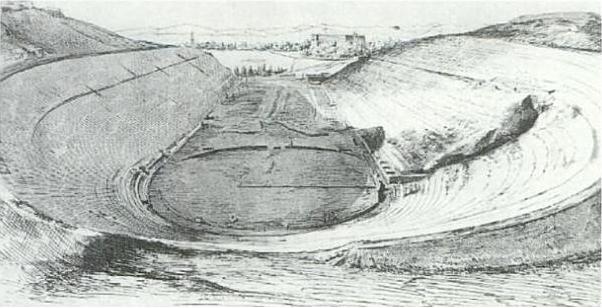
Zappas' contribution in this process was vital: not only were the games hosted at his own initiative, he also provided the funds for the staging of the games, as well as for the construction of much-needed infrastructure, including the refurbishment of the ancient Panathenaic Stadium, which hosted the Games of 1870 and 1875. The same stadium would also host the first IOC Games of 1896, the 1906 Intercalated Games, and archery and the marathon finish at the 2004 Summer Olympics.
In the initial games of 1859, athletes competed in disciplines similar to those of the ancient Olympic games: running, discus, javelin throwing, wrestling, jumping and pole climbing.
Sporadic references to the revival of the ancient Olympic Games were made by various personalities during the 19th century, inspired by a certain degree of Romanticism. In his 1833 poem Dialogue of the Dead, the Constantinople-born Panagiotis Soutsos, editor of a Greek newspaper, used the Olympic Games as the symbol of the ancient Greek traditions. Soon after, he explicitly proposed the revival of the games by the newly formed Greek state, even sending a memorandum to that effect to the Greek government in 1835. His proposal was welcomed by King Otto of Greece, but in the event, nothing was done, despite Soutsos' persistent campaigning over the next twenty-six years.
In 1852, the German archaeologist Ernst Curtius, during a Romantic lecture, also stated that the Olympic events would be revived. Evangelis Zappas, a successful businessman and member of the Greek diaspora in Romania, was inspired by Soutsos and resolved to revive this ancient tradition through his own efforts and resources. In early 1856, Zappas sent a letter through diplomatic channels to King Otto of Greece, offering to fund the entire project of the Olympic revival, providing also cash prizes for the victors. However, this initiative was not without opposition. There was a wide belief among part of the Greek politicians (notably Charilaos Trikoupis and Stephanos Dragoumis) that athletic games were just a throwback to archaic times. They feared that Greece would seem primitive among the leading nations of Europe if it revived, as they claimed, an old-fashioned and pagan festival. Characteristically, the Greek foreign minister and head of the conservative anti-athletic lobby in Athens, Alexandros Rangavis, suggested an industrial and agricultural exposition instead of an athletic event:
I thanked Zappas for his [...] splendid idea; but told him also that times have changed since antiquity. Today, nations do not become distinguished, as then, by having the best athletes and runners, but the champions in industry, handwork and agriculture. I suggested that he found [...] Industrial Olympic Games.
For months there was no official answer from the Greek government. In July 1856, an article in the Greek press by Panagiotis Soutsos, which made Zappas' efforts widely known to the public, triggered a series of events. Finally, Otto agreed upon competitions at four-year intervals, on the occasion of industrial and agricultural expositions, and allowed the realization of athletic events with Zappas' full sponsorship. Consequently, Zappas offered the necessary funds to the Greek government in order to establish an Olympic Trust Fund.
On November 15, 1859, the first modern revival of the athletic Olympic Games took place in Athens. As the renovation of the ancient Panathenaic stadium was not yet complete, the contests were held in Loudovikou square in Athens (modern Koumoundourou square). Although they could be termed as the first Olympic Games of the present tradition, it was far from being an international festival. They had a distinctly national character, since the participants were exclusively of Greek ethnicity, coming both from inside the independent Greek state and the Greek diaspora of the Ottoman Empire. Athletes competed in a variety of disciplines, similar to those of the ancient Olympic games: running, discus, javelin throwing, wrestling, jumping and pole climbing.
Hub AI
Zappas Olympics AI simulator
(@Zappas Olympics_simulator)
Zappas Olympics
The Zappas Olympics (Greek: Ζάππειες Ολυμπιάδες), simply called Olympics (Greek: Ολύμπια, Olympia) at the time, were a series of athletic events held in Athens, Greece, in 1859, 1870 and 1875, sponsored by the Greek businessman Evangelis Zappas. These games were one of the first revivals of the ancient Olympic Games in the modern era. Their success provided further inspiration for William Penny Brookes in England, whose games had been running since 1850, and the International Olympic Committee series from 1896.
Zappas' contribution in this process was vital: not only were the games hosted at his own initiative, he also provided the funds for the staging of the games, as well as for the construction of much-needed infrastructure, including the refurbishment of the ancient Panathenaic Stadium, which hosted the Games of 1870 and 1875. The same stadium would also host the first IOC Games of 1896, the 1906 Intercalated Games, and archery and the marathon finish at the 2004 Summer Olympics.
In the initial games of 1859, athletes competed in disciplines similar to those of the ancient Olympic games: running, discus, javelin throwing, wrestling, jumping and pole climbing.
Sporadic references to the revival of the ancient Olympic Games were made by various personalities during the 19th century, inspired by a certain degree of Romanticism. In his 1833 poem Dialogue of the Dead, the Constantinople-born Panagiotis Soutsos, editor of a Greek newspaper, used the Olympic Games as the symbol of the ancient Greek traditions. Soon after, he explicitly proposed the revival of the games by the newly formed Greek state, even sending a memorandum to that effect to the Greek government in 1835. His proposal was welcomed by King Otto of Greece, but in the event, nothing was done, despite Soutsos' persistent campaigning over the next twenty-six years.
In 1852, the German archaeologist Ernst Curtius, during a Romantic lecture, also stated that the Olympic events would be revived. Evangelis Zappas, a successful businessman and member of the Greek diaspora in Romania, was inspired by Soutsos and resolved to revive this ancient tradition through his own efforts and resources. In early 1856, Zappas sent a letter through diplomatic channels to King Otto of Greece, offering to fund the entire project of the Olympic revival, providing also cash prizes for the victors. However, this initiative was not without opposition. There was a wide belief among part of the Greek politicians (notably Charilaos Trikoupis and Stephanos Dragoumis) that athletic games were just a throwback to archaic times. They feared that Greece would seem primitive among the leading nations of Europe if it revived, as they claimed, an old-fashioned and pagan festival. Characteristically, the Greek foreign minister and head of the conservative anti-athletic lobby in Athens, Alexandros Rangavis, suggested an industrial and agricultural exposition instead of an athletic event:
I thanked Zappas for his [...] splendid idea; but told him also that times have changed since antiquity. Today, nations do not become distinguished, as then, by having the best athletes and runners, but the champions in industry, handwork and agriculture. I suggested that he found [...] Industrial Olympic Games.
For months there was no official answer from the Greek government. In July 1856, an article in the Greek press by Panagiotis Soutsos, which made Zappas' efforts widely known to the public, triggered a series of events. Finally, Otto agreed upon competitions at four-year intervals, on the occasion of industrial and agricultural expositions, and allowed the realization of athletic events with Zappas' full sponsorship. Consequently, Zappas offered the necessary funds to the Greek government in order to establish an Olympic Trust Fund.
On November 15, 1859, the first modern revival of the athletic Olympic Games took place in Athens. As the renovation of the ancient Panathenaic stadium was not yet complete, the contests were held in Loudovikou square in Athens (modern Koumoundourou square). Although they could be termed as the first Olympic Games of the present tradition, it was far from being an international festival. They had a distinctly national character, since the participants were exclusively of Greek ethnicity, coming both from inside the independent Greek state and the Greek diaspora of the Ottoman Empire. Athletes competed in a variety of disciplines, similar to those of the ancient Olympic games: running, discus, javelin throwing, wrestling, jumping and pole climbing.