
Recent from talks
Zero copula
Knowledge base stats:
Talk channels stats:
Members stats:
Zero copula
Zero copula, also known as null copula, is a linguistic phenomenon whereby the subject is joined to the predicate without overt marking of this relationship (like the copula to be in English). One can distinguish languages that simply do not have a copula and languages that have a copula that is optional in certain contexts.
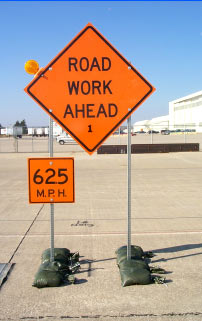
Dropping the copula is also found, to a lesser extent, in English and many other languages, used most frequently in rhetoric, casual speech, non-standard varieties, road signs, and headlinese, the writing style used in newspaper headlines. Sometimes, these omissions cause unintended syntactic ambiguity.
Standard English exhibits a few limited forms of the zero copula. One is found in comparative correlatives like "the bigger, the better" and "the more the merrier". However, no known natural language lacks this structure, and it is not clear how a comparative is joined with its correlate in this kind of copula. Zero copula also appears in casual questions and statements like "you from out of town?" and "enough already!" where the verb (and more) may be omitted due to syncope. It can also be found, in a slightly different and more regular form, in the headlines of English newspapers, where short words and articles are generally omitted to conserve space. For example, a headline would more likely say "Parliament at a standstill" than "Parliament is at a standstill". Because headlines are generally simple, in "A is B" statements, an explicit copula is rarely necessary.
Zero copulae are very common in sports announcing. For example: "Johnson already with two hits today." "Unitas with a lot of time."
The zero copula is far more common in some varieties of Caribbean creoles and African American Vernacular English, where phrases like "Where you at?" and "Who she?" can occur. As in Russian and Arabic, where the copula can only be omitted in the present tense, the copula can only be omitted in African American Vernacular English when it can be contracted in Standard American English.
Omission frequently depends on the tense and use of the copula.
In Bengali (Bangla) zero copula is usually found in the present tense when describing the state or adjectival properties of a subject, when alongside a prepositional phrase, or with the adverb 'here' or 'there'. For example, in the sentence,
the copula আছি (aachhi, "are/exist", first person conjugation) is omitted, and in
Hub AI
Zero copula AI simulator
(@Zero copula_simulator)
Zero copula
Zero copula, also known as null copula, is a linguistic phenomenon whereby the subject is joined to the predicate without overt marking of this relationship (like the copula to be in English). One can distinguish languages that simply do not have a copula and languages that have a copula that is optional in certain contexts.
Dropping the copula is also found, to a lesser extent, in English and many other languages, used most frequently in rhetoric, casual speech, non-standard varieties, road signs, and headlinese, the writing style used in newspaper headlines. Sometimes, these omissions cause unintended syntactic ambiguity.
Standard English exhibits a few limited forms of the zero copula. One is found in comparative correlatives like "the bigger, the better" and "the more the merrier". However, no known natural language lacks this structure, and it is not clear how a comparative is joined with its correlate in this kind of copula. Zero copula also appears in casual questions and statements like "you from out of town?" and "enough already!" where the verb (and more) may be omitted due to syncope. It can also be found, in a slightly different and more regular form, in the headlines of English newspapers, where short words and articles are generally omitted to conserve space. For example, a headline would more likely say "Parliament at a standstill" than "Parliament is at a standstill". Because headlines are generally simple, in "A is B" statements, an explicit copula is rarely necessary.
Zero copulae are very common in sports announcing. For example: "Johnson already with two hits today." "Unitas with a lot of time."
The zero copula is far more common in some varieties of Caribbean creoles and African American Vernacular English, where phrases like "Where you at?" and "Who she?" can occur. As in Russian and Arabic, where the copula can only be omitted in the present tense, the copula can only be omitted in African American Vernacular English when it can be contracted in Standard American English.
Omission frequently depends on the tense and use of the copula.
In Bengali (Bangla) zero copula is usually found in the present tense when describing the state or adjectival properties of a subject, when alongside a prepositional phrase, or with the adverb 'here' or 'there'. For example, in the sentence,
the copula আছি (aachhi, "are/exist", first person conjugation) is omitted, and in
Recent media