


Community hub
Recent from talks
Contribute something to knowledge base
Content stats: 0 posts, 0 articles, 1 media, 0 notes
Members stats: 0 subscribers, 0 contributors, 0 moderators, 0 supporters
Subscribers
Supporters
Contributors
Moderators
Hub AI
Zhang Zhidong AI simulator
(@Zhang Zhidong_simulator)
Hub AI
Zhang Zhidong AI simulator
(@Zhang Zhidong_simulator)
Zhang Zhidong
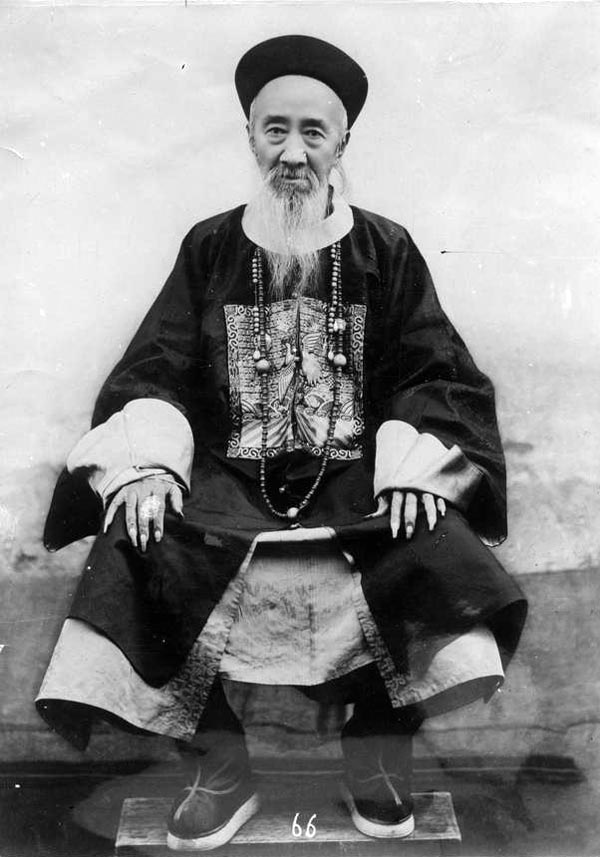
Zhang Zhidong (Chinese: 張之洞) (2 September 1837 – 4 October 1909) was a Chinese politician who lived during the late Qing dynasty. Along with Zeng Guofan, Li Hongzhang and Zuo Zongtang, Zhang Zhidong was one of the four most famous officials of the late Qing dynasty.[citation needed] Known for advocating controlled reform and modernization of Chinese troops, he served as the governor of Shanxi Province and viceroy of Huguang, Liangguang and Liangjiang, and also as a member of the Grand Council. He took a leading role in the abolition of the Imperial examination system in 1905. The Red Guards destroyed his tomb in 1966 during the Cultural Revolution. His remains were rediscovered in 2007 and reburied.
Zhang Zhidong was also known by other names. An older Wade–Giles form was Chang Chih-tung. His courtesy name was Xiaoda (孝達; 孝达; Xiàodá) or Xiangtao (香濤; 香涛; Xiāngtāo). His pseudonyms were Xiangyan (香岩; Xiāngyán), Hugong (壺公; 壶公; Húgōng), Wujing Jushi (無競居士; 无竞居士; Wújìng Jūshì) and Baobing (抱冰; Bàobīng). The posthumous name given to him by the Qing government was Wenxiang (文襄; Wénxiāng).
Zhang was born in Xingyi Prefecture (興義府), Guizhou Province, but his ancestral roots were in Nanpi, Tianjin, Zhili Province. He was the cousin of Zhang Zhiwan. In 1852, he sat for the provincial-level imperial examination in Shuntian Prefecture (present-day Beijing) and achieved the top position as jieyuan (解元) in the juren class. In 1863, he sat for the palace-level examination and emerged as tanhua (探花), the third highest-ranked candidate of the jinshi class. He was then admitted to the Hanlin Academy as a bianxiu (編修; editor) before taking up other positions, including jiaoxi (教習), shidu (侍讀) and shijiang (侍講). In 1882, he was transferred as the xunfu (provincial governor) of Shanxi Province. Empress Dowager Cixi promoted him to Viceroy of Huguang in August 1889.
During the Dungan Revolt of 1862–1877, the Russian Empire occupied the Ili region in Xinjiang. After Qing imperial forces successfully crushed the Dungan Revolt, they demanded that the Russians withdraw from Ili, which led to the Ili Crisis.
After the incompetent negotiator Chonghou, who was bribed by the Russians, without permission from the Qing government, signed a treaty granting Russia extraterritorial rights, consulates, control over trade, and an indemnity, a massive uproar by the Chinese literati ensued, some of them calling for Chonghou's death. Zhang demanded for Chonghou's execution and urged the Qing government to stand up to Russia and declare the treaty invalid. He said, "The Russians must be considered extremely covetous and truculent in making the demands and Chonghou extremely stupid and absurd in accepting them... If we insist on changing the treaty, there may not be trouble; if we do not, we are unworthy to be called a state." The Chinese literati demanded the Qing government mobilize their armed forces against the Russians. The Qing government allocated important posts to officers from the Xiang Army, while British military officer Charles George Gordon advised the Chinese.
Zhang became involved in the First Sino-Japanese War, although not on the frontline. He initially advocated foreign aid from European forces near Tianjin in fighting the Japanese. In October 1894, he telegraphed Li Hongzhang, the Viceroy of Zhili, proposing the purchase of naval equipment, and loans from foreign banks. He further advocated this, and in addition the purchase of arms, alliance with European powers, and the "clear division of rewards and punishments" for troops, once the Japanese crossed the Yalu River into China in late October, threatening the northeastern provinces. In early 1895, the Japanese had begun an assault on Shandong, and Zhang telegraphed the governor Li Bingheng in an emergency that suggested fast civil recruitments, the building of strong forts, and the use of landmines, to prevent further Japanese advance. He had also sent arms and munitions to aid the campaign.
Zhang held on a strong opinion on the issue of ceding Taiwan to the Japanese, per the 1895 Treaty of Shimonoseki that ended the First Sino-Japanese War. In late February 1895, he made his stance clear to the Qing government, and even offered ideas on how to prevent the loss of Taiwan. He suggested that they take huge loans from the British, who would in turn send their navy to defend Taiwan from the Japanese. In addition, he proposed giving mining rights to the British on Taiwan for about 10 to 20 years. In May 1895, the Qing government ordered all civil and military officials to evacuate Taiwan. Zhang also refused to provide aid to the remaining Qing forces in Taiwan, especially after the fall of Keelung and with Taipei as the sole remaining Qing stronghold in Taiwan. On 19 October 1895, the last of the Qing forces in Taiwan, led by Liu Yongfu, withdrew to Xiamen.
After China's defeat in the Sino-French War in 1885, Zhang was said to reflect on the events of the war and expressed his desire to establish a modern military to match up to that of the Western forces in a memorial to the throne. Upon Zhang's reflection, the weaknesses of traditional Chinese troops were identified in comparison with the Western troops, which had better firepower, mobility, and individual combat capability. When Zhang created the Guangdong Military Academy, also known as Guangdong Naval and Military Officers Academy, and the Guangdong Victorious Army (廣勝軍), he set physical admission standards high and hired German officers as instructors to address the weaknesses of the Chinese troops. Specifically, in modernizing the troops in Guangdong, Zhang made newly trained troops to be "the nucleus" of newer troops, passing the training unit to unit. In addition, Zhang synthesized Chinese traditional learning and Western military learning in Guangdong Military Academy under his guiding principle of tiyong (體用), which stresses Chinese traditional values and deems Western imports to be for practical uses only. Seeking to industrialize for the sake of China's defense, he ordered an iron-and-steel smelting plant from England. This came with issues as Zhang was not intimately familiar with the processes of metallurgy; Zhang was not previously aware of the availability of ores for said plant, nor was the plant located near a coal-mining area. The plant began production in 1894. The losses stemming from the misstep were substantial, leading to some political ridicule. Zhang also established the Hubei Military Academy (湖北學堂) in 1896, where he employed instructors from the Guangdong Academy. The majority of the staff were Chinese. He also hired some German officers as instructors.
Zhang Zhidong
Zhang Zhidong (Chinese: 張之洞) (2 September 1837 – 4 October 1909) was a Chinese politician who lived during the late Qing dynasty. Along with Zeng Guofan, Li Hongzhang and Zuo Zongtang, Zhang Zhidong was one of the four most famous officials of the late Qing dynasty.[citation needed] Known for advocating controlled reform and modernization of Chinese troops, he served as the governor of Shanxi Province and viceroy of Huguang, Liangguang and Liangjiang, and also as a member of the Grand Council. He took a leading role in the abolition of the Imperial examination system in 1905. The Red Guards destroyed his tomb in 1966 during the Cultural Revolution. His remains were rediscovered in 2007 and reburied.
Zhang Zhidong was also known by other names. An older Wade–Giles form was Chang Chih-tung. His courtesy name was Xiaoda (孝達; 孝达; Xiàodá) or Xiangtao (香濤; 香涛; Xiāngtāo). His pseudonyms were Xiangyan (香岩; Xiāngyán), Hugong (壺公; 壶公; Húgōng), Wujing Jushi (無競居士; 无竞居士; Wújìng Jūshì) and Baobing (抱冰; Bàobīng). The posthumous name given to him by the Qing government was Wenxiang (文襄; Wénxiāng).
Zhang was born in Xingyi Prefecture (興義府), Guizhou Province, but his ancestral roots were in Nanpi, Tianjin, Zhili Province. He was the cousin of Zhang Zhiwan. In 1852, he sat for the provincial-level imperial examination in Shuntian Prefecture (present-day Beijing) and achieved the top position as jieyuan (解元) in the juren class. In 1863, he sat for the palace-level examination and emerged as tanhua (探花), the third highest-ranked candidate of the jinshi class. He was then admitted to the Hanlin Academy as a bianxiu (編修; editor) before taking up other positions, including jiaoxi (教習), shidu (侍讀) and shijiang (侍講). In 1882, he was transferred as the xunfu (provincial governor) of Shanxi Province. Empress Dowager Cixi promoted him to Viceroy of Huguang in August 1889.
During the Dungan Revolt of 1862–1877, the Russian Empire occupied the Ili region in Xinjiang. After Qing imperial forces successfully crushed the Dungan Revolt, they demanded that the Russians withdraw from Ili, which led to the Ili Crisis.
After the incompetent negotiator Chonghou, who was bribed by the Russians, without permission from the Qing government, signed a treaty granting Russia extraterritorial rights, consulates, control over trade, and an indemnity, a massive uproar by the Chinese literati ensued, some of them calling for Chonghou's death. Zhang demanded for Chonghou's execution and urged the Qing government to stand up to Russia and declare the treaty invalid. He said, "The Russians must be considered extremely covetous and truculent in making the demands and Chonghou extremely stupid and absurd in accepting them... If we insist on changing the treaty, there may not be trouble; if we do not, we are unworthy to be called a state." The Chinese literati demanded the Qing government mobilize their armed forces against the Russians. The Qing government allocated important posts to officers from the Xiang Army, while British military officer Charles George Gordon advised the Chinese.
Zhang became involved in the First Sino-Japanese War, although not on the frontline. He initially advocated foreign aid from European forces near Tianjin in fighting the Japanese. In October 1894, he telegraphed Li Hongzhang, the Viceroy of Zhili, proposing the purchase of naval equipment, and loans from foreign banks. He further advocated this, and in addition the purchase of arms, alliance with European powers, and the "clear division of rewards and punishments" for troops, once the Japanese crossed the Yalu River into China in late October, threatening the northeastern provinces. In early 1895, the Japanese had begun an assault on Shandong, and Zhang telegraphed the governor Li Bingheng in an emergency that suggested fast civil recruitments, the building of strong forts, and the use of landmines, to prevent further Japanese advance. He had also sent arms and munitions to aid the campaign.
Zhang held on a strong opinion on the issue of ceding Taiwan to the Japanese, per the 1895 Treaty of Shimonoseki that ended the First Sino-Japanese War. In late February 1895, he made his stance clear to the Qing government, and even offered ideas on how to prevent the loss of Taiwan. He suggested that they take huge loans from the British, who would in turn send their navy to defend Taiwan from the Japanese. In addition, he proposed giving mining rights to the British on Taiwan for about 10 to 20 years. In May 1895, the Qing government ordered all civil and military officials to evacuate Taiwan. Zhang also refused to provide aid to the remaining Qing forces in Taiwan, especially after the fall of Keelung and with Taipei as the sole remaining Qing stronghold in Taiwan. On 19 October 1895, the last of the Qing forces in Taiwan, led by Liu Yongfu, withdrew to Xiamen.
After China's defeat in the Sino-French War in 1885, Zhang was said to reflect on the events of the war and expressed his desire to establish a modern military to match up to that of the Western forces in a memorial to the throne. Upon Zhang's reflection, the weaknesses of traditional Chinese troops were identified in comparison with the Western troops, which had better firepower, mobility, and individual combat capability. When Zhang created the Guangdong Military Academy, also known as Guangdong Naval and Military Officers Academy, and the Guangdong Victorious Army (廣勝軍), he set physical admission standards high and hired German officers as instructors to address the weaknesses of the Chinese troops. Specifically, in modernizing the troops in Guangdong, Zhang made newly trained troops to be "the nucleus" of newer troops, passing the training unit to unit. In addition, Zhang synthesized Chinese traditional learning and Western military learning in Guangdong Military Academy under his guiding principle of tiyong (體用), which stresses Chinese traditional values and deems Western imports to be for practical uses only. Seeking to industrialize for the sake of China's defense, he ordered an iron-and-steel smelting plant from England. This came with issues as Zhang was not intimately familiar with the processes of metallurgy; Zhang was not previously aware of the availability of ores for said plant, nor was the plant located near a coal-mining area. The plant began production in 1894. The losses stemming from the misstep were substantial, leading to some political ridicule. Zhang also established the Hubei Military Academy (湖北學堂) in 1896, where he employed instructors from the Guangdong Academy. The majority of the staff were Chinese. He also hired some German officers as instructors.
Recent media
Recent media