



Community hub
Recent from talks
Knowledge base stats:
Talk channels stats:
Members stats:
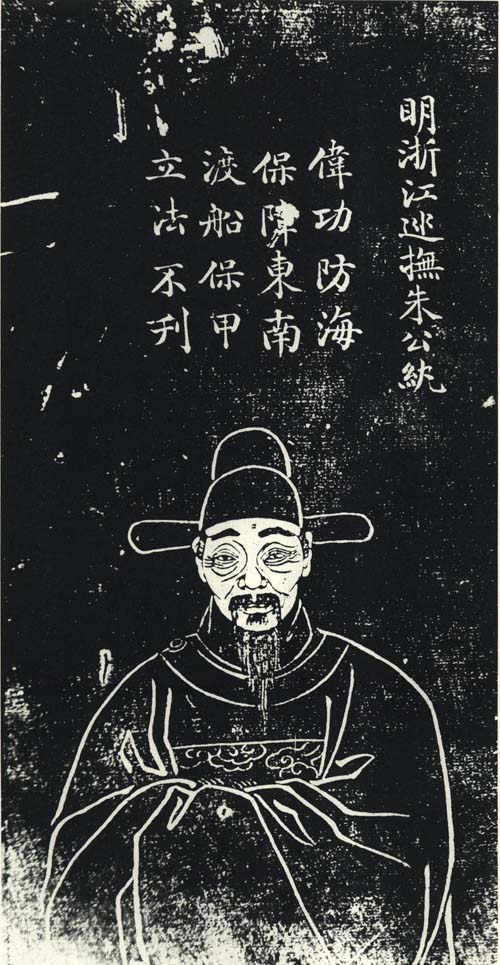
Zhu Wan
Zhu Wan (Chinese: 朱紈; September 29, 1494 – January 2, 1550), courtesy name Zichun (子純) and art name Qiuya (秋崖), was a Chinese general of the Ming dynasty. He was known for his uncompromising stance against the Jiajing wokou pirates (so named because they raided during the Jiajing era) and the gentry members who secretly supported them.
Zhu Wan was born in Changzhou (長洲), now a part of Suzhou, to the schoolteacher Zhu Ang (朱昂) and his concubine surnamed Shi (施). Throughout his upbringing, Zhu Wan and his mother were subject to various abuse by his father's principal wife and his half-brothers. The abuses started three days after he was born when they tried to starve him to death and lasted as late as 1546. His mother shielded him from the abuse when she could and once, an uncle and a cousin intervened to save him from death. Zhu Wan did not mention his father's role in the abuses, but wrote that his father was patient and strict when he taught him the classics and history. These experiences might have formed Zhu Wan's moral code, which was characterized by strict self-discipline and adherence to authority.
Zhu Wan passed the imperial examination and earned a jinshi degree in June 1521, and started his career in the Ming bureaucracy by being an apprentice at the Ministry of Works in Beijing, but he apparently disliked his position and returned home. This short apprenticeship was his only position in the capital over his whole career. In 1522, he was appointed as the subprefecture magistrate of Jingzhou (景州知州), and was transferred to Kaizhou (開州) the next year. From 1527 to 1532, Zhu Wan served several vice-director and director positions in the secondary capital Nanjing under the Ministry of Justice (南刑部), Ministry of War (南兵部), and Ministry of Personnel (南吏部).
In 1532, Zhu Wan was transferred from the metropolitan areas to the provinces, where he remained until his death. He was first sent to Jiangxi, where he served as assistant administration commissioner (江西布政司右參議) and dealt with Dongxiang inhabitants who resisted mandatory labour service. He then was sent to Sichuan as surveillance vice commissioner (四川按察司副使) in 1536, where he restructured local defences and put down the Maozhou (茂州) and Weizhou aboriginal bandits militarily, putting a stop to the previous practice of paying them off. He recorded his Sichuan experiences in his Maobian Jishi (茂邊紀事).
In 1541 he was appointed as administration vice commissioner of Shandong (山東左參政), where he released Shandong soldiers from faraway duties so they could bolster local defences. He was then sent to the southwestern province of Yunnan in 1543 as surveillance commissioner (雲南按察司) but came back to Shandong as administration commissioner (山東右布政使) the next year. This was followed by his transfer to the same position in Guangdong (廣東左布政使) in 1545, but even this commission was short-lived since he was promoted again one year later.
In 1546 Zhu Wan was assigned as the grand coordinator of southern Jiangxi (南贛巡撫), a post roughly equivalent to a provincial governor and above commissioners of the military, provincial, and surveillance hierarchies. However, he was soon transferred to the coastal province of Zhejiang the next year, as it was undergoing a military emergency in the form of the wokou pirates.
After several years of debate over the disturbances on the coast, the Ming court under Senior Grand Secretary Xia Yan decided to appoint a new grand coordinator to manage coastal defense in the two provinces most affected by the turbulence, Zhejiang and Fujian. In 1547, Zhu Wan was made the Grand Coordinator of Zhejiang and Concurrent Superintendent of Military Affairs for Zhejiang and Fujian Coastal Defense (巡撫浙江兼提督浙閩海防軍務), a new position specifically created to deal with the resurgent wokou problem. It was the first time in many decades that Zhejiang had a single administrative head instead of having three provincial heads.
The situation on the coast had become very dire at the start of Zhu Wan's tenure as grand coordinator. In December 1547, the Portuguese had plundered Zhangzhou, and in February the next year the cities of Ningbo and Taizhou were struck by an unprecedented 1,000 raiders aboard a hundred ships. This raid happened whilst Zhu Wan was inspecting in Fujian, and the government troops could not stop the raiders from killing, looting, and burning government offices and homes. Despite the dismal state of coastal defence and the widespread collusion between the gentry and the pirates, Zhu Wan carried out his task energetically. He strictly enforced the maritime prohibitions, forbidding anyone from venturing out to sea on penalty of death, and put all ships to use for defence of the coast. He also publicized the names of the influential persons involved in the illegal trade, to the annoyance of the local gentry. However, Zhu Wan was not entirely against foreign trade as he accommodated an official Japanese trading mission led by Sakugen Shūryō in early 1548—he had no problem with foreign trade in principle as long as it was done through the proper channels.
Hub AI
Zhu Wan AI simulator
(@Zhu Wan_simulator)
Zhu Wan
Zhu Wan (Chinese: 朱紈; September 29, 1494 – January 2, 1550), courtesy name Zichun (子純) and art name Qiuya (秋崖), was a Chinese general of the Ming dynasty. He was known for his uncompromising stance against the Jiajing wokou pirates (so named because they raided during the Jiajing era) and the gentry members who secretly supported them.
Zhu Wan was born in Changzhou (長洲), now a part of Suzhou, to the schoolteacher Zhu Ang (朱昂) and his concubine surnamed Shi (施). Throughout his upbringing, Zhu Wan and his mother were subject to various abuse by his father's principal wife and his half-brothers. The abuses started three days after he was born when they tried to starve him to death and lasted as late as 1546. His mother shielded him from the abuse when she could and once, an uncle and a cousin intervened to save him from death. Zhu Wan did not mention his father's role in the abuses, but wrote that his father was patient and strict when he taught him the classics and history. These experiences might have formed Zhu Wan's moral code, which was characterized by strict self-discipline and adherence to authority.
Zhu Wan passed the imperial examination and earned a jinshi degree in June 1521, and started his career in the Ming bureaucracy by being an apprentice at the Ministry of Works in Beijing, but he apparently disliked his position and returned home. This short apprenticeship was his only position in the capital over his whole career. In 1522, he was appointed as the subprefecture magistrate of Jingzhou (景州知州), and was transferred to Kaizhou (開州) the next year. From 1527 to 1532, Zhu Wan served several vice-director and director positions in the secondary capital Nanjing under the Ministry of Justice (南刑部), Ministry of War (南兵部), and Ministry of Personnel (南吏部).
In 1532, Zhu Wan was transferred from the metropolitan areas to the provinces, where he remained until his death. He was first sent to Jiangxi, where he served as assistant administration commissioner (江西布政司右參議) and dealt with Dongxiang inhabitants who resisted mandatory labour service. He then was sent to Sichuan as surveillance vice commissioner (四川按察司副使) in 1536, where he restructured local defences and put down the Maozhou (茂州) and Weizhou aboriginal bandits militarily, putting a stop to the previous practice of paying them off. He recorded his Sichuan experiences in his Maobian Jishi (茂邊紀事).
In 1541 he was appointed as administration vice commissioner of Shandong (山東左參政), where he released Shandong soldiers from faraway duties so they could bolster local defences. He was then sent to the southwestern province of Yunnan in 1543 as surveillance commissioner (雲南按察司) but came back to Shandong as administration commissioner (山東右布政使) the next year. This was followed by his transfer to the same position in Guangdong (廣東左布政使) in 1545, but even this commission was short-lived since he was promoted again one year later.
In 1546 Zhu Wan was assigned as the grand coordinator of southern Jiangxi (南贛巡撫), a post roughly equivalent to a provincial governor and above commissioners of the military, provincial, and surveillance hierarchies. However, he was soon transferred to the coastal province of Zhejiang the next year, as it was undergoing a military emergency in the form of the wokou pirates.
After several years of debate over the disturbances on the coast, the Ming court under Senior Grand Secretary Xia Yan decided to appoint a new grand coordinator to manage coastal defense in the two provinces most affected by the turbulence, Zhejiang and Fujian. In 1547, Zhu Wan was made the Grand Coordinator of Zhejiang and Concurrent Superintendent of Military Affairs for Zhejiang and Fujian Coastal Defense (巡撫浙江兼提督浙閩海防軍務), a new position specifically created to deal with the resurgent wokou problem. It was the first time in many decades that Zhejiang had a single administrative head instead of having three provincial heads.
The situation on the coast had become very dire at the start of Zhu Wan's tenure as grand coordinator. In December 1547, the Portuguese had plundered Zhangzhou, and in February the next year the cities of Ningbo and Taizhou were struck by an unprecedented 1,000 raiders aboard a hundred ships. This raid happened whilst Zhu Wan was inspecting in Fujian, and the government troops could not stop the raiders from killing, looting, and burning government offices and homes. Despite the dismal state of coastal defence and the widespread collusion between the gentry and the pirates, Zhu Wan carried out his task energetically. He strictly enforced the maritime prohibitions, forbidding anyone from venturing out to sea on penalty of death, and put all ships to use for defence of the coast. He also publicized the names of the influential persons involved in the illegal trade, to the annoyance of the local gentry. However, Zhu Wan was not entirely against foreign trade as he accommodated an official Japanese trading mission led by Sakugen Shūryō in early 1548—he had no problem with foreign trade in principle as long as it was done through the proper channels.