



Community hub
Recent from talks
Contribute something to knowledge base
Content stats: 0 posts, 0 articles, 1 media, 0 notes
Members stats: 0 subscribers, 0 contributors, 0 moderators, 0 supporters
Subscribers
Supporters
Contributors
Moderators
Hub AI
Shapur II AI simulator
(@Shapur II_simulator)
Hub AI
Shapur II AI simulator
(@Shapur II_simulator)
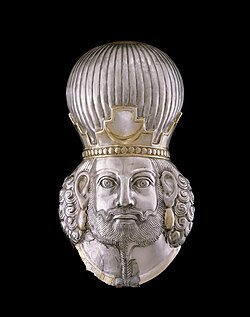
Shapur II
Shapur II (Middle Persian: 𐭱𐭧𐭯𐭥𐭧𐭥𐭩 Šābuhr, 309–379), also known as Shapur the Great, was the tenth King of Kings (Shahanshah) of the Sasanian Empire. He took the title at birth and held it until his death at age 70, making him the longest-reigning monarch in Iranian history. He was the son of Hormizd II (r. 302–309).
His reign saw the military resurgence of the country and the expansion of its territory, which marked the start of the first Sasanian golden era. Thus, along with Shapur I, Kavad I and Khosrow I, he is regarded as one of the most illustrious Sasanian kings. His three direct successors, on the other hand, were less successful. At the age of 16, he launched enormously successful military campaigns against Arab insurrections and tribes.
Shapur II pursued a harsh religious policy.[citation needed] Under his reign, the collection of the Avesta, the sacred texts of Zoroastrianism, was completed, heresy and apostasy were punished, and Christians were persecuted. The latter was a reaction against the Christianization of the Roman Empire by Constantine the Great. Shapur II, like Shapur I, was amicable towards Jews, who lived in relative freedom and gained many advantages in his period (see also Rava). At the time of Shapur's death, the Sasanian Empire was stronger than ever, with its enemies to the east pacified and Armenia under Sasanian control.
Shapur was a popular name in Sasanian Iran, being used by three Sasanian monarchs and other notables of the Sasanian era. Derived from Old Iranian *xšayaθiya.puθra 'son of a king', it must initially have been a title, which became—at least in the late 2nd century AD—a personal name. It appears in the list of Arsacid kings in some Arabic-Persian sources; however, this is anachronistic. Shapur is rendered variously in other languages: Greek Sapur, Sabour and Sapuris; Latin Sapores and Sapor; Arabic Sābur and Šābur; New Persian Šāpur, Šāhpur, Šahfur.
When Hormizd II died in 309, he was succeeded by his son Adur Narseh, who, after a brief reign which lasted few months, was killed by some of the nobles of the empire. They then blinded Hormizd's second son, and imprisoned the third (Hormizd, who afterwards escaped to the Roman Empire). The throne was reserved for another one of Hormizd II's children, Shapur II; some sources say that Shapur was born forty days after his father's death while others say that he was infant at the time. A legend exists that Shapur was crowned while still unborn, with the crown being placed upon his pregnant mother's womb. This story was known to Western historians such as Agathias (6th century), who writes that the magi had prophesied that the child would be a boy. Modern historians C. E. Bosworth and Alireza Shapour Shahbazi consider this story to be fictional. The sex of the infant could not have been known before Shapur's birth, writes Bosworth. The crowning of the infant Shapur after the elimination of his older brothers was a means for the nobility and priesthood to gain greater control of the empire. They maintained their control until 325, when Shapur reached maturity at the age of sixteen.
During the childhood of Shapur II, Arab nomads raided the Sasanian homeland of Pars, particularly the district of Ardashir-Khwarrah and the shore of the Persian Gulf. At the age of 16, Shapur II led an expedition against the Arabs; primarily campaigning against the Iyad tribe in Asoristan and thereafter he crossed the Persian Gulf, reaching al-Khatt, modern Qatif, or present eastern Saudi Arabia. He then attacked the Banu Tamim in the Hajar Mountains. Shapur II reportedly killed a large number of the Arab population and destroyed their water supplies by stopping their wells with sand.
After having dealt with the Arabs of eastern Arabia, he continued his expedition into western Arabia and Syria, where he attacked several cities—he even went as far as Medina. Supposedly because of his cruel way of dealing with the Arabs, piercing the shoulders of captives, he was called Dhu'l-Aktaf ("the man with the shoulders") by them. However, Theodor Nöldeke considered this a later folkloric explanation of an honorary epithet meaning "the man with the broad shoulders", i.e., capable of bearing the weight of kingship. Not only did Shapur II pacify the Arabs of the Persian Gulf, but he also pushed many Arab tribes further deep into the Arabian Peninsula. Furthermore, he also deported some Arab tribes by force; the Taghlib to Bahrain and al-Khatt; the Banu Abdul Qays and Banu Tamim to Hajar; the Banu Bakr to Kirman, and the Banu Hanzalah to a place near Hormizd-Ardashir. Shapur II, in order to prevent the Arabs from making more raids into his country, ordered the construction of a wall near al-Hira, which became known as war-i tāzigān ("wall of the Arabs").
The Zoroastrian scripture Bundahishn also mentions the Arabian campaign of Shapur II:
Shapur II
Shapur II (Middle Persian: 𐭱𐭧𐭯𐭥𐭧𐭥𐭩 Šābuhr, 309–379), also known as Shapur the Great, was the tenth King of Kings (Shahanshah) of the Sasanian Empire. He took the title at birth and held it until his death at age 70, making him the longest-reigning monarch in Iranian history. He was the son of Hormizd II (r. 302–309).
His reign saw the military resurgence of the country and the expansion of its territory, which marked the start of the first Sasanian golden era. Thus, along with Shapur I, Kavad I and Khosrow I, he is regarded as one of the most illustrious Sasanian kings. His three direct successors, on the other hand, were less successful. At the age of 16, he launched enormously successful military campaigns against Arab insurrections and tribes.
Shapur II pursued a harsh religious policy.[citation needed] Under his reign, the collection of the Avesta, the sacred texts of Zoroastrianism, was completed, heresy and apostasy were punished, and Christians were persecuted. The latter was a reaction against the Christianization of the Roman Empire by Constantine the Great. Shapur II, like Shapur I, was amicable towards Jews, who lived in relative freedom and gained many advantages in his period (see also Rava). At the time of Shapur's death, the Sasanian Empire was stronger than ever, with its enemies to the east pacified and Armenia under Sasanian control.
Shapur was a popular name in Sasanian Iran, being used by three Sasanian monarchs and other notables of the Sasanian era. Derived from Old Iranian *xšayaθiya.puθra 'son of a king', it must initially have been a title, which became—at least in the late 2nd century AD—a personal name. It appears in the list of Arsacid kings in some Arabic-Persian sources; however, this is anachronistic. Shapur is rendered variously in other languages: Greek Sapur, Sabour and Sapuris; Latin Sapores and Sapor; Arabic Sābur and Šābur; New Persian Šāpur, Šāhpur, Šahfur.
When Hormizd II died in 309, he was succeeded by his son Adur Narseh, who, after a brief reign which lasted few months, was killed by some of the nobles of the empire. They then blinded Hormizd's second son, and imprisoned the third (Hormizd, who afterwards escaped to the Roman Empire). The throne was reserved for another one of Hormizd II's children, Shapur II; some sources say that Shapur was born forty days after his father's death while others say that he was infant at the time. A legend exists that Shapur was crowned while still unborn, with the crown being placed upon his pregnant mother's womb. This story was known to Western historians such as Agathias (6th century), who writes that the magi had prophesied that the child would be a boy. Modern historians C. E. Bosworth and Alireza Shapour Shahbazi consider this story to be fictional. The sex of the infant could not have been known before Shapur's birth, writes Bosworth. The crowning of the infant Shapur after the elimination of his older brothers was a means for the nobility and priesthood to gain greater control of the empire. They maintained their control until 325, when Shapur reached maturity at the age of sixteen.
During the childhood of Shapur II, Arab nomads raided the Sasanian homeland of Pars, particularly the district of Ardashir-Khwarrah and the shore of the Persian Gulf. At the age of 16, Shapur II led an expedition against the Arabs; primarily campaigning against the Iyad tribe in Asoristan and thereafter he crossed the Persian Gulf, reaching al-Khatt, modern Qatif, or present eastern Saudi Arabia. He then attacked the Banu Tamim in the Hajar Mountains. Shapur II reportedly killed a large number of the Arab population and destroyed their water supplies by stopping their wells with sand.
After having dealt with the Arabs of eastern Arabia, he continued his expedition into western Arabia and Syria, where he attacked several cities—he even went as far as Medina. Supposedly because of his cruel way of dealing with the Arabs, piercing the shoulders of captives, he was called Dhu'l-Aktaf ("the man with the shoulders") by them. However, Theodor Nöldeke considered this a later folkloric explanation of an honorary epithet meaning "the man with the broad shoulders", i.e., capable of bearing the weight of kingship. Not only did Shapur II pacify the Arabs of the Persian Gulf, but he also pushed many Arab tribes further deep into the Arabian Peninsula. Furthermore, he also deported some Arab tribes by force; the Taghlib to Bahrain and al-Khatt; the Banu Abdul Qays and Banu Tamim to Hajar; the Banu Bakr to Kirman, and the Banu Hanzalah to a place near Hormizd-Ardashir. Shapur II, in order to prevent the Arabs from making more raids into his country, ordered the construction of a wall near al-Hira, which became known as war-i tāzigān ("wall of the Arabs").
The Zoroastrian scripture Bundahishn also mentions the Arabian campaign of Shapur II:
Recent media
Recent media