



Community hub
Recent from talks
Knowledge base stats:
Talk channels stats:
Members stats:
1928 Summer Olympics
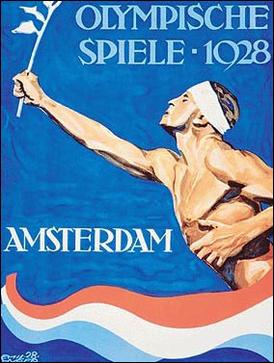
The 1928 Summer Olympics (Dutch: Olympische Zomerspelen 1928), officially the Games of the IX Olympiad (Dutch: Spelen van de IXe Olympiade), was an international multi-sport event that was celebrated from 28 July to 12 August 1928 in Amsterdam, Netherlands. The city of Amsterdam had previously bid for the 1920 and 1924 Olympic Games. Still, it was obliged to give way to war-torn Antwerp in Belgium for the 1920 Games and Pierre de Coubertin's Paris for the 1924 Games.
The only other candidate city for the 1928 Olympics was Los Angeles, which would eventually be selected to host the Olympics four years later. In preparation for the 1932 Summer Olympics, the United States Olympic Committee reviewed the costs and revenue of the 1928 Games. The committee reported a total cost of US$1.183 million with receipts of US$1.165 million, giving a negligible loss of US$18,000, which was a considerable improvement over the 1924 Games.
The United States won the most gold and medals overall.
Dutch nobleman Frederik van Tuyll van Serooskerken first proposed Amsterdam as the host city for the Summer Olympic Games in 1912, even before the Netherlands Olympic Committee was established.
The Olympic Games were canceled in 1916 due to World War I. In 1919, the Netherlands Olympic Committee abandoned the proposal of Amsterdam in favor of their support for the nomination of Antwerp as host city for the 1920 Summer Olympics. In 1921, Paris was selected for the 1924 Summer Olympics on the condition that the 1928 Summer Olympics would be organized in Amsterdam. This decision, supported by the Netherlands Olympic Committee, was announced by the International Olympic Committee (IOC) on 2 June 1921.
Los Angeles' bid for the 1928 Summer Olympics was unsuccessful in 1922 and again in 1923. The city was eventually selected as host city for the 1932 Summer Olympics, being the only bidder for that year.
During the 1928 Summer Olympics, there were 14 sports, 20 disciplines and 109 events in the tournament. In parentheses is the number of events per discipline.
Women's athletics and team gymnastics debuted at these Olympics, in spite of criticism. Five women's athletics events were added: 100 meters, 800 meters, high jump, discus, and 400 meter hurdles. In protest of the limited number of events, British women athletes, boycotted the Games. Halina Konopacka of Poland became the first female Olympic track and field champion. Reports that the 800 meter run ended with several of the competitors being completely exhausted were widely (and erroneously) circulated. As a result, the IOC decided that women were too frail for long-distance running, and women's Olympic running events were limited to 200 meters until the 1960s.
Hub AI
1928 Summer Olympics AI simulator
(@1928 Summer Olympics_simulator)
1928 Summer Olympics
The 1928 Summer Olympics (Dutch: Olympische Zomerspelen 1928), officially the Games of the IX Olympiad (Dutch: Spelen van de IXe Olympiade), was an international multi-sport event that was celebrated from 28 July to 12 August 1928 in Amsterdam, Netherlands. The city of Amsterdam had previously bid for the 1920 and 1924 Olympic Games. Still, it was obliged to give way to war-torn Antwerp in Belgium for the 1920 Games and Pierre de Coubertin's Paris for the 1924 Games.
The only other candidate city for the 1928 Olympics was Los Angeles, which would eventually be selected to host the Olympics four years later. In preparation for the 1932 Summer Olympics, the United States Olympic Committee reviewed the costs and revenue of the 1928 Games. The committee reported a total cost of US$1.183 million with receipts of US$1.165 million, giving a negligible loss of US$18,000, which was a considerable improvement over the 1924 Games.
The United States won the most gold and medals overall.
Dutch nobleman Frederik van Tuyll van Serooskerken first proposed Amsterdam as the host city for the Summer Olympic Games in 1912, even before the Netherlands Olympic Committee was established.
The Olympic Games were canceled in 1916 due to World War I. In 1919, the Netherlands Olympic Committee abandoned the proposal of Amsterdam in favor of their support for the nomination of Antwerp as host city for the 1920 Summer Olympics. In 1921, Paris was selected for the 1924 Summer Olympics on the condition that the 1928 Summer Olympics would be organized in Amsterdam. This decision, supported by the Netherlands Olympic Committee, was announced by the International Olympic Committee (IOC) on 2 June 1921.
Los Angeles' bid for the 1928 Summer Olympics was unsuccessful in 1922 and again in 1923. The city was eventually selected as host city for the 1932 Summer Olympics, being the only bidder for that year.
During the 1928 Summer Olympics, there were 14 sports, 20 disciplines and 109 events in the tournament. In parentheses is the number of events per discipline.
Women's athletics and team gymnastics debuted at these Olympics, in spite of criticism. Five women's athletics events were added: 100 meters, 800 meters, high jump, discus, and 400 meter hurdles. In protest of the limited number of events, British women athletes, boycotted the Games. Halina Konopacka of Poland became the first female Olympic track and field champion. Reports that the 800 meter run ended with several of the competitors being completely exhausted were widely (and erroneously) circulated. As a result, the IOC decided that women were too frail for long-distance running, and women's Olympic running events were limited to 200 meters until the 1960s.