
Recent from talks
1936 North American heat wave
Knowledge base stats:
Talk channels stats:
Members stats:
1936 North American heat wave
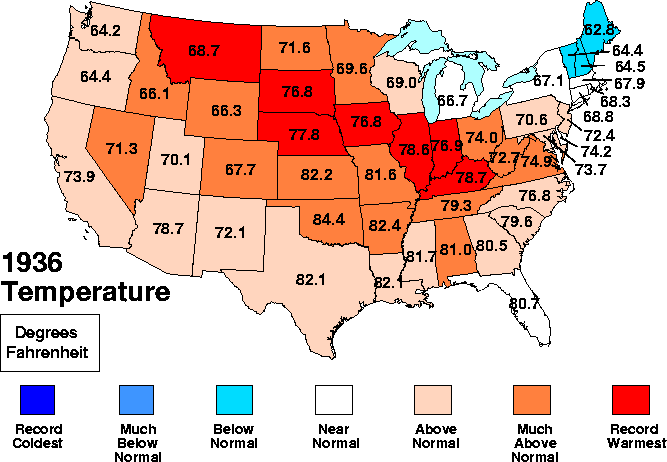
The 1936 North American heat wave was one of the most severe heat waves in the modern history of North America. It took place in the middle of the Great Depression and Dust Bowl of the 1930s and caused more than 5,000 deaths. Many state and city record high temperatures set during the 1936 heat wave stood until the 2012 North American heat wave. Many more endure to this day; as of 2022, 13 state record high temperatures were set in 1936. The 1936 heat wave followed one of the coldest winters on record.
High temperatures began briefly in the Northeast from June 1 to 3. On June 3, Allentown, Pennsylvania, had a high of 95 °F (35 °C) (20 °F (11 °C) above the average) while New York City had a high of 90 °F (32 °C). Baltimore, Maryland, had a high of 96 °F (36 °C), just below the daily record high set in 1925. As the month went on, heat began to build in the Rocky Mountains and over the Southeast.
Salt Lake City, Utah, started off with below average temperatures but would see record highs of 101 °F (38 °C) on both June 20 and 22. Grand Junction, Colorado, saw five days above 100 °F (38 °C) with record highs set from June 18 through 20. Areas east of the Rockies in Colorado varied greatly, with Pueblo seeing one day above 100 °F (38 °C) (June 18) while Lamar saw eleven consecutive days with highs above 100 °F (38 °C). Cheyenne, Wyoming, (with typical highs averaging 75 °F (24 °C)) saw highs averaging 90 °F (32 °C) with a record 95 °F (35 °C) high for June 18. In Ashton, Idaho, a record high for the month of June was set on June 27 at 98 °F (37 °C).
In the South, the heat started in the Gulf Coast states with Atlanta, Georgia seeing low to mid-90s in the early part of the month followed by Birmingham, Alabama seeing a string of mid-90 °F (32 °C) highs from June 6 through 10. Following this, intense heat began to build in the region by mid-month. From June 16 through 19, highs were in the upper 90s to near 100 °F (38 °C) in Birmingham. In a similar time frame, Huntsville, Alabama saw a string of five days above 100 °F (38 °C) with only one day not setting a new daily record high. In Mississippi, Jackson and Meridian both saw highs in the upper 90s while Greenville and Tupelo saw highs in the 100s. For some areas, June 17 was the hottest day of the month with Atlanta setting a daily record high of 102 °F (39 °C) and Evansville, Indiana hitting 100 °F (38 °C).
On June 19, as the heat began to spread northward, multiple areas in the Midwest saw record daily highs, including St. Louis and Kansas City, Missouri, and Topeka, Kansas.
On June 20, Arkansas, Louisiana, Mississippi, and Missouri all set all-time, monthly record highs: Corning, Arkansas, hit 113 °F (45 °C), Dodson, Louisiana, hit 110 °F (43 °C), Greenwood, Mississippi, hit 111 °F (44 °C), and Doniphan, Missouri, hit 112 °F (44 °C). Dozens of other cities had daily record high temperatures, including Shreveport, Louisiana (104 °F (40 °C)), Little Rock, Arkansas (105 °F (41 °C)), and Memphis, Tennessee (103 °F (39 °C)). The heat began to spread northward, with St. Louis and Kansas City, Missouri, seeing daily high records.
On June 26, Nebraska set a new monthly record high as it hit 114 °F (46 °C) in Franklin.
On June 29, it was 110 °F (43 °C) in both Saint John, Kentucky, and Etowah, Tennessee, and 111 °F (44 °C) in Seymour, Indiana; these temperatures set new monthly record highs for each state. This day was particularly brutal, with many areas across the South and Midwest reporting record highs for the month. Springfield, Illinois, hit 103 °F (39 °C) falling just short of the 104 °F (40 °C) record set in 1934. Galesburg, Illinois, hit 102 °F (39 °C) and Lexington, Kentucky, hit 104 °F (40 °C) which remains their hottest temperature ever recorded in June.
Hub AI
1936 North American heat wave AI simulator
(@1936 North American heat wave_simulator)
1936 North American heat wave
The 1936 North American heat wave was one of the most severe heat waves in the modern history of North America. It took place in the middle of the Great Depression and Dust Bowl of the 1930s and caused more than 5,000 deaths. Many state and city record high temperatures set during the 1936 heat wave stood until the 2012 North American heat wave. Many more endure to this day; as of 2022, 13 state record high temperatures were set in 1936. The 1936 heat wave followed one of the coldest winters on record.
High temperatures began briefly in the Northeast from June 1 to 3. On June 3, Allentown, Pennsylvania, had a high of 95 °F (35 °C) (20 °F (11 °C) above the average) while New York City had a high of 90 °F (32 °C). Baltimore, Maryland, had a high of 96 °F (36 °C), just below the daily record high set in 1925. As the month went on, heat began to build in the Rocky Mountains and over the Southeast.
Salt Lake City, Utah, started off with below average temperatures but would see record highs of 101 °F (38 °C) on both June 20 and 22. Grand Junction, Colorado, saw five days above 100 °F (38 °C) with record highs set from June 18 through 20. Areas east of the Rockies in Colorado varied greatly, with Pueblo seeing one day above 100 °F (38 °C) (June 18) while Lamar saw eleven consecutive days with highs above 100 °F (38 °C). Cheyenne, Wyoming, (with typical highs averaging 75 °F (24 °C)) saw highs averaging 90 °F (32 °C) with a record 95 °F (35 °C) high for June 18. In Ashton, Idaho, a record high for the month of June was set on June 27 at 98 °F (37 °C).
In the South, the heat started in the Gulf Coast states with Atlanta, Georgia seeing low to mid-90s in the early part of the month followed by Birmingham, Alabama seeing a string of mid-90 °F (32 °C) highs from June 6 through 10. Following this, intense heat began to build in the region by mid-month. From June 16 through 19, highs were in the upper 90s to near 100 °F (38 °C) in Birmingham. In a similar time frame, Huntsville, Alabama saw a string of five days above 100 °F (38 °C) with only one day not setting a new daily record high. In Mississippi, Jackson and Meridian both saw highs in the upper 90s while Greenville and Tupelo saw highs in the 100s. For some areas, June 17 was the hottest day of the month with Atlanta setting a daily record high of 102 °F (39 °C) and Evansville, Indiana hitting 100 °F (38 °C).
On June 19, as the heat began to spread northward, multiple areas in the Midwest saw record daily highs, including St. Louis and Kansas City, Missouri, and Topeka, Kansas.
On June 20, Arkansas, Louisiana, Mississippi, and Missouri all set all-time, monthly record highs: Corning, Arkansas, hit 113 °F (45 °C), Dodson, Louisiana, hit 110 °F (43 °C), Greenwood, Mississippi, hit 111 °F (44 °C), and Doniphan, Missouri, hit 112 °F (44 °C). Dozens of other cities had daily record high temperatures, including Shreveport, Louisiana (104 °F (40 °C)), Little Rock, Arkansas (105 °F (41 °C)), and Memphis, Tennessee (103 °F (39 °C)). The heat began to spread northward, with St. Louis and Kansas City, Missouri, seeing daily high records.
On June 26, Nebraska set a new monthly record high as it hit 114 °F (46 °C) in Franklin.
On June 29, it was 110 °F (43 °C) in both Saint John, Kentucky, and Etowah, Tennessee, and 111 °F (44 °C) in Seymour, Indiana; these temperatures set new monthly record highs for each state. This day was particularly brutal, with many areas across the South and Midwest reporting record highs for the month. Springfield, Illinois, hit 103 °F (39 °C) falling just short of the 104 °F (40 °C) record set in 1934. Galesburg, Illinois, hit 102 °F (39 °C) and Lexington, Kentucky, hit 104 °F (40 °C) which remains their hottest temperature ever recorded in June.
Recent media