



Community hub
Recent from talks
Knowledge base stats:
Talk channels stats:
Members stats:
1952 Republican National Convention
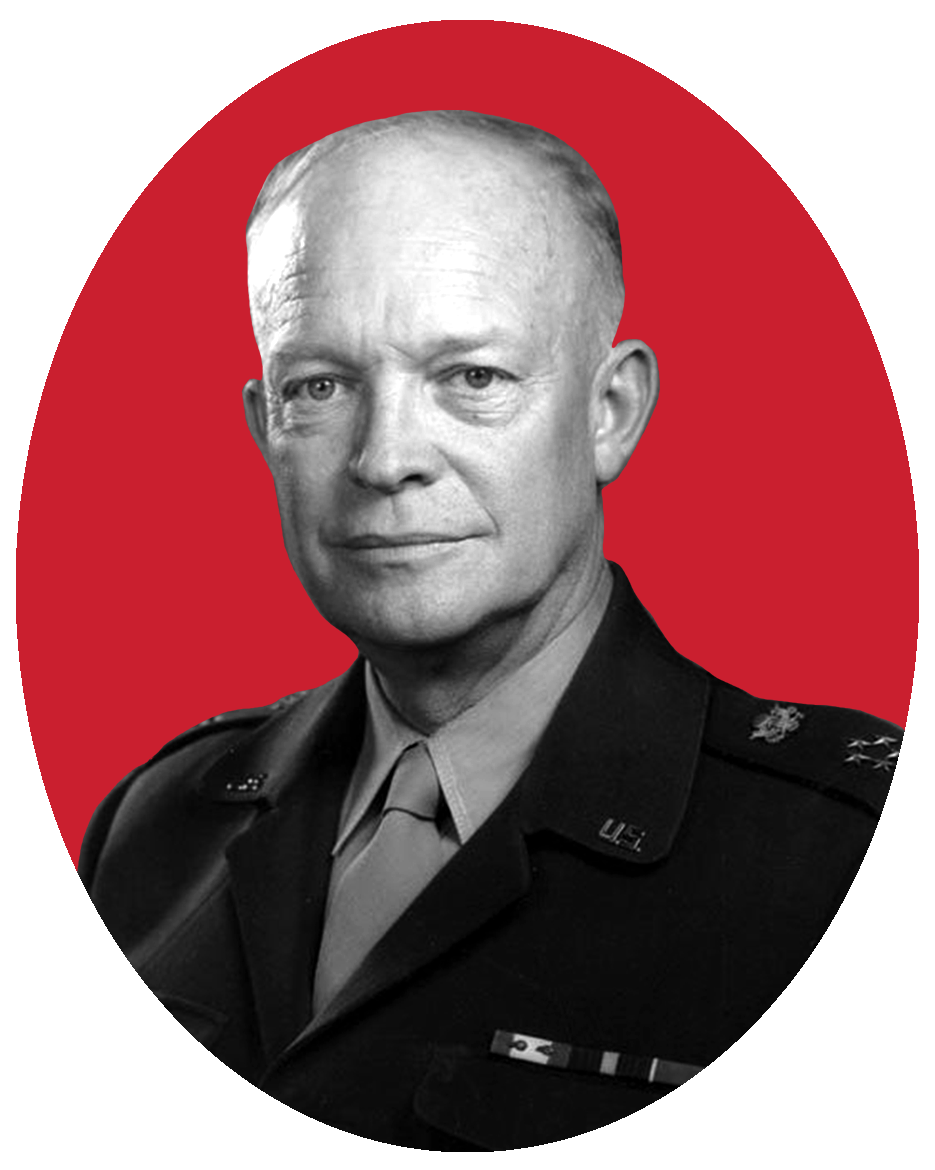
The 1952 Republican National Convention was held at the International Amphitheatre in Chicago, Illinois from July 7 to 11, 1952, and nominated Dwight D. Eisenhower of New York, nicknamed "Ike", for president and Richard M. Nixon of California for vice president.
The Republican platform pledged to end the unpopular war in Korea, supported the development of nuclear weapons as a deterrence strategy, to fire all "the loafers, incompetents and unnecessary employees" at the State Department, condemned the Roosevelt and Truman administrations' economic policies, supported retention of the Taft–Hartley Act, opposed "discrimination against race, religion or national origin", supported "Federal action toward the elimination of lynching", and pledged to bring an end to communist subversion in the United States.
The keynote speech was delivered by MacArthur, who had become a hero to Republicans after President Truman relieved him of command in 1951 because of their disagreement about how to prosecute the Korean War, and had hopes of obtaining the presidential nomination. In his address, MacArthur condemned the Truman administration for America's perceived loss of status on the international stage, including criticism of the Yalta Conference and the administration's handling of the war in Korea. MacArthur also criticized Truman on the domestic front, blaming his administration for wages that failed to keep pace with post-World War II inflation.
The speech was not well received, and did nothing to aid MacArthur's presidential campaign. He curtailed his post-convention speeches and remained out of the public eye until after the election.
The contest for the presidential nomination was expected to be a battle between the party's moderate to liberal and conservative wings. Moderate and liberal Republicans (the "Eastern Establishment"), led by New York Governor Thomas E. Dewey, the party's unsuccessful presidential nominee in 1944 and 1948, were largely supporters of Eisenhower or Warren. The conservative wing was led by Taft, who had unsuccessfully tried for the presidential nomination in 1940 and 1948.
In a pre-convention fight over the seating of delegates, Eisenhower supporters charged the Taft campaign with improperly seeking to obtain delegates from Texas, Georgia and Louisiana, states that were part of the Democratic Party's "Solid South" where Republicans had little or no organization because they traditionally did not do well in general elections. The Taft-dominated Republican National Committee supported Taft in the dispute. When delegate committees met to consider the issue before the convention convened, they sustained Eisenhower's position. Stripped of 42 delegates from the disputed states, Taft's backers realized their chances of beating Eisenhower were slim.
In his remarks during the delegate fight, Taft supporter Everett Dirksen harshly criticized Dewey and the moderate to liberal wing of the party, which had dominated it since 1940. In describing the party's failed presidential campaigns of 1940, 1944 and 1948, he pointed at Dewey, who was seated with the New York delegation, and shouted "We followed you before and you took us down the road to defeat!" Dirksen's condemnation of Dewey touched off sustained anti-Dewey and pro-Taft demonstrations.
Dirksen nominated Taft. Eisenhower was nominated by Maryland Governor Theodore McKeldin, who made obvious overtures to the conservative wing by mentioning Eisenhower's Midwestern Kansas roots and the fact that he had begun attendance at the United States Military Academy during the presidential administration of Robert Taft's father, William Howard Taft. McKeldin described Eisenhower's career at the highest levels of the military as evidence that he was able to assume the responsibilities of the presidency immediately and his international renown as an asset that would enable the party to unify its disparate wings and make inroads among Democratic and independent voters. McKeldin's nomination was seconded by Kansas Governor Edward F. Arn, Oregon Republican Party Chairman Robert B. Elliott, Mrs. Alberta Green, a delegate from West Plains, Missouri, and Hobson R. Reynolds, an African American funeral director, state legislator from Philadelphia, and Director of the Civil Liberties Department of the Improved Benevolent and Protective Order of Elks of the World.
Hub AI
1952 Republican National Convention AI simulator
(@1952 Republican National Convention_simulator)
1952 Republican National Convention
The 1952 Republican National Convention was held at the International Amphitheatre in Chicago, Illinois from July 7 to 11, 1952, and nominated Dwight D. Eisenhower of New York, nicknamed "Ike", for president and Richard M. Nixon of California for vice president.
The Republican platform pledged to end the unpopular war in Korea, supported the development of nuclear weapons as a deterrence strategy, to fire all "the loafers, incompetents and unnecessary employees" at the State Department, condemned the Roosevelt and Truman administrations' economic policies, supported retention of the Taft–Hartley Act, opposed "discrimination against race, religion or national origin", supported "Federal action toward the elimination of lynching", and pledged to bring an end to communist subversion in the United States.
The keynote speech was delivered by MacArthur, who had become a hero to Republicans after President Truman relieved him of command in 1951 because of their disagreement about how to prosecute the Korean War, and had hopes of obtaining the presidential nomination. In his address, MacArthur condemned the Truman administration for America's perceived loss of status on the international stage, including criticism of the Yalta Conference and the administration's handling of the war in Korea. MacArthur also criticized Truman on the domestic front, blaming his administration for wages that failed to keep pace with post-World War II inflation.
The speech was not well received, and did nothing to aid MacArthur's presidential campaign. He curtailed his post-convention speeches and remained out of the public eye until after the election.
The contest for the presidential nomination was expected to be a battle between the party's moderate to liberal and conservative wings. Moderate and liberal Republicans (the "Eastern Establishment"), led by New York Governor Thomas E. Dewey, the party's unsuccessful presidential nominee in 1944 and 1948, were largely supporters of Eisenhower or Warren. The conservative wing was led by Taft, who had unsuccessfully tried for the presidential nomination in 1940 and 1948.
In a pre-convention fight over the seating of delegates, Eisenhower supporters charged the Taft campaign with improperly seeking to obtain delegates from Texas, Georgia and Louisiana, states that were part of the Democratic Party's "Solid South" where Republicans had little or no organization because they traditionally did not do well in general elections. The Taft-dominated Republican National Committee supported Taft in the dispute. When delegate committees met to consider the issue before the convention convened, they sustained Eisenhower's position. Stripped of 42 delegates from the disputed states, Taft's backers realized their chances of beating Eisenhower were slim.
In his remarks during the delegate fight, Taft supporter Everett Dirksen harshly criticized Dewey and the moderate to liberal wing of the party, which had dominated it since 1940. In describing the party's failed presidential campaigns of 1940, 1944 and 1948, he pointed at Dewey, who was seated with the New York delegation, and shouted "We followed you before and you took us down the road to defeat!" Dirksen's condemnation of Dewey touched off sustained anti-Dewey and pro-Taft demonstrations.
Dirksen nominated Taft. Eisenhower was nominated by Maryland Governor Theodore McKeldin, who made obvious overtures to the conservative wing by mentioning Eisenhower's Midwestern Kansas roots and the fact that he had begun attendance at the United States Military Academy during the presidential administration of Robert Taft's father, William Howard Taft. McKeldin described Eisenhower's career at the highest levels of the military as evidence that he was able to assume the responsibilities of the presidency immediately and his international renown as an asset that would enable the party to unify its disparate wings and make inroads among Democratic and independent voters. McKeldin's nomination was seconded by Kansas Governor Edward F. Arn, Oregon Republican Party Chairman Robert B. Elliott, Mrs. Alberta Green, a delegate from West Plains, Missouri, and Hobson R. Reynolds, an African American funeral director, state legislator from Philadelphia, and Director of the Civil Liberties Department of the Improved Benevolent and Protective Order of Elks of the World.