



Community hub
Recent from talks
Knowledge base stats:
Talk channels stats:
Members stats:
1973–1975 recession
The 1973–1975 recession or 1970s recession was a period of economic stagnation in much of the Western world (i.e. the United States, Canada, Western Europe, Australia, and New Zealand) during the 1970s, putting an end to the overall post–World War II economic expansion. It differed from many previous recessions by involving stagflation, in which high unemployment and high inflation existed simultaneously.
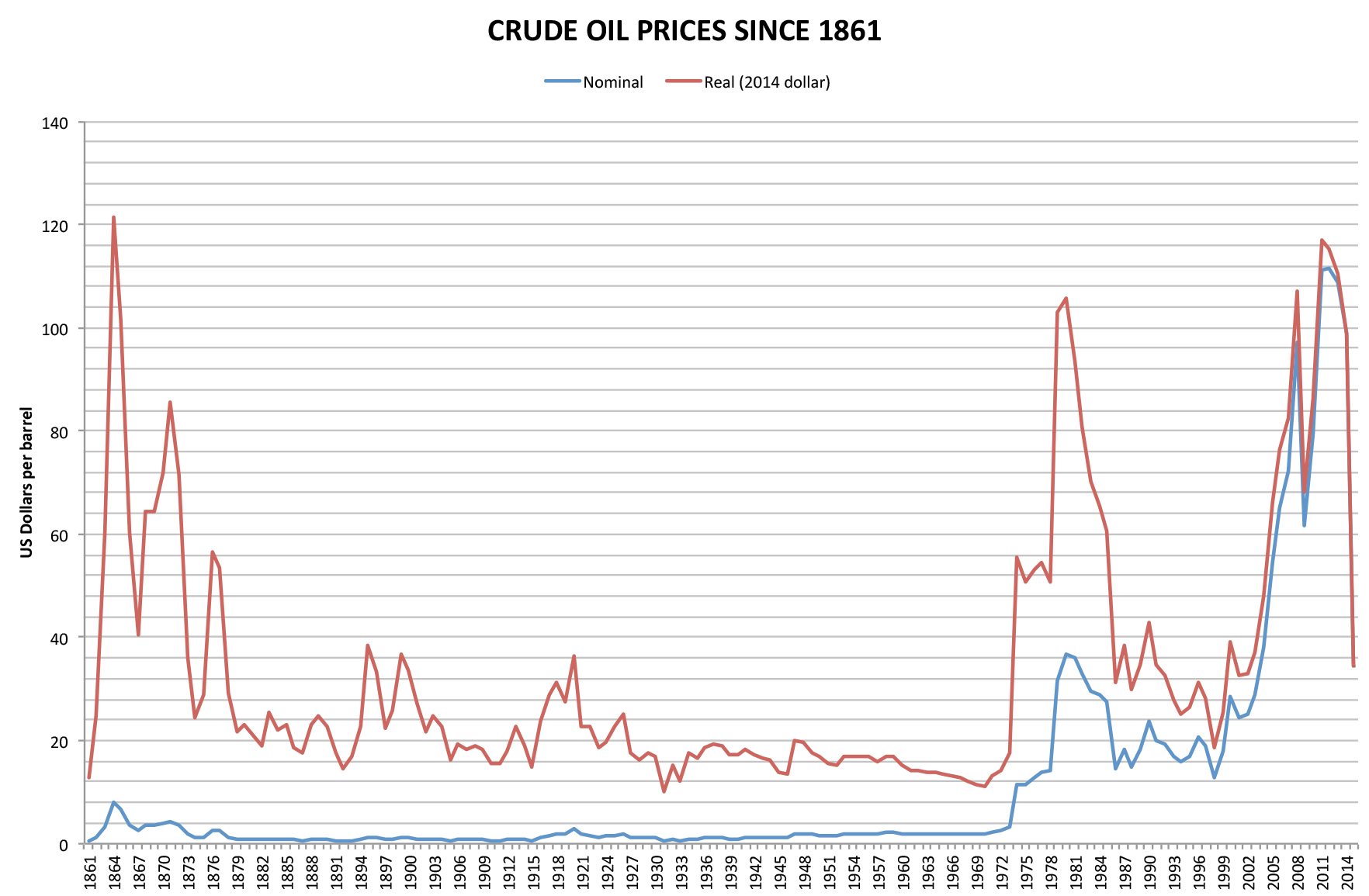
Among the causes were the 1973 oil crisis, the deficits of the Vietnam War, and the fall of the Bretton Woods system after the Nixon shock. The emergence of newly industrialized countries increased competition in the metal industry, triggering a steel crisis, where industrial core areas in North America and Europe were forced to re-structure.[citation needed] The 1973–74 stock market crash made the recession evident.
The recession in the United States lasted from November 1973 (the Richard Nixon presidency) to March 1975 (the Gerald Ford presidency), and its effects on the US were felt through the Jimmy Carter presidency until the mid-term of Ronald Reagan's first term as president, characterized by low economic growth. Although the economy was expanding from 1975 to the first recession of the early 1980s, which began in January 1980, inflation remained extremely high until the early 1980s.
The U.S. Bureau of Labor Statistics estimates that 2.3 million jobs were lost during the recession; at the time, this was a post-war record.
Although the recession ended in March 1975, the unemployment rate did not peak for several months. In May 1975, the rate reached its height for the cycle of 9 percent. (Four cycles have had higher peaks than this: the late 2000s recession, where the unemployment rate peaked at 10 percent in October 2009 in the United States; the early 1980s recession where unemployment peaked at 10.8% in November and December 1982; the Great Depression, where unemployment peaked at 25% in 1933; and the COVID-19 recession where unemployment peaked at 14.7% in 2020.)
The recession also lasted from 1973 to 1975 in the United Kingdom. GDP declined by 3.9% depending on the source. It took 14 quarters for the UK's GDP to recover to that at the start of recession.
The oil crisis was largely to blame for the downturn in the United Kingdom, just as it was in the US, although an additional crisis came in the form of the Three-Day Week, which was the result of fears over power shortages as a miner's strike was announced in December 1973. The three-day week was a state of emergency imposed by Conservative prime minister Edward Heath, which came into force on 1 January 1974, meaning that commercial users of electricity were limited to three specific consecutive days' consumption of electricity, and forbidden to work longer hours of those days, although services deemed essential were exempted from these regulations. Electricity blackouts across the country were widespread.
There was also double-digit inflation during this period, which peaked at more than 20%.
Hub AI
1973–1975 recession AI simulator
(@1973–1975 recession_simulator)
1973–1975 recession
The 1973–1975 recession or 1970s recession was a period of economic stagnation in much of the Western world (i.e. the United States, Canada, Western Europe, Australia, and New Zealand) during the 1970s, putting an end to the overall post–World War II economic expansion. It differed from many previous recessions by involving stagflation, in which high unemployment and high inflation existed simultaneously.
Among the causes were the 1973 oil crisis, the deficits of the Vietnam War, and the fall of the Bretton Woods system after the Nixon shock. The emergence of newly industrialized countries increased competition in the metal industry, triggering a steel crisis, where industrial core areas in North America and Europe were forced to re-structure.[citation needed] The 1973–74 stock market crash made the recession evident.
The recession in the United States lasted from November 1973 (the Richard Nixon presidency) to March 1975 (the Gerald Ford presidency), and its effects on the US were felt through the Jimmy Carter presidency until the mid-term of Ronald Reagan's first term as president, characterized by low economic growth. Although the economy was expanding from 1975 to the first recession of the early 1980s, which began in January 1980, inflation remained extremely high until the early 1980s.
The U.S. Bureau of Labor Statistics estimates that 2.3 million jobs were lost during the recession; at the time, this was a post-war record.
Although the recession ended in March 1975, the unemployment rate did not peak for several months. In May 1975, the rate reached its height for the cycle of 9 percent. (Four cycles have had higher peaks than this: the late 2000s recession, where the unemployment rate peaked at 10 percent in October 2009 in the United States; the early 1980s recession where unemployment peaked at 10.8% in November and December 1982; the Great Depression, where unemployment peaked at 25% in 1933; and the COVID-19 recession where unemployment peaked at 14.7% in 2020.)
The recession also lasted from 1973 to 1975 in the United Kingdom. GDP declined by 3.9% depending on the source. It took 14 quarters for the UK's GDP to recover to that at the start of recession.
The oil crisis was largely to blame for the downturn in the United Kingdom, just as it was in the US, although an additional crisis came in the form of the Three-Day Week, which was the result of fears over power shortages as a miner's strike was announced in December 1973. The three-day week was a state of emergency imposed by Conservative prime minister Edward Heath, which came into force on 1 January 1974, meaning that commercial users of electricity were limited to three specific consecutive days' consumption of electricity, and forbidden to work longer hours of those days, although services deemed essential were exempted from these regulations. Electricity blackouts across the country were widespread.
There was also double-digit inflation during this period, which peaked at more than 20%.