Hubbry Logo
search
logo
1783094

2-Methoxyethanol

logo
Community Hub0 Subscribers
Read side by side
from Wikipedia
2-Methoxyethanol
2-Methoxyethanol
2-Methoxyethanol
2-Methoxyethanol
2-Methoxyethanol
Names
Preferred IUPAC name
2-Methoxyethan-1-ol
Other names
Ethylene glycol monomethyl ether
EGME
Methyl Cellosolve
2-MOE
Identifiers
3D model (JSmol)
1731074
ChEBI
ChEMBL
ChemSpider
DrugBank
ECHA InfoCard 100.003.377 Edit this at Wikidata
EC Number
  • 203-713-7
81877
KEGG
RTECS number
  • KL5775000
UNII
UN number 1188
  • InChI=1S/C3H8O2/c1-5-3-2-4/h4H,2-3H2,1H3 checkY
    Key: XNWFRZJHXBZDAG-UHFFFAOYSA-N checkY
  • InChI=1/C3H8O2/c1-5-3-2-4/h4H,2-3H2,1H3
    Key: XNWFRZJHXBZDAG-UHFFFAOYAC
  • OCCOC
Properties
C3H8O2
Molar mass 76.09 g/mol
Appearance Colorless liquid
Odor Ether-like[1]
Density 0.965 g/cm3
Melting point −85 °C (−121 °F; 188 K)
Boiling point 124 to 125 °C (255 to 257 °F; 397 to 398 K)
miscible[1]
Vapor pressure 6 mmHg (20°C)[1]
Hazards
GHS labelling:
GHS02: FlammableGHS07: Exclamation markGHS08: Health hazard
Danger
H226, H302, H312, H332, H360
P201, P202, P210, P233, P240, P241, P242, P243, P261, P264, P270, P271, P280, P281, P301+P312, P302+P352, P303+P361+P353, P304+P312, P304+P340, P308+P313, P312, P322, P330, P363, P370+P378, P403+P235, P405, P501
NFPA 704 (fire diamond)
NFPA 704 four-colored diamondHealth 3: Short exposure could cause serious temporary or residual injury. E.g. chlorine gasFlammability 2: Must be moderately heated or exposed to relatively high ambient temperature before ignition can occur. Flash point between 38 and 93 °C (100 and 200 °F). E.g. diesel fuelInstability 2: Undergoes violent chemical change at elevated temperatures and pressures, reacts violently with water, or may form explosive mixtures with water. E.g. white phosphorusSpecial hazards (white): no code
3
2
2
Flash point 39 °C (102 °F; 312 K)
Explosive limits 1.8–14%[1]
Lethal dose or concentration (LD, LC):
2370 mg/kg (rat, oral)
890 mg/kg (rabbit, oral)
1480 mg/kg (mouse, oral)
950 mg/kg (guinea pig, oral)[2]
1480 ppm (mouse, 7 hr)[2]
NIOSH (US health exposure limits):
PEL (Permissible)
TWA 25 ppm (80 mg/m3) [skin][1]
REL (Recommended)
TWA 0.1 ppm (0.3 mg/m3) [skin][1]
IDLH (Immediate danger)
200 ppm[1]
Safety data sheet (SDS) External MSDS
Except where otherwise noted, data are given for materials in their standard state (at 25 °C [77 °F], 100 kPa).
checkY verify (what is checkY☒N ?)

2-Methoxyethanol, or methyl cellosolve, is an organic compound with formula C
3
H
8
O
2
that is used mainly as a solvent. It is a clear, colorless liquid with an ether-like odor. It is in a class of solvents known as glycol ethers which are notable for their ability to dissolve a variety of different types of chemical compounds and for their miscibility with water and other solvents. It can be formed by the nucleophilic attack of methanol on protonated ethylene oxide followed by proton transfer:

C
2
H
5
O+
+ CH
3
OH
C
3
H
8
O
2
+ H+

2-Methoxyethanol is used as a solvent for many different purposes such as varnishes, dyes, and resins. It is also used as an additive in airplane deicing solutions. In organometallic chemistry it is commonly used for the synthesis of Vaska's complex and related compounds such as carbonylchlorohydridotris(triphenylphosphine)ruthenium (II). During these reactions the alcohol acts as a source of hydride and carbon monoxide.

2-Methoxyethanol is toxic to the bone marrow and testicles. Workers exposed to high levels are at risk for granulocytopenia, macrocytic anemia, oligospermia, and azoospermia.[3]

The methoxyethanol is converted by alcohol dehydrogenase into methoxyacetic acid which is the substance which causes the harmful effects. Both ethanol and acetate have a protecting effect. The methoxyacetate can enter the Krebs cycle where it forms methoxycitrate.[4]

Presence in interstellar space

[edit]

In 2024, a group led by researchers at the Massachusetts Institute of Technology reported the discovery of 2-methoxyethanol in a star-forming region within the nebula NGC 6334.[5] The discovery was made by examining in the laboratory the spectral signature of 2-methoxyethanol as the molecule was made to rotate. This signature was then sought in observational data for the region collected by the Atacama Large Millimeter Array, and 25 of its spectral lines were detected, constituting a secure identification of the molecule in the astronomical data.

References

[edit]
Revisions and contributorsEdit on WikipediaRead on Wikipedia
from Grokipedia
2-Methoxyethanol is an organic compound classified as a glycol ether, with the chemical formula C₃H₈O₂ and a molecular weight of 76.09 g/mol.[1] It is a colorless, hygroscopic liquid with a mild, ether-like odor, exhibiting a boiling point of 124–125 °C, a melting point of −85 °C, and a density of 0.965 g/cm³ at 20 °C.[2] Highly soluble in water and miscible with most organic solvents, it serves primarily as a versatile solvent in industrial applications.[1] Commonly known by synonyms such as methyl cellosolve or ethylene glycol monomethyl ether, 2-methoxyethanol is produced industrially through the reaction of ethylene oxide with methanol.[3] Its key uses include acting as a solvent for resins, cellulose acetate, dyes, and lacquers in the coatings and paints industry; as a component in printing inks, quick-drying varnishes, and enamels; and in applications like nail polish formulation, perfume fixatives, photographic film processing, and jet fuel de-icing additives.[4] Additionally, it functions as a chemical intermediate in the synthesis of other glycol ethers and finds roles in cleaners, adhesives, and electronics manufacturing.[2] Despite its utility, 2-methoxyethanol is highly toxic and poses significant health risks, particularly through inhalation, skin absorption, and ingestion.[5] Acute exposure can cause irritation to the eyes, skin, nose, and throat, along with symptoms such as drowsiness, weakness, headache, and nausea; severe cases may lead to central nervous system depression or fatality.[6] Chronic exposure is associated with hematologic effects like bone marrow suppression, anemia, and leukopenia, as well as reproductive and developmental toxicity, including reduced sperm count in males and teratogenic effects in offspring.[7] Due to these hazards, occupational exposure limits are strictly regulated, such as the OSHA permissible exposure limit of 25 ppm (skin) over an 8-hour workday.[8] Environmentally, it is considered a hazardous substance, prompting careful handling and disposal protocols.[9]

Chemical identity

Nomenclature

The preferred IUPAC name for this compound is 2-methoxyethan-1-ol.[10] Other systematic names include 2-methoxyethanol and ethylene glycol monomethyl ether.[1] These names reflect its classification as a member of the glycol ethers, a group of alkoxy alcohols derived from ethylene glycol.[11] Common trade names for 2-methoxyethanol encompass Methyl Cellosolve, 2-MOE, and EGME.[1] These designations are widely used in industrial and commercial contexts to refer to the substance.[12] The term "Cellosolve" originated as a registered trademark in 1924 by Carbide and Carbon Chemicals Corporation (later Union Carbide Corporation) for a series of glycol ether solvents, with Methyl Cellosolve specifically denoting 2-methoxyethanol.[13] This branding highlighted their solvent properties for resins, gums, and related materials.[14]

Structure

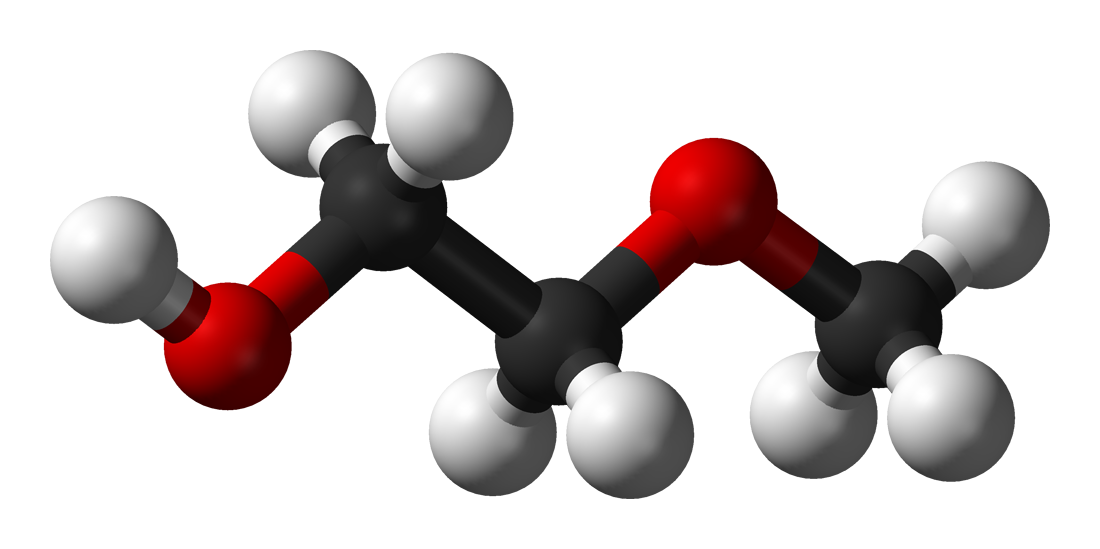
2-Methoxyethanol possesses the molecular formula C₃H₈O₂.[1] Its structural formula is CH₃OCH₂CH₂OH, consisting of a methyl group linked via an oxygen atom to a hydroxyethyl chain, forming an ether bridge between the methyl and ethanol components.[1] A defining feature of 2-methoxyethanol's architecture is the coexistence of a hydroxyl (-OH) group at the terminal carbon and an ether (-O-) linkage, classifying it as a glycol ether with bifunctional characteristics that influence its intermolecular interactions.[1] Computational analyses using ab initio and density functional theory methods reveal that the C-O-C angle varies slightly among conformers, typically ranging from 113.0° to 114.2°, reflecting the flexibility of the ether moiety.[15]

Properties

Physical properties

2-Methoxyethanol is a colorless liquid with a mild, ether-like odor.[1] Its molar mass is 76.09 g/mol.[1] The compound has a density of 0.965 g/cm³ at 20°C.[16] It exhibits a low melting point of -85°C, allowing it to remain liquid at typical ambient temperatures, and a boiling point of 124–125°C at standard pressure.[16] 2-Methoxyethanol is miscible with water and most organic solvents, such as alcohols, ethers, and acetone, owing to its amphiphilic structure featuring both hydrophilic hydroxyl and lipophilic ether functionalities.[1] It has a flash point of 39°C (closed cup), indicating moderate flammability.[3] The vapor pressure is 6 mmHg at 20°C, reflecting its volatility under standard conditions.[1]

Chemical properties

2-Methoxyethanol exhibits relative stability under standard ambient conditions but is flammable and can decompose at elevated temperatures. Thermal decomposition primarily occurs through unimolecular pathways, yielding products such as formaldehyde and methanol, among others like ethanol and dimethyl ether, as determined by computational studies using CBS-QB3 methods over a temperature range of 298–2000 K.[17] The compound's reactivity is influenced by its hydroxyl (-OH) group, which enables it to act as both a proton donor and acceptor in hydrogen bonding interactions, similar to other alcohols. The pKa of the hydroxyl group is approximately 14.8 at 25 °C, indicating weak acidity and limited proton donation under neutral conditions. The ether linkage in 2-methoxyethanol resists hydrolysis under neutral or basic conditions but can undergo cleavage in the presence of strong acids, such as HI or HBr, via protonation of the oxygen atom followed by nucleophilic attack.[18] As a highly flammable liquid classified under GHS Category 3 (flash point 39–42 °C), 2-methoxyethanol poses ignition risks from heat, sparks, or flames, with explosive limits of 2.5–19.8% in air. It is incompatible with strong oxidizing agents, such as peroxides or permanganates, which can lead to exothermic reactions or formation of explosive peroxides upon contact.

Synthesis

Laboratory synthesis

2-Methoxyethanol is commonly prepared in laboratory settings through the acid-catalyzed ring-opening reaction of ethylene oxide with methanol. The mechanism involves the protonation of the epoxide ring by the acid catalyst, followed by nucleophilic attack from methanol at the less substituted carbon, leading to the formation of the product after deprotonation: CH₃OH + C₂H₄O → CH₃OCH₂CH₂OH.[1] Sulfuric acid is frequently employed as the catalyst, with the reaction typically conducted at temperatures between 100 and 150°C under moderate pressure to promote efficient ring opening and minimize side products such as diethylene glycol dimethyl ether. This method allows for straightforward small-scale preparation suitable for research purposes. An alternative laboratory route utilizes a variant of the Williamson ether synthesis, involving the reaction of sodium methoxide with 2-chloroethanol. Sodium methoxide is generated in situ from sodium metal and methanol, and the alkoxide then displaces the chloride from 2-chloroethanol via an SN2 mechanism to afford 2-methoxyethanol and sodium chloride.[19] This approach is particularly useful for isotopic labeling or when ethylene oxide is unavailable, though it requires careful handling of the toxic 2-chloroethanol intermediate. In both methods, typical yields range from 80 to 90%, depending on reaction optimization and purity of starting materials. The product is purified by fractional distillation under reduced pressure to separate it from unreacted methanol (boiling point 64.7°C) and higher oligomers, yielding a colorless liquid with boiling point 124-125°C.[1]

Industrial production

2-Methoxyethanol is commercially produced on a large scale through the reaction of ethylene oxide with methanol, typically in the presence of an acid or Lewis acid catalyst such as boron trifluoride to facilitate the ring-opening addition.[20] This process is carried out in continuous flow reactors to ensure efficiency and safety at industrial volumes. The reaction proceeds under controlled conditions to minimize side products like diethylene glycol dimethyl ether.[4] The synthesis operates at temperatures ranging from 80 to 160°C and moderate pressures, allowing for high conversion rates while maintaining selectivity toward the desired monoglycol ether. Following the reaction, excess methanol is recovered via distillation, and the crude product is purified through fractional distillation under reduced pressure to achieve high purity suitable for industrial applications.[21] As of 1990, combined annual production in Western Europe, the USA, and Japan was approximately 79,000 metric tons; recent global production figures are not publicly detailed but are estimated in the tens of thousands of tons annually.[4] Production relies on low-cost petrochemical feedstocks such as ethylene oxide derived from ethylene oxidation. These abundant raw materials, combined with mature technology, support economic viability despite regulatory controls due to toxicity.[4]

Applications

Solvent applications

2-Methoxyethanol is widely employed as a solvent in the coatings industry, where it facilitates the formulation of varnishes, enamels, stains, and paint removers due to its moderate evaporation rate of approximately 0.5 relative to n-butyl acetate (1.0).[3] This property enables controlled application and drying, making it suitable for protective coatings such as lacquers, metal coatings, baking enamels, phenolic varnishes, and epoxy resin coatings.[6] In the dyes and resins sector, 2-methoxyethanol excels at dissolving nitrocellulose, cellulose acetate, natural and synthetic resins, alcohol-soluble dyes, ethyl cellulose, and inks, contributing to its role in printing inks and surface treatments like leather dyeing and cellophane sealing.[1] Its high solvency power stems from its ability to effectively solubilize a broad range of polar and non-polar materials, including oils and pigments.[3] A key advantage of 2-methoxyethanol as a solvent is its complete miscibility with water and most organic solvents, such as alcohols, ethers, acetone, hydrocarbons, ketones, and glycols, allowing it to function as a coupling agent in water-organic mixtures for stable formulations in spray paints and quick-drying varnishes.[1] This versatility enhances its utility in industrial blends without phase separation.[2] Prior to regulatory scrutiny and phase-out trends in the 1980s and 1990s due to health concerns, solvent applications represented a significant share of its market, with coatings and inks alone accounting for approximately 7% of U.S. consumption in the 1980s, while overall solvent uses represented production volumes exceeding 100 million pounds annually in the late 1970s.[1][6] As of 2019, U.S. production volumes were between 1 and 10 million pounds annually, mainly for use as a chemical intermediate.[1]

Other uses

Historically, 2-methoxyethanol was primarily employed as a fuel system icing inhibitor (FSII) in aviation fuels, where it depresses the freezing point of water contaminants to prevent ice crystal formation in fuel lines and filters during flight.[2] This application accounted for approximately 80% of its commercial market in the 1980s and early 1990s, particularly in jet fuels for both military and civilian aircraft, before being largely replaced by less toxic alternatives such as diethylene glycol monomethyl ether.[22] Its effectiveness stemmed from its ability to lower the freezing point of water-fuel mixtures to -43 °C, ensuring reliable fuel flow in cold conditions.[4] In organometallic chemistry, 2-methoxyethanol functions as a solvent for synthesizing coordination compounds, notably Vaska's complex, trans-chlorocarbonylbis(triphenylphosphine)iridium(I), by facilitating the reaction of iridium chloride with triphenylphosphine and carbon monoxide.[23] It also supports the preparation of related ruthenium complexes, such as ruthenium hydridechlorocarbonyltris(triphenylphosphine), due to its polar protic nature that aids in dissolving metal precursors and stabilizing intermediates.[24] Historically, 2-methoxyethanol found use as a solvent in the production of cellulose-based materials, including acetate resins related to early plastics like celluloid, where it aided in dissolving and processing nitrocellulose formulations before safer alternatives emerged in the mid-20th century.[2] Prior to the 1980s, it served as a key additive in military jet fuels for anti-icing, with production and application peaking during that era until regulatory scrutiny led to partial phase-outs in favor of less toxic options.[25] In the electronics industry, 2-methoxyethanol has been incorporated into cleaning formulations for semiconductors, leveraging its solvency to remove residues from wafers during manufacturing processes.[1] However, its use has been significantly reduced or phased down due to occupational health regulations stemming from its reproductive toxicity, with exposures in semiconductor facilities dropping below 1 ppm by the late 1980s through substitution and engineering controls.[4] Additionally, 2-methoxyethanol plays minor roles as an extraction solvent in chemical analysis, particularly in extractive distillation processes to separate polar compounds from aqueous mixtures, enhancing purity in laboratory-scale isolations.[26]

Toxicology and safety

Health effects

2-Methoxyethanol (2-ME) primarily exerts its toxicity through reproductive and hematologic effects following exposure, as it is metabolized in the liver to the active metabolite methoxyacetic acid (MAA) via oxidation by alcohol dehydrogenase to methoxyacetaldehyde and subsequent action by aldehyde dehydrogenase.[7][27] MAA is responsible for the compound's toxicological profile, disrupting cellular processes such as spermatogenesis and hematopoiesis.[28] Hematologic toxicity manifests as bone marrow suppression, leading to granulocytopenia (reduced neutrophils), leukopenia, and macrocytic anemia in exposed animals and humans.[7][29] In rats exposed to 3000-6000 ppm via inhalation for 13 weeks, progressive pancytopenia, normocytic normochromic anemia, and bone marrow depletion were observed, with partial recovery after cessation of exposure.[7] Human case reports from occupational exposure, including skin contact at low airborne levels (around 8 ppm), have documented bone marrow depression and pancytopenia, resolving upon removal from exposure.[6] Reproductive toxicity includes severe testicular damage, resulting in oligospermia and azoospermia in male animals.[30] In rats administered 1500-6000 ppm in drinking water for 13 weeks, testicular atrophy, reduced testis weights (e.g., 0.673 g vs. control 1.494 g at 1500 ppm), and degeneration of seminiferous tubules were noted, with persistent effects even after 56 days post-exposure.[7] Dermal application to rats at doses as low as 400 mg/kg over 2 weeks induced similar testicular degeneration and reduced epididymal sperm counts.[30][7] Acute exposure to 2-ME causes irritation of the eyes, skin, and respiratory tract, along with central nervous system (CNS) depression at high doses.[6] In humans, symptoms include drowsiness, weakness, shaking, and headache from inhalation or dermal contact; ingestion can be fatal due to severe encephalopathy.[6] Animal studies confirm tremors, diarrhea, and dehydration at acute oral doses of 1200 mg/kg in mice.[7] Chronic exposure in animal models demonstrates potential teratogenicity and developmental toxicity.[31] In pregnant mice dosed orally at 31 mg/kg/day, embryonic deaths and skeletal abnormalities occurred; rats and rabbits exposed to 50 ppm via inhalation showed fetal malformations.[6] Offspring mortality reached approximately 50% at high doses, with behavioral deficits such as increased maze errors in survivors.[31] The median lethal dose (LD50) for 2-ME is approximately 2.5 g/kg orally in rats and 1.3 g/kg dermally in rabbits, indicating moderate acute toxicity via these routes.[7]

Exposure limits and regulations

In the United States, the Occupational Safety and Health Administration (OSHA) has established a permissible exposure limit (PEL) for 2-methoxyethanol of 25 ppm (80 mg/m³) as an 8-hour time-weighted average (TWA), with a skin notation indicating potential significant absorption through the skin, prompting the need for protective measures beyond inhalation controls.[32] The National Institute for Occupational Safety and Health (NIOSH) recommends a more stringent recommended exposure limit (REL) of 0.1 ppm (0.3 mg/m³) as an 8-hour TWA, also with a skin notation, based on evidence of reproductive toxicity observed in animal studies.[33] Additionally, NIOSH has set the immediately dangerous to life or health (IDLH) concentration at 200 ppm, representing a level above which acute hazards could impair escape or cause irreversible health effects.[34] In the European Union, 2-methoxyethanol is classified under the Classification, Labelling and Packaging (CLP) Regulation as toxic to reproduction category 1B (Repr. 1B), due to its potential to cause serious effects on reproduction via dermal and inhalation routes, and it is subject to restrictions under the REACH Regulation, limiting its use in mixtures above certain concentrations unless authorized.[35] These restrictions stem from its identification as a substance of very high concern (SVHC) for reproductive toxicity, requiring registration and evaluation by the European Chemicals Agency (ECHA). Phase-out trends in the EU have accelerated since the 2010s, with 2-methoxyethanol banned in cosmetic products and restricted in consumer formulations to minimize exposure, leading to substitution with less toxic glycol ethers in paints, cleaners, and inks; however, Commission Regulation (EU) 2022/586 postpones the inclusion of 2-methoxyethanol in Annex XIV to REACH, with the Commission assessing further regulatory measures including occupational exposure limits.[35] Similar substitutions are encouraged in industrial applications to align with these reproductive health protections. Handling guidelines from OSHA and NIOSH emphasize engineering controls such as use in fume hoods or enclosed systems to maintain exposures below limits, along with personal protective equipment (PPE) including chemical-resistant gloves, protective clothing, and respirators with organic vapor cartridges when engineering controls are insufficient; eye protection and training on skin absorption risks are also required.[36][33]

Occurrence

Detection in interstellar space

2-Methoxyethanol (CH₃OCH₂CH₂OH), a complex organic molecule, was first detected in interstellar space in 2024 through observations conducted with the Atacama Large Millimeter/submillimeter Array (ALMA).[37] This discovery marked the identification of one of the largest and most intricate complex organic molecules observed in such environments to date.[37] The detection occurred in the massive star-forming region NGC 6334I, located within the NGC 6334 complex in the southern sky constellation of Scorpius, approximately 5,500 light-years from Earth.[37][38] NGC 6334I represents a hot core environment, characterized by dense gas and elevated temperatures conducive to the formation and preservation of complex organics.[37] Identification relied on millimeter-wave spectroscopy, specifically ALMA Band 4 observations that captured 25 rotational transitions of 2-methoxyethanol aligning precisely with laboratory-measured spectra.[37] These transitions, observed in the frequency range of approximately 130–145 GHz, provided unambiguous spectral signatures after spectroscopic characterization using chirped-pulse Fourier transform microwave and frequency-modulated absorption techniques in the laboratory.[37] The molecule's abundance was quantified via rotational diagram analysis, yielding a column density of 1.3_{-0.9}^{+1.4} × 10^{17} cm^{-2} at an excitation temperature of 143_{-39}^{+31} K, reflecting its presence in trace amounts relative to more abundant species in the hot core.[37] This interstellar detection was reported by an international team led by Zachary T. P. Fried, including collaborators from MIT, the University of Virginia, and the National Radio Astronomy Observatory, in a study published in The Astrophysical Journal Letters.[37]

Astrochemical significance

The astrochemical significance of 2-methoxyethanol lies in its formation through radical-radical recombination on interstellar dust grain surfaces, primarily via the reaction of methoxy (CH₃O•) and hydroxyethyl (•CH₂CH₂OH) radicals, which highlights the role of grain-surface chemistry in synthesizing complex oxygen-bearing organics.[37] Alternative pathways include insertion reactions, such as those involving electronically excited carbenes with precursors like methoxymethanol or ethylene glycol, emphasizing the interconnected network of methoxy-containing species in dense cloud environments.[37] These mechanisms align with broader models of successive addition reactions on icy mantles, where simpler molecules like formaldehyde undergo hydrogenation and functionalization to yield ethers.[39] As the first glycol ether detected in the interstellar medium, 2-methoxyethanol represents a structural bridge between abundant simple alcohols like methanol (CH₃OH) and diols like ethylene glycol ((CH₂OH)₂), illustrating the emergence of ether functionalities amid the predominance of hydroxyl groups in cosmic oxygen chemistry.[37] Unlike the highly stable diols, its higher energy conformation (26 kcal/mol above the global minimum among C₃H₈O₂ isomers) suggests selective formation under warm conditions in hot cores, supporting refined astrochemical models for the evolution of molecular complexity.[39] In the context of prebiotic chemistry, 2-methoxyethanol acts as a simple glycol ether precursor to more elaborate oxygen-rich organics, potentially contributing to the abiotic synthesis of lipid-like structures observed in meteorites and ice analogs.[39] Its detection via ALMA observations of NGC 6334I validates predictions from quantum chemical simulations and enhances understanding of oxygen chemistry in protostellar environments, with implications for tracing similar compositions in exoplanet atmospheres.[37] Ongoing research anticipates its identification in additional hot core regions like Orion KL, where comparable physical conditions could reveal abundance variations and further constrain formation efficiencies across diverse interstellar settings; as of November 2025, however, it has not been detected in other regions such as Orion KL.[39]

References

User Avatar
No comments yet.