


Community hub
Recent from talks
Contribute something
Nothing was collected or created yet.
2009 World Baseball Classic
View on Wikipedia

Key Information


The 2009 World Baseball Classic (WBC) was an international baseball competition. It began on March 5 and finished March 23.
Unlike in 2006, when the round-robin format of the first two rounds led to some eliminations being decided by run-difference tiebreakers, the first two rounds of the 2009 edition were modified double-elimination format. The modification was that the final game of each bracket was winner-take-all, even if won by the team emerging from the loser's bracket, although that game only affected seeding, as two teams always advanced from each bracket.
The biggest surprise in the first round was the Netherlands, which twice defeated the Dominican Republic in Pool D to advance. The second round saw the two Pool A teams (South Korea and Japan) defeat the two Pool B teams (Cuba and Mexico) while the two Pool C teams (Venezuela and the United States) defeated the two Pool D teams (Puerto Rico and the Netherlands). South Korea and Japan then advanced to the final game, playing each other for the fifth time in the tournament (split 2–2 up to that time), and Japan emerged victorious for the second straight Classic, winning the final game 5–3 in 10 innings.
For the second straight Classic, Daisuke Matsuzaka was named the Most Valuable Player of the tournament.
Format
[edit]As was the case for the 2006 tournament, the sixteen teams were split into four pools of four teams each.[1] Whereas previously the teams played in round-robin competition in the first two rounds, this time they took part in a double-elimination format, similar to the U.S. College World Series sponsored by the NCAA. Under the new format, teams were only guaranteed to play two games. This change was made to eliminate the complicated tiebreaking procedures,[2] which were required for one of the pools in each of the first two rounds in 2006.
After the first round, the tournament was held in the U.S. The top two teams from each of the four pools—seeded from the final game in their respective pools—went to the second round, with the teams from Pools A and B meeting at Petco Park in San Diego for Pool 1, and the teams in Pools C and D playing at Dolphin Stadium in Miami Gardens for Pool 2.[3] Again, both pools made use of double-elimination to determine the teams qualifying for the semifinals. In another change from 2006, the four qualifying teams crossed over for the semifinals, with the winner of each pool playing against the runner-up from the other pool.[2] The championship round process was otherwise unchanged, with each semifinal being a single elimination match, the victors meeting in the final to determine the tournament champion. All three championship round games were held at Dodger Stadium in Los Angeles.[3]
In the final, the team with the higher winning percentage of games in the tournament were to be the home team. If the teams competing in the final had identical winning percentages in the tournament, then World Baseball Classic, Inc. (WBCI) would conduct a coin flip or draw to determine the home team.
Rosters
[edit]Each participating national federation had a deadline of January 19, 2009, to submit a 45-man provisional roster. Final rosters of 28 players, which was required to include a minimum of 13 pitchers and two catchers, were submitted on February 24. If a player on the submitted roster was unable to play, usually due to injury, he could be substituted at any time before the start of the tournament. While rosters could not be changed during a round of competition, a team that advanced to a later round could change its roster for the later round.
Venues
[edit]Seven stadiums were used during the tournament:
| Pool A | Pool B | Pool C | Pool D |
|---|---|---|---|
 Tokyo, Japan Tokyo, Japan
|
 Mexico City, Mexico Mexico City, Mexico
|
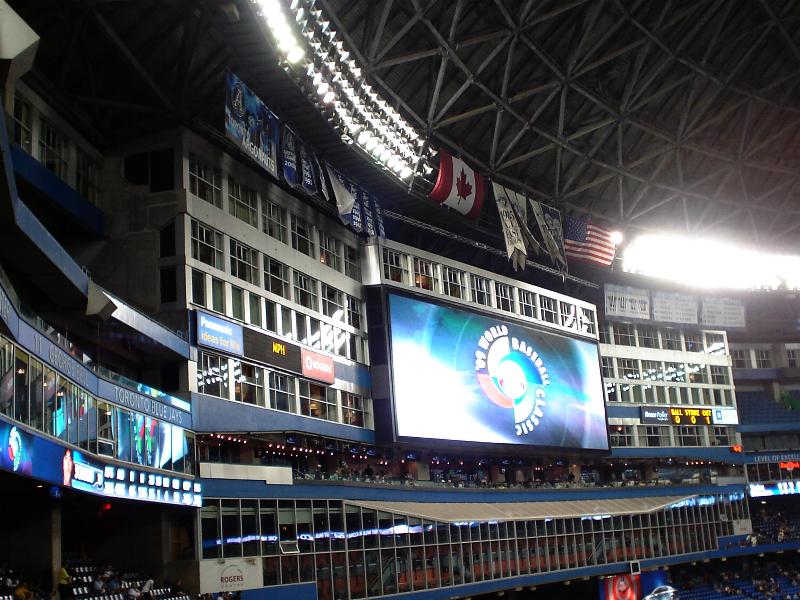
 Toronto, Canada Toronto, Canada
|
 San Juan, Puerto Rico San Juan, Puerto Rico
|
| Tokyo Dome | Foro Sol | Rogers Centre | Hiram Bithorn Stadium |
| Capacity: 42,000 | Capacity: 26,000 | Capacity: 49,539 | Capacity: 18,264 |

|

|

|

|
| Pool 1 | Pool 2 | Championship |
|---|---|---|
 San Diego, United States San Diego, United States
|
Miami Gardens, United States
|
Los Angeles, United States
|
| Petco Park | Dolphin Stadium | Dodger Stadium |
| Capacity: 42,685 | Capacity: 38,560 | Capacity: 56,000 |

|

|

|
Pools composition
[edit]The 16 teams that participated in the 2006 World Baseball Classic were all invited back for the 2009 tournament. The World Baseball Classic, Inc. (WBCI) changed the members of each pool as compared with the 2006 Classic, however, except for Pool A. There was no official qualifying competition.
Note: Numbers in parentheses indicate positions in the IBAF World Rankings at the time of the tournament.[4][5]
| Pool A | Pool B | Pool C | Pool D |
|---|---|---|---|
 China (14) China (14)
|
 Australia (10) Australia (10)
|
Canada (7)
|
 Dominican Republic (17) Dominican Republic (17)
|
 Chinese Taipei (5) Chinese Taipei (5)
|
 Cuba (1) Cuba (1)
|
 Italy (13) Italy (13)
|
 Netherlands (6) Netherlands (6)
|
| Japan (4)
|
Mexico (8)
|
United States (2)
|
 Panama (9) Panama (9)
|
 South Korea (3) South Korea (3)
|
 South Africa (20) South Africa (20)
|
 Venezuela (15) Venezuela (15)
|
Puerto Rico (11)
|
First round
[edit]Pool A
[edit]| Preliminaries | Qualifiers | Seeding | |||||||||||
| – | China | 0 | |||||||||||
| – | Japan | 4 | |||||||||||
| W1 | Japan | 14 | |||||||||||
| W2 | South Korea | 2 | |||||||||||
| – | Chinese Taipei | 0 | |||||||||||
| – | South Korea | 9 | |||||||||||
| W4 | Japan | 0 | |||||||||||
| W5 | South Korea | 1 | |||||||||||
| Lower round 1 | Lower final | ||||||||||||
| W3 | China | 0 | |||||||||||
| L1 | China | 4 | L4 | South Korea | 14 | ||||||||
| L2 | Chinese Taipei | 1 | |||||||||||
| Date | Local time | Road team | Score | Home team | Inn. | Venue | Game duration | Attendance | Boxscore |
|---|---|---|---|---|---|---|---|---|---|
| Mar 5, 2009 | 18:30 | China
|
0–4 | Japan
|
Tokyo Dome | 2:55 | 43,428 | Boxscore | |
| Mar 6, 2009 | 18:30 | Chinese Taipei
|
0–9 | South Korea
|
Tokyo Dome | 2:48 | 12,704 | Boxscore | |
| Mar 7, 2009 | 12:30 | Chinese Taipei
|
1–4 | China
|
Tokyo Dome | 2:51 | 12,890 | Boxscore | |
| Mar 7, 2009 | 19:00 | Japan
|
14–2 | South Korea
|
7 | Tokyo Dome | 2:48 | 45,640 | Boxscore |
| Mar 8, 2009 | 18:30 | China
|
0–14 | South Korea
|
7 | Tokyo Dome | 2:13 | 12,571 | Boxscore |
| Mar 9, 2009 | 18:30 | South Korea
|
1–0 | Japan
|
Tokyo Dome | 3:02 | 42,879 | Boxscore |
Pool B
[edit]| Preliminaries | Qualifiers | Seeding | |||||||||||
| – | South Africa | 1 | |||||||||||
| – | Cuba | 8 | |||||||||||
| W1 | Cuba | 5 | |||||||||||
| W2 | Australia | 4 | |||||||||||
| – | Australia | 17 | |||||||||||
| – | Mexico | 7 | |||||||||||
| W4 | Cuba | 16 | |||||||||||
| W5 | Mexico | 4 | |||||||||||
| Lower round 1 | Lower final | ||||||||||||
| W3 | Mexico | 16 | |||||||||||
| L1 | South Africa | 3 | L4 | Australia | 1 | ||||||||
| L2 | Mexico | 14 | |||||||||||
| Date | Local time | Road team | Score | Home team | Inn. | Venue | Game duration | Attendance | Boxscore |
|---|---|---|---|---|---|---|---|---|---|
| Mar 8, 2009 | 12:00 | South Africa
|
1–8 | Cuba
|
Foro Sol | 2:37 | 11,270 | Boxscore | |
| Mar 8, 2009 | 19:00 | Australia
|
17–7 | Mexico
|
8 | Foro Sol | 3:43 | 20,821 | Boxscore |
| Mar 9, 2009 | 20:00 | Mexico
|
14–3 | South Africa
|
Foro Sol | 3:33 | 10,311 | Boxscore | |
| Mar 10, 2009 | 20:00 | Cuba
|
5–4 | Australia
|
Foro Sol | 3:29 | 13,396 | Boxscore | |
| Mar 11, 2009 | 20:00 | Mexico
|
16–1 | Australia
|
6 | Foro Sol | 2:31 | 16,718 | Boxscore |
| Mar 12, 2009 | 19:00 | Mexico
|
4–16 | Cuba
|
7 | Foro Sol | 3:33 | 20,149 | Boxscore |
Pool C
[edit]| Preliminaries | Qualifiers | Seeding | |||||||||||
| – | Canada | 5 | |||||||||||
| – | United States | 6 | |||||||||||
| W1 | United States | 15 | |||||||||||
| W2 | Venezuela | 6 | |||||||||||
| – | Italy | 0 | |||||||||||
| – | Venezuela | 7 | |||||||||||
| W3 | United States | 3 | |||||||||||
| W5 | Venezuela | 5 | |||||||||||
| Lower round 1 | Lower final | ||||||||||||
| W4 | Italy | 1 | |||||||||||
| L1 | Canada | 2 | L3 | Venezuela | 10 | ||||||||
| L2 | Italy | 6 | |||||||||||
| Date | Local time | Road team | Score | Home team | Inn. | Venue | Game duration | Attendance | Boxscore |
|---|---|---|---|---|---|---|---|---|---|
| Mar 7, 2009 | 14:00 | Canada
|
5–6 | United States
|
Rogers Centre | 2:55 | 42,314 | Boxscore | |
| Mar 7, 2009 | 20:00 | Italy
|
0–7 | Venezuela
|
Rogers Centre | 3:00 | 13,272 | Boxscore | |
| Mar 8, 2009 | 20:00 | United States
|
15–6 | Venezuela
|
Rogers Centre | 3:39 | 13,094 | Boxscore | |
| Mar 9, 2009 | 18:30 | Italy
|
6–2 | Canada
|
Rogers Centre | 3:36 | 12,411 | Boxscore | |
| Mar 10, 2009 | 17:00 | Italy
|
1–10 | Venezuela
|
Rogers Centre | 3:04 | 10,450 | Boxscore | |
| Mar 11, 2009 | 18:30 | Venezuela
|
5–3 | United States
|
Rogers Centre | 3:08 | 12,358 | Boxscore |
Pool D
[edit]| Preliminaries | Qualifiers | Seeding | |||||||||||
| – | Netherlands | 3 | |||||||||||
| – | Dominican Rep. | 2 | |||||||||||
| W1 | Netherlands | 1 | |||||||||||
| W2 | Puerto Rico | 3 | |||||||||||
| – | Panama | 0 | |||||||||||
| – | Puerto Rico | 7 | |||||||||||
| W4 | Puerto Rico | 5 | |||||||||||
| W5 | Netherlands | 0 | |||||||||||
| Lower round 1 | Lower final | ||||||||||||
| W3 | Dominican Rep. | 1 | |||||||||||
| L1 | Dominican Rep. | 9 | L4 | Netherlands | 2 | ||||||||
| L2 | Panama | 0 | |||||||||||
| Date | Local time | Road team | Score | Home team | Inn. | Venue | Game duration | Attendance | Boxscore |
|---|---|---|---|---|---|---|---|---|---|
| Mar 7, 2009 | 12:00 | Netherlands
|
3–2 | Dominican Republic
|
Hiram Bithorn Stadium | 3:01 | 9,335 | Boxscore | |
| Mar 7, 2009 | 18:00 | Panama
|
0–7 | Puerto Rico
|
Hiram Bithorn Stadium | 2:57 | 17,348 | Boxscore | |
| Mar 8, 2009 | 16:30 | Panama
|
0–9 | Dominican Republic
|
Hiram Bithorn Stadium | 2:46 | 9,221 | Boxscore | |
| Mar 9, 2009 | 18:30 | Netherlands
|
1–3 | Puerto Rico
|
Hiram Bithorn Stadium | 3:11 | 19,479 | Boxscore | |
| Mar 10, 2009 | 18:30 | Dominican Republic
|
1–2 | Netherlands
|
11 | Hiram Bithorn Stadium | 3:38 | 11,814 | Boxscore |
| Mar 11, 2009 | 17:30 | Netherlands
|
0–5 | Puerto Rico
|
Hiram Bithorn Stadium | 2:55 | 19,501 | Boxscore |
Second round
[edit]Pool 1
[edit]| Preliminaries | Qualifiers | Seeding | |||||||||||
| AR | Japan | 6 | |||||||||||
| BW | Cuba | 0 | |||||||||||
| W1 | Japan | 1 | |||||||||||
| W2 | South Korea | 4 | |||||||||||
| BR | Mexico | 2 | |||||||||||
| AW | South Korea | 8 | |||||||||||
| W4 | South Korea | 2 | |||||||||||
| W5 | Japan | 6 | |||||||||||
| Lower round 1 | Lower final | ||||||||||||
| W3 | Cuba | 0 | |||||||||||
| L1 | Cuba | 7 | L4 | Japan | 5 | ||||||||
| L2 | Mexico | 4 | |||||||||||
| Date | Local time | Road team | Score | Home team | Inn. | Venue | Game duration | Attendance | Boxscore |
|---|---|---|---|---|---|---|---|---|---|
| Mar 15, 2009 | 13:00 | Japan
|
6–0 | Cuba
|
Petco Park | 3:33 | 20,179 | Boxscore | |
| Mar 15, 2009 | 20:00 | Mexico
|
2–8 | South Korea
|
Petco Park | 3:43 | 22,337 | Boxscore | |
| Mar 16, 2009 | 20:00 | Cuba
|
7–4 | Mexico
|
Petco Park | 3:09 | 9,329 | Boxscore | |
| Mar 17, 2009 | 20:00 | Japan
|
1–4 | South Korea
|
Petco Park | 3:21 | 15,332 | Boxscore | |
| Mar 18, 2009 | 20:00 | Japan
|
5–0 | Cuba
|
Petco Park | 3:26 | 9,774 | Boxscore | |
| Mar 19, 2009 | 18:00 | Japan
|
6–2 | South Korea
|
Petco Park | 3:42 | 14,832 | Boxscore |
Pool 2
[edit]| Preliminaries | Qualifiers | Seeding | |||||||||||
| DR | Netherlands | 1 | |||||||||||
| CW | Venezuela | 3 | |||||||||||
| W1 | Venezuela | 2 | |||||||||||
| W2 | Puerto Rico | 0 | |||||||||||
| CR | United States | 1 | |||||||||||
| DW | Puerto Rico | 11 | |||||||||||
| W4 | Venezuela | 10 | |||||||||||
| W5 | United States | 6 | |||||||||||
| Lower round 1 | Lower final | ||||||||||||
| W3 | United States | 6 | |||||||||||
| L1 | Netherlands | 3 | L4 | Puerto Rico | 5 | ||||||||
| L2 | United States | 9 | |||||||||||
| Date | Local time | Road team | Score | Home team | Inn. | Venue | Game duration | Attendance | Boxscore |
|---|---|---|---|---|---|---|---|---|---|
| Mar 14, 2009 | 13:00 | Netherlands
|
1–3 | Venezuela
|
Dolphin Stadium | 2:22 | 17,345 | Boxscore | |
| Mar 14, 2009 | 20:00 | United States
|
1–11 | Puerto Rico
|
7 | Dolphin Stadium | 2:15 | 30,595 | Boxscore |
| Mar 15, 2009 | 19:30 | Netherlands
|
3–9 | United States
|
Dolphin Stadium | 3:14 | 11,059 | Boxscore | |
| Mar 16, 2009 | 20:00 | Venezuela
|
2–0 | Puerto Rico
|
Dolphin Stadium | 3:23 | 25,599 | Boxscore | |
| Mar 17, 2009 | 19:00 | Puerto Rico
|
5–6 | United States
|
Dolphin Stadium | 3:54 | 13,224 | Boxscore | |
| Mar 18, 2009 | 19:00 | United States
|
6–10 | Venezuela
|
Dolphin Stadium | 3:32 | 16,575 | Boxscore |
Championship round
[edit]| Semifinals | Final | ||||||||
| 1R | South Korea
| 10 | |||||||
| 2W | Venezuela
| 2 | |||||||
| SF1W | South Korea
| 3 | |||||||
| SF2W | Japan
| 5 | |||||||
| 2R |  United States United States
| 4 | |||||||
| 1W | Japan
| 9 | |||||||
Semifinals
[edit]| Date | Local time | Road team | Score | Home team | Inn. | Venue | Game duration | Attendance | Boxscore |
|---|---|---|---|---|---|---|---|---|---|
| Mar 21, 2009 | 18:00 | South Korea
|
10–2 | Venezuela
|
Dodger Stadium | 3:22 | 43,378 | Boxscore | |
| Mar 22, 2009 | 17:00 | United States
|
4–9 | Japan
|
Dodger Stadium | 3:15 | 43,630 | Boxscore |
Final
[edit]| Date | Local time | Road team | Score | Home team | Inn. | Venue | Game duration | Attendance | Boxscore |
|---|---|---|---|---|---|---|---|---|---|
| Mar 23, 2009 | 18:00 | Japan
|
5–3 | South Korea
|
10 | Dodger Stadium | 4:00 | 54,846 | Boxscore |
Final standings
[edit]Organizer WBCI has no interest in the final standings and did not compute. So, it was calculated by IBAF for the IBAF Men's Baseball World Rankings.
In the final standings, ties were to be broken in the following order of priority:
- The team allowing the fewest runs per nine innings (RA/9) in all games;
- The team allowing the fewest earned runs per nine innings (ERA) in all games;
- The team with the highest batting average (AVG) in all games;
|
| |||||||||||||||||||||||||||||||||||||||||||||||||||||||||||||||||||||||||||||||||||||||||||||||||||||||||||||||

Attendance
[edit]801,408 (avg. 20,549; pct. 54.5%)
First round
[edit]453,374 (avg. 18,891; pct. 55.6%)
- Pool A – 170,112 (avg. 28,352; pct. 67.5%)
- Pool B – 92,665 (avg. 15,444; pct. 59.4%)
- Pool C – 103,899 (avg. 17,317; pct. 35.0%)
- Pool D – 86,698 (avg. 14,450; pct. 79.1%)
Second round
[edit]206,180 (avg. 17,182; pct. 42.3%)
- Pool 1 – 91,783 (avg. 15,297; pct. 35.8%)
- Pool 2 – 114,397 (avg. 19,066; pct. 49.4%)
Championship round
[edit]141,854 (avg. 47,285; pct. 84.4%)
- Semifinals – 87,008 (avg. 43,504; pct. 77.7%)
- Final – 54,846 (avg. 54,846; pct. 97.9%)
2009 All-World Baseball Classic team
[edit].jpg)
.jpg)
.jpg)
.jpg)
.jpg)
.jpg)
Catcher – Iván Rodríguez of Puerto Rico
Second baseman – José López of Venezuela
Shortstop – Jimmy Rollins of the United States
Outfielder – Norichika Aoki of Japan
Outfielder – Yoenis Céspedes of Cuba
Pitcher – Hisashi Iwakuma of Japan
- Note: The tournament Most Valuable Player was Daisuke Matsuzaka.[6]
| Position | Player |
|---|---|
| C | Iván Rodríguez
|
| 1B | Tae-kyun Kim
|
| 2B | José López
|
| 3B | Bum-ho Lee
|
| SS | Jimmy Rollins
|
| OF | Norichika Aoki
|
| Frederich Cepeda
| |
| Yoenis Céspedes
| |
| DH | Hyun-soo Kim
|
| P | Jung-keun Bong
|
| Hisashi Iwakuma
| |
| Daisuke Matsuzaka
|
Statistics leaders
[edit]
Batting[edit]
* Minimum 2.7 plate appearances per game
|
Pitching[edit]
* Minimum 0.8 innings pitched per game
|
Additional rules
[edit]As was the case for the 2006 Classic, several rules were announced for the 2009 tournament that modified the existing rules for international baseball set out by the IBAF.[7][8]
Once again there were limits on the number of pitches thrown in a game, though the limits themselves were changed from the previous tournament:
- 70 pitches in First Round (up from 65 in 2006)
- 85 pitches in Second Round (up from 80 in 2006)
- 100 pitches in Championship Round (up from 95 in 2006)
If a pitcher reached his limit during an at bat, he was allowed to finish pitching to the batter, but was removed from the game at the end of the at bat.
A 30–pitch outing needed to be followed by one day off, and a 50–pitch outing by four days off. No one would be allowed to pitch on three consecutive days. As the championship round was played over three consecutive days, a so-called "pitcher rest equalization" rule was added: a pitcher making 30 or more pitches in a semifinal was ineligible to pitch in the final. This negated an advantage the winners of the first semifinal would have had in the final.
A mercy rule came into effect when one team led by either fifteen runs after five innings, or ten runs after seven innings in the first two rounds.
Instant replay was also available to umpires during the tournament. As was introduced in Major League Baseball during the 2008 season, replays were only used to adjudicate on home run decisions, to determine whether the ball was fair or foul, over the fence or not, and the impact of fan interference.
An alternative version of the IBAF's extra inning rule was also introduced. If after 12 innings the score was still tied, each half inning thereafter would have started with runners on second and first base. The runners would have been the eighth and ninth hitters due in that inning respectively. For example, if the number five hitter was due to lead off the inning, the number three hitter would have been on second base, and the number four hitter on first base. However, this rule was never actually employed in this year's Classic, as the two extra-inning games in the tournament ended prior to a 13th inning.
All base coaches were required to wear protective helmets, in the aftermath of the death of Mike Coolbaugh and participating teams were required to announce the next day's starting pitcher. Additionally, a modified early termination rule was in effect for the first two rounds; had a team been ahead by 15 or more runs after five innings or ten or more runs after seven or eight innings, the game ended at that point.
Prize money
[edit]USD 14,000,000
By final standings
[edit]- Champions – USD 2,700,000
- Runners-up – USD 1,700,000
- Semifinalists – USD 1,200,000 (x 2 teams)
- Eliminated in Second Round – USD 700,000 (x 4 teams)
- Eliminated in First Round – USD 300,000 (x 8 teams)
Bonus for pool winners
[edit]- First Round – USD 300,000 (x 4 teams)
- Second Round – USD 400,000 (x 2 teams)
Media coverage
[edit]In the United States, ESPN and the MLB Network shared the rights, with ESPN broadcasting 23 of the games, including the Finals, while MLB Network showed the remaining 16.[9] Spanish language telecasts in the U.S. were handled by ESPN Deportes telecasting all games. Internationally, it was broadcast to 167 countries by ESPN International.
In Canada, Rogers Sportsnet aired all 39 games.[10]
In the Dominican Republic, CDN (Cadena de Noticias) and CDN2 broadcast all games live (except for games played in Tokyo, shown on tape delay)[citation needed]
In Japan, J Sports broadcast all 39 games. TV Asahi (Round 1) and TBS (Round 2 and Finals) broadcast all games featuring Japan. For all games featuring Japan, they gained viewing ratings of at least 20%. The final game gained ratings in the range 30-45%.[11]
Video games
[edit]World Baseball Classic 2009 has licensed three video games, all only released in Japan: Pro Yakyuu Spirits 6,[12] Baseball Heroes 2009[13] and Jikkyou Pawafuru Major League 2009[14]
References
[edit]- ^ "WBC 2009 Brackets". Major League Baseball. July 31, 2008. Archived from the original on October 6, 2008. Retrieved September 27, 2008.
- ^ a b "Classic changes advancement rules". Major League Baseball. March 23, 2008. Retrieved September 27, 2008.
- ^ a b "Dodger Stadium to host Classic finals". Major League Baseball. July 31, 2008. Archived from the original on September 9, 2008. Retrieved September 27, 2008.
- ^ "Inaugural IBAF World Ranking Released". MyGameday. Retrieved August 20, 2022.
- ^ "14 European Teams listed in IBAF World Ranking". Mister Baseball. Retrieved August 20, 2022.
- ^ See: 2009 World Baseball Classic – Championship § Final – Japan 5, South Korea 3.
- ^ "Several rules changes adopted for 2009 World Baseball Classic" (Press release). Major League Baseball. January 29, 2009. Archived from the original on November 5, 2012. Retrieved October 6, 2010.
- ^ Miller, Doug; MLB.com (January 30, 2009). "Rules changes approved for Classic". WorldBaseballClassic.com. Major League Baseball. Archived from the original on February 16, 2012. Retrieved January 31, 2009.
- ^ Ibarra, Sergio (October 7, 2008). "ESPN, MLB Net Map Plans for World Baseball Classic". TelevisionWeek. Archived from the original on March 23, 2012. Retrieved March 20, 2009.
- ^ "Notebook: Happy fans would pay Junior well". Toronto Star. February 25, 2009. Archived from the original on October 14, 2012. Retrieved March 20, 2009.
- ^ "WBC決勝戦視聴率、36.4%【WBC】" (in Japanese). Jiji Press. March 25, 2009. Retrieved March 27, 2009.
{{cite web}}:|archive-url=is malformed: timestamp (help)CS1 maint: url-status (link) - ^ "Pro Yakyuu Spirits 6". Archived from the original on March 24, 2010. Retrieved March 5, 2010.
- ^ "Baseball Heroes 2009". Archived from the original on February 5, 2010. Retrieved March 6, 2010.
- ^ "Jikkyou Pawafuru Major League 2009". Archived from the original on April 15, 2010. Retrieved March 5, 2010.
External links
[edit]2009 World Baseball Classic finalists | |
|---|---|
| Champions | |
| Runners-up | |
| Semi-finals | |
| Second round | |
| First round | |

2009 World Baseball Classic
View on GrokipediaBackground and Format
Qualification Process
The qualification process for the 2009 World Baseball Classic was established through an agreement between Major League Baseball (MLB) and the International Baseball Federation (IBAF, now WBSC) following the inaugural 2006 tournament, which granted automatic berths to all 16 participating nations for the second edition.[3] This structure was designed to build on the initial event's momentum, maintaining a fixed field of teams to encourage development and repeat participation without additional entry barriers at that stage. The criteria for automatic qualification were straightforward: any nation that competed in the 2006 World Baseball Classic earned a spot in 2009, regardless of their finish. This included the top performers from 2006—champion Japan, runner-up Cuba, and bronze medalist United States—as well as the other 13 teams: Australia, Canada, China, Dominican Republic, Italy, Mexico, Netherlands, Panama, Puerto Rico, South Africa, South Korea, Taiwan, and Venezuela. No rankings or performance thresholds beyond participation were required, reflecting the event's early focus on expanding global interest rather than a competitive selection process. Unlike subsequent World Baseball Classics starting in 2013, there were no dedicated qualifying tournaments held in 2008 for the 2009 edition. Regional events such as the 2008 European Baseball Championship and others served primarily to update IBAF world rankings but did not determine WBC entry. The 2006 agreement prioritized stability for the sophomore tournament, setting the stage for future expansions that would introduce qualifiers to broaden participation.Tournament Format
The 2009 World Baseball Classic was structured around 16 participating teams divided into four pools of four teams each for the first round. Each pool employed a double-elimination format, meaning teams remained in contention until they suffered two losses, with games scheduled to ensure the top two teams from each pool advanced to the second round. This change from the 2006 tournament's round-robin setup was designed to reduce the reliance on tiebreakers and provide more decisive outcomes based on overall performance.[3] In the second round, the eight advancing teams were reorganized into two pools of four, again utilizing a double-elimination format over the first five games per pool to determine the top two teams from each group. These four teams then proceeded to the semifinals, which along with the championship final, were played as single-elimination contests to crown the winner. The overall progression emphasized competitive balance, allowing stronger teams multiple opportunities while streamlining the path to the knockout stage.[3] The tournament spanned from March 5 to March 23, 2009, encompassing a total of 41 games across all rounds. For instances where teams finished with identical loss records within a pool, tiebreakers were applied in sequence: first by head-to-head results, then by run differential, and if necessary, by runs allowed per defensive inning in head-to-head matchups. These rules ensured fair advancement and seeding without requiring additional playoff games.[1][4]Additional Rules
The 2009 World Baseball Classic introduced several rule modifications to standard baseball regulations, aimed at protecting player health, ensuring competitive balance, and accommodating the international tournament format. These changes were overseen by Major League Baseball (MLB) and the International Baseball Federation (IBAF), with limits on pitcher usage being a key focus to prevent overuse injuries in the condensed schedule. Pitchers were subject to strict pitch count limits, after which they were required to be removed from the game: 70 pitches in the first round, 85 pitches in the second round, and 100 pitches in the semifinals and final.[6][3] These thresholds were monitored by umpires and team officials, reflecting lessons from the 2006 tournament where higher workloads led to concerns about arm strain. To expedite lopsided contests and maintain game momentum during pool play, a mercy rule was implemented exclusively for the first and second rounds. Under this provision, a game would conclude after seven innings if one team led by 10 or more runs, or after five innings if the lead reached 15 runs; this rule did not apply to the semifinals or final to preserve the integrity of knockout matches.[3] The designated hitter (DH) rule was universally applied across all games, regardless of the host venue's domestic league customs, allowing teams to substitute a batter for the pitcher without defensive repercussions and promoting offensive parity in an international context.[7] Ties were eliminated through extended play, with games proceeding to extra innings until a decisive outcome, incorporating the IBAF's tiebreaker mechanism starting in the 11th inning: each half-inning began with runners placed on first and second base and no outs, the batter advancing from the prior inning's lineup spot.[8] Player eligibility was determined by citizenship or residency criteria, requiring participants to hold citizenship in the represented nation, possess permanent residency there, or have been born in the country (or have a parent born there), verified via passport or equivalent documentation to ensure national representation.[7] Anti-doping measures were rigorously enforced, with all players subjected to mandatory testing for performance-enhancing drugs prior to the tournament, conducted under IBAF protocols aligned with World Anti-Doping Agency standards, to uphold fair play and athlete health.[9] Injury replacement policies permitted teams to substitute injured players only between rounds, using a provisional roster of up to four alternates per team; no mid-round or semifinal-stage replacements were allowed, potentially forcing forfeits if a team fell below the minimum roster size.[10] These regulations integrated with the tournament's advancement structure by emphasizing player welfare without altering core qualification pathways.Teams and Preparation
Participating Nations
The 2009 World Baseball Classic featured 16 participating nations, all of which earned automatic entry by competing in the inaugural 2006 tournament: Australia, Canada, China, Cuba, Dominican Republic, Italy, Japan, Mexico, Netherlands, Panama, Puerto Rico, South Africa, South Korea, Taiwan, United States, and Venezuela. These teams represented diverse regions and levels of baseball development, from established powerhouses with professional leagues to emerging programs building international competitiveness. No major withdrawals occurred, allowing the full field to compete across four first-round pools in Tokyo, Mexico City, San Juan, and Toronto.[3] Asian and Pacific Teams Japan brought its dominant professional infrastructure through Nippon Professional Baseball (NPB), established in 1936, which has produced multiple WBC champions and fostered a national passion for the sport since the late 19th century. South Korea, with the Korea Baseball Organization (KBO) founded in 1982, has emerged as an Asian powerhouse, securing Olympic medals and leveraging strong domestic talent pipelines. Taiwan, known as Chinese Taipei in competitions, boasts a robust amateur system and the Chinese Professional Baseball League (CPBL) since 1990, contributing to consistent international showings. China, relatively new to the sport with the China Baseball League starting in 2002, aimed to grow participation through state-supported programs initiated in the 1990s. Australia, with Baseball Australia overseeing the sport since 1936 and a professional ABL league, has built success through youth development and Olympic participation. Caribbean and Latin American Teams The Dominican Republic, a global talent exporter with the LIDOM winter league dating to 1955, has deep MLB ties and reached the 2006 final. Venezuela, home to the LVBP league since 1946, produces numerous MLB players and has a history of regional dominance. Puerto Rico, with the LBPPR professional circuit since 1938, combines U.S. territorial status with strong local leagues and multiple international medals. Cuba, featuring the Serie Nacional since 1962 under government sponsorship, holds a storied legacy with over 20 world amateur titles before professionals were allowed. Mexico, with LMB dating to 1925 and ties to MLB through the Mexican League, has hosted major events and developed cross-border talent. Panama, introduced to baseball in the early 20th century via the Panama Canal Zone, relies on amateur leagues and has produced MLB stars like Rod Carew. North American and European Teams The United States, birthplace of modern baseball in the 19th century with Major League Baseball (MLB) as its pinnacle, fields a roster of top professionals despite past international challenges. Canada, with the sport arriving in the 1870s and the Intercounty League as its oldest, has grown through MLB exposure and youth programs since Baseball Canada formed in 1963. Italy, where baseball began post-World War II with U.S. soldiers, is governed by the FIBS since 1948 and has seen success in European championships. The Netherlands, with the Honkbal Hoofdklasse league since 1922, excels in Europe through Dutch Antilles influences and consistent WBC appearances. South Africa, introduced to baseball in the early 20th century by British colonists, operates under Baseball South Africa since 1993 and focuses on development amid limited resources.Rosters
The rosters for the 2009 World Baseball Classic consisted of 28 players per team, including a minimum of 13 pitchers and two catchers, with provisional 45-man rosters submitted by national federations on January 19, 2009, and final rosters due by February 24, 2009.[11] Position limits were enforced to balance pitching and fielding. The selection process was overseen by each nation's baseball federation in collaboration with Major League Baseball (MLB), which provided input on player eligibility and release from clubs, particularly for high-profile MLB-affiliated athletes whose participation required club consent amid concerns over injury risks during spring training.[4] The overall player pool highlighted a significant disparity in talent sourcing, with teams like the United States, Dominican Republic, and Venezuela drawing heavily from MLB's established stars, while nations such as Japan and South Korea relied on prominent players from domestic professional leagues like Nippon Professional Baseball (NPB) and the Korea Baseball Organization (KBO). This contrast underscored the event's role in bridging MLB's global dominance with emerging international talent, though MLB teams expressed reservations about releasing top players due to potential fatigue or injury impacts on the regular season.[1] Cuba and other qualifiers featured a mix of state-sponsored athletes and limited MLB defectors, emphasizing grassroots development over professional imports.[12] Notable selections included the United States roster, managed by USA Baseball with MLB oversight, featuring infielders Dustin Pedroia and David Wright as key contributors alongside pitchers like Roy Halladay and outfielder Brian McCann. Japan's team, selected by the Baseball Federation of Japan, boasted NPB icons such as outfielder Ichiro Suzuki and starting pitcher Daisuke Matsuzaka, blending MLB returnees with domestic aces like Yu Darvish. The Dominican Republic's federation assembled a powerhouse with slugger David Ortiz, shortstop José Reyes, and pitchers like Pedro Martínez, drawing extensively from MLB talent to represent their baseball heritage.[1] Venezuela highlighted MLB stars including shortstop Miguel Cabrera and pitcher Carlos Zambrano, while Puerto Rico fielded catcher Iván Rodríguez and outfielder Carlos Beltrán as anchors. South Korea's KBO-focused roster centered on pitcher Park Chan-ho and pitcher Ryu Hyun-jin, reflecting strong domestic leagues.[4] Injuries prompted several replacements during the tournament, with changes permitted only between rounds for medical reasons. For the United States, infielder Dustin Pedroia was sidelined by an abdominal muscle strain after the first round and replaced by Brian Roberts, while third baseman Chipper Jones was injured with an oblique strain during the tournament and replaced by Evan Longoria for the semifinals; additionally, David Wright sustained a head injury from a knee to the head during play against Puerto Rico, leading to further adjustments. Other teams, like Venezuela, dealt with pitcher Esteban Loaiza's trapezius strain, requiring mid-tournament swaps from provisional pools. These incidents amplified debates on player safety in the compressed schedule.[13]Venues and Organization
Venues
The 2009 World Baseball Classic featured venues across four continents for the first round, with subsequent rounds consolidating in the United States to streamline logistics for advancing teams. The first round was hosted at four distinct sites: Tokyo Dome in Tokyo, Japan, for Pool A; Foro Sol in Mexico City, Mexico, for Pool B; Rogers Centre in Toronto, Canada, for Pool C; and Hiram Bithorn Stadium in San Juan, Puerto Rico, for Pool D. These locations were selected to accommodate regional teams and foster local enthusiasm, with each stadium configured for baseball play without major structural alterations reported.[3][14] Tokyo Dome, a multi-purpose domed stadium, hosted Pool A games from March 5 to 9, with a capacity of approximately 55,000 for baseball events, allowing for large crowds in a controlled indoor environment. Foro Sol, an open-air venue primarily used for concerts and motorsports, was adapted for Pool B from March 8 to 12, offering a capacity of around 27,000 seats in its baseball configuration. Rogers Centre, a retractable-roof stadium, accommodated Pool C matches from March 7 to 11 with a baseball capacity of about 49,500, providing flexibility for weather conditions in early spring. Hiram Bithorn Stadium, an outdoor facility, served Pool D from March 7 to 11, with a capacity of roughly 19,000, emphasizing its role as a community hub for Puerto Rican baseball.[15][14][3] The second round utilized two U.S. venues to host the advancing teams: Petco Park in San Diego, California, for Pool 1 (teams from Pools A and D) from March 15 to 19, with a capacity of 42,685; and Dolphin Stadium (now Hard Rock Stadium) in Miami Gardens, Florida, for Pool 2 (teams from Pools B and C) from March 14 to 18, seating about 38,000 for baseball. These sites were chosen for their modern facilities and proximity to major airports, facilitating quicker transitions for international squads compared to the first round's global spread. The championship round, including semifinals on March 21 and 22 and the final on March 23, took place at Dodger Stadium in Los Angeles, California, which has a capacity of 56,000 and served as the tournament's culminating venue without noted seating expansions.[1][14] Logistical arrangements were coordinated by Major League Baseball in partnership with local organizers, including transportation managed by specialized firms for players, staff, and VIPs across the venues. Travel posed challenges for international teams, particularly those from Asia, who encountered jet lag from 12- to 16-hour time zone shifts when relocating to U.S. sites for the second round and beyond, requiring adjusted schedules for acclimation. Hosting duties involved venue preparations for international broadcasting and security, with teams quartered in nearby hotels to minimize disruptions during the compact tournament timeline.[16][17][18]Pools Composition
The 2009 World Baseball Classic divided its 16 participating teams into four pools of four, with assignments designed to balance competition based on seeding from the 2006 tournament results, where top performers like Cuba (seed 1), the United States (seed 2), and the Dominican Republic (seed 3) were placed in different pools to avoid early matchups.[1] Each pool played in a round-robin format during the first round at designated venues, with initial games scheduled to kick off the tournament on March 5, 2009. Pool A was hosted at the Tokyo Dome in Tokyo, Japan, and included China, Chinese Taipei (5), Japan (seed 4), and South Korea. The opening matchup featured China against Japan on March 5, followed by South Korea facing Chinese Taipei on March 6.[1] Pool B took place at Foro Sol in Mexico City, Mexico, comprising Australia, Cuba (seed 1), Mexico (seed 8), and South Africa. It began with Cuba versus South Africa and Australia against Mexico on March 8.[1] Pool C was held at Rogers Centre in Toronto, Canada, with Canada, Italy (seed 13), the United States (seed 2), and Venezuela. The first games were Canada versus the United States and Italy against Venezuela on March 7.[1] Pool D occurred at Hiram Bithorn Stadium in San Juan, Puerto Rico, featuring the Dominican Republic (seed 3), the Netherlands (seed 6), Panama (seed 9), and Puerto Rico. It opened with the Netherlands versus the Dominican Republic and Panama against Puerto Rico on March 7.[1] The following table summarizes the pool compositions and venues:| Pool | Venue | Teams (with seeds where applicable) |
|---|---|---|
| A | Tokyo Dome, Tokyo, Japan | China, Chinese Taipei (5), Japan (4), South Korea |
| B | Foro Sol, Mexico City, Mexico | Australia, Cuba (1), Mexico (8), South Africa |
| C | Rogers Centre, Toronto, Canada | Canada, Italy (13), United States (2), Venezuela |
| D | Hiram Bithorn Stadium, San Juan, Puerto Rico | Dominican Republic (3), Netherlands (6), Panama (9), Puerto Rico |
First Round
Pool A
Pool A of the 2009 World Baseball Classic was held at the Tokyo Dome in Tokyo, Japan, from March 5 to 9, featuring teams from China, Chinese Taipei, Japan, and South Korea in a round-robin format.[1] The pool showcased high-level Asian baseball rivalries, with defending champions Japan entering as favorites and delivering an undefeated performance to top the group.[19] South Korea, the 2008 Olympic gold medalists, secured second place despite a lopsided loss to Japan, while Chinese Taipei and China struggled, combining for just one win.[4] The tournament opened on March 5 with Japan defeating China 4-0 in a pitchers' duel, where starting pitcher Hisanori Takahashi threw 2.1 scoreless innings and the Japanese offense capitalized on timely hits from Akinori Iwamura and Kosuke Fukudome. The next day, March 6, South Korea routed Chinese Taipei 9-0 behind a six-run first inning highlighted by Lee Jin-young's grand slam off starter Wang Chien-ming, with Ryul Park earning the shutout victory.[20] On March 7, China claimed their only victory of the pool, edging Chinese Taipei 4-1 as reliever Liu Fu-ming secured the win and Wang Wei added two RBIs in a low-scoring affair between the rivals.[21] Later that evening on March 7, Japan exploded for a 14-2 mercy-rule win over South Korea in seven innings, powered by three home runs—including solo shots from Shuichi Murata and Kenji Johjima—and strong pitching from Daisuke Matsuzaka, who allowed just one run in four innings.[22] South Korea rebounded decisively on March 8, invoking the mercy rule with a 14-0 thrashing of China in seven innings, where eight pitchers combined for a shutout and the offense scored in five frames, led by Choo Hyun-woo's three hits. The pool concluded on March 9 with Japan shutting out Chinese Taipei 10-0 in seven innings, as Tomoaki Kanemoto went 3-for-3 with a home run and Junichi Tazawa pitched four scoreless frames to clinch first place. Final standings saw Japan finish 3-0, advancing as the top seed with a dominant +26 run differential, while South Korea went 2-1 to take second and also qualify for the second round in San Diego.[1] Chinese Taipei ended 0-3, outscored 23-1 across their games, and China managed a 1-2 record but was eliminated with a -17 run differential.[4] Key performances defined the pool's intensity, with Japan's Ichiro Suzuki collecting 8 hits in 12 at-bats for a .667 average despite going hitless in the opener, showcasing his consistent contact skills. South Korea's Choo Shin-soo batted .500 with multiple multi-hit games, including two doubles against China, bolstering their advancement.[4] Pitching stood out in several contests, notably Matsuzaka's efficient outing against South Korea and the collective dominance of Japan's staff, which posted a 1.78 ERA for the pool.[1] Notable events included the massive crowd of over 44,000 at Tokyo Dome for the Japan-South Korea matchup, underscoring the game's cultural significance in Asia, and China's upset win over Chinese Taipei, a rare bright spot amid their overall struggles.Pool B
Pool B of the first round was contested at Foro Sol in Mexico City, Mexico, featuring teams from Cuba, Mexico, Australia, and South Africa. The round robin format ran from March 8 to March 12, 2009, with Cuba posting a perfect record and Mexico earning the second advancement spot to the second round in Miami. The pool highlighted Cuba's balanced attack and Mexico's potent offense, while Australia and South Africa struggled against the stronger sides.[1] The tournament opened on March 8 with Cuba overpowering South Africa 8-1 behind solid starting pitching and extra-base hits that built an early lead. In the evening matchup, Australia stunned Mexico 17-7 in a run-filled offensive showcase, where Australia's hitters capitalized on Mexican pitching miscues to score in nearly every inning.[3] Mexico responded forcefully on March 10, routing South Africa 14-3 with a barrage of 14 hits, including multiple home runs that overwhelmed the South African defense. Cuba maintained their momentum with a 5-4 thriller over Australia, relying on late-inning relief pitching to preserve a one-run victory after Australia mounted a comeback attempt.[3] On March 12, Mexico clinched qualification by demolishing Australia 16-1 in six innings under the mercy rule, as their lineup exploded for 13 hits and the pitching staff limited Australia to just six baserunners. Cuba capped the pool undefeated, defeating Mexico 16-4 in a lopsided finale where their bats produced 16 runs on 15 hits, though the outcome did not affect seeding.[3] The final standings reflected Cuba's dominance and Mexico's resilience:| Team | W | L | PCT |
|---|---|---|---|
| Cuba | 3 | 0 | 1.000 |
| Mexico | 2 | 1 | .667 |
| Australia | 1 | 2 | .333 |
| South Africa | 0 | 3 | .000 |
Pool C
Pool C of the first round took place at Rogers Centre in Toronto, Canada, from March 7 to 11, 2009, featuring Canada, Italy, the United States, and Venezuela in a round-robin format.[1] The pool was marked by competitive games among MLB-heavy teams, with Venezuela emerging as the surprise top seed after an upset win over the United States, while the U.S. secured second place to advance. Italy picked up a key win over Canada, but both were eliminated. The tournament opened on March 7 with the United States edging Canada 6-5 in a close contest attended by 42,314 fans, highlighted by David Wright's go-ahead RBI single in the ninth. In the late game, Venezuela shut out Italy 7-0 behind strong pitching from Duque Hebbert and timely hitting.[1] On March 8, the U.S. routed Venezuela 15-6 in a high-scoring affair, powered by four home runs including two from Adam Dunn and a grand slam by Ryan Braun, overwhelming the Venezuelan staff. The following day, March 9, Italy defeated Canada 6-2, with starter Chris Denorfia earning the win and the Italian offense capitalizing on Canadian errors. March 10 featured Venezuela rebounding with a 10-1 victory over Italy, where Magglio Ordóñez went 3-for-4 with two RBIs, solidifying their position. The pool concluded on March 11 with Venezuela upsetting the United States 5-3, as closer Francisco Rodríguez secured the save after a tense ninth inning, clinching first place amid a crowd of 12,358. The final standings were as follows:| Team | W | L | PCT |
|---|---|---|---|
| Venezuela | 3 | 1 | .750 |
| United States | 2 | 1 | .667 |
| Italy | 1 | 2 | .333 |
| Canada | 0 | 3 | .000 |
Pool D
Pool D of the 2009 World Baseball Classic was held at Hiram Bithorn Stadium in San Juan, Puerto Rico, from March 7 to 11, featuring the Dominican Republic, Netherlands, Panama, and Puerto Rico. The pool followed a round-robin format where teams played up to three games each, with the top two teams advancing to the second round in Miami. The Dominican Republic entered as heavy favorites with a star-studded roster including David Ortiz and Manny Ramirez, while Puerto Rico aimed to leverage home-field advantage, the Netherlands relied on disciplined pitching, and Panama sought an upset as underdogs.[1] The opening day on March 7 set an unexpected tone. In the first game, the Netherlands stunned the Dominican Republic 3-2 in a defensive battle, with Shairon Martis pitching 5.1 scoreless innings and the Dutch scoring single runs in the first, third, and fifth to hold off a late Dominican rally featuring a two-run homer by Ortiz in the eighth. Later that day, Puerto Rico dominated Panama 7-0, powered by two home runs from catcher Iván Rodríguez, who drove in four runs, while starter Javier Vázquez allowed just two hits over six innings. These results left Puerto Rico and the Netherlands at 1-0, while Panama and the Dominican Republic stood at 0-1.[3] On March 8, the Dominican Republic rebounded emphatically against Panama, winning 9-0 behind strong outings from starter José Contreras and reliever Fernando Rodney, who combined for a two-hit shutout. Miguel Olivo homered twice and drove in five runs, helping the Dominicans score four in the first and five more later to eliminate Panama from contention after their second straight loss. Meanwhile, the other teams had no games scheduled that day.[3] March 9 featured a crucial matchup between undefeated Puerto Rico and the Netherlands. Puerto Rico prevailed 3-1, with closer José Veras securing the win after starter Gian Carlos Alonso allowed one run over six innings. The game remained tight until Puerto Rico added two insurance runs in the eighth on a bases-loaded walk and a sacrifice fly, advancing their record to 2-0 while dropping the Netherlands to 1-1. Panama remained eliminated without a game. The final day on March 10 and 11 decided the pool's qualifiers. In an elimination game for the Dominican Republic, the Netherlands again triumphed 2-1 in 11 innings, with reliever Leon Boyd earning the win after a scoreless 11th and Dirk van den Bliek delivering the game-winning RBI single. The Dominican offense struggled against Dutch pitching, managing only seven hits despite efforts from Ortiz and Hanley Ramírez, marking a shocking early exit for the pre-tournament favorites. On March 11, Puerto Rico completed pool play with a 5-0 shutout of the Netherlands, highlighted by effective pitching from Fernando Cabrera and J.C. Romero, clinching the pool at 3-0.[3] Puerto Rico topped the standings with a perfect 3-0 record, advancing as the Pool D winner, while the Netherlands qualified as runner-up with a 2-2 mark, thanks to their upset victories over the Dominican Republic. The Dominican Republic finished 1-2, and Panama went 0-2, both eliminated. The Netherlands' pitching staff, led by starters like Martis and relievers such as Eddy Petit, was pivotal in their advancement, holding opponents to a 1.91 ERA in the pool. Puerto Rico's home crowd support and balanced offense propelled them forward, setting up intriguing second-round matchups.[1][3]| Team | W | L | PCT |
|---|---|---|---|
| Puerto Rico | 3 | 0 | 1.000 |
| Netherlands | 2 | 2 | .500 |
| Dominican Republic | 1 | 2 | .333 |
| Panama | 0 | 2 | .000 |
Second Round
Pool 1
The second round Pool 1 of the 2009 World Baseball Classic was held at Petco Park in San Diego, California, from March 15 to 19, 2009. The pool featured the top two finishers from first-round Pool A (Japan and South Korea) and the top two from first-round Pool B (Cuba and Mexico), competing in a modified double-elimination format where the top two teams advanced to the semifinals. Japan and South Korea advanced with strong performances, while Cuba earned one win before elimination, and Mexico was winless.[1] The opening day on March 15 saw Japan shut out Cuba 6-0 behind starter Daisuke Matsuzaka's four scoreless innings and key hits from Ichiro Suzuki and Tsuyoshi Nishioka, who each recorded two RBIs. In the day's other matchup, South Korea defeated Mexico 8-2, with Choo Shin-soo going 3-for-4 and scoring twice. On March 16, Cuba responded with a 7-4 win over Mexico, scoring key runs in the fifth and seventh innings to stay alive.[23] A pivotal contest occurred on March 17 when South Korea upset Japan 4-1 in a low-scoring pitchers' duel, as starter Jung-hwan Park limited Japan to one run over six innings, and South Korea capitalized on three Japan errors for unearned runs. Japan rebounded on March 18, blanking Cuba 5-0 with Yu Darvish delivering six strong innings and RBI contributions from Nobuhiko Matsunaka. The pool concluded on March 19 with Japan defeating South Korea 6-2 to secure the top seed, highlighted by a home run from Michihiro Ogasawara and solid relief pitching.[24] Japan and South Korea advanced as the top two, with Japan's win over South Korea on the final day determining seeding. Cuba's lone win provided a highlight but could not overcome losses to Japan, while Mexico finished winless after two games. Key moments included South Korea's upset over Japan on March 17, which led to the decisive rematch, and Japan's consistent dominance over Cuba.| Team | W | L | PCT |
|---|---|---|---|
| Japan | 3 | 1 | .750 |
| South Korea | 2 | 1 | .667 |
| Cuba | 1 | 2 | .333 |
| Mexico | 0 | 2 | .000 |
Pool 2
Pool 2 of the second round was contested at Land Shark Stadium (now Hard Rock Stadium) in Miami Gardens, Florida, from March 14 to 18, 2009. The group included the United States and Venezuela, the top two finishers from first-round Pool C in Toronto, along with Puerto Rico and the Netherlands, the top two from first-round Pool D in San Juan. The four teams competed in a modified double-elimination format, with the top two advancing to the semifinals based on the bracket outcomes. Venezuela went undefeated to claim first place, while the United States advanced as second on run differential after a 2-2 record.[1] The opening games on March 14 featured Venezuela defeating the Netherlands 3-1 behind solo home runs from Miguel Cabrera and José López, with Carlos Silva earning the win in five innings and Francisco Rodríguez pitching a scoreless ninth for the save. In the night's second contest, Puerto Rico routed the United States 11-1 in seven innings under the 10-run mercy rule, as Carlos Beltrán and Felipe López homered and the team scored six runs off starter Jake Peavy in the first two innings.[25][26] On March 15, the United States bounced back with a 9-3 victory over the Netherlands, eliminating the Dutch; Jimmy Rollins hit a two-run homer in the second and a run-scoring triple, while Roy Oswalt pitched six innings of two-run ball. On March 16, Venezuela blanked Puerto Rico 2-0, improving to 2-0, as Félix Hernández struck out seven over 4⅔ innings and the team scored on Ramón Hernández's RBI single and a sacrifice fly.[27] On March 17, the United States edged Puerto Rico 6-5 in a close contest, with David Wright delivering a walk-off hit in the ninth to advance their cause. The pool concluded on March 18 with Venezuela topping the United States 10-6, securing the top seed with a perfect 3-0 record; the Venezuelans built an early lead with multi-hit efforts, while the U.S. fell to 2-2 but advanced over Puerto Rico on run differential.[28][29]| Team | W | L | PCT |
|---|---|---|---|
| Venezuela | 3 | 0 | 1.000 |
| United States | 2 | 2 | .500 |
| Puerto Rico | 1 | 2 | .333 |
| Netherlands | 0 | 2 | .000 |
Championship Round
Semifinals
The semifinals of the 2009 World Baseball Classic were contested at Dodger Stadium in Los Angeles, California, on March 21 and 22, determining the finalists from the advancing teams from the second round pools: Japan and South Korea from the San Diego pool, and the United States and Venezuela from the tournament structure.[4] The format paired the San Diego pool runner-up against the Miami pool winner and the San Diego pool winner against the Miami pool runner-up, with the victors advancing to the championship game on March 23.[4] On March 21, South Korea defeated Venezuela 10–2 in the first semifinal before a crowd of 43,378.[30] Starting pitcher Suk-min Yoon (2–0) earned the win, allowing two runs on six hits over six innings while striking out four.[31] Venezuela starter Carlos Silva (1–1) took the loss after surrendering five runs on four hits in just 1⅓ innings.[31] South Korea jumped to a 3–0 lead in the first inning on a three-run home run by outfielder Shin-Soo Choo, who finished 2-for-4 with three RBIs.[32] Designated hitter Tae-kyun Kim extended the advantage to 5–0 in the second with a two-run homer, his tournament-leading fourth of the Classic.[33] Venezuela answered with one run in the bottom of the third on a double by Miguel Cabrera and a single, making it 5–1, but South Korea pulled away with three more in the fourth—including an unearned run on a Venezuela error—to lead 8–1 before adding two in the sixth for a 10–1 advantage. Venezuela added one run in the seventh for the final 10–2 margin.[34] Venezuela committed five errors in the field, contributing to South Korea's 10-run outburst on 10 hits, while the Koreans played error-free defense.[34] The second semifinal on March 22 saw Japan eliminate the host United States 9–4 in front of 43,630 spectators.[35] Daisuke Matsuzaka (3–0) secured the victory despite a shaky start, yielding two runs over 4⅔ innings with five strikeouts and three walks.[36] United States starter Roy Oswalt (1–1) absorbed the defeat, giving up six runs on five hits in 3⅔ innings.[35] The U.S. struck first in the top of the first when second baseman Brian Roberts hit a solo home run off Matsuzaka, his second of the tournament.[37] Japan tied it in the second on an RBI single by catcher Kenji Johjima, then erupted for five runs in the fourth—fueled by three walks, two hits, and a hit batsman—to take a 6–1 lead.[38] The Americans rallied for three runs across the fifth and sixth innings, highlighted by a two-run double from David Wright in the fifth, narrowing the gap to 6–4.[37] However, Japan responded with three insurance runs in the bottom of the eighth, including a two-run single by shortstop Tsuyoshi Nishioka, to seal the outcome.[38] The win set up an all-Asian final between Japan and South Korea, who had split their four prior meetings in the tournament.[36]Final
The championship final of the 2009 World Baseball Classic took place on March 23, 2009, at Dodger Stadium in Los Angeles, California, pitting Japan against South Korea in a rematch of the 2006 final. Japan, seeking to repeat as champions after their 2006 victory, edged out South Korea 5-3 in a tense 10-inning thriller that showcased intense rivalry and high-stakes drama.[2][39] The game attracted a sellout crowd of 54,846 spectators, setting a tournament attendance record and filling the stadium with a vibrant, electric atmosphere dominated by waves of Japanese and Korean fans waving flags, chanting, and creating a cross-cultural spectacle rarely seen in American baseball.[40][41] Japan opened the scoring in the top of the third inning, manufacturing a run against South Korean starter Jung-hwan Park with an RBI single by Michihiro Ogasawara that plated the go-ahead tally for a 1-0 lead. South Korea responded in the bottom of the fifth, tying the game at 1-1 when outfielder Shin-Soo Choo launched a solo home run to left-center off Japanese starter Hisashi Iwakuma, a pivotal moment that energized the Korean supporters.[42][43] The score remained deadlocked through the sixth inning, but Japan broke the tie in the top of the seventh with a rally featuring a single, a stolen base, Ichiro Suzuki's bunt single, and Hiroyuki Nakajima's RBI single, pushing the lead to 2-1. They added another run in the eighth to extend the advantage to 3-1, capitalizing on South Korea's bullpen fatigue. South Korea refused to fade, scratching across a run in the bottom of the eighth on a combination of hits and aggressive baserunning to narrow the deficit to 3-2, then knotting the score at 3-3 in the ninth with a timely extra-base hit and capitalizing on a Japanese fielding miscue.[2][42] In the top of the 10th, Japan seized control with two crucial runs: after a leadoff walk and a sacrifice bunt, Suzuki delivered a two-out, two-run single off reliever Jung-boo Byun, providing a 5-3 cushion and what proved to be the game-winning blow. Japan's bullpen, anchored by reliever Takayuki Kishi, then slammed the door in the bottom of the 10th, retiring the side in order—including a strikeout of Choo—to secure the repeat title and deny South Korea their first WBC championship.[2][42]Results and Records
Final Standings
The 2009 World Baseball Classic concluded with Japan claiming first place after defeating South Korea 5–3 in the final at Dodger Stadium, marking their second straight championship. The tournament's overall rankings were determined by advancement through the rounds, with win-loss records used to order teams within placement groups and tiebreakers such as head-to-head results, run differential, or runs allowed per 9 innings (RA/9) applied when records were tied. Japan finished with a 7–2 record across nine games, including a 2–1 performance in Pool A.[1] South Korea secured second place with a 6–3 record, highlighted by a first-round Pool A win (3–1, including a deciding 1–0 victory over Japan) and a semifinal victory over Venezuela (10–2), though they dropped both encounters with Japan in the second round and the final. Venezuela earned third place with a 6–2 record, as Pool C winner (3–1) going undefeated 3–0 in the second round before their semifinal defeat. The United States took fourth with a 4–4 record, advancing as Pool C runner-up (2–1) and going 2–2 in the second round before losing to Japan 9–4 in the semifinals.[1][4]| Rank | Team | Record | Advancement Path |
|---|---|---|---|
| 1 | Japan | 7–2 | Pool A (2–1); second round Pool 1 (3–1); semifinal win over United States; final win over South Korea |
| 2 | South Korea | 6–3 | Pool A winner (3–1); second round Pool 1 (2–1); semifinal win over Venezuela; final loss to Japan |
| 3 | Venezuela | 6–2 | Pool C winner (3–1); second round Pool 2 (3–0); semifinal loss to South Korea |
| 4 | United States | 4–4 | Pool C runner-up (2–1); second round Pool 2 (2–2); semifinal loss to Japan |
Attendance
The 2009 World Baseball Classic drew a total attendance of 801,408 fans across 39 games, averaging 20,549 spectators per game.[44][3] This marked an 8.7% increase over the 2006 tournament's total of 737,112.[44] Attendance varied significantly by round, reflecting the tournament's progression and venue locations. The first round, featuring 24 games across four pools in Tokyo, Mexico City, Toronto, and San Juan, attracted 453,374 fans.[45][5] The second round, with 12 games split between San Diego and Miami, saw 206,180 attendees.[45] The championship round at Dodger Stadium in Los Angeles drew 141,854 fans for its three games, including the semifinals and final.[45] Notable peak crowds highlighted the event's draw in key markets. The tournament opener between Japan and China at Tokyo Dome on March 5 pulled in 43,428 fans, setting a tone for strong international interest.[15] In the championship round, both semifinals—South Korea's 10–2 win over Venezuela on March 21 (43,378 attendees) and Japan's 9–4 victory against the United States on March 22 (43,630 attendees)—filled Dodger Stadium near capacity.[34][36] The final on March 23, where Japan defeated South Korea 5–3, achieved the tournament's highest turnout with 54,846 spectators.[39][46] These figures were influenced by home team popularity and the international appeal of participating nations, particularly in Asia and Latin America, where baseball holds strong cultural significance. Venues like Tokyo Dome (capacity 55,000) and Dodger Stadium (capacity 56,000) often approached or exceeded expectations due to the presence of fan-favorite teams such as Japan, South Korea, and Venezuela.[15][46]Awards and Statistics
All-World Baseball Classic Team
The All-World Baseball Classic Team for the 2009 tournament was selected to honor the top performers across all rounds, based on their overall contributions including batting, fielding, pitching effectiveness, and impact on team success, as determined by a panel of international media members and World Baseball Classic officials.[1] The team consisted of three pitchers, one catcher, four infielders, three outfielders, and one designated hitter, reflecting a balance of positions from the participating nations.[1] The selected players were:| Position | Player | Country |
|---|---|---|
| Pitcher | Daisuke Matsuzaka | Japan |
| Pitcher | Hisashi Iwakuma | Japan |
| Pitcher | Jung Keun Bong | South Korea |
| Catcher | Iván Rodríguez | Puerto Rico |
| First Baseman | Taekyun Kim | South Korea |
| Second Baseman | José López | Venezuela |
| Third Baseman | Bum-ho Lee | South Korea |
| Shortstop | Jimmy Rollins | United States |
| Outfielder | Norichika Aoki | Japan |
| Outfielder | Frederich Cepeda | Cuba |
| Outfielder | Yoenis Céspedes | Cuba |
| Designated Hitter | Hyun-soo Kim | South Korea |
Batting Leaders
The 2009 World Baseball Classic highlighted several standout batting performances, with players from diverse nations excelling in offensive production. Qualification for rate statistics such as batting average and OPS required a minimum of 15 plate appearances, ensuring meaningful sample sizes amid the tournament's short format. Overall, the event saw balanced offensive output, with Cuba setting a single-game home run record of 6 against South Africa in Pool B.[3]Batting Average Leaders (min. 15 PA)
| Player | Team | AVG |
|---|---|---|
| Frederich Cepeda | Cuba | .600 |
| Ivan Rodriguez | Puerto Rico | .500 |
| Norichika Aoki | Japan | .324 |
| Ichiro Suzuki | Japan | .273 |
Home Run Leaders
Seven players tied for the tournament lead with 3 home runs each, reflecting the event's competitive pitching that limited power output. Notable leaders included:| Player | Team | HR |
|---|---|---|
| Frederich Cepeda | Cuba | 3 |
| Ryan Braun | United States | 3 |
| Adrian Beltre | Dominican Republic | 3 |
| Ivan Rodriguez | Puerto Rico | 2 |
RBI Leaders
| Player | Team | RBI |
|---|---|---|
| Tae-kyun Kim | South Korea | 11 |
| Frederich Cepeda | Cuba | 10 |
| Ivan Rodriguez | Puerto Rico | 8 |
Hits Leaders
| Player | Team | Hits |
|---|---|---|
| Norichika Aoki | Japan | 12 |
| Ichiro Suzuki | Japan | 12 |
| Frederich Cepeda | Cuba | 12 |
OPS Leaders (min. 15 PA)
| Player | Team | OPS |
|---|---|---|
| Frederich Cepeda | Cuba | 1.350 |
| Ivan Rodriguez | Puerto Rico | 1.350 |
| Norichika Aoki | Japan | .732 |
Pitching Leaders
The pitching performances in the 2009 World Baseball Classic were highlighted by several standout relievers and starters who dominated with low run totals and high efficiency, contributing to their teams' successes in a tournament format limited to short outings due to pitch count rules.[51] Japan's pitching staff, in particular, was exceptional, allowing just 11 runs across six games en route to the championship.[1]ERA Leaders (Minimum 10 Innings Pitched)
The following pitchers posted the lowest earned run averages (ERA) among those who qualified with at least 10 innings pitched, showcasing elite control and effectiveness in high-stakes international play.[51]| Rank | Player | Team | ERA | IP |
|---|---|---|---|---|
| 1 | Tomoaki Kanemaru | Japan | 0.00 | 10.1 |
| 2 (tie) | Chang-yong Lim | South Korea | 0.00 | 10.0 |
| 2 (tie) | Fernando Rodney | Dominican Republic | 0.00 | 10.0 |
| 2 (tie) | Mat Latos | United States | 0.00 | 10.0 |
| 5 (tie) | Takayuki Kishi | Japan | 0.69 | 13.0 |
| 5 (tie) | Yadel Martí | Cuba | 0.69 | 13.0 |
| 7 | Kenshin Kawakami | Japan | 1.17 | 15.1 |
| 8 | Hiroki Kuroda | Japan | 1.29 | 14.0 |
| 9 | Daisuke Matsuzaka | Japan | 1.38 | 13.0 |
| 10 | Clayton Richard | United States | 1.42 | 12.2 |
Wins Leaders
Multiple pitchers achieved wins in the tournament's round-robin and knockout structure, with Daisuke Matsuzaka leading with three victories through quality starts and team support.[51]| Rank | Player | Team | Wins | IP |
|---|---|---|---|---|
| 1 | Daisuke Matsuzaka | Japan | 3 | 13.0 |
| 2 (tie) | Kenshin Kawakami | Japan | 2 | 15.1 |
| 2 (tie) | Hisanori Takahashi | Japan | 2 | 10.0 |
| 2 (tie) | Hideki Okajima | Japan | 2 | 10.2 |
| 2 (tie) | Ryota Igarashi | Japan | 2 | 10.0 |
Strikeouts Leaders
Strikeout totals reflected the tournament's emphasis on power pitching, with no minimum innings requirement, allowing relievers to feature prominently.[51]| Rank | Player | Team | Strikeouts | IP |
|---|---|---|---|---|
| 1 | Yu Darvish | Japan | 20 | 13.0 |
| 2 | Wei-Yin Chen | Chinese Taipei | 12 | 9.0 |
| 3 | Hisashi Iwakuma | Japan | 11 | 7.0 |
| 4 (tie) | Junichi Tazawa | Japan | 10 | 7.2 |
| 4 (tie) | Dennys Reyes | Mexico | 10 | 6.1 |
Saves Leaders
Saves were limited by the tournament's structure, but closers provided key insurance in close games.[51]| Rank | Player | Team | Saves | IP |
|---|---|---|---|---|
| 1 | Leo Núñez | Dominican Republic | 3 | 4.0 |
| 2 (tie) | Fernando Rodney | Dominican Republic | 2 | 10.0 |
| 2 (tie) | José Veras | Dominican Republic | 2 | 5.2 |
| 2 (tie) | Manny Corpas | Venezuela | 2 | 5.0 |
| 2 (tie) | Edwardo Agramonte | Venezuela | 2 | 4.1 |
WHIP Leaders (Minimum 10 Innings Pitched)
Walks plus hits per inning pitched (WHIP) leaders mirrored the ERA leaders, emphasizing pitchers who minimized baserunners.[51]| Rank | Player | Team | WHIP | IP |
|---|---|---|---|---|
| 1 (tie) | Tomoaki Kanemaru | Japan | 0.58 | 10.1 |
| 1 (tie) | Fernando Rodney | Dominican Republic | 0.60 | 10.0 |
| 3 | Mat Latos | United States | 0.70 | 10.0 |
| 4 | Chang-yong Lim | South Korea | 0.80 | 10.0 |
| 5 | Takayuki Kishi | Japan | 0.85 | 13.0 |