
Recent from talks
Abdullah Rimawi
Knowledge base stats:
Talk channels stats:
Members stats:
Abdullah Rimawi
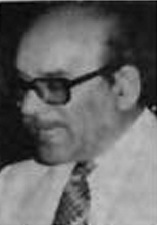
Abdullah Rimawi (Arabic: عبد الله الريماوي; also spelled Abdullah ar-Rimawi, 1920 – 5 March 1980) was the head of the Ba'ath Party in Jordan in the 1950s. He served as Foreign Affairs Minister in Suleiman Nabulsi's government in 1957. A staunch pan-Arabist, Rimawi became one of the most vocal opponents of the Hashemite ruling family in Jordan and favored union with Syria. He fled Jordan in 1957 as the result of a crisis between the leftist government he was a part of and the royal family. He based himself in the United Arab Republic (or the UAR, the result of a union between Egypt and Syria in 1958), where he drew closer to UAR President Gamal Abdel Nasser provoking his expulsion from the Ba'ath Party—which was at odds with Nasser—in 1959. Soon after he founded a splinter party called the Arab Socialist Revolutionary Ba'ath Party. During his exile, he allegedly made a number of attempts to attack or undermine the Jordanian monarchy.
Rimawi was born in 1920 in the town of Beit Rima, near Ramallah, during the period of British Mandatory rule in Palestine. He attended primary school in his hometown and secondary school at the Arab College in Jerusalem, graduating in 1937. He then enrolled at the American University of Beirut where he studied Western political theory and the rise of nationalism in the Asian continent. He graduated with a BA in mathematics and natural science in 1940. Afterward, Rimawi returned to Palestine and got a job as a professor in the Nablus school authority. He would later work in various high schools in Jaffa, Tulkarm, and Ramla until 1945.
In 1945, the Arab Higher Committee (AHC; the principal political organ of Palestinian Arabs under the British Mandate) was reestablished and Rimawi was appointed head of its Public Instruction Department. He was a vocal opponent of the Palestine Partition Plan devised in 1947 which proposed the division of Palestine into two separate Arab and Jewish states. In January 1948, during the Palestine War, Rimawi issued a broadcast from AHC radio dismissing claims by the Haganah (the Jewish paramilitary force) that "wealthy Arabs" were fleeing their homes. He stated many Palestinians were simply leaving to join Arab fighters' camps to train themselves for war. That same year, Rimawi had joined the Holy War Army of Abd al-Qadir al-Husayni in 1948.
Rimawi and Abdullah Na'was founded the social, cultural and political al-Baath newspaper in 1948, although at that time neither officially joined the Ba'ath Party. However, with assistance from Cairo-based exiled Jordanian Army general Abdullah el-Tell, both set up the party's branch in Jordan the following year, in 1949. By the end of the war, much of what was the British Mandate of Palestine fell into Israeli hands, but the Arab Legion of Transjordan captured a large swathe of territory called the West Bank. Rimawi, who was popular in the Ramallah-Jerusalem area of the West Bank, publicly opposed the 1949 Armistice Agreements between Israel and Transjordan. On the orders of then-Transjordanian Prime Minister Tawfik Abu al-Huda, he was arrested and imprisoned in the Bayir Jail located in the country's southern desert. On October 18, he went on a hunger strike and was soon released with the aid of Raghib al-Nashashibi who had close relations with Abu al-Huda.
Rimawi initiated his political career in 1950 when he was elected to the Jordanian Parliament as an independent representative (the Ba'ath Party was officially banned in Jordan at the time) of the District of Ramallah. Along with the rest of the parliament, he voted to officially recognize the new union between the West Bank (which the Arab Legion captured in the 1948 War) and Transjordan to form the Hashemite Kingdom of Jordan under Abdullah I. Prior to his election, he studied law in Jerusalem, gaining a law certificate in 1951. In the spring of 1951, Rimawi hosted the Ba'ath Party's first organizational conference at his Ramallah home. The party's regional command conference, in which Rimawi was selected as the party's secretary-general, was held in 1952. King Hussein had since succeeded his father Talal who had briefly become king following the assassination of Abdullah I. Using his influential relationship among Palestinian circles, Rimawi assisted the Egyptian military attaché in Jordan in setting up the country's first Palestinian fedayeen units whose purpose was to perform armed raids on Israeli territory.
Rimawi was effective in recruiting party members across Jordan and increasing popular support for the Ba'ath Party's Arab nationalist ideas in cities on both sides of the Jordan River, as well as in parliament. He was able to retain his parliamentary seat until 1956. During their service in parliament, Rimawi and Abu Na'was formed the core of the political opposition to the Hashemite ruling-family. The Ba'ath Party was legalized in Jordan in 1955 after a High Court decision was won by party members. During this time period, Rimawi like many of his Arab nationalist colleagues in Jordan, became a fervent supporter of pan-Arabist Egyptian president Gamal Abdel Nasser who, in that year in particular, clinched an arms deal with the Soviet bloc, strongly advocated pan-Arab unity, and adopted "positive neutralism" as the political path of the Arab world during the Cold War era.
On October 21, 1956, the Ba'ath Party won only two seats of the 40 Lower House seats being contested. However, its ally, the National Socialist Party headed by Sulayman al-Nabulsi, won 12 seats, the most won by any party in the election. The National Communist Party also won three seats and the three parties formed a left-wing Arab nationalist coalition. Following the defeat of his loyalists, King Hussein allowed al-Nabulsi, the new Prime Minister, to form a cabinet of his own choosing. Al-Nabulsi appointed Rimawi to the posts of Minister of State of Foreign Affairs and Deputy Premier. Rimawi became the most outspoken critic of the royal family and managed to exercise extra power by making alliances with other radical anti-royalists in the cabinet and parliament as well as with dissenting officers in the Jordanian Army who called themselves the "Free Officers." He openly declared his opposition to the independence of Jordan, favoring a union with its northern neighbor, Syria.
As criticism of the king mounted, the royal family censored the press, parliamentary debates and shut down five news publications. Rimawi condemned the censorship which he claimed was intended to protect the position of Glubb Pasha, the British commander of the Jordanian Army whose role in the 1948 War was constantly put under scrutiny by the government. Rimawi was the main force behind al-Nabulsi's efforts to replace the annual British subsidy to Jordan with aid from Arab states. In 1956, the United Kingdom intended to cease its aid due to financial difficulties and the United States turned down King Hussein's aid request, prompting him to agree to Rimawi and al-Nabulsi's proposal.
Hub AI
Abdullah Rimawi AI simulator
(@Abdullah Rimawi_simulator)
Abdullah Rimawi
Abdullah Rimawi (Arabic: عبد الله الريماوي; also spelled Abdullah ar-Rimawi, 1920 – 5 March 1980) was the head of the Ba'ath Party in Jordan in the 1950s. He served as Foreign Affairs Minister in Suleiman Nabulsi's government in 1957. A staunch pan-Arabist, Rimawi became one of the most vocal opponents of the Hashemite ruling family in Jordan and favored union with Syria. He fled Jordan in 1957 as the result of a crisis between the leftist government he was a part of and the royal family. He based himself in the United Arab Republic (or the UAR, the result of a union between Egypt and Syria in 1958), where he drew closer to UAR President Gamal Abdel Nasser provoking his expulsion from the Ba'ath Party—which was at odds with Nasser—in 1959. Soon after he founded a splinter party called the Arab Socialist Revolutionary Ba'ath Party. During his exile, he allegedly made a number of attempts to attack or undermine the Jordanian monarchy.
Rimawi was born in 1920 in the town of Beit Rima, near Ramallah, during the period of British Mandatory rule in Palestine. He attended primary school in his hometown and secondary school at the Arab College in Jerusalem, graduating in 1937. He then enrolled at the American University of Beirut where he studied Western political theory and the rise of nationalism in the Asian continent. He graduated with a BA in mathematics and natural science in 1940. Afterward, Rimawi returned to Palestine and got a job as a professor in the Nablus school authority. He would later work in various high schools in Jaffa, Tulkarm, and Ramla until 1945.
In 1945, the Arab Higher Committee (AHC; the principal political organ of Palestinian Arabs under the British Mandate) was reestablished and Rimawi was appointed head of its Public Instruction Department. He was a vocal opponent of the Palestine Partition Plan devised in 1947 which proposed the division of Palestine into two separate Arab and Jewish states. In January 1948, during the Palestine War, Rimawi issued a broadcast from AHC radio dismissing claims by the Haganah (the Jewish paramilitary force) that "wealthy Arabs" were fleeing their homes. He stated many Palestinians were simply leaving to join Arab fighters' camps to train themselves for war. That same year, Rimawi had joined the Holy War Army of Abd al-Qadir al-Husayni in 1948.
Rimawi and Abdullah Na'was founded the social, cultural and political al-Baath newspaper in 1948, although at that time neither officially joined the Ba'ath Party. However, with assistance from Cairo-based exiled Jordanian Army general Abdullah el-Tell, both set up the party's branch in Jordan the following year, in 1949. By the end of the war, much of what was the British Mandate of Palestine fell into Israeli hands, but the Arab Legion of Transjordan captured a large swathe of territory called the West Bank. Rimawi, who was popular in the Ramallah-Jerusalem area of the West Bank, publicly opposed the 1949 Armistice Agreements between Israel and Transjordan. On the orders of then-Transjordanian Prime Minister Tawfik Abu al-Huda, he was arrested and imprisoned in the Bayir Jail located in the country's southern desert. On October 18, he went on a hunger strike and was soon released with the aid of Raghib al-Nashashibi who had close relations with Abu al-Huda.
Rimawi initiated his political career in 1950 when he was elected to the Jordanian Parliament as an independent representative (the Ba'ath Party was officially banned in Jordan at the time) of the District of Ramallah. Along with the rest of the parliament, he voted to officially recognize the new union between the West Bank (which the Arab Legion captured in the 1948 War) and Transjordan to form the Hashemite Kingdom of Jordan under Abdullah I. Prior to his election, he studied law in Jerusalem, gaining a law certificate in 1951. In the spring of 1951, Rimawi hosted the Ba'ath Party's first organizational conference at his Ramallah home. The party's regional command conference, in which Rimawi was selected as the party's secretary-general, was held in 1952. King Hussein had since succeeded his father Talal who had briefly become king following the assassination of Abdullah I. Using his influential relationship among Palestinian circles, Rimawi assisted the Egyptian military attaché in Jordan in setting up the country's first Palestinian fedayeen units whose purpose was to perform armed raids on Israeli territory.
Rimawi was effective in recruiting party members across Jordan and increasing popular support for the Ba'ath Party's Arab nationalist ideas in cities on both sides of the Jordan River, as well as in parliament. He was able to retain his parliamentary seat until 1956. During their service in parliament, Rimawi and Abu Na'was formed the core of the political opposition to the Hashemite ruling-family. The Ba'ath Party was legalized in Jordan in 1955 after a High Court decision was won by party members. During this time period, Rimawi like many of his Arab nationalist colleagues in Jordan, became a fervent supporter of pan-Arabist Egyptian president Gamal Abdel Nasser who, in that year in particular, clinched an arms deal with the Soviet bloc, strongly advocated pan-Arab unity, and adopted "positive neutralism" as the political path of the Arab world during the Cold War era.
On October 21, 1956, the Ba'ath Party won only two seats of the 40 Lower House seats being contested. However, its ally, the National Socialist Party headed by Sulayman al-Nabulsi, won 12 seats, the most won by any party in the election. The National Communist Party also won three seats and the three parties formed a left-wing Arab nationalist coalition. Following the defeat of his loyalists, King Hussein allowed al-Nabulsi, the new Prime Minister, to form a cabinet of his own choosing. Al-Nabulsi appointed Rimawi to the posts of Minister of State of Foreign Affairs and Deputy Premier. Rimawi became the most outspoken critic of the royal family and managed to exercise extra power by making alliances with other radical anti-royalists in the cabinet and parliament as well as with dissenting officers in the Jordanian Army who called themselves the "Free Officers." He openly declared his opposition to the independence of Jordan, favoring a union with its northern neighbor, Syria.
As criticism of the king mounted, the royal family censored the press, parliamentary debates and shut down five news publications. Rimawi condemned the censorship which he claimed was intended to protect the position of Glubb Pasha, the British commander of the Jordanian Army whose role in the 1948 War was constantly put under scrutiny by the government. Rimawi was the main force behind al-Nabulsi's efforts to replace the annual British subsidy to Jordan with aid from Arab states. In 1956, the United Kingdom intended to cease its aid due to financial difficulties and the United States turned down King Hussein's aid request, prompting him to agree to Rimawi and al-Nabulsi's proposal.
Recent media