
Recent from talks
Abrin
Knowledge base stats:
Talk channels stats:
Members stats:
Abrin
Abrin is an extremely toxic toxalbumin found in the seeds of the rosary pea (or jequirity pea), Abrus precatorius. It has a median lethal dose of 0.7 micrograms per kilogram of body mass when given to mice intravenously (approximately 3.86 times more toxic than ricin, being 2.7 micrograms per kilogram). The median toxic dose for humans ranges from 10 to 1000 micrograms per kilogram when ingested and is 3.3 micrograms per kilogram when inhaled.
Abrin is a ribosome inhibiting protein like ricin, a toxin which can be found in the seeds of the castor oil plant, and pulchellin, a toxin which can be found in the seeds of Abrus pulchellus. Abrin is classed as a "select agent" under U.S. law.
Abrin is naturally produced exclusively by the rosary pea and constitutes approximately 0.08% of the plant's brightly colored seeds. The release of the toxin is inhibited by the seed coat; thus, if the seed coat is damaged or destroyed (for instance, by chewing), the toxin may be released.
Abrin is a water-soluble lectin. Abrin in powdered form is yellowish-white. It is a stable substance. It can withstand 30 minutes of heating at 60 °C (140 °F), but loses most of its toxicity after 30 minutes at 80 °C (176 °F). Though it is combustible, it does not polymerize easily and is not particularly volatile.
Chemically, abrin is a mixture of four isotoxins, these being abrin-a (P11140), -b (Q06077), -c (P28590), and -d (Q06076). Occasionally, the homologous low-toxicity hemagglutinin of Abrus precatorius (Q9M6E9; AAG) is also included as the fifth protein under the collective name 'abrin'.
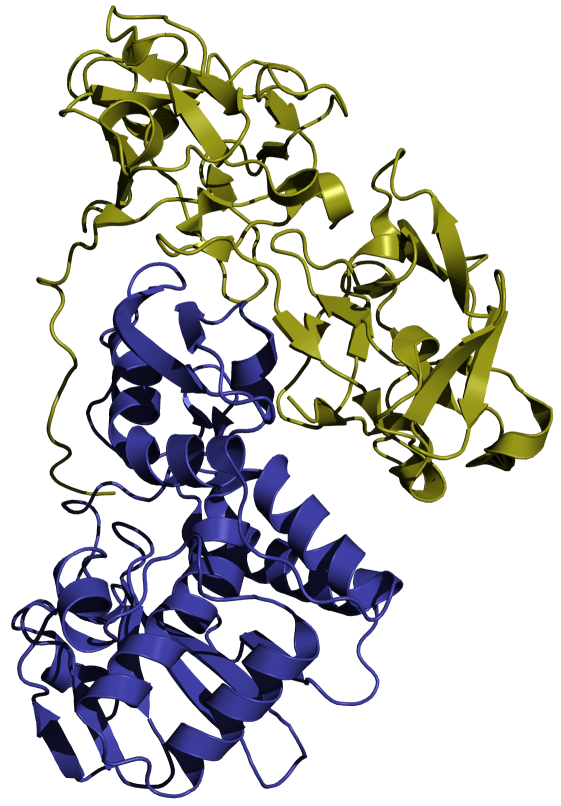
Abrin-a is the most potent of the four isotoxins, encoded for by an intron-free gene, and consists of two subunits or chains, A and B. The primary product of protein biosynthesis, preproabrin, consists of a signal peptide sequence, the amino acid sequences for subunits A and B, and a linker. A molecule of abrin-a has a total of 528 amino acids and is about 65 kDa in mass. Abrin-a is formed after the cleavage of a signal peptide sequence and post-translational modifications such as glycosylation and disulfide bridge formation in the endoplasmic reticulum (ER). The other three abrins, as well as the agglutinin, have a similar structure.
In terms of structure, abrin-a is related to the lectin, ricin, produced in the seeds of Ricinus communis.
Abrin is not known to have been weaponised. However, due to its high toxicity and the possibility of being processed into an aerosol, the use of abrin as a biological weapon is possible in principle. Despite this, the rosary pea yields only small quantities of abrin, which reduces the risk.
Hub AI
Abrin AI simulator
(@Abrin_simulator)
Abrin
Abrin is an extremely toxic toxalbumin found in the seeds of the rosary pea (or jequirity pea), Abrus precatorius. It has a median lethal dose of 0.7 micrograms per kilogram of body mass when given to mice intravenously (approximately 3.86 times more toxic than ricin, being 2.7 micrograms per kilogram). The median toxic dose for humans ranges from 10 to 1000 micrograms per kilogram when ingested and is 3.3 micrograms per kilogram when inhaled.
Abrin is a ribosome inhibiting protein like ricin, a toxin which can be found in the seeds of the castor oil plant, and pulchellin, a toxin which can be found in the seeds of Abrus pulchellus. Abrin is classed as a "select agent" under U.S. law.
Abrin is naturally produced exclusively by the rosary pea and constitutes approximately 0.08% of the plant's brightly colored seeds. The release of the toxin is inhibited by the seed coat; thus, if the seed coat is damaged or destroyed (for instance, by chewing), the toxin may be released.
Abrin is a water-soluble lectin. Abrin in powdered form is yellowish-white. It is a stable substance. It can withstand 30 minutes of heating at 60 °C (140 °F), but loses most of its toxicity after 30 minutes at 80 °C (176 °F). Though it is combustible, it does not polymerize easily and is not particularly volatile.
Chemically, abrin is a mixture of four isotoxins, these being abrin-a (P11140), -b (Q06077), -c (P28590), and -d (Q06076). Occasionally, the homologous low-toxicity hemagglutinin of Abrus precatorius (Q9M6E9; AAG) is also included as the fifth protein under the collective name 'abrin'.
Abrin-a is the most potent of the four isotoxins, encoded for by an intron-free gene, and consists of two subunits or chains, A and B. The primary product of protein biosynthesis, preproabrin, consists of a signal peptide sequence, the amino acid sequences for subunits A and B, and a linker. A molecule of abrin-a has a total of 528 amino acids and is about 65 kDa in mass. Abrin-a is formed after the cleavage of a signal peptide sequence and post-translational modifications such as glycosylation and disulfide bridge formation in the endoplasmic reticulum (ER). The other three abrins, as well as the agglutinin, have a similar structure.
In terms of structure, abrin-a is related to the lectin, ricin, produced in the seeds of Ricinus communis.
Abrin is not known to have been weaponised. However, due to its high toxicity and the possibility of being processed into an aerosol, the use of abrin as a biological weapon is possible in principle. Despite this, the rosary pea yields only small quantities of abrin, which reduces the risk.
Recent media