
Abrin
View on Wikipedia
| Abrin-a | |||||||
|---|---|---|---|---|---|---|---|
 | |||||||
| Identifiers | |||||||
| Organism | |||||||
| Symbol | ? | ||||||
| CAS number | 1393-62-0 | ||||||
| UniProt | P11140 | ||||||
| |||||||
| Identifiers | |
|---|---|
| ChemSpider |
|
| KEGG | |
| RTECS number |
|
| UNII | |
| UN number | 3462 |
Except where otherwise noted, data are given for materials in their standard state (at 25 °C [77 °F], 100 kPa).
| |

Abrin is an extremely toxic toxalbumin found in the seeds of the rosary pea (or jequirity pea), Abrus precatorius. It has a median lethal dose of 0.7 micrograms per kilogram of body mass when given to mice intravenously (approximately 3.86 times more toxic than ricin, being 2.7 micrograms per kilogram).[1] The median toxic dose for humans ranges from 10 to 1000 micrograms per kilogram when ingested and is 3.3 micrograms per kilogram when inhaled.[2]
Abrin is a ribosome inhibiting protein like ricin, a toxin which can be found in the seeds of the castor oil plant,[3] and pulchellin, a toxin which can be found in the seeds of Abrus pulchellus.[4] Abrin is classed as a "select agent" under U.S. law.
Occurrence
[edit]Abrin is naturally produced exclusively by the rosary pea and constitutes approximately 0.08% of the plant's brightly colored seeds. The release of the toxin is inhibited by the seed coat; thus, if the seed coat is damaged or destroyed (for instance, by chewing), the toxin may be released.

Physical properties
[edit]Abrin is a water-soluble[5] lectin. Abrin in powdered form is yellowish-white. It is a stable substance.[5][6] It can withstand 30 minutes of heating at 60 °C (140 °F), but loses most of its toxicity after 30 minutes at 80 °C (176 °F).[7] Though it is combustible, it does not polymerize easily and is not particularly volatile.[6]
Biochemistry
[edit]Chemically, abrin is a mixture of four isotoxins, these being abrin-a (P11140), -b (Q06077), -c (P28590), and -d (Q06076). Occasionally, the homologous low-toxicity[8] hemagglutinin of Abrus precatorius (Q9M6E9; AAG) is also included as the fifth protein under the collective name 'abrin'.

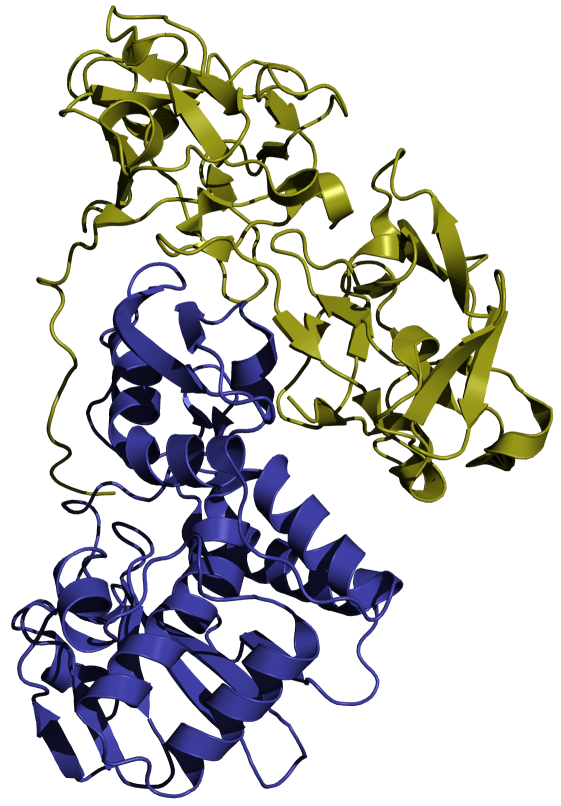
Abrin-a is the most potent of the four isotoxins, encoded for by an intron-free gene, and consists of two subunits or chains, A and B. The primary product of protein biosynthesis, preproabrin, consists of a signal peptide sequence, the amino acid sequences for subunits A and B, and a linker. A molecule of abrin-a has a total of 528 amino acids and is about 65 kDa in mass. Abrin-a is formed after the cleavage of a signal peptide sequence and post-translational modifications such as glycosylation and disulfide bridge formation in the endoplasmic reticulum (ER). The other three abrins, as well as the agglutinin, have a similar structure.
In terms of structure, abrin-a is related to the lectin, ricin, produced in the seeds of Ricinus communis.
Use
[edit]Abrin is not known to have been weaponised.[5] However, due to its high toxicity and the possibility of being processed into an aerosol, the use of abrin as a biological weapon is possible in principle.[9] Despite this, the rosary pea yields only small quantities of abrin, which reduces the risk.
The rosary pea is common to tropical regions, and is occasionally employed as an herbal remedy for certain conditions.[10] While the outer shell of the seed protects its contents from the stomachs of most mammals, the seed coats are occasionally punctured to make beaded jewelry. This can lead to poisoning if a seed is swallowed, or if such jewelry is worn against damaged skin.[6]
Abrin has been shown to act as an immunoadjuvant in the treatment of cancer in mice.[11]
Toxicology
[edit]Symptoms of abrin poisoning include diarrhea, vomiting, colic, tachycardia, and tremors. Death usually occurs after a few days due to kidney failure, heart failure, and/or respiratory paralysis.
Toxicity
[edit]Although there is no consensus on the level of lethal dose in humans after oral intake, it is assumed that the intake of 0.1 to 1 microgram per kilogram of body weight, or the consumption of a single seed of the rosary pea, may be fatal, but this information is insufficiently documented.[9] According to other estimates, the LD50 value of abrin is between 10 and 1000 μg/kg and is comparable to that of ricin.[12] The severity of the effects of abrin poisoning vary on the means of exposure to the substance (whether inhaled, ingested, or injected).[5][6] Exposure to abrin on the skin can cause an allergic reaction, indicated by blisters, redness, irritation, and pain,[6] however, there is no evidence of toxicity after skin contact.
Abrin is significantly more toxic following intravenous administration. The LD50 values obtained vary between 0.03 and 0.06 μg/kg in rabbits and between 1.25 and 1.3 μg/kg in dogs, depending on the species.[13] In clinical studies involving cancer patients, up to 0.3 μg/kg of intravenous abrin immunotoxin was tolerated without the development of serious symptoms of toxicity.
The toxicity of abrin is increased if it is inhaled. In rats, the LD50 for this route of administration is 3.3 μg/kg.[14]
Toxicodynamics
[edit]Abrin resembles ricin, in that it also is a type 2 ribosome-inactivating protein (RIP-II) with a similar mode of action, but the effect of abrin is more potent than that of ricin.[15] The toxic effect of abrin is due to an intracellular, multi-step process. Abrin binds to and penetrates the cells of the body, inhibiting cell protein synthesis after being transported to the endoplasmic reticulum (ER). By attaching its non-specifically binding B chain, which acts as a haptomer, to the carbohydrate chain of a glycoprotein on the cell surface, the abrin molecule anchors itself to the cell and is subsequently engulfed. However, both specific and nonspecific binding result in the uptake of abrin via endocytosis, as well as the activation of the A chain, caused by the cleavage of the B chain. The activated A chain of abrin, the effectomer, then enters the inner parts of the cell, where it cleaves an adenine (A4324) nucleobase from the 28S rRNA of the large ribosomal subunit of a ribosome on or near the ER, inhibiting the regular process of cellular protein synthesis. Without these proteins, cells cannot survive. This is harmful to the human body and can be fatal in small exposures. Additionally, abrin also may bind to cells specifically bearing the mannose receptor on their surface; since this receptor is found in a particularly high density on cells of the reticulohistiocytic system, that system in particular is affected by the toxicity of abrin.[9]
Toxicokinetics
[edit]Information dealing with the toxicokinetics of abrin is limited and debated. Due to its biochemical properties and its similarity to ricin, it is believed that abrin is at least partially degraded in the gastrointestinal tract.[16] The size of the molecule also restricts absorption through the gastrointestinal tract. Nevertheless, the numerous deaths caused from consuming rosary pea seeds confirm that enough of the toxin can be absorbed into the systemic circulation via the gastrointestinal tract to cause death.[9]
Murine studies show that there is an accumulation of abrin after injection, in the liver, kidneys, spleen, blood cells, lungs, and heart. The molecule is excreted via the kidneys after it undergoes proteolytic cleavage.[17]
Signs and symptoms of abrin exposure
[edit]The major symptoms of abrin poisoning depend on the route of exposure and the dose received, though many organs may be affected in severe cases. In general, symptoms can appear anywhere between several hours to several days after exposure. Initial symptoms of abrin poisoning by inhalation may occur within 8 hours of exposure but a more typical time course is 18–24 hours; they can prove fatal within 36–72 hours. Following ingestion of abrin, initial symptoms usually occur rapidly, but can take up to five days to appear.[6]
The later signs and symptoms of exposure are caused by abrin's cytotoxic effects, killing cells in the kidney, liver, adrenal glands, and central nervous system.[6]
Inhalation
[edit]Within a few hours of inhaling abrin, common symptoms include fever, cough, airway irritation, chest tightness, pulmonary edema (excess fluid accumulated in the lungs), and nausea. This makes breathing difficult (called dyspnea), and the skin might turn blue or black in a condition called cyanosis, which is a symptom of hypoxia. Excess fluid in the lungs can be diagnosed by x-ray or by listening to the chest with a stethoscope. As the effects of abrin progress, a person can become diaphoretic (sweating heavily) and fluid can build up further. Their blood pressure may drop dramatically, keeping oxygen from reaching the brain and other vital organs in a condition called shock, and respiratory failure may occur, which can be fatal within 36 to 72 hours. If an exposure to abrin by inhalation is not fatal, the airway can become sensitized or irritated.[6]
Ingestion
[edit]Swallowing any amount of abrin can lead to a slow-burn process of severe symptoms. Early symptoms include nausea, vomiting, pain in the mouth, throat, and esophagus, diarrhea, dysphagia (trouble swallowing), and abdominal cramps and pain. As the symptoms progress, bleeding and inflammation begins in the gastrointestinal tract. The affected person can vomit up blood (hematemesis), have blood in their feces, which creates a black, tarry stool called melena, and more internal bleeding. Loss of blood volume and water from nausea, vomiting, diarrhea, and bleeding causes blood pressure to drop and organ damage to begin, which can be seen as the person begins to have somnolence/drowsiness, hematuria (blood in the urine), stupor, convulsions, polydipsia (excessive thirst), and oliguria (low urine production). This ultimately results in multi-system organ failure, hypovolemic shock, vascular collapse, and death.[6]
Absorption
[edit]Abrin can be absorbed through broken skin or absorbed through the skin if dissolved in certain solvents. It can also be injected in small pellets and absorbed through contact with the eyes. Abrin in the powder or mist form can cause redness and pain in the eyes (i.e. conjunctivitis) in small doses. Small doses absorbed through the eyes can also cause tearing (lacrimation). Higher doses can cause tissue damage, severe bleeding at the back of the eye (retinal hemorrhage), and vision impairment or blindness. A large enough dose can be absorbed into the bloodstream and lead to systemic toxicity.[6]
Treatment
[edit]Because no antidote exists for abrin, the most important factor is avoiding abrin exposure in the first place. If exposure cannot be avoided, the most important factor is then getting the abrin off or out of the body as quickly as possible. Abrin exposure can be prevented when it is present in large quantities by wearing appropriate personal protective equipment. Abrin poisoning is treated with supportive care to minimize the effects of the poisoning. This care varies based on the route of exposure and the time since exposure. For recent ingestion, administration of activated charcoal and gastric lavage are both options. Using an emetic (vomiting agent) is not a useful treatment. In cases of eye exposure, flushing the eye with saline helps to remove abrin. Oxygen therapy, airway management, assisted ventilation, monitoring, IV fluid administration, and electrolyte replacement are also important components of treatment.[6]
See also
[edit]References
[edit]- ^ Gill DM (1982). "Bacterial toxins: a table of lethal amounts". Microbiological Reviews. 46 (1): 86–94. doi:10.1128/MMBR.46.1.86-94.1982. PMC 373212. PMID 6806598.
- ^ Rudolf C Johnson, et al. (March 2009). "Quantification of L-Abrine in Human and Rat Urine: A Biomarker for the Toxin Abrin". Journal of Analytical Toxicology. 33 (2): 77–84. doi:10.1093/jat/33.2.77. PMID 19239732.
- ^ Dickers KJ, Bradberry SM, Rice P, Griffiths GD, Vale JA (2003). "Abrin poisoning". Toxicological Reviews. 22 (3): 137–42. doi:10.2165/00139709-200322030-00002. PMID 15181663. S2CID 20411255.
- ^ Sadraeian M, Guimaraes GF, Araujo AP, Worthylake DK, LeCour LJ, Pincus SH (2017). "Selective cytotoxicity of a novel immunotoxin based on pulchellin A chain for cells expressing HIV envelope". Scientific Reports. 7 (1) 7579. Bibcode:2017NatSR...7.7579S. doi:10.1038/s41598-017-08037-3. PMC 5548917. PMID 28790381.
- ^ a b c d "Facts About Abrin". CDC.gov. Centers for Disease Control and Prevention. Archived from the original on 2006-09-28.
- ^ a b c d e f g h i j k "The Emergency Response Safety and Health Database: Biotoxin: ABRIN – NIOSH". cdc.gov. Centers for Disease Control and Prevention. Retrieved 2015-12-30.
- ^ "Abrin: Biotoxin | NIOSH | CDC". www.cdc.gov. 2023-05-26.
- ^ Liu CL, Tsai CC, Lin SC, Wang LI, Hsu CI, Hwang MJ, Lin JY (21 January 2000). "Primary structure and function analysis of the Abrus precatorius agglutinin A chain by site-directed mutagenesis. Pro(199) Of amphiphilic alpha-helix H impairs protein synthesis inhibitory activity". The Journal of Biological Chemistry. 275 (3): 1897–901. doi:10.1074/jbc.275.3.1897. PMID 10636890.
- ^ a b c d Dickers KJ, Bradberry SM, Rice P, Griffiths GD, Vale JA (2003). "Abrin poisoning". Toxicological Reviews. 22 (3): 137–42. doi:10.2165/00139709-200322030-00002. PMID 15181663. S2CID 20411255.
- ^ "Indian Herbs – Rosary Pea". iloveindia.com. Archived from the original on 2018-09-27. Retrieved 2014-08-28.
- ^ Shionoya H, Arai H, Koyanagi N, Ohtake S, Kobayashi H, Kodama T, Kato H, Tung TC, Lin JY (1982). "Induction of antitumor immunity by tumor cells treated with abrin". Cancer Research. 42 (7): 2872–76. PMID 7083176.
- ^ Johnson RC, Zhou Y, Jain R, Lemire SW, Fox S, Sabourin P, Barr JR (2009). "Quantification of L-abrine in human and rat urine: a biomarker for the toxin abrin". Journal of Analytical Toxicology. 33 (2): 77–84. doi:10.1093/jat/33.2.77. PMID 19239732.
- ^ Fodstad O, Johannessen JV, Schjerven L, Pihl A (1979). "Toxicity of abrin and ricin in mice and dogs". Journal of Toxicology and Environmental Health. 5 (6): 1073–84. Bibcode:1979JTEHA...5.1073F. doi:10.1080/15287397909529815. PMID 529341.
- ^ Griffiths GD, Rice P, Allenby AC, et al. (1995). "Inhalation toxicology and histopathology of ricin and abrin toxins". Inhal Toxicol. 7 (2): 269–288. Bibcode:1995InhTx...7..269G. doi:10.3109/08958379509029098.
- ^ Griffiths GD, Lindsay CD, Upshall DG (1994). "Examination of the toxicity of several protein toxins of plant origin using bovine pulmonary endothelial cells". Toxicology. 90 (1–2): 11–27. Bibcode:1994Toxgy..90...11G. doi:10.1016/0300-483X(94)90201-1. PMID 8023336.
- ^ Lin JY, Kao CL, Tung TC (1970). "Study on the effect of tryptic digestion on the toxicity of abrin". Taiwan Yi Xue Hui Za Zhi. Journal of the Formosan Medical Association. 69 (2): 61–3. PMID 5270832.
- ^ Fodstad Ø, Olsnes S, Pihl A (1976). "Toxicity, distribution and elimination of the cancerostatic lectins abrin and ricin after parenteral injection into mice". Br J Cancer. 34 (4): 418–425. doi:10.1038/bjc.1976.187. PMC 2025264. PMID 974006.
External links
[edit]- Abrin at the U.S. National Library of Medicine Medical Subject Headings (MeSH)
- "Abrin: Biotoxin". The Emergency Response Safety and Health Database. National Institute for Occupational Safety and Health. 2018-09-27.
- "The Crystal Structure of Abrin-A". Proteopedia.
Abrin
View on GrokipediaSource and Occurrence
Botanical Origin
Abrin is a toxic lectin protein derived exclusively from the seeds of Abrus precatorius L., a perennial twining vine belonging to the genus Abrus in the Fabaceae family (Leguminosae).[9][7] The species is classified under the order Fabales, subclass Rosidae, and class Magnoliopsida within the division Magnoliophyta of seed plants.[10] This woody vine produces herbaceous branches and pinnate leaves, with seeds serving as the primary repository for abrin isoforms, including abrin-a, abrin-b, abrin-c, and abrin-d.[11][7] The seeds of A. precatorius exhibit distinctive morphology: small, hard legumes approximately 5-6 mm long, typically scarlet red with a polished surface and a prominent black hilum at one end, earning common names like rosary pea, crab's eye, or jequirity pea.[12] Abrin, functioning as a heterodimeric glycoprotein, comprises a notable fraction of the seed's soluble protein content, with reported purification yields of about 0.15% from mature kernels.[13] These lectins are synthesized in the seeds as part of the plant's protein profile, akin to other Fabaceae species where such proteins accumulate during seed development.[14] In the evolutionary context of legumes, abrin exemplifies type II ribosome-inactivating proteins (RIPs) that likely arose from ancestral carbohydrate-binding domains, enabling roles in seed storage and potential defense through glycan recognition.[15] Empirical isolation studies confirm abrin's concentration is tied to seed maturation, though precise quantitative variation remains documented primarily through biochemical yields rather than developmental gradients.[16][13]Geographical Distribution
Abrus precatorius originates from tropical and subtropical regions of the Old World, encompassing parts of Africa, tropical Asia (including India and Southeast Asia), and northern and eastern Australia, where it inhabits seasonally dry biomes as a climbing shrub.[17] The species favors disturbed habitats such as scrublands, forest edges, and abandoned fields, often spreading via its climbing habit and seed dispersal by birds and water.[18] Human-mediated introduction, primarily through trade of its brightly colored seeds for beads and ornaments, has facilitated its establishment in New World tropics, including the Americas, West Indies, and Pacific islands, where it has naturalized extensively.[19] In areas like peninsular Florida, it has become invasive, displacing native vegetation in disturbed sites up to latitudes corresponding to Marion County.[20] Naturalized populations are documented in southeastern Queensland and northeastern New South Wales, Australia, reflecting both intentional cultivation and unintended spread.[21] Empirical data on abrin concentration indicate variability across populations, with seeds from wild specimens in native ranges like India yielding detectable levels of the toxin, though quantitative comparisons between wild and cultivated variants lack comprehensive field validation in peer-reviewed studies.[7] Environmental stressors such as salinity and temperature influence seed germination rates, potentially affecting overall plant vigor and toxin production indirectly, as observed in germination trials under varying conditions.[22]Physicochemical Properties
Molecular Composition
Abrin is a heterodimeric glycoprotein toxin belonging to the class of type II ribosome-inactivating proteins (RIPs). It consists of two non-identical polypeptide chains: the enzymatically active A-chain, which exhibits RNA N-glycosidase activity, and the B-chain, a lectin capable of binding terminal galactose residues. These chains are linked by a single interchain disulfide bond, with the overall molecular mass of the holotoxin ranging from 60 to 65 kDa.[23][24][25] The A-chain has a molecular weight of approximately 30 kDa, while the B-chain weighs about 33-35 kDa, enabling the B-chain to mediate cell surface binding through its two galactose-specific binding sites, which facilitate receptor-mediated endocytosis and subsequent delivery of the A-chain to the ribosomal machinery.[26][27] Abrin exists in four primary isoforms—abrin-a, -b, -c, and -d—isolated from the seeds of Abrus precatorius, which differ mainly in their N-glycosylation patterns and minor sequence variations, though abrin-a is the most abundant and potent variant with a well-characterized crystal structure. These isoforms share a conserved core fold similar to ricin, with the A-chain adopting an α/β fold typical of RIPs and the B-chain featuring a β-trefoil architecture for carbohydrate recognition.[28][7][25] Purification studies indicate that abrin constitutes roughly 1-5% of the total seed protein content by weight, reflecting its role as a defensive lectin in the plant.[29]Stability and Physical Traits
Abrin demonstrates notable thermal resilience, retaining toxicity after exposure to temperatures as high as 74°C, with complete inactivation requiring sustained heating at 74°C or above.[30] A 2017 study by USDA Agricultural Research Service researchers found abrin remained stable in cell-free translation assays following heat treatments at 63°C, 74°C, 80°C, 85°C, and 99°C, though partial denaturation occurs around 80°C after 30 minutes, leading to substantial loss of activity.[31] [2] This heat tolerance persists in various matrices, including dairy products, where lower temperatures fail to eliminate bioactivity.[32] The toxin exhibits broad pH tolerance, with no significant reduction in toxicity across tested ranges, performing optimally at neutral pH while resisting acidic or basic conditions that degrade many proteins.[30] Such environmental durability contributes to abrin's persistence in settings prone to pH fluctuations, like contaminated soils or processed foods. In physical form, purified abrin manifests as a yellowish-white powder, soluble in water, which enhances its potential for aerosolization or dissemination in aqueous environments.[33] Its stability endures for days to weeks—or up to months—in powdered or solubilized states, depending on humidity, temperature, and contaminants, posing sustained contamination risks distinct from more labile biological agents.[34] This resilience facilitates unintended persistence in food chains or deliberate dispersal, as evidenced by minimal degradation under standard environmental stressors.[33]Biochemical Mechanism
Cellular Action
Abrin, a type II ribosome-inactivating protein, exerts its cellular toxicity through the coordinated action of its A and B chains. The B chain, a lectin, binds specifically to terminal galactose residues on cell surface glycoproteins and glycolipids, enabling receptor-mediated endocytosis of the holotoxin.[30][35] This binding initiates clathrin-dependent uptake into endosomes, followed by retrograde transport to the Golgi and endoplasmic reticulum, where the disulfide-linked chains separate, allowing the A chain to translocate to the cytosol.[36] Biochemical assays confirm that isolated B chain retains galactose-binding affinity comparable to the intact toxin, with dissociation constants in the nanomolar range.[37] In the cytosol, the A chain functions as an RNA N-glycosidase, catalyzing the depurination of a conserved adenine residue (A4324) in the sarcin/ricin loop of the 28S rRNA within the 60S ribosomal subunit.[38] This modification disrupts the loop's structure, preventing elongation factors EF-1 and EF-2 from binding and halting peptide chain elongation during translation, thereby irreversibly inhibiting protein synthesis.[39] Cell-free and cellular assays demonstrate the A chain's catalytic potency, with one molecule capable of inactivating thousands of ribosomes due to its enzymatic turnover.[40] Empirical inhibition data from luciferase reporter assays show the A chain achieving 50% inhibition of protein synthesis (IC50) at approximately 10 ng/mL in eukaryotic cell extracts.[41] Whole-toxin cytotoxicity assays in human cell lines, such as HeLa cells, yield IC50 values as low as 0.14 ng/mL, reflecting efficient internalization and ribosomal targeting.[42] This mechanism exploits the universal architecture of eukaryotic ribosomes, lacking endogenous repair pathways for the depurinated rRNA, resulting in progressive cellular depletion of proteins essential for survival.[43]Comparison with Related Toxins
Abrin and ricin belong to the family of type II ribosome-inactivating proteins (RIPs), sharing a heterodimeric structure consisting of an A-chain with N-glycosidase activity that depurinates the sarcin/ricin loop of 28S rRNA, thereby halting protein synthesis, and a B-chain lectin that facilitates binding to cell surface galactosyl residues and subsequent endocytosis.[44][35] The A-chains exhibit approximately 40% sequence homology, while the B-chains share about 60%, contributing to analogous cellular intoxication mechanisms but with quantitative differences in efficiency.[45] Abrin demonstrates substantially higher toxicity than ricin across species and routes, with mouse intravenous LD50 values reported as low as 0.04 μg/kg for abrin compared to higher thresholds for ricin, rendering abrin up to 75 times more potent in some models.[3][35] Estimated human oral median lethal doses further underscore this disparity, at 0.01–0.04 μg/kg for abrin versus 0.1–1 μg/kg for ricin.[45] This enhanced potency arises from abrin's B-chain exhibiting greater affinity for target galactosyl groups and more effective intracellular translocation of the A-chain, leading to amplified ribosomal inactivation per molecule.[46] Differences in N-glycosylation patterns between abrin and ricin influence their immunogenicity and host immune recognition, with abrin's profile showing substantive glycosylation on its A-chain akin yet not identical to ricin's, potentially affecting antibody cross-reactivity and vaccine development challenges.[47] Recent advancements, such as 2024 mass spectrometric workflows employing affinity enrichment and depurination assays, enable precise differentiation of enzymatically active abrin from ricin in complex matrices, addressing prior detection ambiguities due to structural similarities.[48] Despite comparable bioterrorism potential as highly toxic, plant-derived select agents with low production barriers, abrin receives less public and media scrutiny than ricin, though both warrant equivalent biosecurity measures given their accessibility and lethality.[42][49]Historical Context
Early Discovery and Toxicology Studies
The seeds of Abrus precatorius have been known for their toxicity since ancient times in India, where extracts were empirically used as poisons for livestock and vermin, with documented fatal effects observed in early veterinary and medicinal texts.[50] Accidental human ingestions, often from seeds incorporated into jewelry or necklaces, were reported in 19th-century medical literature, manifesting in severe gastrointestinal hemorrhage, dehydration, and multi-organ failure, with lethality occurring after consumption of as few as 1-3 intact seeds in adults.[51] Scientific characterization advanced in the late 19th century; in 1884, Warden and Waddell proposed that the toxic principle, termed abrin, was proteinaceous based on precipitation and denaturation tests from seed extracts.[52] This was corroborated in 1887 by Martin, who classified abrin as an albumose—a proto-protein—and demonstrated its agglutinating effects on erythrocytes, establishing it as the first identified toxic protein akin to the contemporaneous discovery of ricin.[27] Early empirical toxicology focused on animal models, revealing intravenous lethality in rabbits at doses of 0.03-0.06 μg/kg by the early 20th century, though precise mechanisms remained unelucidated until later protein synthesis inhibition studies.[53] A milestone in understanding abrin's selective action occurred in 1970, when in vitro experiments showed abrin exhibited markedly higher cytotoxicity toward tumor cell lines (e.g., sarcoma and carcinoma cells) compared to normal fibroblasts, with IC50 values 10-100 times lower for malignant cells, attributed to differential membrane binding and uptake.[54] This prompted foundational biochemical assays confirming abrin's ribosome-inactivating properties, paving the way for LD50 quantifications in rodents, such as 1.25 μg/kg subcutaneously in mice and 3.3 μg/kg via inhalation in rats, derived from dose-response curves in controlled exposures.[55] These studies underscored abrin's potency exceeding ricin by factors of 5-10 in certain routes, based on survival rates and histopathological evidence of hepatic and renal necrosis.[56]Traditional and Cultural Uses
The seeds of Abrus precatorius, the source of abrin, have been employed in various cultural practices, particularly as beads for jewelry, necklaces, and rosaries due to their vibrant red coloration with a black spot, resembling the eye of a bird.[57] These uses persist in regions such as India, Africa, and parts of Asia, where the seeds are also incorporated into percussion instruments, despite awareness of their toxicity when the intact hard shell is compromised by drilling, nicking, or chewing, which exposes the abrin toxin.[57] In traditional systems, the seeds served as units of weight measurement in South Asian commerce, known as "ratti," standardized at approximately 1.75 grains, though this application carried risks if seeds were damaged during handling.[58] In Ayurvedic medicine, A. precatorius seeds, referred to as Gunja, are traditionally processed through detoxification methods like Shodhana (purification via soaking, boiling, or milk treatment) to mitigate toxicity before use in formulations for conditions such as sciatica, alopecia, arthritis pain, and as an aphrodisiac.[59] Claims include anti-inflammatory and hair restorative effects, with roots and seeds applied externally or in minute internal doses for nervous disorders, skin ailments, and erectile dysfunction, though ancient texts emphasize strict purification to avoid abrin-induced harms like gastrointestinal distress or paralysis.[59] Similar folk applications appear in Chinese and African traditions for treating bronchitis, sore throat, jaundice, and abdominal disorders, often using leaves or roots rather than seeds to reduce risk.[58] Documented risks underscore the dangers of cultural uses, with accidental ingestions from beaded jewelry leading to severe abrin poisoning, particularly in children who chew the seeds; for instance, cases report gastrointestinal hemorrhage, organ failure, and fatalities when as few as one to three seeds are breached.[60] An 18-month-old child developed life-threatening symptoms after ingesting a single rosary pea bead, highlighting how intact shells provide partial protection but fail if pierced for crafting.[60] Despite these incidents, cultural persistence continues in artisanal goods, prompting warnings from poison control centers against importing or handling such items without verifying seed integrity.[4]Toxicity Profile
Lethal Doses and Potency
Abrin demonstrates exceptional lethality, with the intravenous LD50 in mice ranging from 0.4 to 0.7 μg/kg body weight, depending on the isolate and experimental conditions.[61][62] Intraperitoneal LD50 values in mice are similarly low, at approximately 0.91 μg/kg for purified abrin.[63] These figures underscore abrin's potency as a ribosome-inactivating protein, far exceeding that of many known toxins on a per-weight basis. Human lethality estimates derive from animal extrapolations and sparse clinical data, placing the fatal dose at 0.1-1 μg/kg body weight for systemic exposure.[63] [64] Documented fatalities, including intentional ingestions of crushed Abrus precatorius seeds, align with this threshold, as even minute quantities—equivalent to a fraction of a single seed's toxin content—have proven lethal without intervention.[64] No antidote exists, and survival hinges on supportive care, with purity of the abrin extract critically influencing outcomes; impure seed-derived preparations may exhibit variable toxicity due to contaminants or incomplete extraction.[65] Route of administration markedly modulates potency, with parenteral (e.g., intravenous or intramuscular) delivery bypassing digestive barriers and yielding higher bioavailability than oral ingestion, where proteolytic degradation in the gut attenuates lethality by up to several orders of magnitude.[30] Aerosolized or injected forms amplify risk, as evidenced by animal models showing rapid systemic distribution.[34] Empirical data refute assertions of a safe threshold, as traditional handling practices (e.g., using intact seeds for jewelry) fail to eliminate risk from accidental breakage or abrasion, with verified poisonings demonstrating no non-lethal exposure limit.[64][5]| Species/Route | LD50 (μg/kg) | Source |
|---|---|---|
| Mouse, IV | 0.4-0.7 | CDC/NIOSH; peer-reviewed toxicology[61][62] |
| Mouse, IP | 0.91 | Purification study[63] |
| Human (est.) | 0.1-1 | Extrapolation from cases[63][64] |