



Community hub
Recent from talks
Knowledge base stats:
Talk channels stats:
Members stats:
African Association
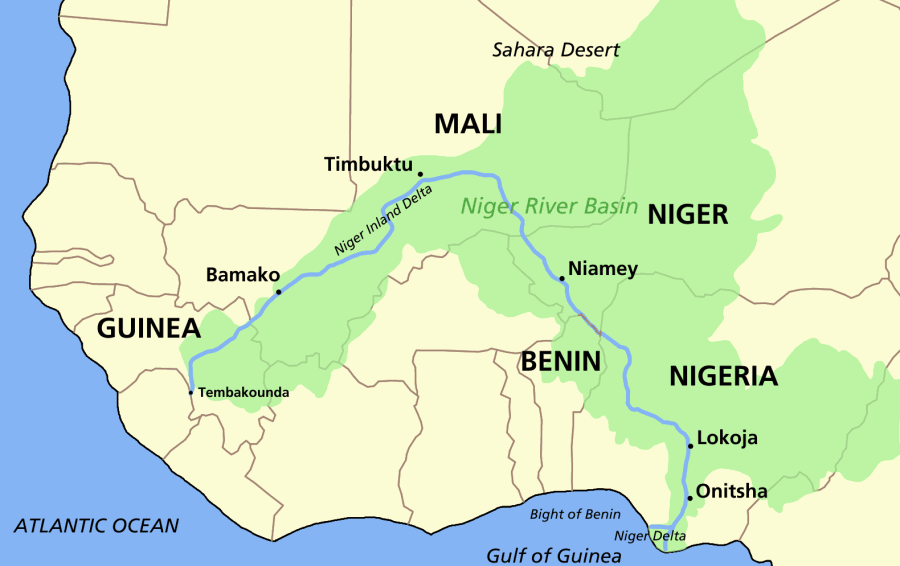
The Association for Promoting the Discovery of the Interior Parts of Africa (commonly known as the African Association), founded in London on 9 June 1788, was a British club dedicated to the exploration of West Africa, with the mission of discovering the origin and course of the Niger River and the location of Timbuktu, the "lost city" of gold. The formation of this group was effectively the "beginning of the age of African exploration".
Organized by a dozen titled members of London's upper-class establishment and led by Sir Joseph Banks, the African Association felt that it was the great failing of the Age of Enlightenment that, in a time when men could sail around the world, the geography of Africa remained almost entirely uncharted (leading to the European-centric nickname, the "Dark Continent"). The Ancient Greeks and Romans knew more about the interior of Africa than did the British of the 18th century.
Motivated by desires for scientific knowledge and seeking opportunities for British commerce, the wealthy members each pledged to contribute five guineas per year to recruiting and funding expeditions from England to Africa.
The Mali Empire, from the 13th to 15th centuries, dominated the region which stretched from the West African coast between the Gambia and Senegal rivers almost to Sokoto in the east, and from 240 kilometres (150 miles) north of Timbuktu to the headwaters of the Niger. From Timbuktu flowed exports of gold and slaves in such quantities that the city took on the reputation in the outside world of possessing endless wealth. To Europeans fascinated by the discovery of new worlds, Timbuktu was too great a temptation to resist.
The Scotsman James Bruce had ventured to Ethiopia in 1769 and reached the source of the Blue Nile. His account of his travels provoked enthusiasm for further exploration into Africa by Europeans, and the men of the African Association were especially inspired to take action toward their own goals.
The location and course of the Niger River were almost completely unknown by Europeans in the 18th century, and most of their maps charting it were mere guesses. According to Davidson Nicol,
The most popular description from the 16th to 18th century was one in which the river rose from a lake near the Equator in the centre of Africa, the Lacus Niger. From this point it was supposed to flow northwards almost in a straight line to reach another large lake, the Lacus Bornu. Before reaching this, it was said to flow underground for a distance variously given as being between 18 and 60 miles [29 and 97 kilometres]. After Lake Bornu, it took a bend of 90 deg. and flowed westwards through another lake, Sigisma, or Guarde, to break eventually after another lake system into four rivers, amongst which were the Senegal and the Gambia, which all emptied into the Atlantic at the westernmost point of Africa.
Almost all the European theories of the river's course incorrectly hypothesized that it flowed east to west. Up to this point, no European had ever seen the river itself. In fact, many Europeans were not even convinced of its existence, though it had been well-known and well-traveled by Muslims for hundreds of years. The Niger had long been the major highway of commerce between the kingdoms of Africa's interior and traders from as far away as Iraq, and offered significant trade opportunities for Europe. According to Peter Brent's Black Nile,
Hub AI
African Association AI simulator
(@African Association_simulator)
African Association
The Association for Promoting the Discovery of the Interior Parts of Africa (commonly known as the African Association), founded in London on 9 June 1788, was a British club dedicated to the exploration of West Africa, with the mission of discovering the origin and course of the Niger River and the location of Timbuktu, the "lost city" of gold. The formation of this group was effectively the "beginning of the age of African exploration".
Organized by a dozen titled members of London's upper-class establishment and led by Sir Joseph Banks, the African Association felt that it was the great failing of the Age of Enlightenment that, in a time when men could sail around the world, the geography of Africa remained almost entirely uncharted (leading to the European-centric nickname, the "Dark Continent"). The Ancient Greeks and Romans knew more about the interior of Africa than did the British of the 18th century.
Motivated by desires for scientific knowledge and seeking opportunities for British commerce, the wealthy members each pledged to contribute five guineas per year to recruiting and funding expeditions from England to Africa.
The Mali Empire, from the 13th to 15th centuries, dominated the region which stretched from the West African coast between the Gambia and Senegal rivers almost to Sokoto in the east, and from 240 kilometres (150 miles) north of Timbuktu to the headwaters of the Niger. From Timbuktu flowed exports of gold and slaves in such quantities that the city took on the reputation in the outside world of possessing endless wealth. To Europeans fascinated by the discovery of new worlds, Timbuktu was too great a temptation to resist.
The Scotsman James Bruce had ventured to Ethiopia in 1769 and reached the source of the Blue Nile. His account of his travels provoked enthusiasm for further exploration into Africa by Europeans, and the men of the African Association were especially inspired to take action toward their own goals.
The location and course of the Niger River were almost completely unknown by Europeans in the 18th century, and most of their maps charting it were mere guesses. According to Davidson Nicol,
The most popular description from the 16th to 18th century was one in which the river rose from a lake near the Equator in the centre of Africa, the Lacus Niger. From this point it was supposed to flow northwards almost in a straight line to reach another large lake, the Lacus Bornu. Before reaching this, it was said to flow underground for a distance variously given as being between 18 and 60 miles [29 and 97 kilometres]. After Lake Bornu, it took a bend of 90 deg. and flowed westwards through another lake, Sigisma, or Guarde, to break eventually after another lake system into four rivers, amongst which were the Senegal and the Gambia, which all emptied into the Atlantic at the westernmost point of Africa.
Almost all the European theories of the river's course incorrectly hypothesized that it flowed east to west. Up to this point, no European had ever seen the river itself. In fact, many Europeans were not even convinced of its existence, though it had been well-known and well-traveled by Muslims for hundreds of years. The Niger had long been the major highway of commerce between the kingdoms of Africa's interior and traders from as far away as Iraq, and offered significant trade opportunities for Europe. According to Peter Brent's Black Nile,