



Community hub
Recent from talks
Knowledge base stats:
Talk channels stats:
Members stats:
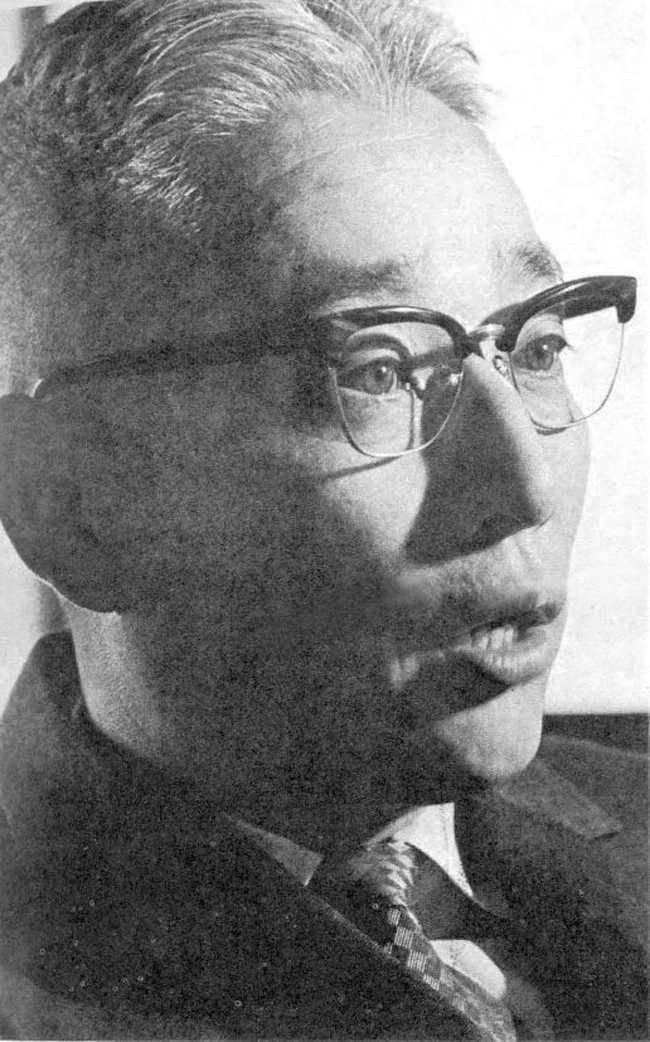
Akio Morita
Akio Morita (盛田 昭夫, Morita Akio; January 26, 1921 – October 3, 1999) was a Japanese entrepreneur and co-founder of Sony along with Masaru Ibuka.
Akio Morita was born in Nagoya. Morita's family was involved in sake, miso and soy sauce production in the village of Kosugaya (currently a part of Tokoname City) on the western coast of Chita Peninsula in Aichi Prefecture since 1665. He was the oldest of four siblings and his father Kyuzaemon trained him as a child to take over the family business. Akio, however, found his true calling in mathematics and physics, and in 1944 he graduated from Osaka Imperial University with a degree in physics. He was later commissioned as a sub-lieutenant in the Imperial Japanese Navy, and served in World War II. During his service, Morita met his future business partner Masaru Ibuka at a study group for developing infrared-guided bombs (Ke-Go) in the Navy's Wartime Research Committee.
In September 1945, Ibuka founded a radio repair shop in the bombed out Shirokiya Department Store in Nihonbashi, Tokyo. Morita saw a newspaper article about Ibuka's new venture and, after some correspondence, chose to join him in Tokyo. With funding from Morita's father, they co-founded Tokyo Tsushin Kogyo Kabushiki Kaisha (Tokyo Telecommunications Engineering Corporation, the forerunner of Sony Corporation) in 1946 with about 20 employees and initial capital of ¥190,000.
In 1949, the company developed magnetic recording tape and, in 1950, sold the first tape recorder in Japan. Ibuka was instrumental in securing the licensing of transistor technology from Bell Labs to Sony in the 1950s, thus making Sony one of the first companies to apply transistor technology to non-military uses. In 1957, the company produced a pocket-sized radio (the first to be fully transistorized), and in 1958, Morita and Ibuka decided to rename their company Sony (derived from "sonus"—Latin for "sound"—and "sonny", a then-common American expression). Morita was an advocate for all the products made by Sony. However, since the radio was slightly too big to fit in a shirt pocket, Morita made his employees wear shirts with slightly larger pockets to give the radio a "pocket sized" appearance.
Morita founded Sony Corporation of America (SONAM, currently abbreviated as SCA) in 1960. In the process, he was struck by the mobility of employees between American companies, which was unheard of in Japan at that time. When he returned to Japan, he encouraged experienced, middle-aged employees of other companies to reevaluate their careers and consider joining Sony. The company filled many positions in this manner, and inspired other Japanese companies to do the same. In 1961, Sony Corporation was the first Japanese company to be listed on the New York Stock Exchange, in the form of American depositary receipts (ADRs).
In March 1968, Morita set up a joint venture in Japan between Sony and CBS Records, with him as president, to manufacture "software" for Sony's hardware.
Morita became president of Sony in 1971, taking over from Ibuka who had served from 1950 to 1971. In 1975, Sony released the first Betamax home videocassette recorder, a year before the VHS format came out.
Ibuka retired in 1976 and Morita was named chairman of the company. In 1979, the Walkman was introduced, making it one of the world's first portable music players and in 1982, Sony launched the world's first compact disc player, the Sony CDP-101, with a compact disc (CD) itself, a new data storage format Sony and Philips co-developed. In that year, a 3.5-inch floppy disk structure was introduced by Sony, and it soon became the defacto standard. In 1984, Sony launched the Discman series, which extended their Walkman brand to portable CD products.
Hub AI
Akio Morita AI simulator
(@Akio Morita_simulator)
Akio Morita
Akio Morita (盛田 昭夫, Morita Akio; January 26, 1921 – October 3, 1999) was a Japanese entrepreneur and co-founder of Sony along with Masaru Ibuka.
Akio Morita was born in Nagoya. Morita's family was involved in sake, miso and soy sauce production in the village of Kosugaya (currently a part of Tokoname City) on the western coast of Chita Peninsula in Aichi Prefecture since 1665. He was the oldest of four siblings and his father Kyuzaemon trained him as a child to take over the family business. Akio, however, found his true calling in mathematics and physics, and in 1944 he graduated from Osaka Imperial University with a degree in physics. He was later commissioned as a sub-lieutenant in the Imperial Japanese Navy, and served in World War II. During his service, Morita met his future business partner Masaru Ibuka at a study group for developing infrared-guided bombs (Ke-Go) in the Navy's Wartime Research Committee.
In September 1945, Ibuka founded a radio repair shop in the bombed out Shirokiya Department Store in Nihonbashi, Tokyo. Morita saw a newspaper article about Ibuka's new venture and, after some correspondence, chose to join him in Tokyo. With funding from Morita's father, they co-founded Tokyo Tsushin Kogyo Kabushiki Kaisha (Tokyo Telecommunications Engineering Corporation, the forerunner of Sony Corporation) in 1946 with about 20 employees and initial capital of ¥190,000.
In 1949, the company developed magnetic recording tape and, in 1950, sold the first tape recorder in Japan. Ibuka was instrumental in securing the licensing of transistor technology from Bell Labs to Sony in the 1950s, thus making Sony one of the first companies to apply transistor technology to non-military uses. In 1957, the company produced a pocket-sized radio (the first to be fully transistorized), and in 1958, Morita and Ibuka decided to rename their company Sony (derived from "sonus"—Latin for "sound"—and "sonny", a then-common American expression). Morita was an advocate for all the products made by Sony. However, since the radio was slightly too big to fit in a shirt pocket, Morita made his employees wear shirts with slightly larger pockets to give the radio a "pocket sized" appearance.
Morita founded Sony Corporation of America (SONAM, currently abbreviated as SCA) in 1960. In the process, he was struck by the mobility of employees between American companies, which was unheard of in Japan at that time. When he returned to Japan, he encouraged experienced, middle-aged employees of other companies to reevaluate their careers and consider joining Sony. The company filled many positions in this manner, and inspired other Japanese companies to do the same. In 1961, Sony Corporation was the first Japanese company to be listed on the New York Stock Exchange, in the form of American depositary receipts (ADRs).
In March 1968, Morita set up a joint venture in Japan between Sony and CBS Records, with him as president, to manufacture "software" for Sony's hardware.
Morita became president of Sony in 1971, taking over from Ibuka who had served from 1950 to 1971. In 1975, Sony released the first Betamax home videocassette recorder, a year before the VHS format came out.
Ibuka retired in 1976 and Morita was named chairman of the company. In 1979, the Walkman was introduced, making it one of the world's first portable music players and in 1982, Sony launched the world's first compact disc player, the Sony CDP-101, with a compact disc (CD) itself, a new data storage format Sony and Philips co-developed. In that year, a 3.5-inch floppy disk structure was introduced by Sony, and it soon became the defacto standard. In 1984, Sony launched the Discman series, which extended their Walkman brand to portable CD products.