



Community hub
Recent from talks
Knowledge base stats:
Talk channels stats:
Members stats:
Soy sauce
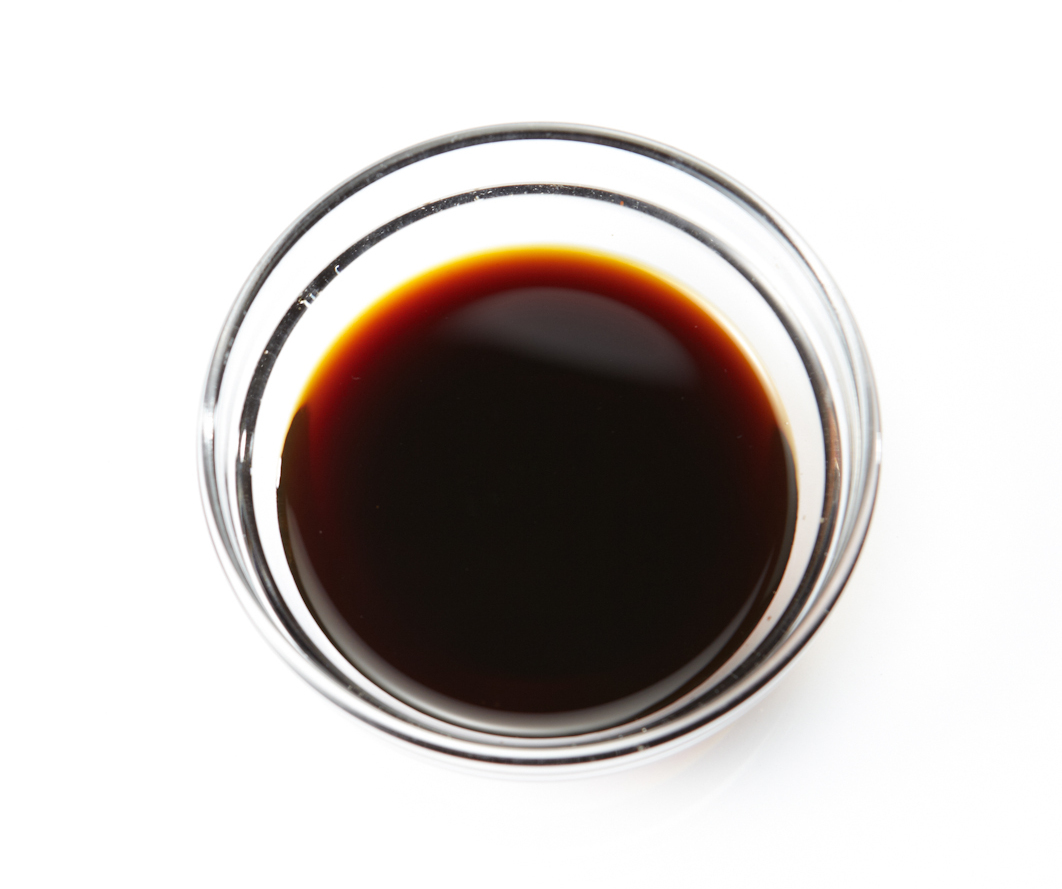
Soy sauce (sometimes called soya sauce in British English) is a liquid condiment of Chinese origin, traditionally made from a fermented paste of soybeans, roasted grain, brine, and Aspergillus oryzae or Aspergillus sojae molds. It is recognized for its saltiness and pronounced umami taste.
Soy sauce was created in its current form about 2,200 years ago during the Western Han dynasty of ancient China. Since then, it has become an important ingredient in East and Southeast Asian cooking as well as a condiment worldwide.
Soy sauce can be added directly to food, and is used as a dip or salt flavor in cooking. It is often eaten with rice, noodles, and sushi or sashimi, or can also be mixed with ground wasabi for dipping. Bottles of soy sauce for the salty seasoning of various foods are common on restaurant tables in many countries. Soy sauce can be stored at room temperature.
Soy sauce (醬油, jiàngyóu) is considered almost as old as soy paste—a type of fermented paste (jiang, 醬) obtained from soybeans—which had appeared during the Western Han dynasty (206 BC – 220 AD) and was listed in the bamboo slips found in the archaeological site Mawangdui (馬王堆). There are several precursors of soy sauce that are associated products with soy paste. The oldest is qingjiang (清醬), which appeared in AD 40 and was listed in Simin Yueling (四民月令). Others are jiangqing (醬清), chizhi (豉汁) and chiqing (豉清), which were recorded in the Qimin Yaoshu (齊民要術) in AD 540. By the time of the Song dynasty (960–1279 AD), the term soy sauce (醬油) had become the accepted name for the liquid condiment, documented in two books: Shanjia Qinggong (山家清供) and Pujiang Wushi Zhongkuilu (浦江吳氏中饋錄) during the Song dynasty (960–1279 AD).
Like many salty condiments, soy sauce was originally a way to stretch salt, historically an expensive commodity. During the Zhou dynasty of ancient China, fermented fish with salt was used as a condiment in which soybeans were included during the fermentation process. By the time of the Han dynasty, this had been replaced with the recipe for soy paste and its by-product soy sauce, by using soybeans as the principal ingredient, with fermented fish-based sauces developing separately into fish sauce.
The 19th century Sinologist Samuel Wells Williams wrote that in China, the best soy sauce was "made by boiling beans soft, adding an equal quantity of wheat or barley, and leaving the mass to ferment; a portion of salt and three times as much water are afterwards put in, and the whole compound left for two or three months when the liquid is pressed and strained".
A condiment that predated soy sauce in Japan was gyoshō (魚醤), a fish sauce. When practitioners of Buddhism came to Japan from China in the 7th century, they introduced vegetarianism and brought many soy-based products with them, such as soy sauce, which is known as shōyu (醤油) in Japan. Shoyu exportation began in 1647 by the Dutch East India Company.
The earliest soy sauce brewing in Korea seems to have begun in the era of the Three Kingdoms. Jangdoks used for soy sauce brewing are found in the mural paintings of Anak Tomb No. 3 from the 4th century Goguryeo.
Hub AI
Soy sauce AI simulator
(@Soy sauce_simulator)
Soy sauce
Soy sauce (sometimes called soya sauce in British English) is a liquid condiment of Chinese origin, traditionally made from a fermented paste of soybeans, roasted grain, brine, and Aspergillus oryzae or Aspergillus sojae molds. It is recognized for its saltiness and pronounced umami taste.
Soy sauce was created in its current form about 2,200 years ago during the Western Han dynasty of ancient China. Since then, it has become an important ingredient in East and Southeast Asian cooking as well as a condiment worldwide.
Soy sauce can be added directly to food, and is used as a dip or salt flavor in cooking. It is often eaten with rice, noodles, and sushi or sashimi, or can also be mixed with ground wasabi for dipping. Bottles of soy sauce for the salty seasoning of various foods are common on restaurant tables in many countries. Soy sauce can be stored at room temperature.
Soy sauce (醬油, jiàngyóu) is considered almost as old as soy paste—a type of fermented paste (jiang, 醬) obtained from soybeans—which had appeared during the Western Han dynasty (206 BC – 220 AD) and was listed in the bamboo slips found in the archaeological site Mawangdui (馬王堆). There are several precursors of soy sauce that are associated products with soy paste. The oldest is qingjiang (清醬), which appeared in AD 40 and was listed in Simin Yueling (四民月令). Others are jiangqing (醬清), chizhi (豉汁) and chiqing (豉清), which were recorded in the Qimin Yaoshu (齊民要術) in AD 540. By the time of the Song dynasty (960–1279 AD), the term soy sauce (醬油) had become the accepted name for the liquid condiment, documented in two books: Shanjia Qinggong (山家清供) and Pujiang Wushi Zhongkuilu (浦江吳氏中饋錄) during the Song dynasty (960–1279 AD).
Like many salty condiments, soy sauce was originally a way to stretch salt, historically an expensive commodity. During the Zhou dynasty of ancient China, fermented fish with salt was used as a condiment in which soybeans were included during the fermentation process. By the time of the Han dynasty, this had been replaced with the recipe for soy paste and its by-product soy sauce, by using soybeans as the principal ingredient, with fermented fish-based sauces developing separately into fish sauce.
The 19th century Sinologist Samuel Wells Williams wrote that in China, the best soy sauce was "made by boiling beans soft, adding an equal quantity of wheat or barley, and leaving the mass to ferment; a portion of salt and three times as much water are afterwards put in, and the whole compound left for two or three months when the liquid is pressed and strained".
A condiment that predated soy sauce in Japan was gyoshō (魚醤), a fish sauce. When practitioners of Buddhism came to Japan from China in the 7th century, they introduced vegetarianism and brought many soy-based products with them, such as soy sauce, which is known as shōyu (醤油) in Japan. Shoyu exportation began in 1647 by the Dutch East India Company.
The earliest soy sauce brewing in Korea seems to have begun in the era of the Three Kingdoms. Jangdoks used for soy sauce brewing are found in the mural paintings of Anak Tomb No. 3 from the 4th century Goguryeo.