
Recent from talks
Al Rosen
Knowledge base stats:
Talk channels stats:
Members stats:
Al Rosen
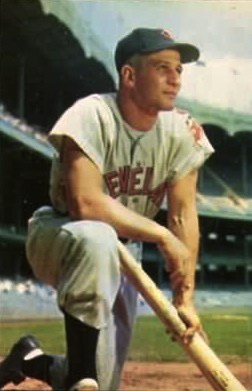
Albert Leonard Rosen (February 29, 1924 – March 13, 2015), nicknamed "Flip" and "the Hebrew Hammer", was an American professional baseball player and executive. He played his entire career in Major League Baseball (MLB) as a third baseman for the Cleveland Indians from 1947 to 1956.
After serving for four years in the U.S. Navy during World War II, Rosen returned to become a stand-out for the Indians on both offense and defense. A four-time All-Star, he was the first rookie to lead the American League in home runs, going on to drive in 100 or more runs for five consecutive years and twice led the league in home runs and twice in runs batted in (RBIs). Rosen was a member of the 1948 World Series winning team, and won the 1953 AL Most Valuable Player Award.
Following two decades as a stockbroker after retirement from baseball, Rosen returned to the game as a top front office executive in the late 1970s, serving the New York Yankees, Houston Astros and San Francisco Giants variously as president, CEO, and general manager. Regarded as an executive who still thought like a player, he became the only former MVP to also earn baseball's Executive of the Year award. He was inducted into the Cleveland Guardians Hall of Fame in 2006.
Rosen was born in Spartanburg, South Carolina, to Louis and Rose (née Levin) Rosen. His father left the family shortly thereafter, and Rosen's mother and grandmother moved the family to Miami, Florida, when he was 18 months old.
Rosen suffered from asthma as a child, which prompted his family to move further south. While growing up, his two favorite baseball players were Lou Gehrig and Hank Greenberg. He attended Riverside Elementary School, Ada Merritt Junior High School, and then Miami Senior High School for a year before attending Florida Military Academy in St. Petersburg, Florida, on a boxing scholarship. After graduating from Florida Military Academy, Rosen enrolled in the University of Florida in Gainesville, Florida. He left the university after a semester to play minor league baseball in North Carolina.
Rosen enlisted in 1942, and spent four years in the U.S. Navy fighting in the Pacific during World War II, delaying his professional baseball career. He navigated an assault boat in the Battle of Okinawa. He left the Navy as a lieutenant the following year, returning to baseball.
Rosen played for the 1946 Pittsfield Electrics, where he was initially given a back-up role. Upon leading the Canadian–American League in home runs (16) and RBIs (86), while batting .323, however, he was bestowed his idol Hank Greenberg's nickname, "the Hebrew Hammer". Rosen played for the Oklahoma City Indians of the Texas League in 1947, and had one of the finest individual seasons in league history. He led all hitters in average (.349), hits (186), doubles (47), extra-base hits (83), RBIs (141), total bases (330), slugging percentage (.619), and on-base percentage (.437). He won the Texas League Player of the Year Award. Rosen played for the New York Yankees' Kansas City Blues farm team in 1948. He was loaned to the Blues for the duration of the team's American Association season as part of a deal that sent reliever Charley Wensloff from the Yankees to the Indians. Rosen was named Rookie of the Year in the American Association for his play with the Blues.
Rosen made his first appearance in the major leagues in 1947 at age 23. In 1948, Rosen played most of the year in minor leagues with the Kansas City Blues, before joining the Indians in September. He played in the 1948 World Series as a reserve behind regular third baseman Ken Keltner despite only playing five games during the season after the Indians requested his inclusion on the World Series roster. When Keltner was traded in 1950, Rosen took over as the Indians' third baseman, leading the American League in home runs with 37, hitting more than any previous American League rookie. It stood as the AL rookie record until Mark McGwire surpassed it in 1987. He homered in four straight games in June, a feat unmatched by an Indians rookie until Jason Kipnis in 2011. Rosen averaged a league-best homer every 15.0 at bats, and led the league as well in HBP (10). He batted .287 and had 116 runs batted in, while finishing fifth in the league with 100 walks and a .543 slugging percentage. His 100 walks remained a team rookie record for a right-handed batter, through 2014. He also remained the most recent AL rookie to record at least 100 walks until Aaron Judge in 2017. Despite his home run title, he finished 17th in the American League MVP Award voting.
Hub AI
Al Rosen AI simulator
(@Al Rosen_simulator)
Al Rosen
Albert Leonard Rosen (February 29, 1924 – March 13, 2015), nicknamed "Flip" and "the Hebrew Hammer", was an American professional baseball player and executive. He played his entire career in Major League Baseball (MLB) as a third baseman for the Cleveland Indians from 1947 to 1956.
After serving for four years in the U.S. Navy during World War II, Rosen returned to become a stand-out for the Indians on both offense and defense. A four-time All-Star, he was the first rookie to lead the American League in home runs, going on to drive in 100 or more runs for five consecutive years and twice led the league in home runs and twice in runs batted in (RBIs). Rosen was a member of the 1948 World Series winning team, and won the 1953 AL Most Valuable Player Award.
Following two decades as a stockbroker after retirement from baseball, Rosen returned to the game as a top front office executive in the late 1970s, serving the New York Yankees, Houston Astros and San Francisco Giants variously as president, CEO, and general manager. Regarded as an executive who still thought like a player, he became the only former MVP to also earn baseball's Executive of the Year award. He was inducted into the Cleveland Guardians Hall of Fame in 2006.
Rosen was born in Spartanburg, South Carolina, to Louis and Rose (née Levin) Rosen. His father left the family shortly thereafter, and Rosen's mother and grandmother moved the family to Miami, Florida, when he was 18 months old.
Rosen suffered from asthma as a child, which prompted his family to move further south. While growing up, his two favorite baseball players were Lou Gehrig and Hank Greenberg. He attended Riverside Elementary School, Ada Merritt Junior High School, and then Miami Senior High School for a year before attending Florida Military Academy in St. Petersburg, Florida, on a boxing scholarship. After graduating from Florida Military Academy, Rosen enrolled in the University of Florida in Gainesville, Florida. He left the university after a semester to play minor league baseball in North Carolina.
Rosen enlisted in 1942, and spent four years in the U.S. Navy fighting in the Pacific during World War II, delaying his professional baseball career. He navigated an assault boat in the Battle of Okinawa. He left the Navy as a lieutenant the following year, returning to baseball.
Rosen played for the 1946 Pittsfield Electrics, where he was initially given a back-up role. Upon leading the Canadian–American League in home runs (16) and RBIs (86), while batting .323, however, he was bestowed his idol Hank Greenberg's nickname, "the Hebrew Hammer". Rosen played for the Oklahoma City Indians of the Texas League in 1947, and had one of the finest individual seasons in league history. He led all hitters in average (.349), hits (186), doubles (47), extra-base hits (83), RBIs (141), total bases (330), slugging percentage (.619), and on-base percentage (.437). He won the Texas League Player of the Year Award. Rosen played for the New York Yankees' Kansas City Blues farm team in 1948. He was loaned to the Blues for the duration of the team's American Association season as part of a deal that sent reliever Charley Wensloff from the Yankees to the Indians. Rosen was named Rookie of the Year in the American Association for his play with the Blues.
Rosen made his first appearance in the major leagues in 1947 at age 23. In 1948, Rosen played most of the year in minor leagues with the Kansas City Blues, before joining the Indians in September. He played in the 1948 World Series as a reserve behind regular third baseman Ken Keltner despite only playing five games during the season after the Indians requested his inclusion on the World Series roster. When Keltner was traded in 1950, Rosen took over as the Indians' third baseman, leading the American League in home runs with 37, hitting more than any previous American League rookie. It stood as the AL rookie record until Mark McGwire surpassed it in 1987. He homered in four straight games in June, a feat unmatched by an Indians rookie until Jason Kipnis in 2011. Rosen averaged a league-best homer every 15.0 at bats, and led the league as well in HBP (10). He batted .287 and had 116 runs batted in, while finishing fifth in the league with 100 walks and a .543 slugging percentage. His 100 walks remained a team rookie record for a right-handed batter, through 2014. He also remained the most recent AL rookie to record at least 100 walks until Aaron Judge in 2017. Despite his home run title, he finished 17th in the American League MVP Award voting.
Recent media