Hubbry Logo
Alex GregoryAlex GregoryMain
Open search
Alex Gregory
Community hub
Alex Gregory
logo
8 pages, 0 posts
0 subscribers
Be the first to start a discussion here.
Alex Gregory
Alex Gregory
from Wikipedia

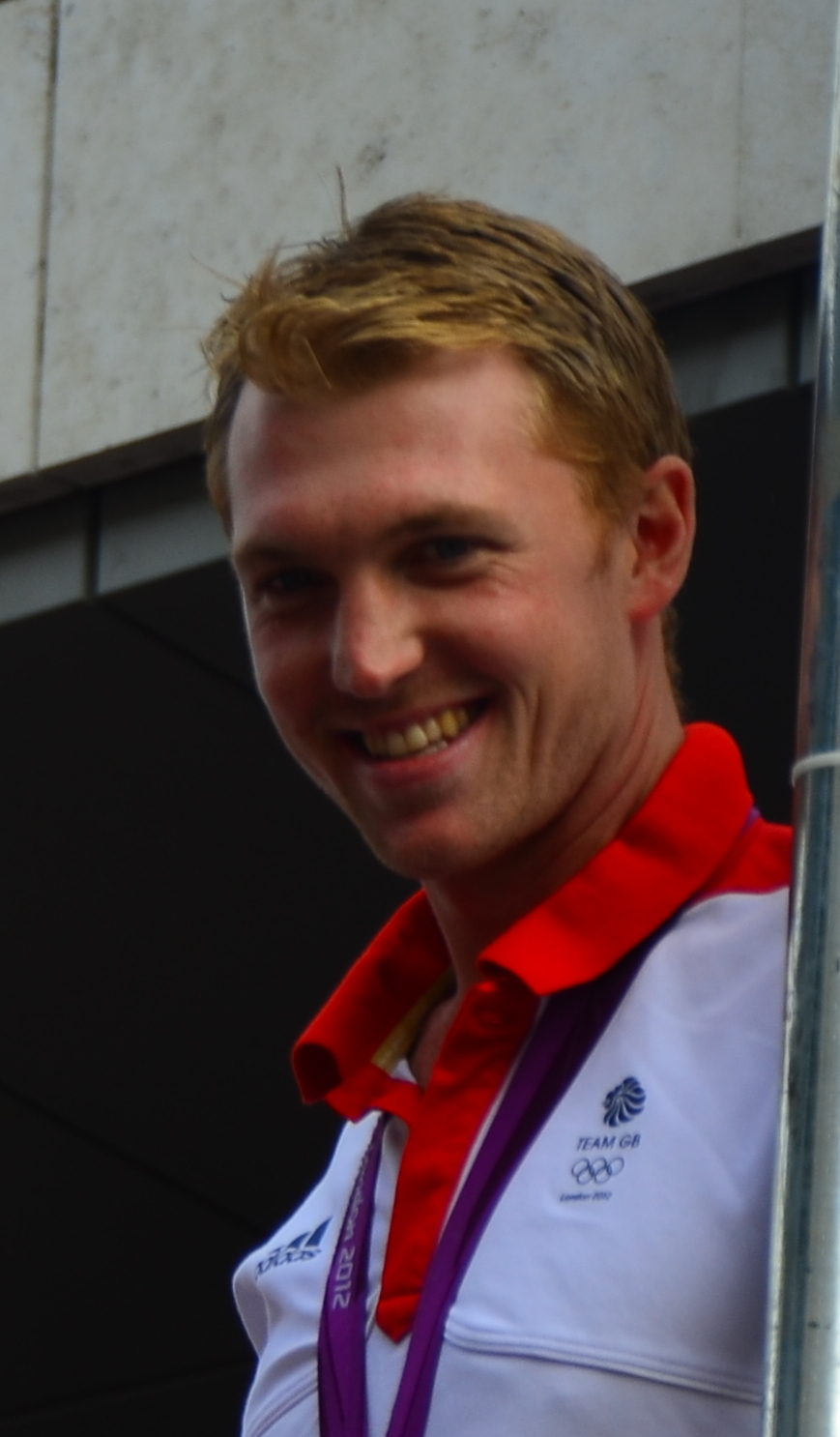
Alexander John Gregory, MBE (born 11 March 1984) is an English former representative rower. He is a six-time world champion and a two-time Olympic gold medallist at 2012 and 2016 in the Coxless four.[1]

Key Information

Education

[edit]

Alex Gregory was educated at the Richard Pate School in Cheltenham, then Bredon Hill Middle School, a comprehensive school in Ashton under Hill, Worcestershire, followed by Prince Henry's High School in Evesham. He later attended the University of Reading in Berkshire from which he graduated in 2006.

Career

[edit]

Born in Cheltenham, Gregory gained his first GB vest in 2004 at the World Rowing U23 Championships in Poland, finishing 11th in the quad.[2] At the World U23 Championships in 2005 he was 4th in the double and 8th in the single the following year. He has been a full member of the men's squad since his graduation from university.[2] Gregory is also a member of the Leander Club, of which he was Captain.[2]

He was selected for the 2008 Beijing Olympic Games as a reserve, having narrowly missed out on qualifying the men's quad for the Games.[2]

Gregory won the pair at the GB Rowing Senior Trials in his first season in 'sweep'. He established his place in the new GB four during the 2009 World Cup Series winning two golds and a bronze to take the overall 2009 title. He was the 'rookie' in the boat, racing with three experienced Olympians, all medallists from Beijing.

At the 2009 World Rowing Championships the four's main rivals were the Australian silver medal four from Beijing who had stayed together to avenge the GB victory at the Olympics. GB won the gold medal, almost two seconds ahead of Australia with Slovenia in third.[2]

At the 2011 World Rowing Championships in Bled, Slovenia, Gregory raced in the men's four with crewmates Matt Langridge, Richard Egington and Tom James, winning a gold medal ahead of Greece in second and Australia in third.[2]

At the 2012 GB Rowing Team Senior Trials held in March at Eton Dorney, Gregory and crew mate Alex Partridge came second in the men's pair.[2]

Pete Reed, Tom James and Andrew Triggs Hodge, who won gold in the four in Beijing, were all selected along with Gregory for the Olympic season. The four went on to win the 2012 London Olympic Games gold medal in the Coxless four at Eton Dorney.[3]

He competed at the 2013 World Rowing Championships in Chungju, where he won a gold medal as part of the eight[4] and the following year he competed at the 2014 World Rowing Championships in Bosbaan, Amsterdam, where he won a gold medal as part of the coxless four with Moe Sbihi, George Nash and Andrew Triggs Hodge.[5] One year later he was part of the British team that topped the medal table at the 2015 World Rowing Championships at Lac d'Aiguebelette in France, where he won a gold medal as part of the eight with Matt Gotrel, Constantine Louloudis, Pete Reed, Paul Bennett, Moe Sbihi, George Nash, Will Satch and Phelan Hill.[6]

Honours

[edit]

In August 2012, to celebrate his gold medal at London 2012, post boxes were painted gold in his home town of Cheltenham.[7]

Gregory was appointed Member of the Order of the British Empire (MBE) in the 2013 New Year Honours for services to rowing.[8][9]

On 20 November 2015, Gregory was named as "Olympic Athlete of the Year" at the GB Rowing Teams awards.[10]

See also

[edit]

References

[edit]
[edit]
Revisions and contributorsEdit on WikipediaRead on Wikipedia
from Grokipedia
Alexander John Gregory MBE (born 11 March 1984 in , ) is a retired British rower renowned for his achievements in international competition, including two Olympic gold medals in the men's coxless four at the 2012 and 2016 Rio de Janeiro Games. He secured five World Rowing Championship titles overall from 2009 to 2015, including four between 2011 and 2015, competing in both the men's four and eight events, and holds the distinction of being one of only three rowers to win six consecutive international titles. Gregory began his career as a sculler in 2004, making his senior international debut for in 2006 after placing 11th at the 2004 World Rowing Under 23 Championships. Over a 16-year career, including a decade with the British men's squad, he contributed to a world best time in the coxless four and set seven in . Awarded the Member of the (MBE) in the 2013 New Year's Honours for services to , Gregory retired after the 2016 Olympics and transitioned into motivational speaking, delivering global talks on high-performance mindset and resilience for organizations such as . He founded the MindBodyRow app in 2020, offering on-demand workouts for fitness enthusiasts, and leads wellness retreats inspired by his own experiences in . Additionally, Gregory serves as a patron for the British Exploring youth charity, captains the Leander Club, and is a father to three children.

Early life and education

Early life

Alexander John Gregory was born on 11 March 1984 in , , , though his hometown is listed as the nearby rural village of Wormington. Gregory grew up in a typical rural setting, where outdoor activities played a significant role in his childhood, particularly spending time in nature with his father, which later influenced his interest in physically demanding pursuits. Little is publicly documented about his parents or any siblings, but this early exposure to the countryside fostered a foundation for his athletic development. Prior to discovering at age 17 during his school years, this period set the stage for his later transition into structured and sporting opportunities.

Education

Alex Gregory began his formal education at The Richard Pate's School, an independent preparatory school in , , where he attended from 1991 to 1995. During his primary years, Gregory received a foundational education in a structured academic environment that emphasized early development in core subjects. He progressed to state-funded , first attending Bredon Hill Middle School in Ashton-under-Hill, , followed by Prince Henry's High School in , spanning approximately 1995 to 2002. At these institutions, Gregory completed his middle and high school studies, including qualifications, within comprehensive schooling systems that supported a broad alongside extracurricular opportunities. It was during his years at Prince Henry's High School that Gregory was introduced to through extracurricular activities, joining Rowing Club at age 17 and beginning to explore the sport as a that aligned with his physical interests. Gregory then pursued higher education at the , where he studied and graduated in 2006 with a . Upon arriving at the university, he immediately joined the Reading University Boat Club, which served as a crucial stepping stone for his athletic development by providing competitive training and racing opportunities on the Thames at Caversham. Throughout his undergraduate years, Gregory balanced rigorous academic demands in with his growing commitments to , including participation in university-level competitions that honed his skills and led to early national recognition.

Rowing career

Early and club career

Gregory began competitive during his time at the , joining the university boat club around 2002 upon starting his studies. He represented the university in (BUCS) regattas, building foundational skills in the sport after initially taking it up at Evesham Rowing Club during his A-levels. In 2006, following his graduation, Gregory joined Leander Club in , becoming a full member of the men's squad that year. At Leander, he progressed through club training and domestic competitions, honing his technique primarily in events. Gregory's early international experience came at the under-23 level. He made his debut at the 2004 World U23 Championships in , , where he finished 11th in the quadruple sculls. The following year, at the 2005 U23 Championships in , Netherlands, he placed fourth in the double sculls, narrowly missing a . In 2006, competing in the single sculls at the U23 Worlds in Hazewinkel, Belgium, he achieved an eighth-place finish. A pivotal shift occurred in 2008 when Gregory transitioned from to , a decision made while serving as a reserve for Great Britain's men's quadruple sculls at the Olympics, though he did not compete in the event. This change marked the end of his junior and under-23 phases, setting the stage for his senior career while continuing to row with Leander in domestic regattas.

International breakthrough

Gregory's international breakthrough came in 2009, following his transition to sweep rowing the previous year, a shift that optimized his physical attributes for the demands of larger crews. Standing at 1.98 m (6 ft 6 in) and weighing 97 kg (214 lb), his stature provided leverage and power ideal for sweep events, allowing him to excel in coordinated team efforts. This change earned him a spot in the men's coxless four after winning the men's pair at the GB Rowing Team Senior Trials. The crew then dominated the World Cup series, securing two gold medals and one bronze across the regattas in , , and . Capping the year, Gregory and his teammates—Matt Langridge, Richard Egington, and Alex Partridge—claimed gold at the 2009 in , , finishing two seconds ahead of in a display of tactical maturity. This victory marked his first senior world title and established the British four as a formidable unit. In 2010, the same crew continued building momentum with two golds and a bronze, though they placed fourth at the World Championships in Lake Karapiro, , narrowly missing the podium but honing their race strategy for future dominance. Retaining his position, Gregory helped the men's four win two more World Cup golds in 2011 before reclaiming the world title at the Championships in , , ahead of and . The crew's synergy, built through intensive shared training at the national squad's high-performance center in Caversham, emphasized synchronized power application and mental resilience. As the 2012 London Olympics approached, a reconfigured four—including Gregory, , Tom James, and Andrew Triggs Hodge—underwent rigorous regimen adjustments, incorporating camps and data-driven technique refinements to peak for the home Games. This evolution in team dynamics, blending experienced oarsmen with renewed focus, positioned Britain as favorites in the event. The crew set a world best time of 5:37.86 at the World Rowing Cup in .

Olympic Games

Gregory's first involvement with the Olympics came in 2008 at the Games, where he was selected as a reserve for the men's quadruple sculls but did not compete, instead contributing to the training squad. At the 2012 London Olympics, Gregory earned his first as part of the men's coxless four, rowing alongside , Tom James, and Andrew Triggs Hodge at Eton Dorney. The crew led from the start on "Super Saturday," finishing in 6:03.97 to win by 1.25 seconds over , marking Great Britain's fourth consecutive Olympic victory in the event. Gregory claimed his second Olympic gold four years later at the 2016 Rio Games, again in the men's coxless four with teammates Mohamed Sbihi, George Nash, and Constantine Louloudis on the choppy waters of Lagoa Rodrigo de Freitas. Despite challenging conditions from residual wind affecting the course, the British boat surged in the final 500 meters to hold off a late charge from , securing victory by three-quarters of a length and extending Great Britain's dominance to five straight golds in the discipline. Over his Olympic career, Gregory amassed two gold medals in the men's coxless four, establishing himself as a double Olympic champion.

World and European Championships

Alex Gregory established himself as a dominant force in international through his performances at the and European Championships, securing five senior gold medals and multiple European medals between 2009 and 2016. His versatility across the men's coxless four and men's eight highlighted Great Britain's strength in sweep during this period, contributing to a cumulative record that underscored his role in the team's sustained success. At the 2013 in , , Gregory rowed in the bow seat of Great Britain's men's eight, which claimed gold in a historic first victory for the nation in the event. The crew, consisting of Daniel Ritchie, Tom Ransley, Gregory, , Mohamed Sbihi, Andrew Triggs Hodge, George Nash, Will Satch, and coxswain , took control from the start and maintained a commanding lead, finishing in 6:13.97 over two seconds ahead of . This win marked Gregory's third World Championship gold, following earlier triumphs in the men's four at the 2009 Championships in , , and the 2011 Championships in , . In 2014, Gregory returned to the men's coxless four, securing gold at both the World and European Championships. At the European Championships in , , he stroked the boat alongside Mohamed Sbihi, George Nash, and Andrew Triggs Hodge, powering to victory with a dominant performance that set the tone for the season. Later, at the World Championships in Amsterdam, Netherlands, the same quartet jumped to an early lead and extended it to nearly two lengths by the 1500-meter mark, holding off a late surge from to win by 1.72 seconds in 5:49.99. This double gold elevated Gregory's World tally to four. The 2015 season saw Gregory back in the men's eight, where faced fierce rivalry from . At the European Championships in , , the crew earned silver, finishing just behind the Germans in a tightly contested final. Gregory, rowing in the six seat with teammates Matt Gotrel, Stewart Innes, , Paul Bennett, , George Nash, Will Satch, and coxswain Phelan Hill, showed resilience after a challenging heat. They redeemed the result at the World Championships in Lac d'Aiguebelette, , with a revised lineup including Constantine Louloudis, where a storming finish in the final 250 meters secured gold by a mere 0.21 seconds over , clocking 5:25.00. This victory completed Gregory's fifth gold. Gregory's final major championship before the 2016 Olympics came at the 2016 European Championships in , , where he helped the men's four to gold. Teamed with Mohamed Sbihi, George Nash, and Constantine Louloudis, they overcame challenging conditions to win ahead of and , reinforcing Great Britain's dominance in the boat class. Across his career, Gregory's five World golds and three European medals (two golds, one silver) exemplified his tactical adaptability and contribution to team strategies emphasizing early positioning and powerful finishes in key races.

Retirement and later activities

Retirement

Alex Gregory announced his retirement from competitive in January 2017, mere months after securing his second consecutive Olympic gold medal in the men's coxless four at the 2016 Rio de Janeiro Games. The decision marked the end of a 12-year international career with , during which he had become one of the 's most decorated athletes. Gregory cited his primary motivation as a desire to prioritize family time after years of intense commitments that had kept him away from home, including missing the births of two of his three children with partner . He also expressed interest in pursuing new personal challenges beyond the rigors of elite sport. In reflecting on his career, Gregory highlighted the profound lessons learned through perseverance amid setbacks, while acknowledging the physical and emotional sacrifices demanded by over a decade of high-level training and competition. These included the strain of relentless preparation and the personal toll of balancing athletic pursuits with family life, which he described as a key factor in his timing for retirement. With the Rio Olympics serving as his final major competition, Gregory confirmed there would be no additional events, shifting his focus to gradually disengaging from the squad. At Leander Club, where he had served as captain, he began transitioning away from active roles, laying the groundwork for future involvement in a non-competitive capacity.

Post-retirement expeditions and ventures

Following his retirement from elite rowing after the 2016 Rio Olympics, Alex Gregory channeled his expertise in endurance and open-water navigation into high-risk expeditions, seeking challenges beyond competitive sport. In 2017, Gregory participated in the Polar Row, a pioneering multi-stage ocean rowing attempt to traverse the Arctic Ocean's open waters. The expedition, led by Fiann Paul, aimed to cover roughly 1,200 miles from Tromsø, Norway, to Iceland via Svalbard and the Fram Strait, with the goal of approaching the North Pole vicinity and setting multiple records in uncharted polar routes. Gregory joined for the second leg alongside a rotating international crew that included Paul (Iceland), Carlo Facchino (Italy), Danny Longman and Sam Vye (UK), and others from the US, India, and Norway. Leveraging his Olympic-honed skills in harsh, unpredictable conditions, the team rowed the first leg of 521 nautical miles to Svalbard in just nine days, averaging 2-3 knots despite constant 1.5-hour shifts. The crew achieved 11 , including the first row across the and open waters south to north, the fastest row above the , and the northernmost latitude reached by a rowing vessel at 79°55' N, where they encountered the permanent edge on August 10. However, progress halted amid thickening ice, overcast weather draining solar batteries, and forced manual steering, stranding the team on the remote island from August 19. They endured over two weeks of isolation, facing extreme cold around 2°C, 99% humidity, and logistical breakdowns, before rescue by the Norwegian coastguard to the mainland on September 4, 2017. Gregory sustained severe hand injuries from prolonged exposure, with skin becoming pale, swollen, deeply wrinkled, and blistered—resembling second-degree —after weeks of soaked gloves and unrelenting wetness. Gregory later recounted the ordeal as a test of resilience, noting the cold "seeping into my bones" with no escape, yet emphasizing the team's determination amid failures like equipment malfunctions and health issues. The expedition highlighted his transition to exploratory ventures, though it ended prematurely without completing the full route to . Early post-retirement pursuits also included initial family-oriented adventures, such as short outdoor trips and with his children, which inspired his 2018 book DadVentures: Amazing Outdoor Adventures for Daring Dads and Fearless Kids.

Speaking, coaching, and media

Following his retirement from competitive in 2017, Alex Gregory transitioned into a prominent , engaging audiences at corporate events, educational institutions, and sports conferences worldwide. Drawing directly from his experiences as a double Olympic gold medalist, his keynotes explore the mental and physical demands of elite performance, with core themes including building resilience amid setbacks, fostering effective in high-stakes environments, and achieving sustainable work-life balance. For instance, in presentations for organizations like and Stanton House, Gregory illustrates how overcoming self-doubt and leveraging collective strengths propelled his successes in the and Olympics. In parallel, Gregory founded Mind Body Row in 2023, establishing a comprehensive platform dedicated to accessible rowing-based fitness and . The program offers immersive retreats in scenic locations, such as annual events in that combine on-water sessions, , and mindfulness practices to enhance recovery and technique; a notable 2025 retreat emphasized holistic for participants of varying skill levels, including the September event at Herdada da Cortesia Hotel. Complementing these, the Mind Body Row app provides on-demand workouts tailored for rowers, including guided sessions focused on stroke and endurance, while collaborations with iFit have produced beginner-friendly series like the "Becoming a Rower" program, which prioritizes proper form over intensity to build confidence and prevent injury. Around 2024–2025, Gregory introduced structured multi-part workout series within the app, such as the June 2025 'RHYTHM' series designed to progressively improve timing, control, and enjoyment for users seeking consistent progress without overwhelming pressure. Gregory has maintained a visible media presence, contributing to discussions on his athletic legacy and personal growth through outlets like and rowing-focused podcasts. Notable appearances include a 2023 Kent episode on his fitness ventures and a 2024 interview on The Row Show, where he shared insights into transitioning from elite competition to coaching while reflecting on teamwork dynamics in crew boats. As former captain of the prestigious Leander Club—where he served during his competitive peak—Gregory has continued to advocate for the club's growth, participating in events that promote junior development and within British . A key facet of his post-Olympic output is the 2018 publication of DadVentures: Amazing Outdoor Adventures for Daring Dads and Fearless Kids, a guide blending fatherhood anecdotes with practical adventure ideas inspired by his life after Rio. The book offers scalable activities—from quick after-school outings to multi-day trips—aimed at strengthening family bonds through outdoor exploration, reflecting Gregory's emphasis on balancing professional achievements with personal fulfillment.

Personal life

Family

Alex Gregory is married to Gregory. The couple has three children: sons (born October 2009) and Jesse (born January 2016), and daughter Daisy (born August 2013). Throughout his rowing career, Gregory balanced the demands of elite competition with fatherhood, often enduring long separations from his family due to intensive training camps and international events. He missed the births of two of his children, including Daisy's in 2013, as he was competing at the in , , where he secured gold in the men's eight. These experiences highlighted the personal sacrifices required, with Gregory later reflecting on the challenges of being an absent father while pursuing Olympic success. Family life played a significant role in Gregory's decision to retire from international rowing in 2017, allowing him to prioritize time with Emily and his young children after years of absences. As of 2024, the family continues to emphasize shared outdoor pursuits, with Gregory prioritizing time at home with his children to foster bonding and work-life balance.

Philanthropy and interests

Gregory serves as a Fellow of the British Exploring Society, a youth adventure charity that promotes and through expeditions for young people. As a former participant in the society's programs during his school years, he actively advocates for its initiatives, emphasizing the value of in building resilience and among . Beyond his charitable commitments, Gregory maintains a deep interest in and the outdoors, influenced by his background in from the . He pursues non-competitive activities such as in scenic areas like the , where he leads guided explorations that highlight environmental appreciation. His passion for and drives these pursuits, often focusing on sustainable engagement with natural landscapes. Gregory also enjoys travel and hands-on hobbies like , which allow him to connect with the environment in a personal, reflective manner. These interests occasionally overlap with family activities, such as shared outdoor adventures that foster a collective appreciation for . Additionally, he supports rowing community efforts by encouraging junior participation in club events, drawing from his own early experiences to inspire the next generation without formal coaching roles.

Honours and legacy

Awards

In recognition of his contributions to rowing, Alex Gregory was appointed Member of the (MBE) in the 2013 for services to the sport. Following his in the men's coxless four at the 2012 London Olympics, Gregory received a distinctive national honor through the painting of a gold in his hometown of , , as part of the Royal Mail's tradition to commemorate Olympic and Paralympic medalists. This gesture, unveiled on 's , symbolized his achievement and joined similar tributes across the for the 2012 Games victors. Gregory's sustained excellence was further acknowledged at the 2015 GB Rowing Team Awards, where he was named Olympic Athlete of the Year alongside , honoring his pivotal role in multiple world championship golds and preparation for the Rio Olympics. This accolade highlighted his leadership and performance in the men's eight and four events leading up to 2016.

Impact on rowing

Alex Gregory played a pivotal role in establishing British 's dominance during the , serving as a consistent and versatile member of the men's squad across both the four and eight events. His longevity in high-performance crews, spanning from 2009 onward, helped solidify Great Britain's position as a leading force in international competition, contributing to a period of sustained success that elevated the sport's profile domestically and globally. As former captain of Leander Club, one of the world's oldest and most prestigious rowing institutions, Gregory influenced talent development by overseeing programs that nurtured emerging athletes, including initiatives targeting junior rowers from diverse backgrounds. During his leadership, the club functioned as a key pipeline for national squad members, providing resources like financial aid and high-performance training to foster the next generation of competitors. Through founding Mind Body Row, Gregory has advanced athlete welfare by integrating support into practice, offering guided, pressure-free sessions that emphasize stress reduction, , and sustainable fitness routines. This initiative addresses longstanding gaps in elite by promoting work-life balance and mental resilience, encouraging rowers to view the sport as a tool for overall well-being rather than solely performance. Gregory's post-competitive endeavors, including Arctic ocean expeditions and media productions, have broadened 's appeal to non-traditional participants by showcasing its adventurous and accessible dimensions. His involvement in high-profile ventures, such as the 2017 Polar Row attempt, garnered widespread attention and inspired broader engagement; during the expedition, Gregory and the crew set 11 , including the first row across the open waters north to south. While digital content like workout videos and the Mind Body Row app democratizes technique and motivation for recreational audiences.

References

Add your contribution
Related Hubs
User Avatar
No comments yet.