


Community hub
0 subscribers8 pages, 0 posts
Recent from talks
All channels
Be the first to start a discussion here.
Be the first to start a discussion here.
Be the first to start a discussion here.
Be the first to start a discussion here.
Contribute something
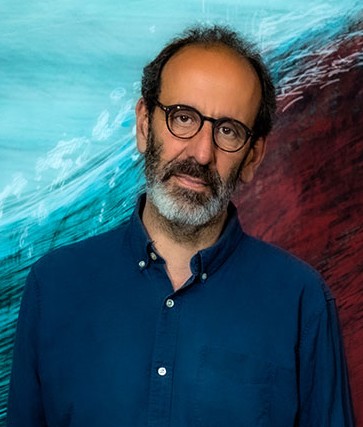
Welcome to the community hub built to collect knowledge and have discussions related to Alexandre Gavras.
Nothing was collected or created yet.
Alexandre Gavras
View on Wikipediafrom Wikipedia
Alexandre Gavras (born August 23, 1969) is a French film producer.
Key Information


Filmography
[edit]As a director
[edit]| Year | Title | Credit(s) | Notes |
|---|---|---|---|
| 1991 | The Plant | Direction and screenplay | Short film |
| 1993 | Latcho Drom | Assistant director | Documentary |
| 1995 | Mondo | Assistant director | |
| 1998 | Tueurs de petits poissons | Direction and screenplay | Brest European Short Film Festival: French Grand Prix Clermont-Ferrand International Short Film Festival: Canal+ Award Nominated – César Award for Best Short Film Nominated – Molodist International Film Festival: Best Film Award |
As a producer
[edit]| Year | Title | Credit(s) | Notes |
|---|---|---|---|
| 2012 | Capital | Production | |
| 2013 | Just Before Losing Everything | Production | César Award for Best Short Film Nominated – Academy Award for Best Live Action Short Film[1] |
| 2016 | Blaise | Production | TV series |
| 2017 | Custody | Production | César Award for Best Film Prix Luigi De Laurentiis |
| 2018 | Touiza | Production | Short film |
| 2018 | Les Bonnes Conditions | Production | Documentary |
| 2019 | Adults in the Room | Production | |
| 2019 | Alice | Production | Short film |
| 2021 | Les Intranquilles | Production |
References
[edit]- ^ "86th Academy Awards". oscars.org. Retrieved September 7, 2014.
External links
[edit]
Alexandre Gavras
View on Grokipediafrom Grokipedia
Early life
Family background and upbringing
Alexandre Gavras was born on August 23, 1969, in Paris, France, to the Greek-French film director Costa-Gavras and French film producer and journalist Michèle Ray-Gavras.[1] His parents, who married in 1968, established KG Productions in 1973 as a Paris-based film production company focused on feature films.[5] Michèle Ray-Gavras had previously worked as an independent journalist covering conflicts in Vietnam and Bolivia from 1963 to 1977 before transitioning to production.[6] Gavras grew up in a family environment centered on cinema, with his parents' professional activities shaping a household connected to politically themed filmmaking.[7] He has two siblings, both directors: Julie Gavras and Romain Gavras, reflecting the family's early and sustained involvement in the industry.[8]Career
Entry into film production
Alexandre Gavras leveraged familial connections to enter film production via KG Productions, the company established in 1973 by his parents, director Costa-Gavras and producer Michèle Ray-Gavras.[9][2] Following earlier experience as an assistant director and director of short films in the 1990s, he formally joined KG Productions as a producer in 2012, initially emphasizing support for young talents through short films and subsequent features.[3][10] Gavras's debut credited producing effort came with the 2013 short Just Before Losing Everything, a collaboration that highlighted his focus on narrative-driven works by emerging directors.[11] This marked his transition from on-set and directorial roles to overseeing production logistics and development within the family enterprise, which he co-leads alongside his parents.[2]Key productions and collaborations
Alexandre Gavras serves as a key producer at KG Productions, the Paris-based company founded in 1973 by his parents, Costa-Gavras and Michèle Ray-Gavras, where he collaborates closely with family leadership to oversee production.[2] Under his involvement, the company has maintained a steady output of feature films, emphasizing co-productions that span French and international partnerships.[12] A prominent example is Custody (2017), directed by Xavier Legrand, which Gavras produced through KG Productions; the film premiered at the Venice Film Festival and earned César Award nominations for Best Film and Best Actress, demonstrating critical recognition and distribution in markets including France, the UK, Spain, and Italy.[13] This domestic thriller highlighted Gavras's collaboration with Legrand, a partnership that extended to the director's follow-up The Successor (2023).[14] Gavras also produced Adults in the Room (2019), directed by his father Costa-Gavras, with a budget of approximately €6.58 million; the political drama, focusing on the Greek debt crisis, premiered out of competition at Venice and achieved theatrical release across Europe via distributors including Warner Classics.[15] This project underscored KG Productions' capacity for higher-budget endeavors involving historical and geopolitical themes, blending family ties with broader European co-financing. Into the 2020s, Gavras has facilitated international collaborations, such as co-producing No Other Choice with Korean director Park Chan-wook through KG Productions alongside Moho Film, a film selected by South Korea for Oscar consideration in 2025.[16] Similarly, Bab El Sahra (2024), directed by Salim Brahimi and produced by Gavras for KG, represents ongoing engagement with North African narratives, as discussed in industry meetings like Cinemed 2024.[2] These efforts reflect KG's pivot toward diverse genres, from family dramas to cross-cultural political works, with verifiable outputs ensuring commercial distribution viability.[17]Directorial and other creative roles
Alexandre Gavras began his directorial career with the short film The Plant in 1991, a 39-minute fiction piece completed as part of his studies at New York University Film School.[18] He also wrote the screenplay for this work, marking his initial foray into screenwriting.[19] In 1998, Gavras directed the short film Tueur de petits poissons, a thriller about a morgue employee who invents an invisible serum from fish poison amid nightmares.[20] The film garnered over 100 festival selections, approximately 50 awards, and a César nomination for Best Short Film.[21] Gavras additionally penned the screenplay and portrayed the lead character Jacques.[22] Beyond directing, Gavras has taken on occasional acting roles, often in minor capacities within French productions. These include Inspector Bayard in Mon colonel (2006), a character in La faute à Fidel! (2006), and appearances in Le capital (2012). His acting credits complement his behind-the-camera work but remain secondary to his primary professional focus.Filmography
As producer
Gavras began his producing career in the late 1990s and has maintained a consistent output, primarily through KG Productions, focusing on French and international co-productions.[10] His credits include both feature films and shorts, often collaborating with directors like Xavier Legrand and his father, Costa-Gavras.[14] Key producing credits include:- Tueur de petits poissons (1998, dir. Dominique Farrugia), an early short film credit.[4]
- Just Before Losing Everything (2013, dir. Xavier Legrand), a short film that served as a precursor to later collaborations.[11]
- Custody (Jusqu'à la garde, 2017, dir. Xavier Legrand), a French drama produced in association with KG Productions.[23]
- Adults in the Room (2019, dir. Costa-Gavras), a Franco-Greek co-production depicting the Greek debt crisis.
- Les Intranquilles (The Restless, 2021, dir. Joachim Lafosse), a Belgian-French co-production.[12]
- The Successor (Le Successeur, 2023, dir. Xavier Legrand), continuing the partnership with Legrand.[14]
- Last Breath (Le Dernier Souffle, 2024, dir. Costa-Gavras), a recent KG Productions release.[14][12]