



Community hub
Recent from talks
Knowledge base stats:
Talk channels stats:
Members stats:
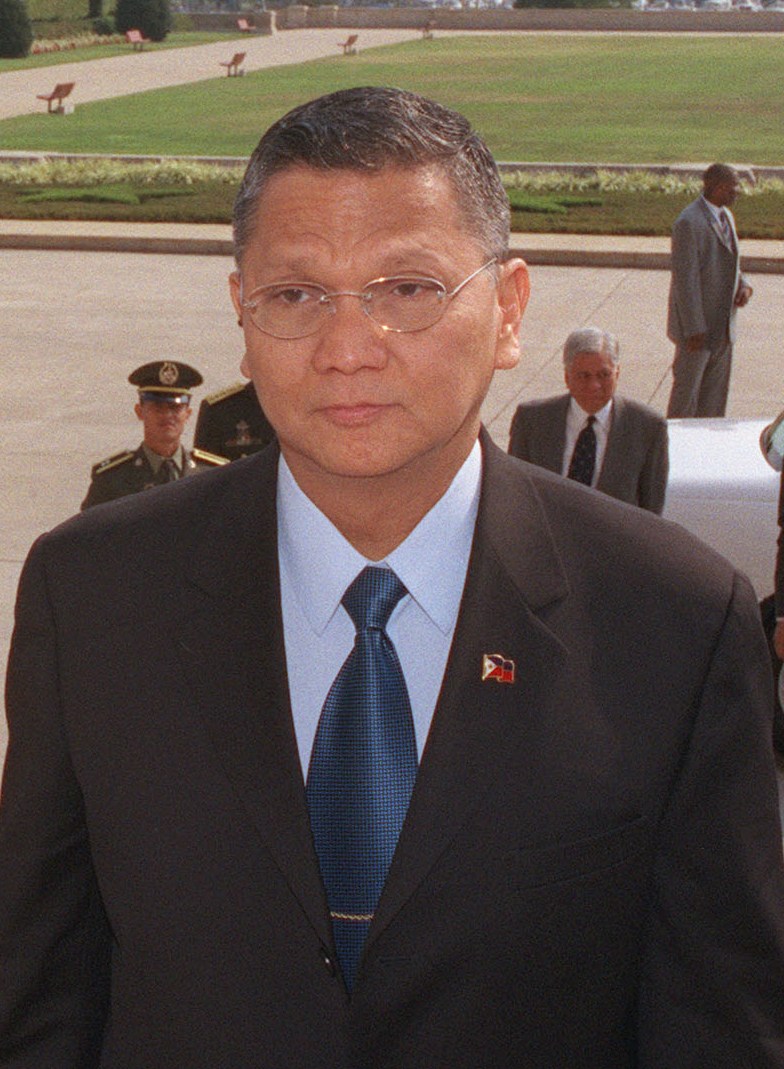
Angelo Reyes
Angelo Tomas Reyes (March 17, 1945 – February 8, 2011) also known as General Reyes, was a Filipino retired general and politician who served as the Armed Forces of the Philippines (AFP) Chief of Staff from 2000 to 2001 under President Joseph Estrada. At the height of the 2001 EDSA Revolution, Reyes withdrew his support for Estrada, which led to the installation of Vice President Gloria Macapagal Arroyo as president, under whom he then served as Cabinet Secretary until 2010. He also served under Arroyo as Secretary of the Departments of the Interior and Local Government, Environment and Natural Resources, Energy, and National Defense.
Reyes ran for a seat in Congress under the United Transport Coalition (1-UTAK), a party representing workers in the public transportation sector, in the 2010 party-list election but was dropped by the party without his consent. It led to an investigation which had been ongoing at the time of his death. A week after being accused of corruption during his tenure as AFP chief of staff, Reyes died due to a gunshot wound in an apparent suicide, according to Scene of the Crime Operatives.
Reyes was married to Teresita Pernia-Reyes with whom he has five sons, Pablo, Angelito (a former representative from Taguig), Marc, Carlo and Judd.
Reyes was born on March 17, 1945, in San Miguel, Manila to Pablo Paralejas Reyes and Purificacion Tomas. He spent most of his childhood in San Miguel. He completed his secondary education at the Cubao High School in 1960, where he graduated as the class valedictorian. In 1966, he was among the top ten graduates of the Philippine Military Academy in Baguio and earned his Bachelor’s of Science in Military Science. He then proceeded to acquire two master's degrees, namely: Masters in Business Administration from the Asian Institute of Management in 1973 and a Master of Public Administration from Harvard's John F. Kennedy School of Government in 1991. He also took up International Defense Management Course in Monterey, California, in 1983. In 1987, he graduated No. 1 in Trust Operations Management Course conducted by the Trust Institutes Foundation of the Philippines at the Ateneo Business School which eventually earned him a scholarship to the Northeastern Illinois University in Chicago.
Angelo Reyes began his military career as a team leader in the Philippine Army's 1st Special Forces Airborne Regiment. He spent his field command duties as battalion commander, brigade commander, and area commander in Mindanao where he gained experience in addressing the threats from the communist insurgency and Muslim secessionism in the Philippines. He became the Commanding General of the Philippine Army which then propelled him to the top post of the Philippine military as Chief of Staff of the Armed Forces of the Philippines.
As AFP Chief of Staff, he still worked towards the vision of a modern boy scouts of the Philippines. On January 19, 2001, the then-General Reyes withdrew support from President Joseph Estrada, leading to his ouster. Reyes held the following positions in the Philippine Army and in the top brass of Armed Forces of the Philippines, garnering various military medals and citations throughout his 39-year military career until he retired in 2001:
Reyes was sworn as national defense secretary two days after retiring as the AFP's 27th chief of staff. In concurrent capacity, he also chaired the National Disaster Coordinating Council. Under his leadership, he was able to imbibe a culture of excellence at the department of national defense and transformed it into a technology-driven defense establishment making it more responsive to the challenges of rapidly changing security establishment amidst the rising trend in global terrorism, He was instrumental in crafting the National Internal Security Plan which is now being implemented by the government in addressing the root causes of insurgency through poverty alleviation, delivery of basic services and empowerment of the local government.
As chairman of the National Disaster Coordinating Council, he campaigned for preservation of lives and property through individual preparedness and responsiveness. He ventured on a tri-media information campaign program dubbed “FIRST DEFENSE” which was proven effective in educating individuals and families on how to be self-reliant in times of disasters and calamities.
Hub AI
Angelo Reyes AI simulator
(@Angelo Reyes_simulator)
Angelo Reyes
Angelo Tomas Reyes (March 17, 1945 – February 8, 2011) also known as General Reyes, was a Filipino retired general and politician who served as the Armed Forces of the Philippines (AFP) Chief of Staff from 2000 to 2001 under President Joseph Estrada. At the height of the 2001 EDSA Revolution, Reyes withdrew his support for Estrada, which led to the installation of Vice President Gloria Macapagal Arroyo as president, under whom he then served as Cabinet Secretary until 2010. He also served under Arroyo as Secretary of the Departments of the Interior and Local Government, Environment and Natural Resources, Energy, and National Defense.
Reyes ran for a seat in Congress under the United Transport Coalition (1-UTAK), a party representing workers in the public transportation sector, in the 2010 party-list election but was dropped by the party without his consent. It led to an investigation which had been ongoing at the time of his death. A week after being accused of corruption during his tenure as AFP chief of staff, Reyes died due to a gunshot wound in an apparent suicide, according to Scene of the Crime Operatives.
Reyes was married to Teresita Pernia-Reyes with whom he has five sons, Pablo, Angelito (a former representative from Taguig), Marc, Carlo and Judd.
Reyes was born on March 17, 1945, in San Miguel, Manila to Pablo Paralejas Reyes and Purificacion Tomas. He spent most of his childhood in San Miguel. He completed his secondary education at the Cubao High School in 1960, where he graduated as the class valedictorian. In 1966, he was among the top ten graduates of the Philippine Military Academy in Baguio and earned his Bachelor’s of Science in Military Science. He then proceeded to acquire two master's degrees, namely: Masters in Business Administration from the Asian Institute of Management in 1973 and a Master of Public Administration from Harvard's John F. Kennedy School of Government in 1991. He also took up International Defense Management Course in Monterey, California, in 1983. In 1987, he graduated No. 1 in Trust Operations Management Course conducted by the Trust Institutes Foundation of the Philippines at the Ateneo Business School which eventually earned him a scholarship to the Northeastern Illinois University in Chicago.
Angelo Reyes began his military career as a team leader in the Philippine Army's 1st Special Forces Airborne Regiment. He spent his field command duties as battalion commander, brigade commander, and area commander in Mindanao where he gained experience in addressing the threats from the communist insurgency and Muslim secessionism in the Philippines. He became the Commanding General of the Philippine Army which then propelled him to the top post of the Philippine military as Chief of Staff of the Armed Forces of the Philippines.
As AFP Chief of Staff, he still worked towards the vision of a modern boy scouts of the Philippines. On January 19, 2001, the then-General Reyes withdrew support from President Joseph Estrada, leading to his ouster. Reyes held the following positions in the Philippine Army and in the top brass of Armed Forces of the Philippines, garnering various military medals and citations throughout his 39-year military career until he retired in 2001:
Reyes was sworn as national defense secretary two days after retiring as the AFP's 27th chief of staff. In concurrent capacity, he also chaired the National Disaster Coordinating Council. Under his leadership, he was able to imbibe a culture of excellence at the department of national defense and transformed it into a technology-driven defense establishment making it more responsive to the challenges of rapidly changing security establishment amidst the rising trend in global terrorism, He was instrumental in crafting the National Internal Security Plan which is now being implemented by the government in addressing the root causes of insurgency through poverty alleviation, delivery of basic services and empowerment of the local government.
As chairman of the National Disaster Coordinating Council, he campaigned for preservation of lives and property through individual preparedness and responsiveness. He ventured on a tri-media information campaign program dubbed “FIRST DEFENSE” which was proven effective in educating individuals and families on how to be self-reliant in times of disasters and calamities.