



Community hub
Recent from talks
Knowledge base stats:
Talk channels stats:
Members stats:
Anti-Serb sentiment
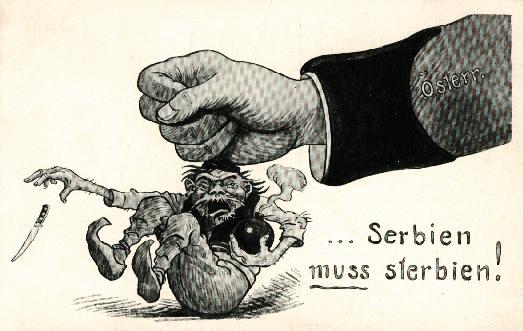
Anti-Serb sentiment or Serbophobia (Serbian: србофобија, romanized: srbofobija) refers to negative attitudes, prejudice or discrimination towards Serbs as an ethnic group. Historically, it has been a basis for the persecution, ethnic cleansing, and genocide of ethnic Serbs.
A distinctive form of anti-Serb sentiment is anti-Serbian sentiment, which can be defined as hostility to, prejudice towards, or discrimination against Serbia as a nation-state for Serbs. Additionally, another form of anti-Serb sentiment is discrimination or bias against Republika Srpska, the Serb-majority entity in Bosnia and Herzegovina.
Among the most widely-known historical proponents of anti-Serb sentiment was the 19th- and 20th-century Croatian Party of Rights. The most extreme elements of this party later became the Ustaše in the Kingdom of Yugoslavia, a Croatian fascist organization that came to power during World War II and instituted racial laws that specifically targeted Serbs, Jews, Roma and political dissidents. Their actions culminated in the genocide of Serbs and other minority groups that lived in that lived in the territory of the then-Independent State of Croatia.
The opposite of Serbophobia is Serbophilia.
Anti-Serb sentiment in the Kosovo Vilayet grew in the aftermath of the Ottoman-Serb and Ottoman-Greek conflicts during the period between 1877 and 1897. With the Battle of Vranje in 1878, thousands of Ottoman-Albanian troops and Albanian civilians were expelled into the Eastern part of Ottoman-held Kosovo Vilayet. These displaced persons, known as Muhaxir, were highly hostile towards the Serbs in the areas they had retreated to, considering that they had been expelled from the Vranje area due to the Ottoman-Serb conflict. This animosity fuelled anti-Serb sentiment, which resulted in Albanians committing widespread atrocities against Serb civilians, including physical assaults and killings, across the entire territory, including parts of Pristina and Bujanovac.
Atrocities against Serbs in the region eventually peaked in 1901 after the region was flooded with weapons that were not handed back to the Ottomans after the Greco-Turkish War of 1897. In May 1901, Albanians pillaged and partially burned the cities of Novi Pazar, Sjenica, and Pristina, and massacred Serbs in the area of Kolašin. David Little suggests that the actions of Albanians at the time constituted ethnic cleansing as they attempted to create a homogeneous area free of Christian Serbs.
The Society Against Serbs was a Bulgarian nationalist organization established in 1897 in Thessaloniki, Ottoman Empire. The organization's activists were both "Centralists" and "Vrhovnists" of the Bulgarian revolutionary committees (the Internal Macedonian Revolutionary Organization and the Supreme Macedonian-Adrianople Committee). By 1902, they had murdered at least 43 people and wounded 52 others, including owners of Serbian schools, teachers, Serbian Orthodox clergy, and other notable Serbs in the Ottoman Empire. Additionally, Bulgarians used the slur word "Serbomans" for people of non-Serbian origin, but with Serbian self-determination in Macedonia.[citation needed]
Anti-Serbian sentiment coalesced in 19th-century Croatia when some of the Croatian intelligentsia planned the creation of a Croatian nation-state. Croatia was at the time part of the Habsburg monarchy, while since 1804, it was part of the Austrian Empire, although it remained in personal union with the Kingdom of Hungary. After the Austro-Hungarian Compromise of 1867, it eventually became part of Transleithania, while Dalmatia and Istria remained separate Austrian crown lands. Ante Starčević, the leader of the Party of Rights between 1851 and 1896, believed Croats should confront their neighbors, including Serbs. Among others, he wrote that Serbs were an "unclean race" and, with the co-founder of his party, Eugen Kvaternik, denied the existence of Serbs or Slovenes in Croatia, perceiving their political consciousness as a threat. During the 1850s, Starčević forged the term Slavoserb (Latin: sclavus, servus) to describe people supposedly ready to serve foreign rulers, initially used to refer to some Serbs and his Croat opponent, and later applied to all Serbs by his followers. The Austro-Hungarian occupation of Bosnia and Herzegovina in 1878 likely contributed to the development of Starčević's anti-Serb sentiment, as he believed that it significantly increased the chances for the establishment of Greater Croatia. David Bruce MacDonald has put forward a thesis that Starčević's theories could only justify ethnocide but not genocide because Starčević intended to assimilate Serbs as "Orthodox Croats", and not to exterminate them.
Hub AI
Anti-Serb sentiment AI simulator
(@Anti-Serb sentiment_simulator)
Anti-Serb sentiment
Anti-Serb sentiment or Serbophobia (Serbian: србофобија, romanized: srbofobija) refers to negative attitudes, prejudice or discrimination towards Serbs as an ethnic group. Historically, it has been a basis for the persecution, ethnic cleansing, and genocide of ethnic Serbs.
A distinctive form of anti-Serb sentiment is anti-Serbian sentiment, which can be defined as hostility to, prejudice towards, or discrimination against Serbia as a nation-state for Serbs. Additionally, another form of anti-Serb sentiment is discrimination or bias against Republika Srpska, the Serb-majority entity in Bosnia and Herzegovina.
Among the most widely-known historical proponents of anti-Serb sentiment was the 19th- and 20th-century Croatian Party of Rights. The most extreme elements of this party later became the Ustaše in the Kingdom of Yugoslavia, a Croatian fascist organization that came to power during World War II and instituted racial laws that specifically targeted Serbs, Jews, Roma and political dissidents. Their actions culminated in the genocide of Serbs and other minority groups that lived in that lived in the territory of the then-Independent State of Croatia.
The opposite of Serbophobia is Serbophilia.
Anti-Serb sentiment in the Kosovo Vilayet grew in the aftermath of the Ottoman-Serb and Ottoman-Greek conflicts during the period between 1877 and 1897. With the Battle of Vranje in 1878, thousands of Ottoman-Albanian troops and Albanian civilians were expelled into the Eastern part of Ottoman-held Kosovo Vilayet. These displaced persons, known as Muhaxir, were highly hostile towards the Serbs in the areas they had retreated to, considering that they had been expelled from the Vranje area due to the Ottoman-Serb conflict. This animosity fuelled anti-Serb sentiment, which resulted in Albanians committing widespread atrocities against Serb civilians, including physical assaults and killings, across the entire territory, including parts of Pristina and Bujanovac.
Atrocities against Serbs in the region eventually peaked in 1901 after the region was flooded with weapons that were not handed back to the Ottomans after the Greco-Turkish War of 1897. In May 1901, Albanians pillaged and partially burned the cities of Novi Pazar, Sjenica, and Pristina, and massacred Serbs in the area of Kolašin. David Little suggests that the actions of Albanians at the time constituted ethnic cleansing as they attempted to create a homogeneous area free of Christian Serbs.
The Society Against Serbs was a Bulgarian nationalist organization established in 1897 in Thessaloniki, Ottoman Empire. The organization's activists were both "Centralists" and "Vrhovnists" of the Bulgarian revolutionary committees (the Internal Macedonian Revolutionary Organization and the Supreme Macedonian-Adrianople Committee). By 1902, they had murdered at least 43 people and wounded 52 others, including owners of Serbian schools, teachers, Serbian Orthodox clergy, and other notable Serbs in the Ottoman Empire. Additionally, Bulgarians used the slur word "Serbomans" for people of non-Serbian origin, but with Serbian self-determination in Macedonia.[citation needed]
Anti-Serbian sentiment coalesced in 19th-century Croatia when some of the Croatian intelligentsia planned the creation of a Croatian nation-state. Croatia was at the time part of the Habsburg monarchy, while since 1804, it was part of the Austrian Empire, although it remained in personal union with the Kingdom of Hungary. After the Austro-Hungarian Compromise of 1867, it eventually became part of Transleithania, while Dalmatia and Istria remained separate Austrian crown lands. Ante Starčević, the leader of the Party of Rights between 1851 and 1896, believed Croats should confront their neighbors, including Serbs. Among others, he wrote that Serbs were an "unclean race" and, with the co-founder of his party, Eugen Kvaternik, denied the existence of Serbs or Slovenes in Croatia, perceiving their political consciousness as a threat. During the 1850s, Starčević forged the term Slavoserb (Latin: sclavus, servus) to describe people supposedly ready to serve foreign rulers, initially used to refer to some Serbs and his Croat opponent, and later applied to all Serbs by his followers. The Austro-Hungarian occupation of Bosnia and Herzegovina in 1878 likely contributed to the development of Starčević's anti-Serb sentiment, as he believed that it significantly increased the chances for the establishment of Greater Croatia. David Bruce MacDonald has put forward a thesis that Starčević's theories could only justify ethnocide but not genocide because Starčević intended to assimilate Serbs as "Orthodox Croats", and not to exterminate them.