
Recent from talks
Archaeoceti
Knowledge base stats:
Talk channels stats:
Members stats:
Archaeoceti
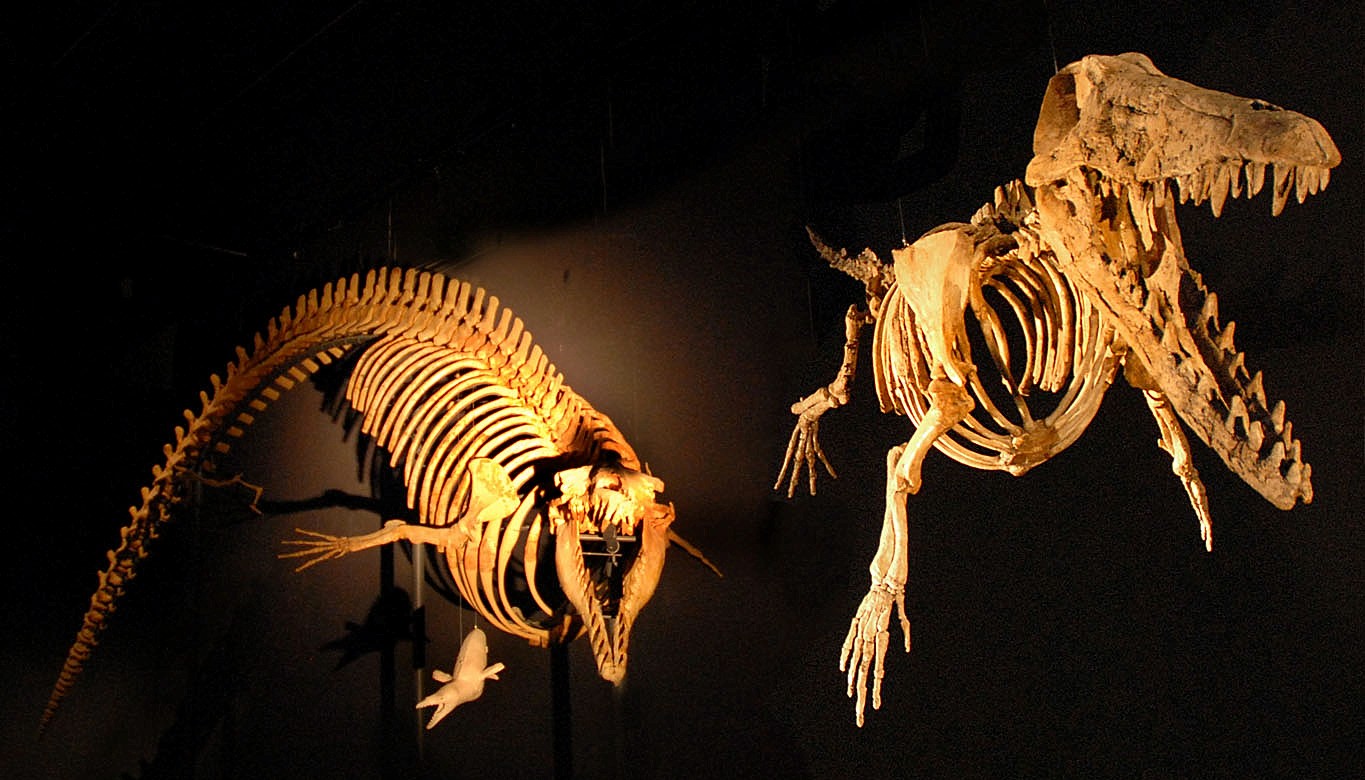
Archaeoceti ("ancient whales"), or Zeuglodontes in older literature, is an obsolete paraphyletic group of primitive cetaceans that lived from the Early Eocene to the late Oligocene (50 to 23 million years ago). Representing the earliest cetacean radiation, they include the initial amphibious stages in cetacean evolution, thus are the ancestors of both modern cetacean suborders, Mysticeti and Odontoceti. This initial diversification occurred in the shallow waters that separated India and Asia 53 to 45 mya, resulting in some 30 species adapted to a fully oceanic life. Echolocation and filter-feeding evolved during a second radiation 36 to 35 mya.
All archaeocetes from the Ypresian (56–47.8 mya) and most from the Lutetian (47.8–41.3 mya) are known exclusively from Indo-Pakistan, but Bartonian (41.3–38.0 mya) and Priabonian (38.0–33.9 mya) genera are known from across Earth, including North America, Egypt, New Zealand, and Europe. Although no consensus exists regarding the mode of locomotion of which cetaceans were capable during the late Lutetian, they were very unlikely to be nearly as well-adapted to the open ocean as living cetaceans. They probably reached as far as North America along coastal waters, either around Africa and over to South America, or more likely, over the Tethys Sea (between Eurasia and Africa) and along the coasts of Europe, Greenland, and North America.
The archaeocetes are paraphyletic in relation to their extant modern descendants, the Neoceti (neocetes). Neocetes consist of two subgroups, the toothed whales (odontocetes) and the baleen whales (mysticetes).
First identified as cetaceans by West 1980, the pakicetids, the most archaic of whales, had long, slender legs and a long, narrow tail, and could reach the size of a modern wolf. They have only been found in sediments from freshwater streams in northwestern India and northern Pakistan, and were probably waders rather than swimmers.
Dozens of fossils are known, but only of skulls, teeth, and jaw fragments; no complete skeletons have been found. The dentition varied; the smallest species had teeth like modern fish eaters, and the largest were more like modern hyenas. The pakicetids may have been predators or carrion feeders. Neither the skull nor the dentition of pakicetids resembles those of modern whales, but the sigmoid process, involucrum, pachyostotic (compact) and rotated ossicles of their ears still reveal their cetacean nature.
The next diverging family of whales, the Ambulocetidae, were large, already fully aquatic, and crocodile-like with large feet and a strong tail. Sediments indicate that they lived in coastal areas and their compact bones suggest that they were ambush rather than fast-pursuit predators. Also known exclusively from Pakistan and India, the ambulocetids include the oldest known whale, Himalayacetus, which is believed to be 53.5 million years old, some 4 million years older than the rest of its family.
Of the less than 10 fossils that have been described, one, Ambulocetus natans, is nearly complete and the main source of information concerning early cetacean evolution. The size of a male sea lion, it had a large head with a long snout and robust, strongly worn teeth. The lower jaw shows that Ambulocetus had an unusual soft tissue connecting the back of the jaw to the middle ear — a small equivalent to the large sound-receiving fat pad in modern odontocetes. Its eyes were placed dorsally on the head, but were facing laterally. The musculature of the head, neck, and back was strong and the fluke-less tail was long. The hind limbs were short, but equipped with long feet. The fore limbs were also short and equipped with five short hooves. Ambulocetus probably swam with its hind feet like a modern otter, and was incapable of supporting its own weight on land. It probably was an ambush hunter like modern crocodiles.
The Remingtonocetidae had short limbs, and a strong and powerful tail with flattened vertebrae. Their long snout, tiny eyes, and ear morphology suggest their vision was poor and that hearing was their dominant sense. They, too, have only been found in Pakistan and India, and sediments suggest that they lived in turbid waters in coastal areas. Though they were probably able to live on land, they apparently used their tails to swim.
Hub AI
Archaeoceti AI simulator
(@Archaeoceti_simulator)
Archaeoceti
Archaeoceti ("ancient whales"), or Zeuglodontes in older literature, is an obsolete paraphyletic group of primitive cetaceans that lived from the Early Eocene to the late Oligocene (50 to 23 million years ago). Representing the earliest cetacean radiation, they include the initial amphibious stages in cetacean evolution, thus are the ancestors of both modern cetacean suborders, Mysticeti and Odontoceti. This initial diversification occurred in the shallow waters that separated India and Asia 53 to 45 mya, resulting in some 30 species adapted to a fully oceanic life. Echolocation and filter-feeding evolved during a second radiation 36 to 35 mya.
All archaeocetes from the Ypresian (56–47.8 mya) and most from the Lutetian (47.8–41.3 mya) are known exclusively from Indo-Pakistan, but Bartonian (41.3–38.0 mya) and Priabonian (38.0–33.9 mya) genera are known from across Earth, including North America, Egypt, New Zealand, and Europe. Although no consensus exists regarding the mode of locomotion of which cetaceans were capable during the late Lutetian, they were very unlikely to be nearly as well-adapted to the open ocean as living cetaceans. They probably reached as far as North America along coastal waters, either around Africa and over to South America, or more likely, over the Tethys Sea (between Eurasia and Africa) and along the coasts of Europe, Greenland, and North America.
The archaeocetes are paraphyletic in relation to their extant modern descendants, the Neoceti (neocetes). Neocetes consist of two subgroups, the toothed whales (odontocetes) and the baleen whales (mysticetes).
First identified as cetaceans by West 1980, the pakicetids, the most archaic of whales, had long, slender legs and a long, narrow tail, and could reach the size of a modern wolf. They have only been found in sediments from freshwater streams in northwestern India and northern Pakistan, and were probably waders rather than swimmers.
Dozens of fossils are known, but only of skulls, teeth, and jaw fragments; no complete skeletons have been found. The dentition varied; the smallest species had teeth like modern fish eaters, and the largest were more like modern hyenas. The pakicetids may have been predators or carrion feeders. Neither the skull nor the dentition of pakicetids resembles those of modern whales, but the sigmoid process, involucrum, pachyostotic (compact) and rotated ossicles of their ears still reveal their cetacean nature.
The next diverging family of whales, the Ambulocetidae, were large, already fully aquatic, and crocodile-like with large feet and a strong tail. Sediments indicate that they lived in coastal areas and their compact bones suggest that they were ambush rather than fast-pursuit predators. Also known exclusively from Pakistan and India, the ambulocetids include the oldest known whale, Himalayacetus, which is believed to be 53.5 million years old, some 4 million years older than the rest of its family.
Of the less than 10 fossils that have been described, one, Ambulocetus natans, is nearly complete and the main source of information concerning early cetacean evolution. The size of a male sea lion, it had a large head with a long snout and robust, strongly worn teeth. The lower jaw shows that Ambulocetus had an unusual soft tissue connecting the back of the jaw to the middle ear — a small equivalent to the large sound-receiving fat pad in modern odontocetes. Its eyes were placed dorsally on the head, but were facing laterally. The musculature of the head, neck, and back was strong and the fluke-less tail was long. The hind limbs were short, but equipped with long feet. The fore limbs were also short and equipped with five short hooves. Ambulocetus probably swam with its hind feet like a modern otter, and was incapable of supporting its own weight on land. It probably was an ambush hunter like modern crocodiles.
The Remingtonocetidae had short limbs, and a strong and powerful tail with flattened vertebrae. Their long snout, tiny eyes, and ear morphology suggest their vision was poor and that hearing was their dominant sense. They, too, have only been found in Pakistan and India, and sediments suggest that they lived in turbid waters in coastal areas. Though they were probably able to live on land, they apparently used their tails to swim.
Recent media